Matthew 15
Biblica® Open Nueva Biblia Viva 2008 · Tap a verse to see its cross-references.
Lo limpio y lo impuro
1Ciertos fariseos y jefes judíos de Jerusalén fueron a entrevistarse con Jesús.
2―¿Por qué tus discípulos desobedecen la tradición antigua? —dijeron—. ¡No están observando el ritual de lavarse las manos antes de comer!
3A lo que Jesús respondió:
―¿Y por qué ustedes violan los mandamientos directos de Dios en el afán de guardar las tradiciones? 4La ley de Dios dice: “Honra a tu padre y a tu madre, y el que maldiga a sus padres, muera irremisiblemente”. 5Pero ustedes dicen: “Es preferible dejar de ayudar a los padres que estén en necesidad a dejar de ofrendar a Dios”. 6De esta manera, con un mandamiento humano están anulando el mandamiento divino de honrar y cuidar a los padres. 7¡Hipócritas! Bien dijo de ustedes el Profeta Isaías:
8»“Este pueblo de labios me honra, pero lejos está de amarme de corazón. 9La adoración que ustedes me brindan no les sirve de nada, porque enseñan tradiciones humanas como si fueran mandamientos de Dios”».
10Entonces Jesús llamó a la gente y le dijo:
―Escuchen y traten de entender: 11Lo que daña el alma no es lo que entra por la boca, sino los pensamientos malos y las palabras con que estos se expresan.
12Los discípulos se le acercaron y le dijeron:
―Los fariseos se ofendieron por esas palabras.
13―Cualquier planta que mi Padre no haya sembrado será arrancada —les respondió Jesús—. 14Así que no les hagan caso, porque son ciegos que tratan de guiar a otros ciegos y lo único que logran es caer juntos en el hoyo.
15Pedro le pidió que les explicara aquello de que comer los alimentos que la ley judía prohíbe no es lo que contamina al hombre.
16―¿Tampoco ustedes entienden? —le respondió Jesús—. 17Cualquier cosa que uno come pasa a través del aparato digestivo y se expulsa; 18pero el mal hablar brota de la suciedad del corazón y corrompe a la persona que así habla. 19Del corazón salen los malos pensamientos, los asesinatos, los adulterios, las fornicaciones, los robos, las mentiras y los chismes. 20Esto es lo que de veras corrompe. Pero uno no se corrompe por comer sin lavarse primero las manos.
La fe de la mujer cananea
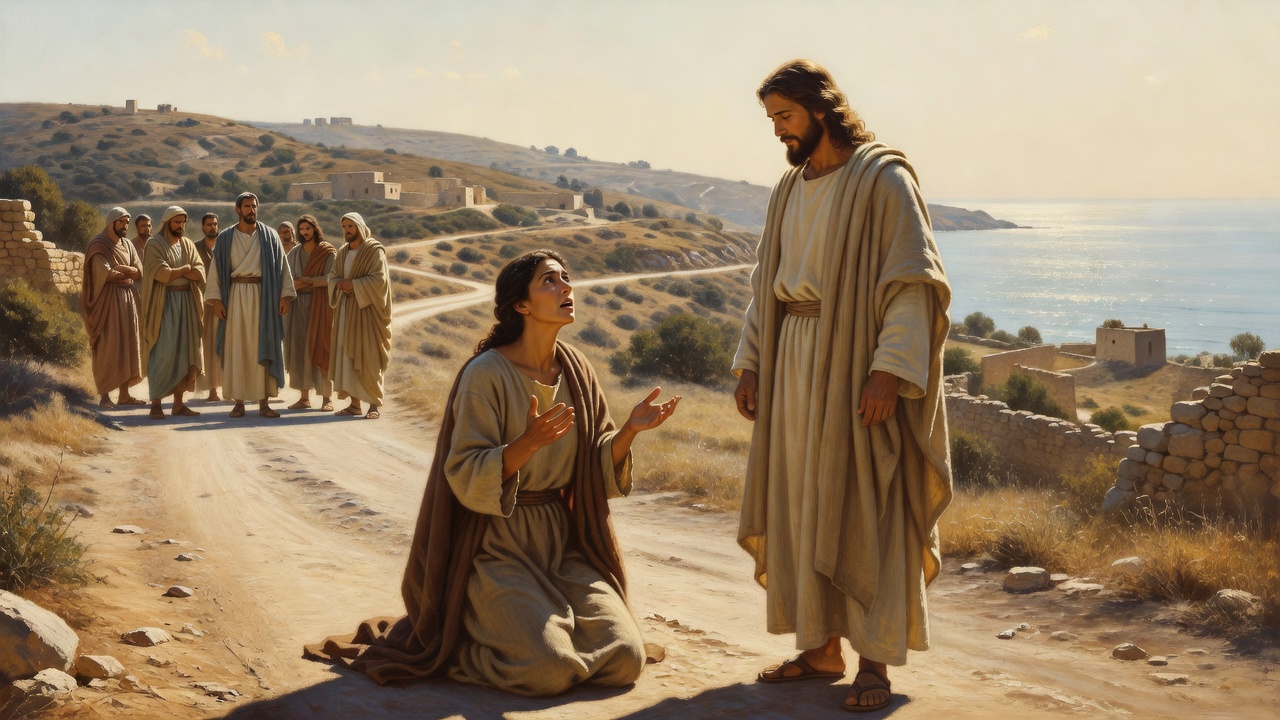
21Jesús salió de allí y caminó los ochenta kilómetros que lo separaban de la región de Tiro y Sidón. 22Una cananea, que vivía por allí, se le acercó suplicante:
―¡Ten misericordia de mí, Señor, Hijo de David! Mi hija tiene un demonio que la atormenta constantemente.
23Jesús no le respondió ni una sola palabra. Sus discípulos se le acercaron y le dijeron:
―Dile que se vaya, que ya nos tiene cansados.
24Entonces Jesús le dijo a la mujer:
―Me enviaron a ayudar a las ovejas perdidas de Israel, no a los gentiles.
25Pero ella se acercó más y de rodillas le suplicó de nuevo:
―¡Señor, ayúdame!
26―No creo que sea correcto quitarle el pan a los hijos y echárselo a los perros —le replicó Jesús.
27―Sí —respondió ella—, pero aun los perrillos comen las migajas que caen de la mesa.
28―¡Tu fe es extraordinaria! —le dijo Jesús—. Conviértanse en realidad tus deseos.
Y su hija sanó en aquel mismo instante.
Jesús alimenta a los cuatro mil
29Jesús regresó al lago de Galilea, subió a una colina y se sentó. 30Y estuvo sanando a cojos, ciegos, mudos, lisiados y a muchos otros enfermos que la multitud le llevaba. 31¡Qué espectáculo! Los que hasta entonces no podían pronunciar ni una palabra hablaban emocionados; los miembros inútiles de los lisiados eran restaurados; los cojos caminaban y saltaban, mientras que los ciegos, maravillados, contemplaban por primera vez el mundo. El gentío, asombrado, alababa al Dios de Israel.
32―Me da lástima toda esta gente —dijo Jesús en voz baja a sus discípulos—. Hace tres días que están aquí y ya no tienen nada que comer. No quiero enviarlos a sus casa sin comer, porque se desmayarían en el camino.
33―¿Pero en qué lugar de este desierto vamos a conseguir suficiente comida para alimentar a este gentío? —le respondieron.
34―¿Qué tienen ahora? —les preguntó Jesús.
―¡Siete panes y unos cuantos pescados!
35Entonces ordenó a la gente que se sentara en el suelo. 36Tomó los siete panes y los pescados, dio gracias a Dios por ellos y comenzó a partirlos y a entregarlos a los discípulos para que los repartieran a la gente.
37Nadie se quedó sin comer, a pesar de que había cuatro mil personas, sin contar las mujeres y los niños ¡Y sobraron siete cestas repletas de alimentos!
39Cuando terminaron de comer, Jesús despidió a la gente y él y sus discípulos se fueron en una barca a la región de Magadán.
Did you know?
Tradition, the coast of Tyre, and bread by the lake
- Pharisees and scribes came from Jerusalem and asked why Jesus’ disciples ate without washing their hands, treating that as a break with the tradition of the elders. He answered by quoting Isaiah, whom Easton's Bible Dictionary (1897) identifies as the son of Amoz and places in the reigns of Uzziah, Jotham, Ahaz, and Hezekiah, on people who honor God with their lips while their hearts are far away.Sources: the Bible text itself · Isaiah
- Jesus then withdrew to the district of Tyre and Sidon, where a Canaanite woman begged him to heal her daughter and called him Son of David. Sidon, on the Mediterranean coast north of Tyre, took its name from Zidon, Canaan’s eldest son and ancestor of the Sidonians and Phoenicians. It was the oldest Phoenician city and the mother city of Tyre; it lay in Asher’s allotment but was never subdued.Sources: the Bible text itself · Sidon · Tyre · Canaan
- Jesus then went along the Sea of Galilee, sat on a mountain, and healed people laid at his feet, before feeding four thousand men, besides women and children, with seven loaves and a few small fish. Easton's Bible Dictionary (1897) notes that John calls the lake the Sea of Tiberias and places its surface 682 feet below the Mediterranean. The same dictionary says the boat crossing ended at Magadan, a name found only in this chapter and called Dalmanutha in Mark, on the west shore of the lake.Sources: the Bible text itself · Sea of Galilee · Magadan
Notes written with AI assistance from open sources (Theographic Bible Metadata, CC BY-SA 4.0; Easton’s Bible Dictionary, public domain) and reviewed before publishing.
Places in this chapter
- Jerusalem · 31.777, 35.234 · verse 1
- Galilee · 32.760, 35.527 · verse 21
- Sidon · Today: Sandikli archaeological site in Sidon · 33.561, 35.372 · verse 21
- Tyre · 33.271, 35.196 · verse 21
- Canaan · 32.767, 35.333 · verse 22
- Sea of Galilee · 32.819, 35.590 · verse 29
Only places identified with high confidence are shown (90% or more according to the scholarly sources compiled by OpenBible). Period map: DARE (Digital Atlas of the Roman Empire), CC BY 4.0; modern map: © OpenStreetMap contributors; places: OpenBible.info (CC BY 4.0).
Credits and license for this translation
Biblica® Open Nueva Biblia Viva 2008
The Holy Bible in Spanish: Biblica® Open Nueva Biblia Viva 2008 (Bible)
copyright © 2008 Biblica, Inc.
Language: Español
Contributor: Biblica, Inc.
Biblica® Open Nueva Biblia Viva™
Copyright © 2006, 2008 by Biblica, Inc.
“Biblica” es una marca registrada en la oficina de Patentes y Marcas de los Estados Unidos por Biblica, Inc. Usado con permiso.
“Biblica” is a trademark registered in the United States Patent and Trademark Office by Biblica, Inc. Used with permission.
Creative Commons license
This work is made available under the Creative Commons Attribution-ShareAlike 4.0 International License (CC BY-SA). To view a copy of this license, visit https://creativecommons.org/licenses/by-sa/4.0 or send a letter to Creative Commons, PO Box 1866, Mountain View, CA 94042, USA.
You have permission to copy and distribute this Work, as long as you do not change it and you keep the title as it is. Changing or translating this Work will create a derivative work. When you publish this derivative work, you must list what changes you have made where people can see them, such as on a website. You must also show where the original Work is from: “The original Work by its copyright holders is available for free at www.biblica.com and open.bible .”
Notice of copyright must appear on the title or copyright page of the work as follows:
Biblica® Open Nueva Biblia Viva™
Copyright © 2006, 2008 by Biblica, Inc.
“Biblica” es una marca registrada en la oficina de Patentes y Marcas de los Estados Unidos por Biblica, Inc. Usado con permiso.
“Biblica” is a trademark registered in the United States Patent and Trademark Office by Biblica, Inc. Used with permission.
You must also make your derivative work available under the same license (CC BY-SA).
If you would like to notify Biblica, Inc. regarding your translation of this work, please contact us at https://open.bible/#feedback .
This translation is made available to you under the terms of the
Creative Commons Attribution Share-Alike license 4.0.
You have permission to share and redistribute this Bible translation in any format and to make reasonable revisions and adaptations of this translation, provided that:
You include the above copyright and source information.
If you make any changes to the text, you must indicate that you did so in a way that makes it clear that the original licensor is not necessarily endorsing your changes.
If you redistribute this text, you must distribute your contributions under the same license as the original.
Pictures included with Scriptures and other documents on this site are licensed just for use with those Scriptures and documents.
For other uses, please contact the respective copyright owners.
Note that in addition to the rules above, revising and adapting God's Word involves a great responsibility to be true to God's Word. See Revelation 22:18-19.
2025-05-21
Source: http://ebible.org/spaonbv/ · eBible.org