Leviticus 5
Biblica® Open Nueva Biblia Viva 2008 · Tap a verse to see its cross-references.
El sacrificio expiatorio por diversos pecados
1»Cualquiera que se niegue a testificar acerca de un delito del cual es testigo, ya sea porque vio o escuchó, es culpable de complicidad, y deberá pagar por ello.
2»Cualquier persona que toque algo que es ritualmente impuro, como el cuerpo muerto de un animal prohibido como alimento, salvaje o doméstico, o el cuerpo de un insecto prohibido, es culpable, aun cuando no se haya dado cuenta de que lo tocó. 3O si toca una impureza humana, de cualquier tipo, quedará impuro en cuanto se dé cuenta de ello.
4»Si alguien jura precipitadamente, sea el voto bueno o malo, en cuanto comprenda su error, será culpable.
5»En cualquiera de estos casos, confesará el pecado cometido 6y presentará una ofrenda por su culpa: una hembra de ganado menor, oveja o cabra. El sacerdote hará la expiación por esa persona, y esta quedará perdonada.
El caso del pobre
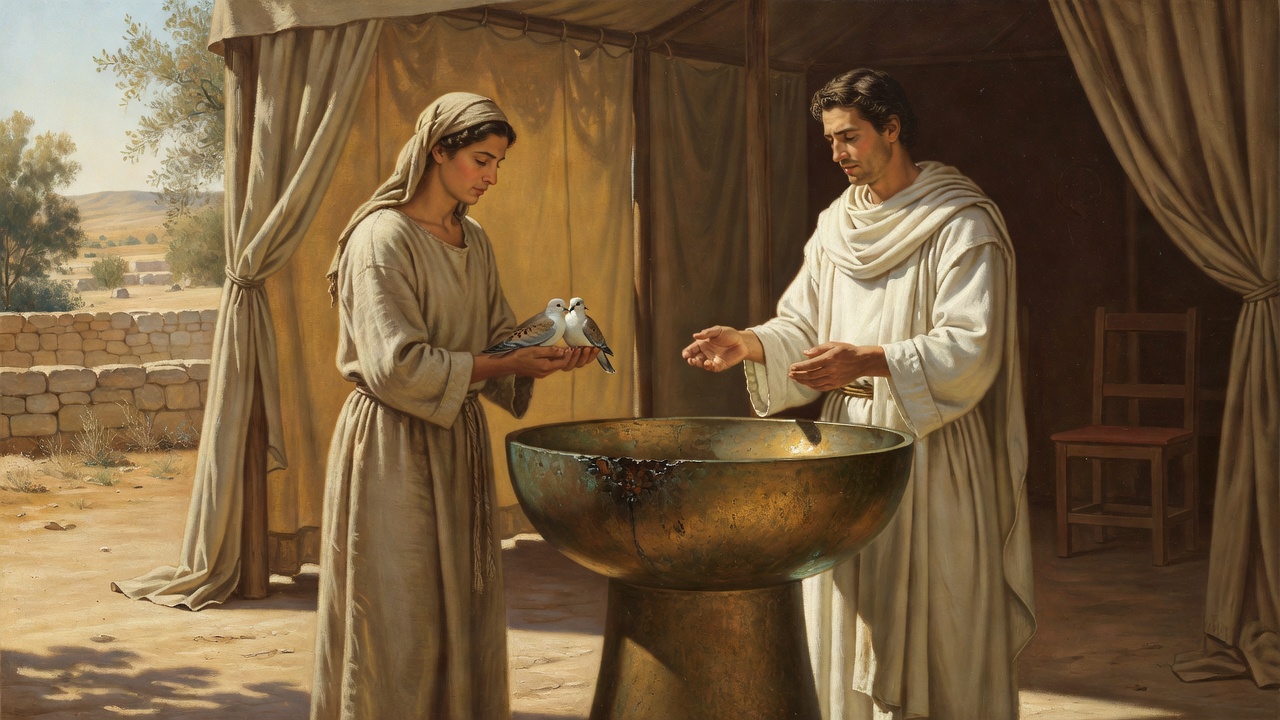
7»Si el culpable es una persona muy pobre, de modo que no tiene forma de ofrecer una oveja, entonces ofrecerá dos tórtolas o dos pichones de paloma: uno como ofrenda por el pecado y el otro como holocausto. 8El sacerdote ofrecerá en primer lugar el sacrificio por el pecado, para lo cual le cortará el cuello al ave, pero sin separarle la cabeza del cuerpo. 9Enseguida rociará una parte de la sangre sobre el costado del altar y el resto lo derramará al pie del altar; es la ofrenda por el pecado. 10La segunda ave será ofrecida como holocausto siguiendo los procedimientos ya mencionados. De esta manera el sacerdote hará expiación por la persona que pecó, y esta será perdonada.
11»Si el culpable es aún más pobre, de modo que ni siquiera puede ofrecer tórtolas o pichones de paloma, ofrecerá como ofrenda por su pecado dos kilos de harina de la mejor calidad. No debe mezclarla con aceite de olivas ni ponerle incienso, porque es una ofrenda por el pecado. 12Se la llevará al sacerdote, el cual tomará un puñado que representará la ofrenda completa, y la quemará sobre el altar, como cualquier otro sacrificio ofrecido al Señor por fuego; esta será su ofrenda por el perdón de sus pecados. 13De esta manera el sacerdote hará expiación por el que haya cometido cualquier pecado de esta clase, y será perdonado. El resto de la harina pertenecerá al sacerdote, como en el caso de una ofrenda de cereales».
El sacrificio por la culpa
14Además, el Señor le dijo a Moisés: 15«Si alguno peca inadvertidamente, al no darle al Señor todo lo que le corresponde, ofrecerá por su pecado un carnero sin defecto. El valor del animal se calculará de acuerdo con la moneda oficial del santuario. Es un sacrificio por la culpa. 16Además, el culpable hará restitución por el diezmo que retuvo, más un veinte por ciento como multa, lo cual entregará al sacerdote. Entonces el sacerdote, por medio del carnero sacrificado, hará expiación por el culpable, y este será perdonado.
17»Cualquiera que desobedezca alguna ley de Dios, aun sin darse cuenta, de todos modos es culpable. Entonces deberá llevar al sacerdote un carnero sin defecto, o su equivalente en dinero. El precio será fijado de la misma manera que se hace con el sacrificio por la culpa. El sacerdote, entonces, presentará el sacrificio a favor del que pecó sin darse cuenta, y este será perdonado. 19Se trata de una ofrenda por la culpa, porque ciertamente esa persona es culpable delante del Señor».
Did you know?
Guilt Offerings and Restitution
- Leviticus 5 accommodates worshippers of varying economic means by offering a sliding scale for sin offerings. A person who could not afford a lamb or goat was permitted to bring two turtledoves or young pigeons, and someone who could not afford birds could bring a tenth of an ephah of fine flour without oil or incense.Sources: the Bible text itself
- For unintentional offenses involving the Lord's holy things, the offender was required to bring an unblemished ram assessed in sanctuary shekels as a guilt offering. In addition, the person had to make full restitution for what was harmed and add a twenty percent penalty (one-fifth) paid to the priest.Sources: the Bible text itself
- The chapter highlights communal responsibility and speech, identifying specific offenses such as refusing to testify after hearing a public charge to give evidence and making thoughtless or rash oaths.Sources: the Bible text itself
Notes written with AI assistance from open sources (Theographic Bible Metadata, CC BY-SA 4.0; Easton’s Bible Dictionary, public domain) and reviewed before publishing.
Credits and license for this translation
Biblica® Open Nueva Biblia Viva 2008
The Holy Bible in Spanish: Biblica® Open Nueva Biblia Viva 2008 (Bible)
copyright © 2008 Biblica, Inc.
Language: Español
Contributor: Biblica, Inc.
Biblica® Open Nueva Biblia Viva™
Copyright © 2006, 2008 by Biblica, Inc.
“Biblica” es una marca registrada en la oficina de Patentes y Marcas de los Estados Unidos por Biblica, Inc. Usado con permiso.
“Biblica” is a trademark registered in the United States Patent and Trademark Office by Biblica, Inc. Used with permission.
Creative Commons license
This work is made available under the Creative Commons Attribution-ShareAlike 4.0 International License (CC BY-SA). To view a copy of this license, visit https://creativecommons.org/licenses/by-sa/4.0 or send a letter to Creative Commons, PO Box 1866, Mountain View, CA 94042, USA.
You have permission to copy and distribute this Work, as long as you do not change it and you keep the title as it is. Changing or translating this Work will create a derivative work. When you publish this derivative work, you must list what changes you have made where people can see them, such as on a website. You must also show where the original Work is from: “The original Work by its copyright holders is available for free at www.biblica.com and open.bible .”
Notice of copyright must appear on the title or copyright page of the work as follows:
Biblica® Open Nueva Biblia Viva™
Copyright © 2006, 2008 by Biblica, Inc.
“Biblica” es una marca registrada en la oficina de Patentes y Marcas de los Estados Unidos por Biblica, Inc. Usado con permiso.
“Biblica” is a trademark registered in the United States Patent and Trademark Office by Biblica, Inc. Used with permission.
You must also make your derivative work available under the same license (CC BY-SA).
If you would like to notify Biblica, Inc. regarding your translation of this work, please contact us at https://open.bible/#feedback .
This translation is made available to you under the terms of the
Creative Commons Attribution Share-Alike license 4.0.
You have permission to share and redistribute this Bible translation in any format and to make reasonable revisions and adaptations of this translation, provided that:
You include the above copyright and source information.
If you make any changes to the text, you must indicate that you did so in a way that makes it clear that the original licensor is not necessarily endorsing your changes.
If you redistribute this text, you must distribute your contributions under the same license as the original.
Pictures included with Scriptures and other documents on this site are licensed just for use with those Scriptures and documents.
For other uses, please contact the respective copyright owners.
Note that in addition to the rules above, revising and adapting God's Word involves a great responsibility to be true to God's Word. See Revelation 22:18-19.
2025-05-21
Source: http://ebible.org/spaonbv/ · eBible.org