Judges 1
Biblica® Open Nueva Biblia Viva 2008 · Tap a verse to see its cross-references.
About this book
About Judges
- The book is called Judges because it contains the history of Israel's deliverance and government by the men who bore that title. Easton's Bible Dictionary (1897) sets their story in repeated times of servitude under neighboring peoples and of deliverance by the judges, and it states that the chronology of the whole period is uncertain.Sources: Easton: Judges, Book of
- Easton's Bible Dictionary (1897) holds that the author was most probably Samuel, and that the book was probably composed during Saul's reign or at the very beginning of David's reign. Easton notes that the words in Judges 18:30–31 imply a date after the Philistines took the ark and after it was set up at Nob, whereas in David's reign the ark was at Gibeon.Sources: Easton: Judges, Book of
- As Easton outlines it, the book has an introduction (1–3:6) linking it with the narrative in Joshua, a history of thirteen judges (3:7–16:31) in four periods, and an appendix (chapters 17–21) with no formal connection to what goes before. If Eli and Samuel are included, Easton counts fifteen judges.Sources: Easton: Judges, Book of
- Easton's outline presents the setting as a succession of servitudes: under Chushan-rishathaim of Mesopotamia, under Eglon of Moab, under Jabin of Hazor in Canaan, under Midian with Amalek and the children of the east, under the Ammonites together with the Philistines, and again under the Philistines. Gideon, also called Jerubbaal, begins what Easton calls the second period; Jephthah, brought from Tob by the elders of Gilead, judged Israel for six years after delivering the people from the Ammonites; Samson, son of Manoah of Zorah, was a Nazirite to God from birth.Sources: Easton: Judges, Book of · Gideon · Jephthah · Samson
- The appendix records the conquest of Laish by a portion of the tribe of Dan, and the near extinction of Benjamin at the hands of the other tribes because Benjamin had assisted the men of Gibeah. Easton places these events only a few years after Joshua's death and says they show the people's religious and moral degeneracy. Easton also notes that Ruth originally formed part of Judges and was separated from it about A.D. 450, then placed in the Hebrew scriptures immediately after the Song of Solomon.Sources: Easton: Judges, Book of · Gibeah
Notes written with AI assistance from open sources (Theographic Bible Metadata, CC BY-SA 4.0; Easton’s Bible Dictionary, public domain) and reviewed before publishing.
Israel continúa su lucha contra los cananeos
1Después de la muerte de Josué, la gente de Israel se presentó delante del Señor para pedirle instrucciones.
―¿Cuál de las tribus será la primera en salir a pelear contra los cananeos? —preguntaron.
2La respuesta de Dios fue la siguiente:
―Judá. Y yo le daré una gran victoria.
3Sin embargo, los jefes de la tribu de Judá pidieron ayuda a la tribu de Simeón: «Ayúdennos a desalojar a los habitantes del territorio que se nos asignó —dijeron—, y luego nosotros los ayudaremos a ustedes en su conquista». Así pues, la gente de Simeón acompañó a la de Judá.
4Y el Señor les ayudó a derrotar a los cananeos y a los fereceos, de modo que diez mil enemigos fueron muertos en Bézec. El rey Adoní Bézec huyó, pero los israelitas lo persiguieron y lo capturaron y le cortaron los pulgares de las manos y de los pies.
7«Setenta reyes sin pulgares en las manos y los pies recogían migajas debajo de mi mesa» —dijo Adoní Bézec—. Ahora el Señor me ha pagado con lo mismo.
Después lo llevaron a Jerusalén y allí murió.
8Judá había conquistado Jerusalén y había dado muerte a todos sus habitantes, prendiendo fuego a la ciudad. 9Después luchó contra los cananeos en la región montañosa del Neguev y en las llanuras de la costa. 10Enseguida Judá marchó contra los cananeos en Hebrón, (anteriormente se llamaba Quiriat Arbá) y destruyó las ciudades de Sesay, Ajimán y Talmay.
11Después marchó contra la ciudad de Debir (llamada anteriormente Quiriat Séfer). 12Y Caleb prometió lo siguiente: «¿Quién dirigirá el ataque contra Debir? A quienquiera que la conquiste le daré mi hija Acsa por esposa».
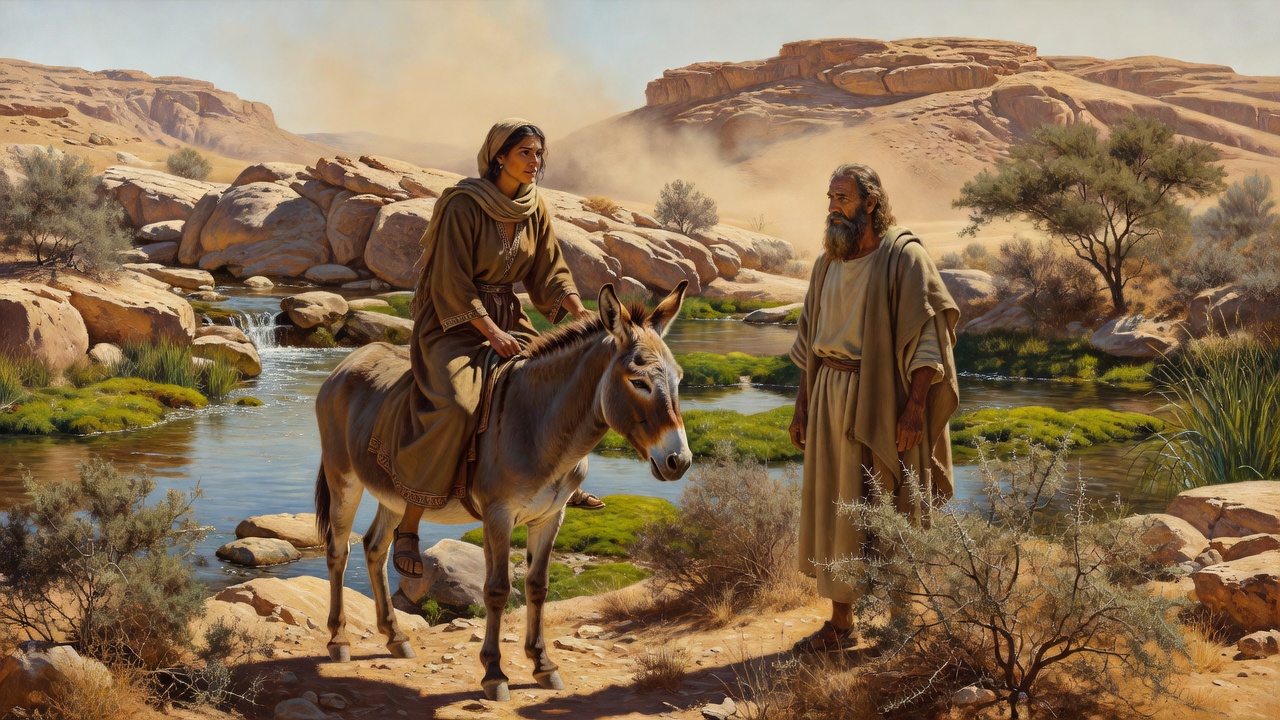
13Otoniel, sobrino de Caleb, hijo de Quenaz el hermano de Caleb, se ofreció para dirigir el ataque, y conquistó la ciudad y obtuvo a Acsa por esposa. 14Un instante antes de salir hacia su nuevo hogar él la persuadió que solicitara de su padre un pedazo adicional de tierra. Ella se desmontó del burro.
―¿Qué quieres? —le preguntó Caleb.
15Ella le dijo:
―Quiero pedirte algo: ya que me has dado tierras en el Néguev, dame también fuentes de agua.
Entonces Caleb le dio las fuentes de arriba y de abajo.
16Cuando la tribu de Judá entró en su nueva tierra en el desierto del Neguev al sur de Arad, los descendientes del suegro de Moisés, miembros de la tribu de los ceneos, lo acompañaron. Dejaron sus hogares en Jericó, la ciudad de las palmeras, y a partir de entonces las dos tribus vivieron juntas. 17Después, Judá se unió a Simeón para enfrentarse a los cananeos en la ciudad de Sefat, y dieron muerte a todo el pueblo. Por eso ahora la ciudad es llamada Jormá (Matanza). 18Judá conquistó además las ciudades de Gaza, Ascalón y Ecrón, con todos sus pueblos circunvecinos. 19El Señor ayudó a la tribu de Judá a expulsar a los habitantes de la región montañosa, pero no pudieron conquistar a los del valle, porque estos tenían carros de hierro.
20La ciudad de Hebrón fue dada a Caleb como el Señor había prometido, y Caleb expulsó a todos sus habitantes, que eran descendientes de los tres hijos de Anac.
21La tribu de Benjamín no expulsó a los jebuseos que vivían en Jerusalén, de modo que allí viven todavía, mezclados con los israelitas.
22Por su parte los descendientes de José atacaron la ciudad de Betel, antes conocida como Luz, y el Señor estuvo con ellos. Primero enviaron exploradores, 24los que capturaron a un hombre que salía de la ciudad y prometieron salvarle la vida y la de su familia si les mostraba cómo entrar en la ciudad. 25Él les mostró la entrada y ellos exterminaron a toda la población perdonando la vida de este hombre y la de su familia. 26Más tarde este hombre se fue a Siria y fundó una ciudad también llamada Luz, nombre con que se conoce todavía.
27La tribu de Manasés tampoco expulsó a la gente que vivía en Betseán, Tanac, Dor, Ibleam y Meguido, con sus pueblos circunvecinos, de modo que los cananeos permanecieron allí. 28Años más tarde, cuando los israelitas fueron más fuertes, dominaron a los cananeos y los obligaron a trabajos forzados, pero jamás los expulsaron del territorio. 29Lo mismo ocurrió con los cananeos que vivían en Guézer. Ellos todavía viven en medio de la tribu de Efraín.
30La tribu de Zabulón no dio muerte a los habitantes de Quitrón y Nalol, sino que los hizo esclavos. 31La tribu de Aser tampoco expulsó a los residentes de Aco, Sidón, Ajlab, Aczib, Jelba, Afec y Rejob. 32De modo que los israelitas todavía viven con los cananeos que eran el pueblo original de aquella tierra. 33La tribu de Neftalí no expulsó al pueblo de Bet Semes y de Bet Anat, de modo que ellos siguen viviendo allí, pero en calidad de siervos.
34En cuanto a la tribu de Dan, los amorreos los obligaron a establecerse en las montañas y no los dejaron descender al valle. 35Pero más tarde, cuando los amorreos se esparcieron por el monte Heres, en Ayalón y Salbín, la tribu de José los venció y los hizo esclavos. 36Los límites de los amorreos comienzan en la subida del Paso del Escorpión, siguen hasta un punto llamado Acrabim (La Roca), y de allí a Selá y hacia las montañas.
Did you know?
Israel's Initial Conquests and Challenges
- Because the Negev was an arid region in the south, Caleb's daughter Achsah asked her father for springs of water alongside the land he had allotted her, receiving both the upper and lower springs.Sources: the Bible text itself · Achsah · Negeb
- The narrative notes the ancient Canaanite names of several conquered sites, including Hebron (formerly Kiriath-arba), Debir (formerly Kiriath-sepher), and Bethel (originally Luz).Sources: the Bible text itself · Hebron · Bethel (of Palestine)
- Although the tribe of Judah took control of the hill country, they were unable to drive out the inhabitants of the plains because those defenders possessed iron chariots.Sources: the Bible text itself
Notes written with AI assistance from open sources (Theographic Bible Metadata, CC BY-SA 4.0; Easton’s Bible Dictionary, public domain) and reviewed before publishing.
Places in this chapter
- Jerusalem · 31.777, 35.234 · verses 7, 8, 21
- Negeb · 31.245, 34.841 · verses 9, 15, 16
- Shephelah · 31.692, 34.875 · verse 9
- Hebron · Today: Tel Rumeida · 31.525, 35.102 · verses 10, 20
- Gulloth-mayim · Today: within 5 km of Khirbet Rabud · 31.432, 35.015 · verse 15
- Lower Gulloth · Today: within 5 km of Khirbet Rabud · 31.432, 35.015 · verse 15
- Upper Gulloth · Today: within 5 km of Khirbet Rabud · 31.432, 35.015 · verse 15
- Jericho · Today: Tell es Sultan · 31.872, 35.445 · verse 16
- Zephath · Today: Tel Masos · 31.212, 34.958 · verse 17
- Ashkelon · Today: Tel Ashkelon · 31.664, 34.546 · verse 18
- Ekron · Today: Tel Miqne · 31.777, 34.852 · verse 18
- Gaza · Today: Tell Harube · 31.504, 34.464 · verse 18
- Luz · Today: Beitin · 31.923, 35.241 · verse 23
- Megiddo · Today: Tel Megiddo · 32.585, 35.184 · verse 27
- Taanach · Today: Tell Ta’anakh · 32.522, 35.219 · verse 27
- Gezer · Today: Tel Gezer · 31.859, 34.919 · verse 29
- Acco · Today: Tel Akko · 32.921, 35.088 · verse 31
- Sidon · Today: Sandikli archaeological site in Sidon · 33.561, 35.372 · verse 31
Only places identified with high confidence are shown (90% or more according to the scholarly sources compiled by OpenBible). Period map: DARE (Digital Atlas of the Roman Empire), CC BY 4.0; modern map: © OpenStreetMap contributors; places: OpenBible.info (CC BY 4.0).
Credits and license for this translation
Biblica® Open Nueva Biblia Viva 2008
The Holy Bible in Spanish: Biblica® Open Nueva Biblia Viva 2008 (Bible)
copyright © 2008 Biblica, Inc.
Language: Español
Contributor: Biblica, Inc.
Biblica® Open Nueva Biblia Viva™
Copyright © 2006, 2008 by Biblica, Inc.
“Biblica” es una marca registrada en la oficina de Patentes y Marcas de los Estados Unidos por Biblica, Inc. Usado con permiso.
“Biblica” is a trademark registered in the United States Patent and Trademark Office by Biblica, Inc. Used with permission.
Creative Commons license
This work is made available under the Creative Commons Attribution-ShareAlike 4.0 International License (CC BY-SA). To view a copy of this license, visit https://creativecommons.org/licenses/by-sa/4.0 or send a letter to Creative Commons, PO Box 1866, Mountain View, CA 94042, USA.
You have permission to copy and distribute this Work, as long as you do not change it and you keep the title as it is. Changing or translating this Work will create a derivative work. When you publish this derivative work, you must list what changes you have made where people can see them, such as on a website. You must also show where the original Work is from: “The original Work by its copyright holders is available for free at www.biblica.com and open.bible .”
Notice of copyright must appear on the title or copyright page of the work as follows:
Biblica® Open Nueva Biblia Viva™
Copyright © 2006, 2008 by Biblica, Inc.
“Biblica” es una marca registrada en la oficina de Patentes y Marcas de los Estados Unidos por Biblica, Inc. Usado con permiso.
“Biblica” is a trademark registered in the United States Patent and Trademark Office by Biblica, Inc. Used with permission.
You must also make your derivative work available under the same license (CC BY-SA).
If you would like to notify Biblica, Inc. regarding your translation of this work, please contact us at https://open.bible/#feedback .
This translation is made available to you under the terms of the
Creative Commons Attribution Share-Alike license 4.0.
You have permission to share and redistribute this Bible translation in any format and to make reasonable revisions and adaptations of this translation, provided that:
You include the above copyright and source information.
If you make any changes to the text, you must indicate that you did so in a way that makes it clear that the original licensor is not necessarily endorsing your changes.
If you redistribute this text, you must distribute your contributions under the same license as the original.
Pictures included with Scriptures and other documents on this site are licensed just for use with those Scriptures and documents.
For other uses, please contact the respective copyright owners.
Note that in addition to the rules above, revising and adapting God's Word involves a great responsibility to be true to God's Word. See Revelation 22:18-19.
2025-05-21
Source: http://ebible.org/spaonbv/ · eBible.org