James 1
Biblica® Open Nueva Biblia Viva 2008 · Tap a verse to see its cross-references.
About this book
About James
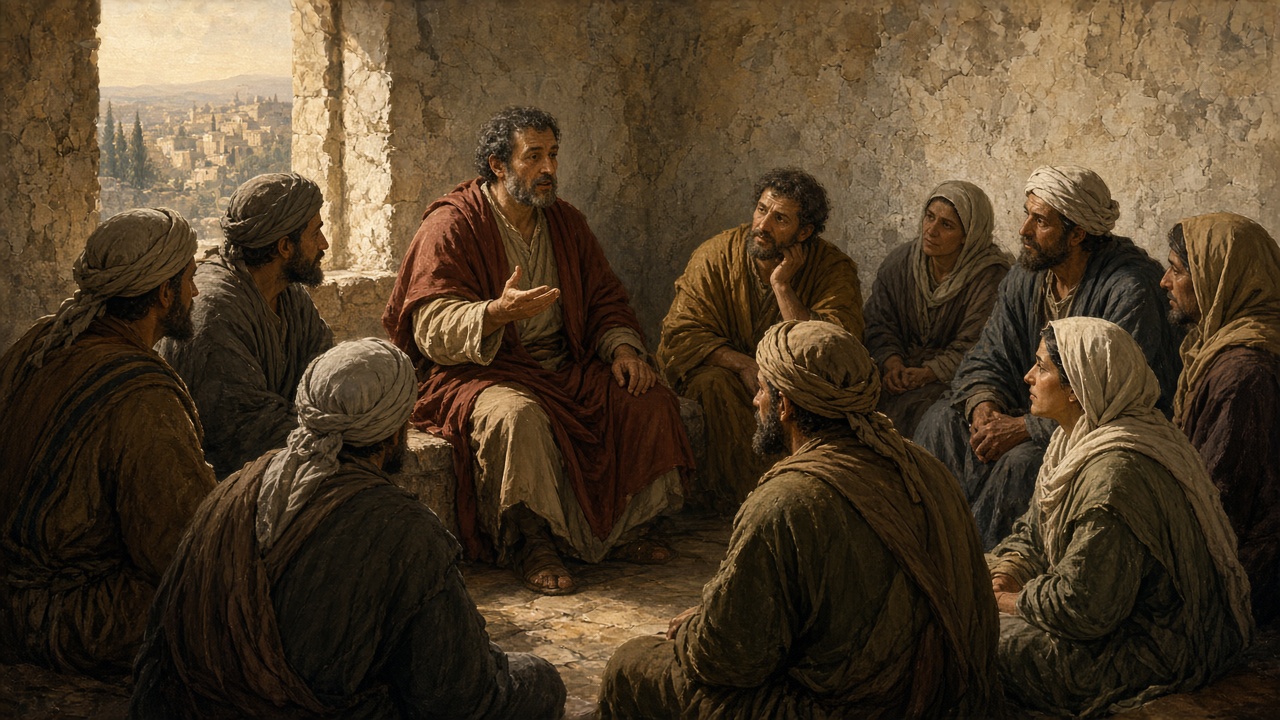
- Easton's Bible Dictionary (1897) identifies the author as James the Less, the Lord's brother and one of the twelve apostles, and as one of the three pillars of the Church. A related entry calls him the son of Alphaeus, or Cleopas, a near kinsman of Jesus, nicknamed "the Less" or "the Little," probably because he was short, and states that this James wrote the letter that bears his name.Sources: Easton: James, Epistle of · James (Brother of Jesus)
- Easton's Bible Dictionary (1897) places the writing in Jerusalem, where James was living, and, from internal evidence, in the period between Paul's two imprisonments in Rome, probably about A.D. 62.Sources: Easton: James, Epistle of
- The letter is addressed to the Jews of the dispersion, "the twelve tribes scattered abroad." The same James is described as head of the church at Jerusalem, where he presided at the council that considered the case of the Gentiles.Sources: Easton: James, Epistle of · James (Brother of Jesus)
- According to Easton, the writer sought to press the practical duties of the Christian life, warning against formalism, fanaticism, fatalism, bowing before the rich, false use of words and oaths, partisanship, evil speaking, boasting, and oppression. He presents the great lesson as patience in trial, in good works, and under provocation, oppression, and persecution, grounded in the near coming of the Lord, who would set wrongs right.Sources: Easton: James, Epistle of
- An entry on Job cites him, in connection with this letter, as an example for later generations of integrity and of submissive patience under the sorest calamities.Sources: Job
Notes written with AI assistance from open sources (Theographic Bible Metadata, CC BY-SA 4.0; Easton’s Bible Dictionary, public domain) and reviewed before publishing.
1Santiago, siervo de Dios y del Señor Jesucristo, saluda a las doce tribus que se hallan dispersas por todo el mundo.
Pruebas y tentaciones
2Hermanos míos, que les dé gran alegría cuando pasen por diferentes pruebas, 3pues ya saben que cuando su fe sea puesta a prueba, producirá en ustedes firmeza. 4Y cuando se desarrolle completamente la firmeza, serán perfectos y maduros, sin que les falte nada.
5Si a alguno de ustedes le falta sabiduría, pídasela a Dios. Él se la dará, porque Dios da a todos en abundancia sin hacer ningún reproche. 6Pero debe pedirla con fe, sin dudar, ya que el que duda es como las olas del mar que el viento agita y lleva de un lado a otro. 7El que es así, no piense que va a recibir alguna cosa del Señor, 8porque no es capaz de tomar decisiones ni es constante en lo que hace.
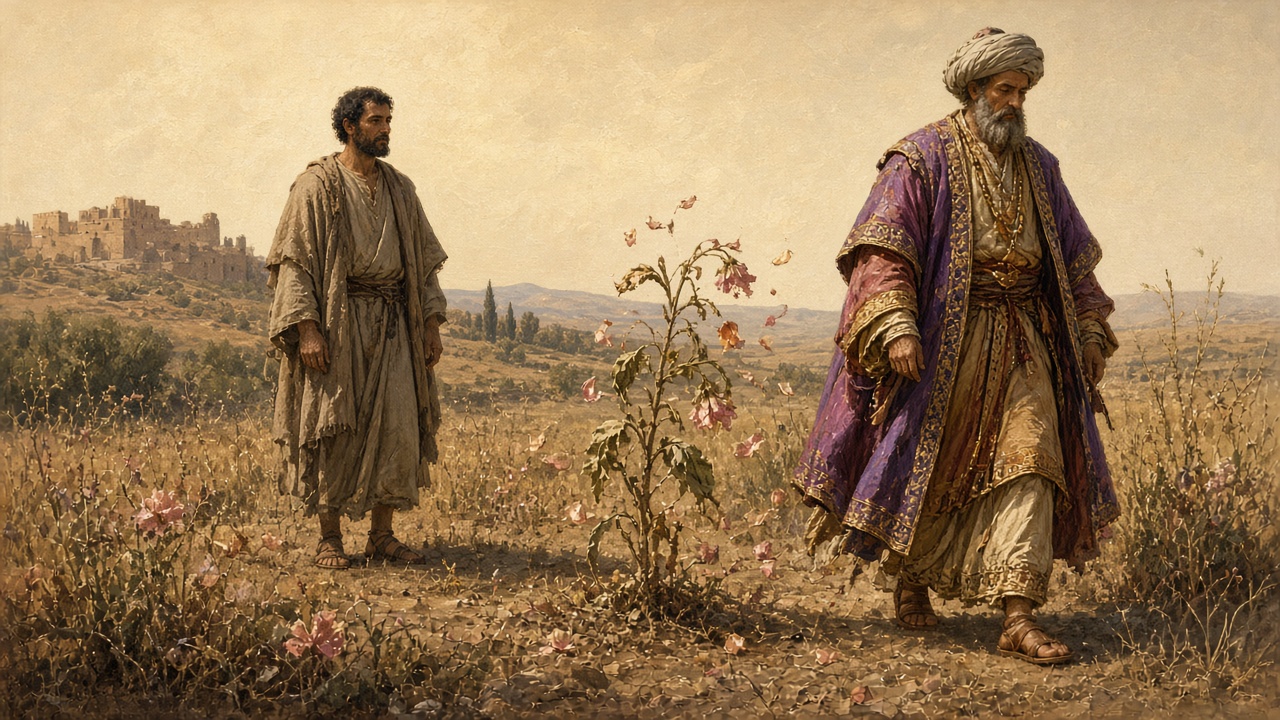
9El hermano de condición humilde debe sentirse orgulloso de lo mucho que vale; 10y el rico, de su humilde condición. El rico se marchitará como la flor del campo. 11Cuando el sol sale, seca la planta con su calor intenso. A la planta se le marchita la flor y pierde su belleza. Así se marchitará también el rico en todos sus negocios.
12Dichoso el que permanece firme durante la prueba, porque cuando la supera, recibe la corona de la vida que Dios ha prometido a los que lo aman. 13Nadie debe decir, cuando es tentado, que es Dios el que lo tienta. Porque Dios no puede ser tentado por el mal, ni él tampoco tienta a nadie.
14Al contrario, cada uno es tentado por sus propios malos deseos que lo arrastran y seducen. 15Los malos deseos dan a luz el pecado. Después, cuando el pecado se desarrolla completamente, da a luz la muerte.
16Mis queridos hermanos, no se engañen. 17De lo alto nos viene todo lo bueno y perfecto. Allí es donde está el Padre que creó todos los astros del cielo, y que no cambia como las sombras. 18Él quiso darnos vida por medio de la palabra de verdad, para que fuéramos los primeros frutos de su creación.
Hay que poner en práctica la palabra
19Mis queridos hermanos, pongan atención: Todos ustedes deben estar listos para escuchar, pero deben ser lentos para hablar y para enojarse. 20Porque el enojo no deja a la gente vivir con justicia como Dios quiere. 21Por eso, despójense de toda suciedad y de la maldad que tanto abunda. De esa manera podrán recibir con humildad la palabra sembrada en ustedes. Esta palabra tiene poder para salvarles la vida.
22Pongan en práctica la palabra y no se limiten a sólo escucharla pues de otra manera se engañan ustedes mismos. 23El que escucha la palabra pero no la pone en práctica es como el que mira su cara en un espejo 24y, en cuanto se va, se olvida de cómo era. 25Pero el que pone su atención en la ley perfecta que da libertad, y sigue en ella sin olvidar lo que ha oído y hace lo que ella dice, será dichoso en lo que hace.
26Si alguien se cree religioso pero no controla su lengua, se engaña a sí mismo, y su religión no sirve para nada.
27La religión pura y sin mancha que a Dios le agrada es esta: ayudar a los huérfanos y a las viudas en sus problemas, y estar siempre limpio sin mancharse con la maldad del mundo.
Did you know?
Trials and Pure Religion
- The letter opens in the name of “James, a servant of God and of the Lord Jesus Christ.” A traditional account identifies him as the son of Alphaeus, or Cleopas, called James “the Less” or “the Little,” probably because he was of low stature, and as a brother, near kinsman, or cousin of Jesus. That account says he appears to have headed the church in Jerusalem and that he presided at the council held to consider the case of the Gentiles.Sources: James (Brother of Jesus) · the Bible text itself
- He addresses “the twelve tribes of the Dispersion” and greets them as brothers. He treats trials of many kinds as a testing of faith that develops perseverance, but he warns that no one who is tempted should say, “God is tempting me,” because God tempts no one.Sources: the Bible text itself
- The rich man, he says, should exult in his low position, because he will pass away like a flower of the field when the sun rises with scorching heat and withers the plant. Pure and undefiled religion, in his words, is to care for orphans and widows in their distress and to keep oneself from being polluted by the world.Sources: the Bible text itself
Notes written with AI assistance from open sources (Theographic Bible Metadata, CC BY-SA 4.0; Easton’s Bible Dictionary, public domain) and reviewed before publishing.
Credits and license for this translation
Biblica® Open Nueva Biblia Viva 2008
The Holy Bible in Spanish: Biblica® Open Nueva Biblia Viva 2008 (Bible)
copyright © 2008 Biblica, Inc.
Language: Español
Contributor: Biblica, Inc.
Biblica® Open Nueva Biblia Viva™
Copyright © 2006, 2008 by Biblica, Inc.
“Biblica” es una marca registrada en la oficina de Patentes y Marcas de los Estados Unidos por Biblica, Inc. Usado con permiso.
“Biblica” is a trademark registered in the United States Patent and Trademark Office by Biblica, Inc. Used with permission.
Creative Commons license
This work is made available under the Creative Commons Attribution-ShareAlike 4.0 International License (CC BY-SA). To view a copy of this license, visit https://creativecommons.org/licenses/by-sa/4.0 or send a letter to Creative Commons, PO Box 1866, Mountain View, CA 94042, USA.
You have permission to copy and distribute this Work, as long as you do not change it and you keep the title as it is. Changing or translating this Work will create a derivative work. When you publish this derivative work, you must list what changes you have made where people can see them, such as on a website. You must also show where the original Work is from: “The original Work by its copyright holders is available for free at www.biblica.com and open.bible .”
Notice of copyright must appear on the title or copyright page of the work as follows:
Biblica® Open Nueva Biblia Viva™
Copyright © 2006, 2008 by Biblica, Inc.
“Biblica” es una marca registrada en la oficina de Patentes y Marcas de los Estados Unidos por Biblica, Inc. Usado con permiso.
“Biblica” is a trademark registered in the United States Patent and Trademark Office by Biblica, Inc. Used with permission.
You must also make your derivative work available under the same license (CC BY-SA).
If you would like to notify Biblica, Inc. regarding your translation of this work, please contact us at https://open.bible/#feedback .
This translation is made available to you under the terms of the
Creative Commons Attribution Share-Alike license 4.0.
You have permission to share and redistribute this Bible translation in any format and to make reasonable revisions and adaptations of this translation, provided that:
You include the above copyright and source information.
If you make any changes to the text, you must indicate that you did so in a way that makes it clear that the original licensor is not necessarily endorsing your changes.
If you redistribute this text, you must distribute your contributions under the same license as the original.
Pictures included with Scriptures and other documents on this site are licensed just for use with those Scriptures and documents.
For other uses, please contact the respective copyright owners.
Note that in addition to the rules above, revising and adapting God's Word involves a great responsibility to be true to God's Word. See Revelation 22:18-19.
2025-05-21
Source: http://ebible.org/spaonbv/ · eBible.org