Hebrews 9
Biblica® Open Nueva Biblia Viva 2008 · Tap a verse to see its cross-references.
El culto en el santuario terrenal
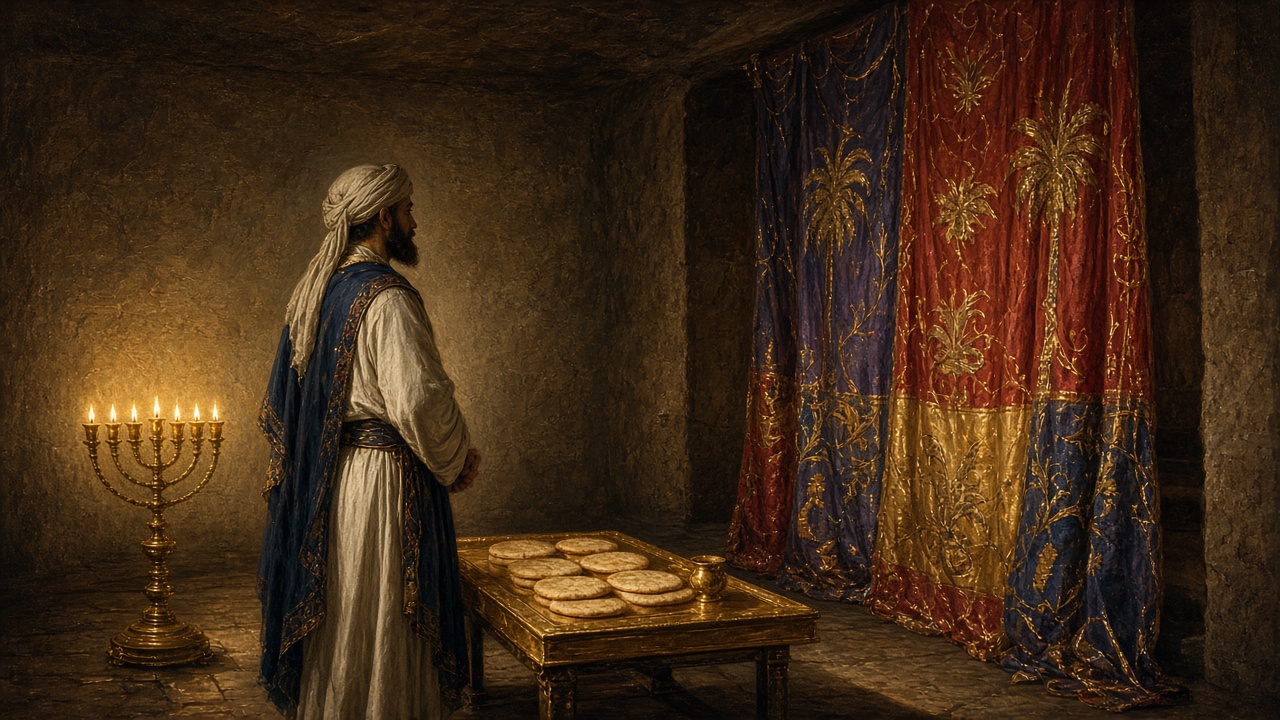
1Ahora bien, el primer pacto tenía reglas para el culto y un santuario aquí en la tierra. 2El santuario se construyó de tal forma que en su primera parte, llamada Lugar Santo, estaban el candelabro, la mesa y los panes sagrados. 3Detrás de la segunda cortina estaba la parte llamada Lugar Santísimo, 4donde estaba el altar de oro para el incienso y el cofre del pacto que estaba toda recubierta de oro. Dentro del cofre había una jarra de oro que contenía el maná, la vara de Aarón que había retoñado, y las tablas del pacto. 5Encima del cofre estaban los querubines de la gloria, que cubrían con su sombra la tapa del cofre. Pero ahora no es necesario hablar de eso con detalles.
6Con todo esto dispuesto así, los sacerdotes entran continuamente en la primera parte del santuario para celebrar el culto. 7Pero en la segunda parte entra únicamente el sumo sacerdote, y sólo una vez al año. Siempre que entra lleva la sangre que ofrece por los pecados que cometen, sin darse cuenta, él y el pueblo. 8Con esto el Espíritu Santo da a entender que, mientras exista el primer santuario, todavía no se había dado a conocer el camino que conduce al Lugar Santísimo.
9Esto nos muestra hoy en día que las ofrendas y los sacrificios que allí se ofrecen no tienen ningún poder para hacer perfecta la conciencia de los que celebran ese culto. 10Estas son únicamente reglas que tienen que ver con alimentos, bebidas y diversas ceremonias de purificación, que sólo tienen vigencia hasta que llegue el tiempo de reformarlo todo.
La sangre de Cristo
11Pero Cristo ya vino, y él es el sumo sacerdote de los bienes definitivos. Es sumo sacerdote en un santuario que es el mejor y es perfecto, que no está hecho por manos humanas, es decir, que no es de este mundo. 12Él entró una sola vez y para siempre al Lugar Santísimo. No entró con sangre de chivos y becerros, sino con su propia sangre, logrando así un rescate eterno. 13La sangre de chivos y toros, y las cenizas de una becerra rociadas sobre personas que están impuras, las hacen puras de modo que quedan limpias por fuera. 14Y si esto es así, ¡la sangre de Cristo es todavía mejor! Pues por medio del Espíritu eterno, Cristo se ofreció a sí mismo a Dios como sacrificio sin mancha para purificar nuestra conciencia de las obras que conducen a la muerte, para que sirvamos al Dios viviente. 15Por eso, Cristo es mediador de un nuevo pacto. Por medio de su muerte, los llamados recibirán la herencia eterna que se les ha prometido, y serán liberados de los pecados que han cometido.
16Ahora bien, en el caso de un testamento, es necesario comprobar la muerte del que lo hizo, 17pues un testamento sólo tiene valor cuando la persona que lo hizo haya muerto. Mientras esa persona esté viva no tendrá ningún valor. 18Por eso, ni siquiera el primer pacto se estableció sin sangre. 19Moisés, después de anunciar a todo el pueblo los mandamientos de la ley, tomó lana roja y ramas de hisopo, las mojó con la sangre de los becerros y los chivos mezclada con agua, y con eso roció el libro de la ley y a todo el pueblo. 20Y mientras los rociaba, decía: «Esta es la sangre del pacto que Dios les ha ordenado a ustedes cumplir». 21De la misma manera, roció con la sangre el santuario y todos los objetos que se usaban en el culto.
22La ley exige que casi todo sea purificado con sangre, pues si no hay derramamiento de sangre no hay perdón. 23Por tanto, era necesario purificar, con esos sacrificios, las copias de lo que hay en el cielo; pero las cosas celestiales mismas necesitan sacrificios mejores que esos. 24Por eso, Cristo no entró en un santuario hecho por seres humanos, que era una simple copia del verdadero santuario. Entró más bien, en el cielo mismo, para presentarse ante Dios a favor nuestro. 25Tampoco entró en el cielo para ofrecerse muchas veces, como entra el sumo sacerdote en el Lugar Santísimo cada año con sangre que no es la suya. 26Si así hubiera sido, Cristo habría tenido que sufrir muchas veces desde que el mundo fue creado. Pero ahora, al final de los tiempos, se ha ofrecido una sola vez y para siempre para acabar con el pecado por medio de su propio sacrificio. 27Y como está establecido que los seres humanos mueran una sola vez y después que venga el juicio, 28así Cristo fue ofrecido una sola vez en sacrificio para quitar los pecados de muchos. Y aparecerá por segunda vez, pero no para cargar con el pecado, sino para salvar a quienes lo esperan.
Did you know?
The Earthly Sanctuary
- This chapter describes the first covenant's earthly sanctuary as a tabernacle divided into two rooms. According to Easton's Bible Dictionary (1897), the outer room, the Holy Place, was twenty cubits long and ten cubits high and wide. It had no opening for daylight, so only the golden lampstand lit it.Sources: the Bible text itself · Holy Place
- A veil of the most costly materials and the brightest colors separated the Holy Place from the Most Holy Place. Priests entered the first room regularly to carry out their duties, but only the high priest entered the inner room, and only once a year, never without blood offered for himself and for sins the people had committed in ignorance.Sources: Holy Place · the Bible text itself
- This chapter places the golden altar of incense in the Most Holy Place, together with the gold-covered ark, which held a gold jar of manna, Aaron's staff that had budded, and the stone tablets of the covenant. Easton's Bible Dictionary (1897), by contrast, locates that altar in the Holy Place, with the table of showbread. Aaron, whose staff is mentioned here, was Moses' elder brother and the eldest son of Amram and Jochebed.Sources: the Bible text itself · Holy Place · Aaron
Notes written with AI assistance from open sources (Theographic Bible Metadata, CC BY-SA 4.0; Easton’s Bible Dictionary, public domain) and reviewed before publishing.
Places in this chapter
- Holy Place · Today: on Mount Moriah · 31.778, 35.236 · verses 2, 8, 12, 25
- Most Holy Place · Today: on Mount Moriah · 31.778, 35.236 · verses 3, 7
Only places identified with high confidence are shown (90% or more according to the scholarly sources compiled by OpenBible). Period map: DARE (Digital Atlas of the Roman Empire), CC BY 4.0; modern map: © OpenStreetMap contributors; places: OpenBible.info (CC BY 4.0).
Credits and license for this translation
Biblica® Open Nueva Biblia Viva 2008
The Holy Bible in Spanish: Biblica® Open Nueva Biblia Viva 2008 (Bible)
copyright © 2008 Biblica, Inc.
Language: Español
Contributor: Biblica, Inc.
Biblica® Open Nueva Biblia Viva™
Copyright © 2006, 2008 by Biblica, Inc.
“Biblica” es una marca registrada en la oficina de Patentes y Marcas de los Estados Unidos por Biblica, Inc. Usado con permiso.
“Biblica” is a trademark registered in the United States Patent and Trademark Office by Biblica, Inc. Used with permission.
Creative Commons license
This work is made available under the Creative Commons Attribution-ShareAlike 4.0 International License (CC BY-SA). To view a copy of this license, visit https://creativecommons.org/licenses/by-sa/4.0 or send a letter to Creative Commons, PO Box 1866, Mountain View, CA 94042, USA.
You have permission to copy and distribute this Work, as long as you do not change it and you keep the title as it is. Changing or translating this Work will create a derivative work. When you publish this derivative work, you must list what changes you have made where people can see them, such as on a website. You must also show where the original Work is from: “The original Work by its copyright holders is available for free at www.biblica.com and open.bible .”
Notice of copyright must appear on the title or copyright page of the work as follows:
Biblica® Open Nueva Biblia Viva™
Copyright © 2006, 2008 by Biblica, Inc.
“Biblica” es una marca registrada en la oficina de Patentes y Marcas de los Estados Unidos por Biblica, Inc. Usado con permiso.
“Biblica” is a trademark registered in the United States Patent and Trademark Office by Biblica, Inc. Used with permission.
You must also make your derivative work available under the same license (CC BY-SA).
If you would like to notify Biblica, Inc. regarding your translation of this work, please contact us at https://open.bible/#feedback .
This translation is made available to you under the terms of the
Creative Commons Attribution Share-Alike license 4.0.
You have permission to share and redistribute this Bible translation in any format and to make reasonable revisions and adaptations of this translation, provided that:
You include the above copyright and source information.
If you make any changes to the text, you must indicate that you did so in a way that makes it clear that the original licensor is not necessarily endorsing your changes.
If you redistribute this text, you must distribute your contributions under the same license as the original.
Pictures included with Scriptures and other documents on this site are licensed just for use with those Scriptures and documents.
For other uses, please contact the respective copyright owners.
Note that in addition to the rules above, revising and adapting God's Word involves a great responsibility to be true to God's Word. See Revelation 22:18-19.
2025-05-21
Source: http://ebible.org/spaonbv/ · eBible.org