Genesis 2
Biblica® Open Nueva Biblia Viva 2008 · Tap a verse to see its cross-references.
1De este modo fueron creados los cielos y la tierra, y todo lo que hay en ellos.
2Después de haber terminado todo lo que se había propuesto hacer, Dios descansó el séptimo día. 3Y bendijo el séptimo día y lo instituyó como día santo, porque en ese día descansó después de haber creado todo.
4Aquí termina la historia de la creación del cielo y de la tierra.
Adán y Eva
Cuando Dios el Señor hizo la tierra y el cielo, 5todavía no había ninguna clase de vegetación en la tierra, porque Dios el Señor aún no había hecho llover. Además, no había quien trabajara la tierra, porque todavía Dios no había hecho al hombre. 6Sin embargo, de la tierra brotaba agua que regaba el suelo.
7Entonces Dios el Señor formó el cuerpo del hombre del polvo de la tierra y sopló en su nariz el aliento de vida. Fue así como el hombre se convirtió en un ser vivo.
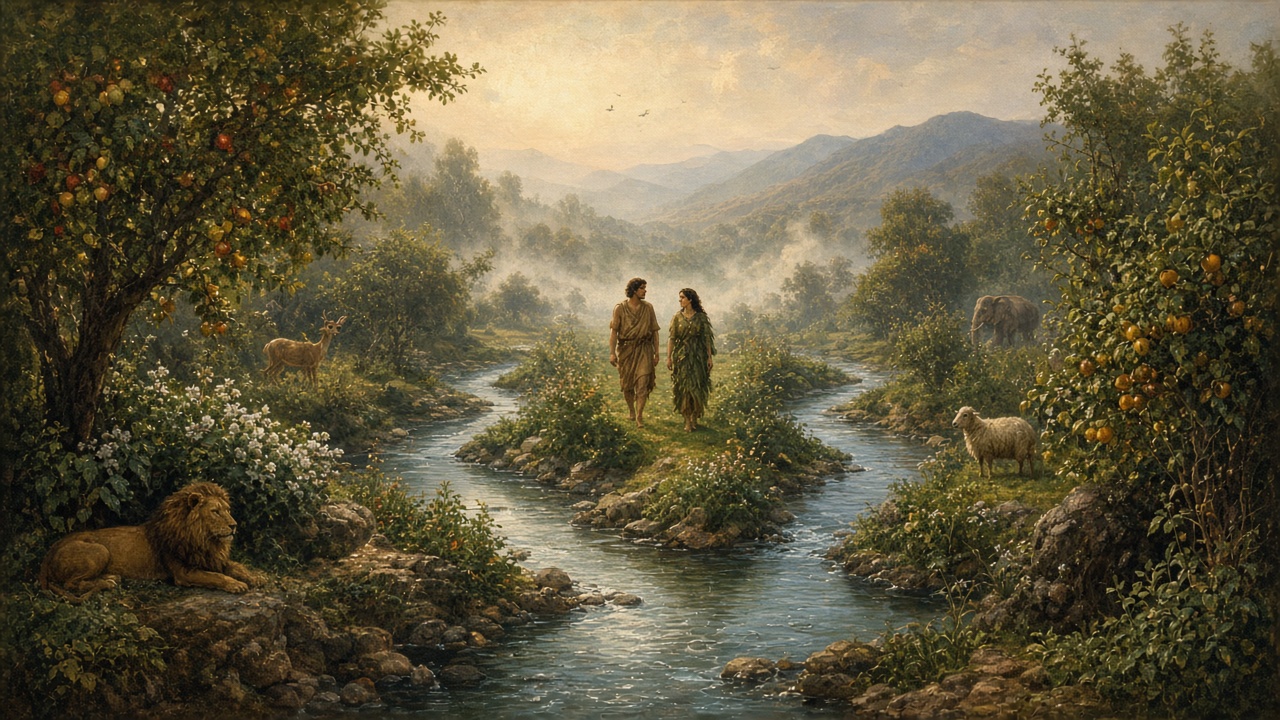
8Luego Dios el Señor plantó un jardín en Edén, hacia el oriente, y puso en él al hombre que había creado. 9Dios el Señor hizo que en el jardín se diera toda clase de árboles hermosos y de frutos deliciosos. En el centro del jardín plantó el árbol de la vida y también el árbol del conocimiento del bien y del mal. 10De la tierra de Edén salía un río que corría a través del huerto para regarlo. Después el río se dividía en cuatro brazos. 11El primero se llamaba Pisón, el cual recorría toda la región de Javilá, donde había oro de muy buena calidad. También allí había plantas con las que se hacen perfumes muy finos, y piedras de ónice. 13El segundo se llamaba Guijón, y atravesaba toda la región de Cus. 14El tercero era el río Tigris, que es el que pasa al oriente de Asiria. Y el cuarto era el río Éufrates.
15Dios el Señor puso al hombre en el jardín de Edén para que lo labrara y lo cuidara, 16y a la vez le dio esta orden: «Puedes comer del fruto de todos los árboles que hay en el jardín, 17pero del árbol del conocimiento del bien y del mal no podrás comer, porque el día que comas del fruto de ese árbol, morirás».
18Dios el Señor dijo: «No es bueno que el hombre esté solo. Le voy a hacer una compañera que sea de ayuda para él en todas sus necesidades». 19Dios el Señor formó, del polvo de la tierra, todos los animales del campo y todas las aves del cielo. Luego se los llevó al hombre para que este les pusiera nombre. Así que el hombre les puso a todos los animales el nombre con que se conocen en la actualidad. Pero entre todos esos animales no se encontró ninguno que le sirviera al hombre de pareja adecuada.
21Entonces Dios el Señor hizo que cayera sobre el hombre un sueño profundo, le sacó una costilla y cerró la carne en el lugar de donde la había sacado. 22Con la costilla hizo a la mujer y se la llevó al hombre. 23Al verla, el hombre exclamó: «¡Esta sí es hueso de mis huesos y carne de mi carne! Se llamará “mujer” porque fue sacada del hombre».
24Es por eso que el hombre deja a su padre y a su madre y se casa con su mujer, y los dos llegan a ser como una sola persona.
25Aunque en ese tiempo el hombre y la mujer estaban desnudos, no se sentían avergonzados.
Did you know?
Adam, Eden, and the Four Rivers
- Adam, meaning “red,” is a Babylonian word and the ordinary name for a human being, with the same sense in Hebrew and in Assyrian. It was given to the first man. He was formed from the dust of the ground—hence the name—and God breathed into his nostrils the breath of life.Sources: Adam · the Bible text itself
- A river flowed out of Eden and divided into four headwaters: the Pishon, the Gihon, the Hiddekel, and the Euphrates. Some identify the Pishon with the Phasis or the Halys, others with the Indus, the Ganges, or still other rivers; the Gihon has been identified with the Nile, and others regard it as the Oxus, the Araxes, or the Ganges. The Hiddekel is the Tigris, called by the Accadians the river of Idikla; Gesenius understood the name as “the rapid Tigris.”Sources: the Bible text itself · Pison · Gihon · Hiddekel
- The site of Eden, the garden in which the first parents lived, has been discussed more than almost any other geographical question. It has been placed in Armenia, in the region west of the Caspian Sea, in Media, near Damascus, in Palestine, in southern Arabia, and in Babylonia. Easton's Bible Dictionary (1897) seeks it along the Tigris and the Euphrates of western Asia, in the land of Shinar, or Babylonia.Sources: Eden
Notes written with AI assistance from open sources (Theographic Bible Metadata, CC BY-SA 4.0; Easton’s Bible Dictionary, public domain) and reviewed before publishing.
Places in this chapter
- Assyria · 36.359, 43.153 · verse 14
- Euphrates · Today: Euphrates River · 31.004, 47.442 · verse 14
- Tigris · Today: Tigris River · 31.004, 47.442 · verse 14
Only places identified with high confidence are shown (90% or more according to the scholarly sources compiled by OpenBible). Period map: DARE (Digital Atlas of the Roman Empire), CC BY 4.0; modern map: © OpenStreetMap contributors; places: OpenBible.info (CC BY 4.0).
Credits and license for this translation
Biblica® Open Nueva Biblia Viva 2008
The Holy Bible in Spanish: Biblica® Open Nueva Biblia Viva 2008 (Bible)
copyright © 2008 Biblica, Inc.
Language: Español
Contributor: Biblica, Inc.
Biblica® Open Nueva Biblia Viva™
Copyright © 2006, 2008 by Biblica, Inc.
“Biblica” es una marca registrada en la oficina de Patentes y Marcas de los Estados Unidos por Biblica, Inc. Usado con permiso.
“Biblica” is a trademark registered in the United States Patent and Trademark Office by Biblica, Inc. Used with permission.
Creative Commons license
This work is made available under the Creative Commons Attribution-ShareAlike 4.0 International License (CC BY-SA). To view a copy of this license, visit https://creativecommons.org/licenses/by-sa/4.0 or send a letter to Creative Commons, PO Box 1866, Mountain View, CA 94042, USA.
You have permission to copy and distribute this Work, as long as you do not change it and you keep the title as it is. Changing or translating this Work will create a derivative work. When you publish this derivative work, you must list what changes you have made where people can see them, such as on a website. You must also show where the original Work is from: “The original Work by its copyright holders is available for free at www.biblica.com and open.bible .”
Notice of copyright must appear on the title or copyright page of the work as follows:
Biblica® Open Nueva Biblia Viva™
Copyright © 2006, 2008 by Biblica, Inc.
“Biblica” es una marca registrada en la oficina de Patentes y Marcas de los Estados Unidos por Biblica, Inc. Usado con permiso.
“Biblica” is a trademark registered in the United States Patent and Trademark Office by Biblica, Inc. Used with permission.
You must also make your derivative work available under the same license (CC BY-SA).
If you would like to notify Biblica, Inc. regarding your translation of this work, please contact us at https://open.bible/#feedback .
This translation is made available to you under the terms of the
Creative Commons Attribution Share-Alike license 4.0.
You have permission to share and redistribute this Bible translation in any format and to make reasonable revisions and adaptations of this translation, provided that:
You include the above copyright and source information.
If you make any changes to the text, you must indicate that you did so in a way that makes it clear that the original licensor is not necessarily endorsing your changes.
If you redistribute this text, you must distribute your contributions under the same license as the original.
Pictures included with Scriptures and other documents on this site are licensed just for use with those Scriptures and documents.
For other uses, please contact the respective copyright owners.
Note that in addition to the rules above, revising and adapting God's Word involves a great responsibility to be true to God's Word. See Revelation 22:18-19.
2025-05-21
Source: http://ebible.org/spaonbv/ · eBible.org