Exodus 5
Biblica® Open Nueva Biblia Viva 2008 · Tap a verse to see its cross-references.
Primer encuentro con el faraón
1Después de haber hablado con los ancianos, Moisés y Aarón fueron a ver al faraón, y le dijeron:
―Le traemos un mensaje de parte del Señor, Dios de Israel. Así dice el Señor: “Deja salir a mi pueblo, porque quiero que vayan al desierto a hacerme fiesta y a adorarme”.
2―¿Conque esas tenemos? —replicó el faraón—. ¿Quién es el Señor para que yo tenga que obedecerlo y dejarlos ir? Yo no conozco al tal Señor, así que no dejaré salir a Israel.
3Pero Aarón y Moisés insistieron:
―El Dios de los hebreos ha salido a nuestro encuentro, y nos ordenó ir a un lugar en el desierto, que queda a tres días de camino, para ofrecerle sacrificios. Si no obedecemos al Señor nuestro Dios, nos podrá castigar por medio de las pestes o la espada.
4―¿Quiénes se creen ustedes? —gritó el faraón—. ¿Por qué distraen al pueblo de su trabajo? ¡Vuelvan a sus tareas!
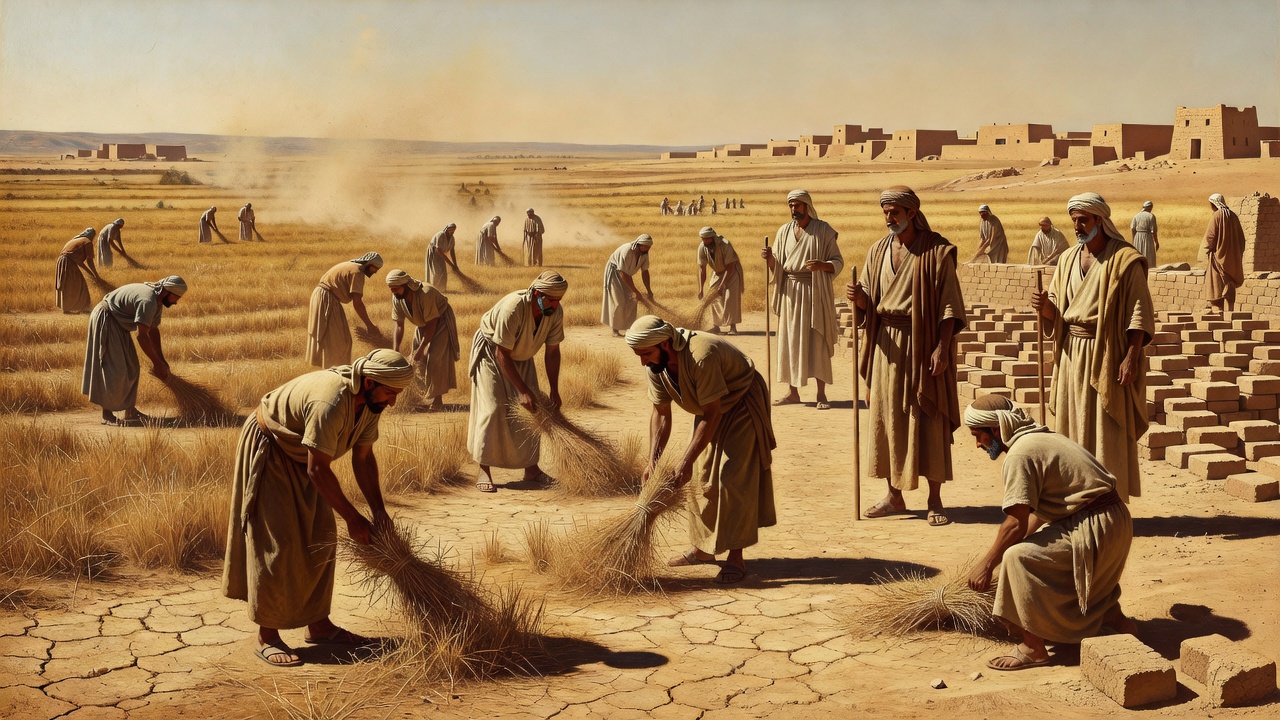
6Ese mismo día, el faraón les envió la siguiente orden a sus cuadrilleros y a los capataces que tenían que vigilar el trabajo del pueblo de Israel: 7«No se entregará más paja a los hebreos para la elaboración de los ladrillos. Sin embargo, no se les disminuirá en un solo ladrillo su cuota de producción, porque parecen no tener suficiente trabajo. De otro modo no hablarían de ir al desierto a ofrecerle sacrificio a su Dios. 9¡Cárguenlos de trabajo y háganlos sudar! ¡Eso les enseñará a no prestar oídos a las mentiras de Moisés y de Aarón!».
10Los cuadrilleros y los capataces le informaron al pueblo:
―El faraón ha dado órdenes de que no les proporcionemos la paja para los ladrillos. Deben ir ustedes mismos a buscarla a donde puedan. Y deberán producir tantos ladrillos como antes.
12Y el pueblo se dispersó en busca de paja. 13Los cuadrilleros fueron muy crueles: «Completen la misma cuota de producción de antes» les decían. 14Y azotaban a los capataces israelitas que habían nombrado, y les decían: «Ni ayer ni anteayer cumplieron con la cuota diaria de producción de ladrillos, ¿por qué?».
15Los capataces fueron a quejarse al faraón, y le rogaron:
―¡No nos traten así! 16No se nos proporciona la paja que necesitamos y se nos exige que hagamos la misma cantidad de ladrillos que antes. Se nos está azotando por algo que no es culpa nuestra. Es culpa de los cuadrilleros que nos hacen demandas tan irrazonables.
17Pero el faraón replicó:
―Ustedes no tienen suficiente trabajo; de lo contrario no estarían diciendo: “Vamos a ofrecerle sacrificios al Señor”. 18¡Vuelvan al trabajo! No se les dará paja, y tendrán que cumplir con la misma cuota de ladrillos.
19Los capataces vieron que estaban en una situación realmente difícil. 20Al salir de la entrevista con el faraón, encontraron a Moisés y a Aarón, que los esperaban afuera del palacio, 21y les dijeron: «Que Dios los juzgue por habernos hecho odiosos al faraón y a su pueblo. Ustedes le han dado una excusa para que nos mate».
Dios promete liberación
22Entonces Moisés oró al Señor, y le dijo:
― Señor, ¿cómo puedes maltratar a tu pueblo de esta manera? ¿Por qué me enviaste, si ibas a hacerles esto? 23Desde que le di tu mensaje al faraón, los ha tratado en forma aún más brutal, y tú no has librado a tu pueblo.
Did you know?
Harder Work After Pharaoh's Refusal
- Easton's Bible Dictionary (1897) says the Pharaoh of the Exodus was probably Menephtah I, the fourteenth and eldest surviving son of Rameses II, but it treats the identification as still an open question: some scholars, it notes, favor Seti II, whose reign it describes as beginning peacefully and ending in sudden disaster. The entry says he resided at Zoan, where he received Moses and Aaron in the interviews recorded in Exodus.Sources: Pharaoh (of the Exodus) · the Bible text itself
- Easton's Bible Dictionary (1897) places Jacob's arrival in Egypt probably about 350 years before Moses was born. It says a Hyksos king, from a pastoral Semitic people of Asia and called a shepherd king, received the family favorably and assigned them Goshen, the best of the land; in this chapter Pharaoh treats the people of Israel, now numerous, as laborers he will not let go.Sources: Moses · the Bible text itself
- Pharaoh answers the request to hold a feast in the wilderness by no longer supplying straw for the bricks, while still requiring the same daily quota. The people scatter through the land of Egypt to gather stubble, and the Israelite foremen whom Pharaoh's taskmasters had set over them are beaten when that quota is not met.Sources: the Bible text itself
Notes written with AI assistance from open sources (Theographic Bible Metadata, CC BY-SA 4.0; Easton’s Bible Dictionary, public domain) and reviewed before publishing.
Places in this chapter
Only places identified with high confidence are shown (90% or more according to the scholarly sources compiled by OpenBible). Period map: DARE (Digital Atlas of the Roman Empire), CC BY 4.0; modern map: © OpenStreetMap contributors; places: OpenBible.info (CC BY 4.0).
Credits and license for this translation
Biblica® Open Nueva Biblia Viva 2008
The Holy Bible in Spanish: Biblica® Open Nueva Biblia Viva 2008 (Bible)
copyright © 2008 Biblica, Inc.
Language: Español
Contributor: Biblica, Inc.
Biblica® Open Nueva Biblia Viva™
Copyright © 2006, 2008 by Biblica, Inc.
“Biblica” es una marca registrada en la oficina de Patentes y Marcas de los Estados Unidos por Biblica, Inc. Usado con permiso.
“Biblica” is a trademark registered in the United States Patent and Trademark Office by Biblica, Inc. Used with permission.
Creative Commons license
This work is made available under the Creative Commons Attribution-ShareAlike 4.0 International License (CC BY-SA). To view a copy of this license, visit https://creativecommons.org/licenses/by-sa/4.0 or send a letter to Creative Commons, PO Box 1866, Mountain View, CA 94042, USA.
You have permission to copy and distribute this Work, as long as you do not change it and you keep the title as it is. Changing or translating this Work will create a derivative work. When you publish this derivative work, you must list what changes you have made where people can see them, such as on a website. You must also show where the original Work is from: “The original Work by its copyright holders is available for free at www.biblica.com and open.bible .”
Notice of copyright must appear on the title or copyright page of the work as follows:
Biblica® Open Nueva Biblia Viva™
Copyright © 2006, 2008 by Biblica, Inc.
“Biblica” es una marca registrada en la oficina de Patentes y Marcas de los Estados Unidos por Biblica, Inc. Usado con permiso.
“Biblica” is a trademark registered in the United States Patent and Trademark Office by Biblica, Inc. Used with permission.
You must also make your derivative work available under the same license (CC BY-SA).
If you would like to notify Biblica, Inc. regarding your translation of this work, please contact us at https://open.bible/#feedback .
This translation is made available to you under the terms of the
Creative Commons Attribution Share-Alike license 4.0.
You have permission to share and redistribute this Bible translation in any format and to make reasonable revisions and adaptations of this translation, provided that:
You include the above copyright and source information.
If you make any changes to the text, you must indicate that you did so in a way that makes it clear that the original licensor is not necessarily endorsing your changes.
If you redistribute this text, you must distribute your contributions under the same license as the original.
Pictures included with Scriptures and other documents on this site are licensed just for use with those Scriptures and documents.
For other uses, please contact the respective copyright owners.
Note that in addition to the rules above, revising and adapting God's Word involves a great responsibility to be true to God's Word. See Revelation 22:18-19.
2025-05-21
Source: http://ebible.org/spaonbv/ · eBible.org