Exodus 3
Biblica® Open Nueva Biblia Viva 2008 · Tap a verse to see its cross-references.
Moisés y la zarza ardiente
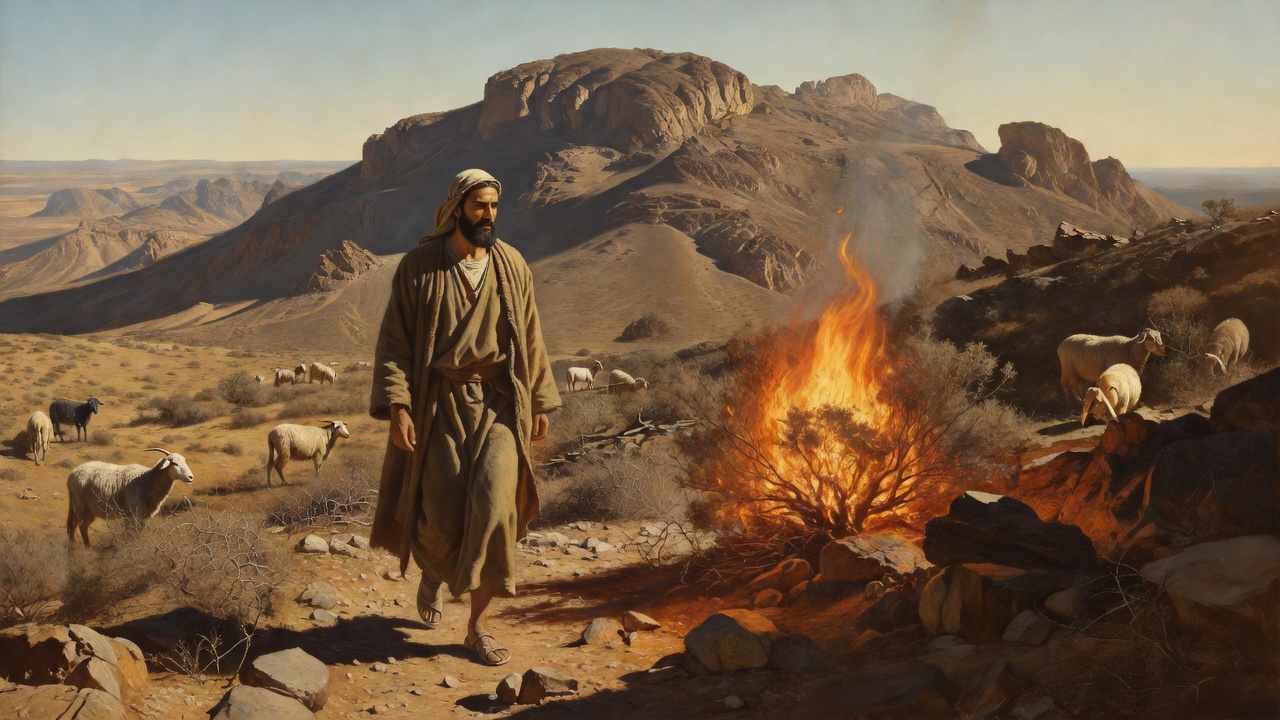
1Un día, mientras Moisés pastoreaba los rebaños de su suegro Jetro, sacerdote de Madián, al otro lado del desierto, cerca de Horeb, monte de Dios, 2repentinamente se le apareció el ángel del Señor, como llamas de fuego en una zarza. Cuando Moisés vio que la zarza ardía sin quemarse, 3se acercó para ver bien lo que pasaba. Pero el Señor lo llamó:
―¡Moisés, Moisés!
―¿Quién me llama? —preguntó Moisés.
5―No te acerques —le dijo Dios—. ¡Quítate las sandalias, porque estás pisando tierra santa! 6Yo soy el Dios de tus padres, el Dios de Abraham, de Isaac y de Jacob.
Moisés se cubrió el rostro con ambas manos, porque tenía miedo de mirar a Dios.
7―He visto los profundos sufrimientos de mi pueblo en Egipto —le dijo el Señor—, y he oído sus oraciones en que piden liberación de sus duros capataces. 8He venido a liberarlos de sus opresores egipcios y a llevarlos a una tierra buena y grande, tierra de la que fluye leche y miel, tierra en que viven los cananeos, los hititas, los amorreos, los ferezeos, los heveos y los jebuseos. 9Sí, el clamor del pueblo de Israel ha ascendido hasta mi presencia, y he visto las pesadas tareas con que los egipcios los han oprimido. 10Ahora te voy a enviar al faraón, para que saques a mi pueblo de Egipto.
11―Pero, yo no soy la persona adecuada para esta tarea —le dijo Moisés a Dios.
12―Ciertamente estaré contigo —le dijo Dios—, y esta es la demostración de que yo soy el que te envío: cuando hayas sacado al pueblo de Egipto, tú y el pueblo me adorarán sobre esta montaña.
13Pero Moisés dijo:
―Si yo voy al pueblo de Israel y les digo que me envió el Dios de sus padres, ellos me preguntarán: “¿De qué Dios nos estás hablando?”. ¿Qué les diré?
14Entonces Dios le respondió a Moisés:
―Diles que te envía el Dios eterno, pues YO SOY EL QUE SOY. ¡Mi nombre es YO SOY! Simplemente diles: “ YO SOY es el que me ha enviado”.
15Además, Dios agregó:
―Diles a los israelitas: “El Señor, el Dios de sus antepasados Abraham, Isaac y Jacob me ha enviado a ustedes. Este es mi nombre eterno y por este nombre seré conocido a través de las generaciones”.
16»Convoca a todos los ancianos de Israel y diles que el Señor se te apareció en esta zarza ardiente y que te dijo: “He visitado a mi pueblo y he visto lo que les ocurre en Egipto. 17Prometo rescatarlos de la esclavitud y humillación que están soportando, y llevarlos a la tierra que ahora ocupan los cananeos, los hititas, los amorreos, los ferezeos, los heveos y los jebuseos, tierra que fluye leche y miel”. 18Los ancianos del pueblo aceptarán tu mensaje, e irán contigo ante el faraón a decirle: “El Señor, el Dios de los hebreos, ha venido a visitarnos y nos ha dado órdenes de ir tres días de camino por el desierto, para ofrecerle sacrificio. Así que te pedimos que nos dejes ir”. 19Pero yo sé que el faraón no les dará permiso, a menos que se haga sobre él mucha presión. 20Yo me encargaré de presionarlo hasta que los deje salir. 21Además, haré que los egipcios los carguen de obsequios en el momento de salir, para que no salgan con las manos vacías. 22Cada mujer pedirá joyas, plata, oro y los vestidos más finos de sus vecinas y de las amigas de estas. Así ustedes vestirán a sus hijos e hijas con lo mejor de Egipto. De esa manera ustedes se quedarán con los objetos más valiosos de los egipcios».
Did you know?
The Call of Moses at the Burning Bush
- Moses is shepherding in Midian when this chapter begins. The Midianites were a nomadic Arabian tribe descended from Midian, Abraham's fourth son by Keturah, whose name is explained as strife. They lived chiefly in the desert north of Arabia, and the Sinai peninsula was grazing land for their flocks; it was there, after fleeing Egypt, that Moses became a servant and then the priest's son-in-law.Sources: the Bible text itself · Midian · Midian
- His father-in-law is Jethro, called the priest of Midian. Easton's Bible Dictionary (1897) equates that priest with Raguel and says that, if the two names belong to one man, Raguel may be regarded as his personal name and Jethro, meaning excellency, as an official title.Sources: the Bible text itself · Jethro
- Moses leads the flock to Horeb, the mountain of God. The name is explained as desert, or mountain, of the dried-up ground, a general term for the whole range of which Sinai was one summit; Easton's Bible Dictionary (1897) gives the modern name of the range as Jebel Musa and describes a huge block about two miles long and about one mile wide, with a very spacious plain called Er Rahah at its north-east end, where the Israelites later camped for nearly a year.Sources: the Bible text itself · Horeb
Notes written with AI assistance from open sources (Theographic Bible Metadata, CC BY-SA 4.0; Easton’s Bible Dictionary, public domain) and reviewed before publishing.
Places in this chapter
- Midian · 28.495, 35.012 · verse 1
- Mount Horeb · Today: Jebel Musa · 28.540, 33.973 · verse 1
- Egypt · 30.129, 31.308 · verses 7, 8, 10, 11, 12, 16, 17, 18, 19, 20, 22
Only places identified with high confidence are shown (90% or more according to the scholarly sources compiled by OpenBible). Period map: DARE (Digital Atlas of the Roman Empire), CC BY 4.0; modern map: © OpenStreetMap contributors; places: OpenBible.info (CC BY 4.0).
Credits and license for this translation
Biblica® Open Nueva Biblia Viva 2008
The Holy Bible in Spanish: Biblica® Open Nueva Biblia Viva 2008 (Bible)
copyright © 2008 Biblica, Inc.
Language: Español
Contributor: Biblica, Inc.
Biblica® Open Nueva Biblia Viva™
Copyright © 2006, 2008 by Biblica, Inc.
“Biblica” es una marca registrada en la oficina de Patentes y Marcas de los Estados Unidos por Biblica, Inc. Usado con permiso.
“Biblica” is a trademark registered in the United States Patent and Trademark Office by Biblica, Inc. Used with permission.
Creative Commons license
This work is made available under the Creative Commons Attribution-ShareAlike 4.0 International License (CC BY-SA). To view a copy of this license, visit https://creativecommons.org/licenses/by-sa/4.0 or send a letter to Creative Commons, PO Box 1866, Mountain View, CA 94042, USA.
You have permission to copy and distribute this Work, as long as you do not change it and you keep the title as it is. Changing or translating this Work will create a derivative work. When you publish this derivative work, you must list what changes you have made where people can see them, such as on a website. You must also show where the original Work is from: “The original Work by its copyright holders is available for free at www.biblica.com and open.bible .”
Notice of copyright must appear on the title or copyright page of the work as follows:
Biblica® Open Nueva Biblia Viva™
Copyright © 2006, 2008 by Biblica, Inc.
“Biblica” es una marca registrada en la oficina de Patentes y Marcas de los Estados Unidos por Biblica, Inc. Usado con permiso.
“Biblica” is a trademark registered in the United States Patent and Trademark Office by Biblica, Inc. Used with permission.
You must also make your derivative work available under the same license (CC BY-SA).
If you would like to notify Biblica, Inc. regarding your translation of this work, please contact us at https://open.bible/#feedback .
This translation is made available to you under the terms of the
Creative Commons Attribution Share-Alike license 4.0.
You have permission to share and redistribute this Bible translation in any format and to make reasonable revisions and adaptations of this translation, provided that:
You include the above copyright and source information.
If you make any changes to the text, you must indicate that you did so in a way that makes it clear that the original licensor is not necessarily endorsing your changes.
If you redistribute this text, you must distribute your contributions under the same license as the original.
Pictures included with Scriptures and other documents on this site are licensed just for use with those Scriptures and documents.
For other uses, please contact the respective copyright owners.
Note that in addition to the rules above, revising and adapting God's Word involves a great responsibility to be true to God's Word. See Revelation 22:18-19.
2025-05-21
Source: http://ebible.org/spaonbv/ · eBible.org