Ecclesiastes 1
Biblica® Open Nueva Biblia Viva 2008 · Tap a verse to see its cross-references.
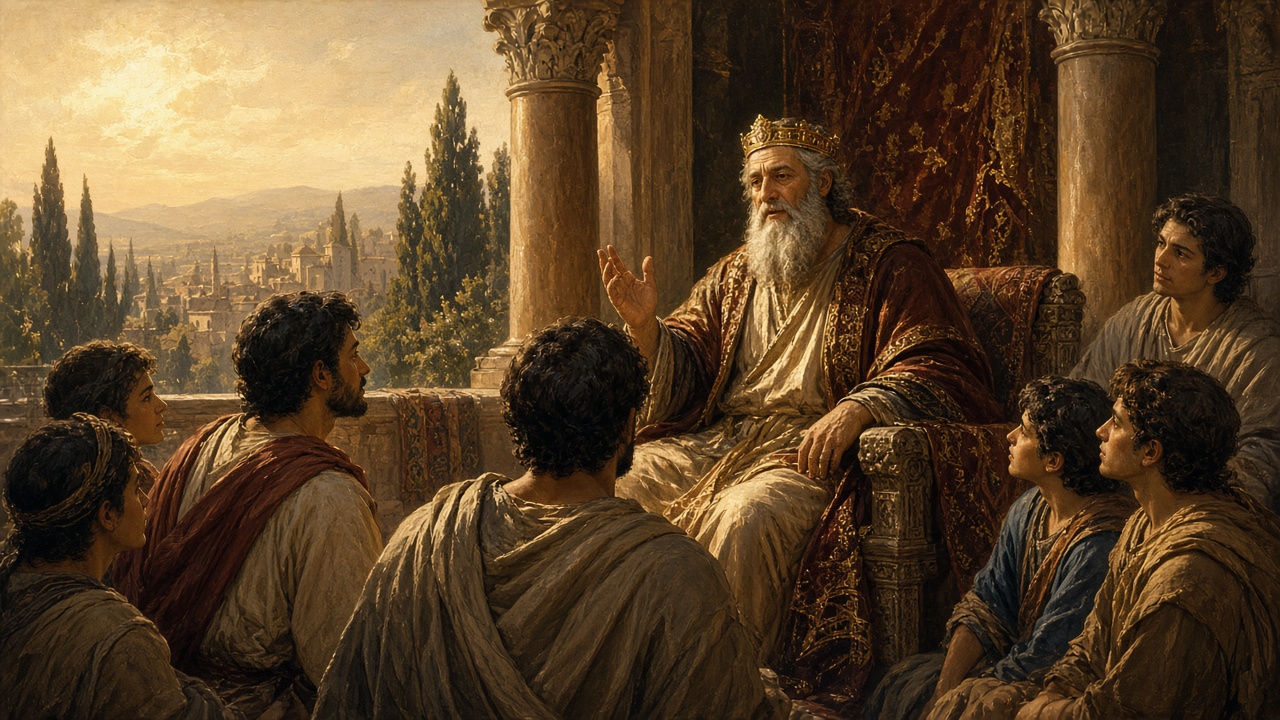
About this book
About Ecclesiastes
- Ecclesiastes is the Greek rendering of the Hebrew Koheleth, which means “Preacher.”Sources: Easton: Ecclesiastes
- The old and traditional view attributes the book to Solomon, and the writer represents himself implicitly as Solomon (1:12). Others date it from the Captivity.Sources: Easton: Ecclesiastes
- It has been styled “The Confession of King Solomon.” Its keynote, in chapter 1 verse 2, is “Vanity of vanities! saith the Preacher, Vanity of vanities! all is vanity!” Easton's Bible Dictionary (1897) explains this as meaning that all human efforts to find happiness apart from God are without result.Sources: Easton: Ecclesiastes
- Easton's Bible Dictionary (1897) describes the writer as a man who gave way to selfishness and sensuality, paid the penalty of that sin in satiety and weariness of life, and yet, under the discipline of a divine education, learned the lesson God meant to teach him. The writer concludes that the secret of a true life is that a man should consecrate the vigor of his youth to God.Sources: Easton: Ecclesiastes
Notes written with AI assistance from open sources (Theographic Bible Metadata, CC BY-SA 4.0; Easton’s Bible Dictionary, public domain) and reviewed before publishing.
Discurso inicial
1Estas son las palabras del Predicador, hijo de David, rey de Jerusalén.
2Según mi entender, nada vale la pena; todo es vano. 3Pues, ¿qué obtiene la gente de todo su trabajo?
Generaciones vienen y generaciones van y todo sigue igual. Sale el sol y se pone, y en rápido giro vuelve a surgir. Sopla el viento del sur y del norte, aquí y allá, yendo y volviendo, sin ir a ninguna parte. Los ríos desembocan en el mar y este nunca se llena, y el agua vuelve a los ríos y nuevamente fluye hacia el mar. 8Todo es indecible fastidio y fatiga. Por más que vemos, jamás nos satisfacemos; por más que oímos, no estamos contentos.
La historia es simple repetición. Nada hay realmente nuevo; todo ha sido hecho o dicho antes. ¿Puedes tú indicar algo que sea nuevo? ¿Cómo sabes que no existió ya en remotas edades? No recordamos lo ocurrido en aquellos tiempos antiguos, y en las futuras generaciones nadie recordará lo que hayamos hecho ahora.
Primeras conclusiones
12Yo, el Predicador, fui rey de Israel y viví en Jerusalén. Y en busca de conocimientos me dediqué a investigarlo todo en el universo. Descubrí que la suerte del ser humano, que Dios le ha señalado, no es un camino feliz. Todo es insensatez; todo es perseguir el viento. Lo torcido no puede enderezarse: es agua pasada; y de nada vale soñar con lo que pudiera haber sido.
16Yo me dije: «Fíjate, soy más instruido que cualquiera de los reyes que me precedieron en Jerusalén. Tengo más sabiduría y conocimientos». Así es que me esforcé por ser sabio en vez de necio, pero hoy reconozco que aun eso fue perseguir el viento. Pues cuanto mayor era mi sabiduría, tanto más grande era mi pena; aumentar el conocimiento es sólo aumentar el dolor.
Did you know?
The Search for Meaning and the Cycles of Life
- The speaker introduces himself as the Teacher, identified as a son of David and king ruling in Jerusalem. In the biblical narrative, King David's line ruled from Jerusalem, a fortified mountain city often associated with wisdom and royal authority.Sources: the Bible text itself · David · Jerusalem
- To illustrate the repetitive and wearisome nature of human toil, the author points to ongoing natural cycles, such as the rising and setting of the sun, shifting wind patterns, and rivers flowing into the sea without ever filling it.Sources: the Bible text itself
- Although the speaker sets his mind to explore all human actions through extensive wisdom and knowledge, he concludes that gaining deeper understanding also brings increased sorrow and grief.Sources: the Bible text itself
Notes written with AI assistance from open sources (Theographic Bible Metadata, CC BY-SA 4.0; Easton’s Bible Dictionary, public domain) and reviewed before publishing.
Places in this chapter
Only places identified with high confidence are shown (90% or more according to the scholarly sources compiled by OpenBible). Period map: DARE (Digital Atlas of the Roman Empire), CC BY 4.0; modern map: © OpenStreetMap contributors; places: OpenBible.info (CC BY 4.0).
Credits and license for this translation
Biblica® Open Nueva Biblia Viva 2008
The Holy Bible in Spanish: Biblica® Open Nueva Biblia Viva 2008 (Bible)
copyright © 2008 Biblica, Inc.
Language: Español
Contributor: Biblica, Inc.
Biblica® Open Nueva Biblia Viva™
Copyright © 2006, 2008 by Biblica, Inc.
“Biblica” es una marca registrada en la oficina de Patentes y Marcas de los Estados Unidos por Biblica, Inc. Usado con permiso.
“Biblica” is a trademark registered in the United States Patent and Trademark Office by Biblica, Inc. Used with permission.
Creative Commons license
This work is made available under the Creative Commons Attribution-ShareAlike 4.0 International License (CC BY-SA). To view a copy of this license, visit https://creativecommons.org/licenses/by-sa/4.0 or send a letter to Creative Commons, PO Box 1866, Mountain View, CA 94042, USA.
You have permission to copy and distribute this Work, as long as you do not change it and you keep the title as it is. Changing or translating this Work will create a derivative work. When you publish this derivative work, you must list what changes you have made where people can see them, such as on a website. You must also show where the original Work is from: “The original Work by its copyright holders is available for free at www.biblica.com and open.bible .”
Notice of copyright must appear on the title or copyright page of the work as follows:
Biblica® Open Nueva Biblia Viva™
Copyright © 2006, 2008 by Biblica, Inc.
“Biblica” es una marca registrada en la oficina de Patentes y Marcas de los Estados Unidos por Biblica, Inc. Usado con permiso.
“Biblica” is a trademark registered in the United States Patent and Trademark Office by Biblica, Inc. Used with permission.
You must also make your derivative work available under the same license (CC BY-SA).
If you would like to notify Biblica, Inc. regarding your translation of this work, please contact us at https://open.bible/#feedback .
This translation is made available to you under the terms of the
Creative Commons Attribution Share-Alike license 4.0.
You have permission to share and redistribute this Bible translation in any format and to make reasonable revisions and adaptations of this translation, provided that:
You include the above copyright and source information.
If you make any changes to the text, you must indicate that you did so in a way that makes it clear that the original licensor is not necessarily endorsing your changes.
If you redistribute this text, you must distribute your contributions under the same license as the original.
Pictures included with Scriptures and other documents on this site are licensed just for use with those Scriptures and documents.
For other uses, please contact the respective copyright owners.
Note that in addition to the rules above, revising and adapting God's Word involves a great responsibility to be true to God's Word. See Revelation 22:18-19.
2025-05-21
Source: http://ebible.org/spaonbv/ · eBible.org