1 Corinthians 1
Biblica® Open Nueva Biblia Viva 2008 · Tap a verse to see its cross-references.
About this book
About 1 Corinthians
- Easton's Bible Dictionary (1897) presents the First Epistle to the Corinthians as a letter of the apostle Paul, written from Ephesus, the capital of proconsular Asia, about the time of the Passover in the third year of his stay there, probably in A.D. 57, when he planned to visit Macedonia and then return to Corinth.Sources: Easton: Corinthians, First Epistle to the · Ephesus
- Corinth lay on the isthmus linking the Peloponnesus to the mainland of Greece, about forty-eight miles west of Athens. The city known in the New Testament had been rebuilt about a century after the Romans destroyed the ancient city in 146 B.C., was settled by a colony of freedmen from Rome, and became the seat of government for southern Greece, the province of Achaia; it was noted for its wealth and for the luxurious and immoral habits of its people.Sources: Corinth · Achaia
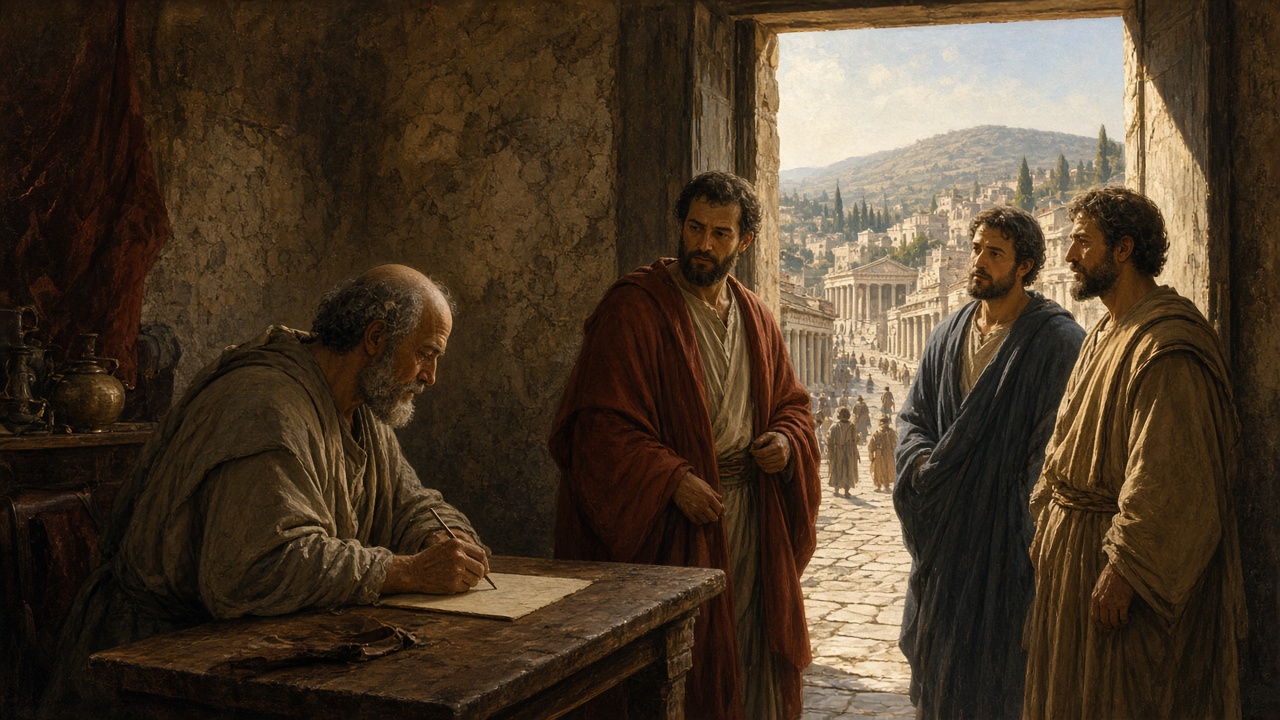
- According to Easton, news of abuses and contentions reached Paul first from Apollos, then from a letter the Corinthians had written him, from members of the household of Chloe, and from Stephanas and two friends who visited him. Stephanas was a member of the church at Corinth, and his household was among those Paul had baptized; Apollos, a Jew of Alexandria who had worked in Corinth, had disciples there who were strongly attached to him. Paul wrote to check the factious spirit, correct erroneous opinions, and remedy disorderly practices, and Easton thinks Titus and an unnamed brother probably carried the letter.Sources: Easton: Corinthians, First Epistle to the · Apollos · Stephanas
- Easton divides the letter into four parts: the divisions and party strife among the Corinthians (chapters 1-4); notorious cases of immorality (chapters 5-6); questions of doctrine and of Christian ethics raised by their communications, especially abuses in the celebration of the Lord's Supper (chapters 7-14); and a defense of the resurrection of the dead, which some among them had questioned, followed by general instructions, notices, and greetings (chapters 15-16).Sources: Easton: Corinthians, First Epistle to the
- The subscription in the Authorized Version erroneously states that the letter was written at Philippi; Easton traces that error to a mistranslation of 1 Corinthians 16:5. He also notes that Paul described the writing as done out of much affliction and pressure of heart, and with streaming eyes.Sources: Easton: Corinthians, First Epistle to the
Notes written with AI assistance from open sources (Theographic Bible Metadata, CC BY-SA 4.0; Easton’s Bible Dictionary, public domain) and reviewed before publishing.
1Pablo, llamado a ser apóstol de Cristo Jesús porque Dios así lo quiso, y nuestro hermano Sóstenes,
2a la iglesia de Dios que está en Corinto, a los que han sido santificados en Cristo Jesús y llamados a ser un pueblo santo, junto con todos los que en cualquier lugar invocan el nombre de nuestro Señor Jesucristo, Señor de ellos y nuestro.
3Que Dios nuestro Padre y el Señor Jesucristo derramen en ustedes su amor y su paz.
Acción de gracias
4No ceso de dar gracias a Dios que les concedió su amor por medio de Cristo. 5Unidos a Cristo, ustedes se han llenado de toda riqueza, tanto en el hablar como en el conocimiento. 6Todo lo que les dije de Cristo se ha confirmado en ustedes, 7porque no les falta ya ningún don espiritual, mientras esperan con ansias el regreso de nuestro Señor Jesucristo.
8Él los mantendrá firmes hasta el fin, para que nadie los pueda culpar de nada en el día de nuestro Señor Jesucristo. 9Dios siempre cumple su palabra, y él los llamó a vivir unidos a su Hijo, Jesucristo, nuestro Señor.
Divisiones en la iglesia
10Pero, amados hermanos, les suplico en el nombre de nuestro Señor Jesucristo que no discutan más, que reine entre ustedes la armonía y cesen las divisiones. Les ruego encarecidamente que mantengan la unidad en sus pensamientos y propósitos.
11Resulta, hermanos míos, que los de la familia de Cloé me han hablado de las riñas que se traen entre ustedes. 12Me cuentan que algunos dicen: «Yo soy de Pablo»; y que otros afirman: «Yo soy de Apolos»; otros más dicen: «Yo soy de Cefas», y aun sostienen: «Yo soy de Cristo».
13¿Cómo? ¿Está dividido Cristo? A ver, díganme, ¿morí yo por los pecados de ustedes? ¿Fue alguno bautizado en mi nombre?
14¡Gracias a Dios que a ninguno de ustedes bauticé excepto a Crispo y a Gayo! 15Así a nadie podría ocurrírsele que fue bautizado en mi nombre. 16Ah, y también bauticé a la familia de Estéfanas. Creo que no bauticé a nadie más, 17porque Cristo no me envió a bautizar sino a predicar el evangelio. Es más, mi predicación fue sin usar discursos propios de la sabiduría humana, para que el mensaje de la cruz de Cristo no perdiera su eficacia.
Cristo, sabiduría y poder de Dios
18Sé bien que, para los perdidos, el mensaje de la cruz es una locura, pero para los salvos, esto es, para nosotros, es poder de Dios, 19porque Dios mismo dice:
«Destruiré los planes humanos por sabios que parezcan, y haré caso omiso de las ideas humanas por más brillantes que sean».
20¿Qué ha sido de los sabios, de los eruditos, de los filósofos de este mundo? Dios los ha hecho lucir tontos al mostrar lo necio de su sabiduría. 21En su sabiduría, Dios dispuso que el mundo jamás lo encontraría por medio de la inteligencia humana, y determinó salvar precisamente a los que creen por medio de la «locura» de la predicación.
22Los judíos piden señales milagrosas y los gentiles buscan sabiduría. 23Por eso, cuando les predicamos a Cristo crucificado, los judíos se escandalizan y los griegos dicen que es una locura. 24Pero para los llamados, ya sean judíos o gentiles, Cristo es el poder de Dios y la sabiduría de Dios.
25Pues la locura de Dios es mucho más sabia que el más sabio plan humano, y lo débil de Dios es más fuerte que todos los hombres juntos.
26Fíjense, hermanos, en los que Dios ha llamado entre ustedes: pocos son sabios, poderosos o nobles, según los criterios humanos. 27Deliberadamente Dios ha escogido a los que el mundo considera tontos y débiles, para avergonzar a los que el mundo considera sabios y fuertes. 28Ha escogido a los que en el mundo no tienen importancia alguna, para destronar a los que el mundo considera grandes. 29De modo que nadie pueda jactarse en la presencia del Señor. 30Por Dios es por quien ustedes están unidos a Cristo Jesús, a quien Dios ha hecho nuestra sabiduría, nuestra justificación, nuestra santificación y nuestra redención. 31A fin de cuentas, como dicen las Escrituras:
«El que quiera sentirse orgulloso, que se enorgullezca de lo que el Señor ha hecho».
Did you know?
Divisions and the Cross in Corinth
- Corinth, the city addressed in this letter, stood on the isthmus joining the Peloponnesus to the mainland of Greece, about forty-eight miles west of Athens. The Romans destroyed the ancient city in 146 B.C.; the Corinth of the New Testament was a new city, rebuilt about a century later and settled by a colony of freedmen from Rome. Under Roman rule it was the seat of government for southern Greece, or Achaia, and was noted for its wealth.Sources: Corinth · the Bible text itself
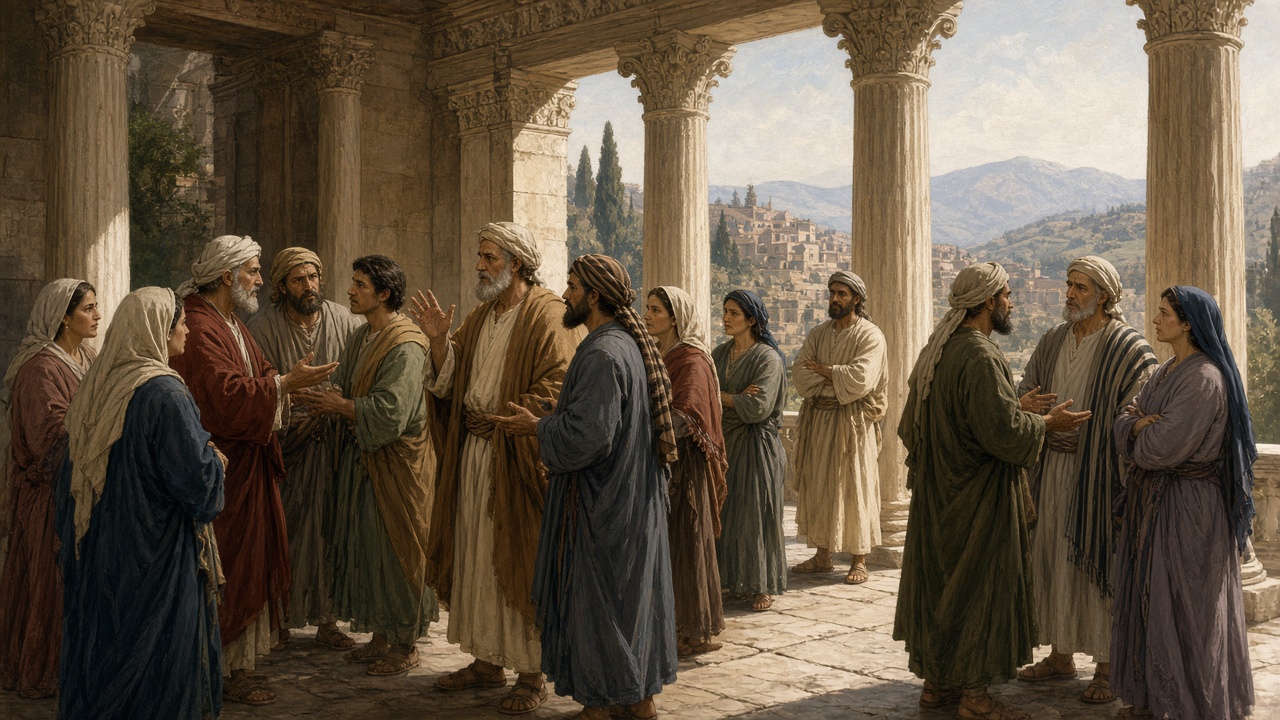
- Paul writes that some from Chloe's household had informed him of quarrels, with people claiming to follow Paul, Apollos, Cephas, or Christ. Chloe was a Christian woman, and nothing else is known of her. Apollos, a Jew from Alexandria, eloquent and well versed in the Scriptures, went on to Corinth after Aquila and Priscilla instructed him in Ephesus, and there he helped water the seed Paul had sown.Sources: Chloe · Apollos · the Bible text itself
- Paul thanks God that he baptized only Crispus and Gaius, and also the household of Stephanas, so that no one could say they had been baptized in his name. Crispus, chief of the synagogue at Corinth, was converted and baptized with his family; Stephanas was a member of that church whose household Paul baptized. Christ, Paul says, sent him not to baptize but to preach the gospel, not with words of wisdom, lest the cross of Christ be emptied of its power.Sources: Crispus · Stephanas · the Bible text itself
Notes written with AI assistance from open sources (Theographic Bible Metadata, CC BY-SA 4.0; Easton’s Bible Dictionary, public domain) and reviewed before publishing.
Places in this chapter
- Corinth · 37.906, 22.879 · verse 2
Only places identified with high confidence are shown (90% or more according to the scholarly sources compiled by OpenBible). Period map: DARE (Digital Atlas of the Roman Empire), CC BY 4.0; modern map: © OpenStreetMap contributors; places: OpenBible.info (CC BY 4.0).
Credits and license for this translation
Biblica® Open Nueva Biblia Viva 2008
The Holy Bible in Spanish: Biblica® Open Nueva Biblia Viva 2008 (Bible)
copyright © 2008 Biblica, Inc.
Language: Español
Contributor: Biblica, Inc.
Biblica® Open Nueva Biblia Viva™
Copyright © 2006, 2008 by Biblica, Inc.
“Biblica” es una marca registrada en la oficina de Patentes y Marcas de los Estados Unidos por Biblica, Inc. Usado con permiso.
“Biblica” is a trademark registered in the United States Patent and Trademark Office by Biblica, Inc. Used with permission.
Creative Commons license
This work is made available under the Creative Commons Attribution-ShareAlike 4.0 International License (CC BY-SA). To view a copy of this license, visit https://creativecommons.org/licenses/by-sa/4.0 or send a letter to Creative Commons, PO Box 1866, Mountain View, CA 94042, USA.
You have permission to copy and distribute this Work, as long as you do not change it and you keep the title as it is. Changing or translating this Work will create a derivative work. When you publish this derivative work, you must list what changes you have made where people can see them, such as on a website. You must also show where the original Work is from: “The original Work by its copyright holders is available for free at www.biblica.com and open.bible .”
Notice of copyright must appear on the title or copyright page of the work as follows:
Biblica® Open Nueva Biblia Viva™
Copyright © 2006, 2008 by Biblica, Inc.
“Biblica” es una marca registrada en la oficina de Patentes y Marcas de los Estados Unidos por Biblica, Inc. Usado con permiso.
“Biblica” is a trademark registered in the United States Patent and Trademark Office by Biblica, Inc. Used with permission.
You must also make your derivative work available under the same license (CC BY-SA).
If you would like to notify Biblica, Inc. regarding your translation of this work, please contact us at https://open.bible/#feedback .
This translation is made available to you under the terms of the
Creative Commons Attribution Share-Alike license 4.0.
You have permission to share and redistribute this Bible translation in any format and to make reasonable revisions and adaptations of this translation, provided that:
You include the above copyright and source information.
If you make any changes to the text, you must indicate that you did so in a way that makes it clear that the original licensor is not necessarily endorsing your changes.
If you redistribute this text, you must distribute your contributions under the same license as the original.
Pictures included with Scriptures and other documents on this site are licensed just for use with those Scriptures and documents.
For other uses, please contact the respective copyright owners.
Note that in addition to the rules above, revising and adapting God's Word involves a great responsibility to be true to God's Word. See Revelation 22:18-19.
2025-05-21
Source: http://ebible.org/spaonbv/ · eBible.org