1 Chronicles 2
Biblica® Open Nueva Biblia Viva 2008 · Tap a verse to see its cross-references.
Hijos de Israel
1Los hijos de Israel fueron: Rubén, Simeón, Leví, Judá, Isacar, Zabulón, 2Dan, José, Benjamín, Neftalí, Gad y Aser.
Descendientes de Judá
3Judá tuvo tres hijos de una mujer de Canaán, hija de Súaj, que fueron: Er, Onán y Selá. Pero el hijo mayor, Er, era tan malvado que el Señor le quitó la vida.
4Entonces la viuda de Er, llamada Tamar, y su suegro Judá, tuvieron hijos gemelos, Fares y Zera. Así que Judá tuvo cinco hijos.
5Los hijos de Fares fueron Jezrón y Jamul.
6Los hijos de Zera fueron: Zimri, Etán, Hemán, Calcol y Dardá.
7Acar hijo de Carmí fue el hombre que provocó la desgracia sobre el pueblo de Israel, pues desobedeció la orden de Dios de destruir todo lo que había en la ciudad de Jericó.
8El hijo de Etán fue Azarías.
9Los hijos de Jezrón fueron Jeramel, Ram, y Quelubay.
10Ram fue el padre de Aminadab, y Aminadab fue el padre de Naasón, dirigente del pueblo de Israel.
11Naasón fue el padre de Salmón, y Salmón fue el padre de Booz. 12Booz fue el padre de Obed, y Obed fue el padre de Isaí.
13El hijo primogénito de Isaí fue Eliab; el segundo, Abinadab; el tercero, Simá; 14el cuarto, Natanael; el quinto, Raday; 15el sexto, Ozén, y el séptimo fue David. 16También tuvo dos hijas de la misma esposa, cuyos nombres fueron Sarvia y Abigaíl.
Los hijos de Sarvia fueron Abisay, Joab y Asael.
17Abigaíl, cuyo marido fue Jéter, de la tierra de los ismaelitas, tuvo un hijo llamado Amasá.
18Caleb hijo de Jezrón tuvo dos esposas, Azuba y Jeriot. Los hijos de Azuba fueron Jéser, Sobab y Ardón.
19Después de la muerte de Azuba, Caleb se casó con Efrata, la cual dio a luz un hijo llamado Jur. 20El hijo de Jur fue Uri, y el hijo de Uri fue Bezalel.
21A la edad de sesenta años, Jezrón se casó con una hija de Maquir, la cual dio a luz un hijo cuyo nombre fue Segub. Maquir fue también padre de Galaad.
22Segub fue padre de Yaír, quien gobernaba veintitrés ciudades en la tierra de Galaad. 23Pero Guesur y Aram le arrebataron las ciudades de Yaír y Quenat, junto con sus aldeas.
Así que estos fueron los descendientes de Maquir, el padre de Galaad.
24Después de la muerte de Jezrón en Caleb Efrata, su esposa Abías tuvo un hijo llamado Asur, que fue el padre de Tecoa.
25Los siguientes fueron los hijos de Jeramel, que fue el primogénito de Jezrón: Ram, el mayor, Buná, Orén, Ozén y Ahías.
26Atará, la segunda esposa de Jeramel, fue la madre de Onam.
27Los hijos de Ram, el hijo mayor de Jeramel, fueron Maaz, Jamín y Équer.
28Los hijos de Onam fueron Samay y Yada.
Los hijos de Samay fueron Nadab y Abisur.
29Los hijos de Abisur y de su esposa Abijaíl fueron Ajbán y Molid.
30Los hijos de Nadab fueron Séled y Apayin. Séled murió sin hijos, 31pero Apayin tuvo un hijo de nombre Isí. El hijo de Isí fue Sesán, y el hijo de Sesán fue Ajlay.
32Yada, hermano de Samay, tuvo dos hijos, Jéter y Jonatán. Jéter murió sin tener hijos, 33pero Jonatán tuvo dos hijos, Pélet y Zazá.
Así que estos fueron los descendientes de Jeramel.
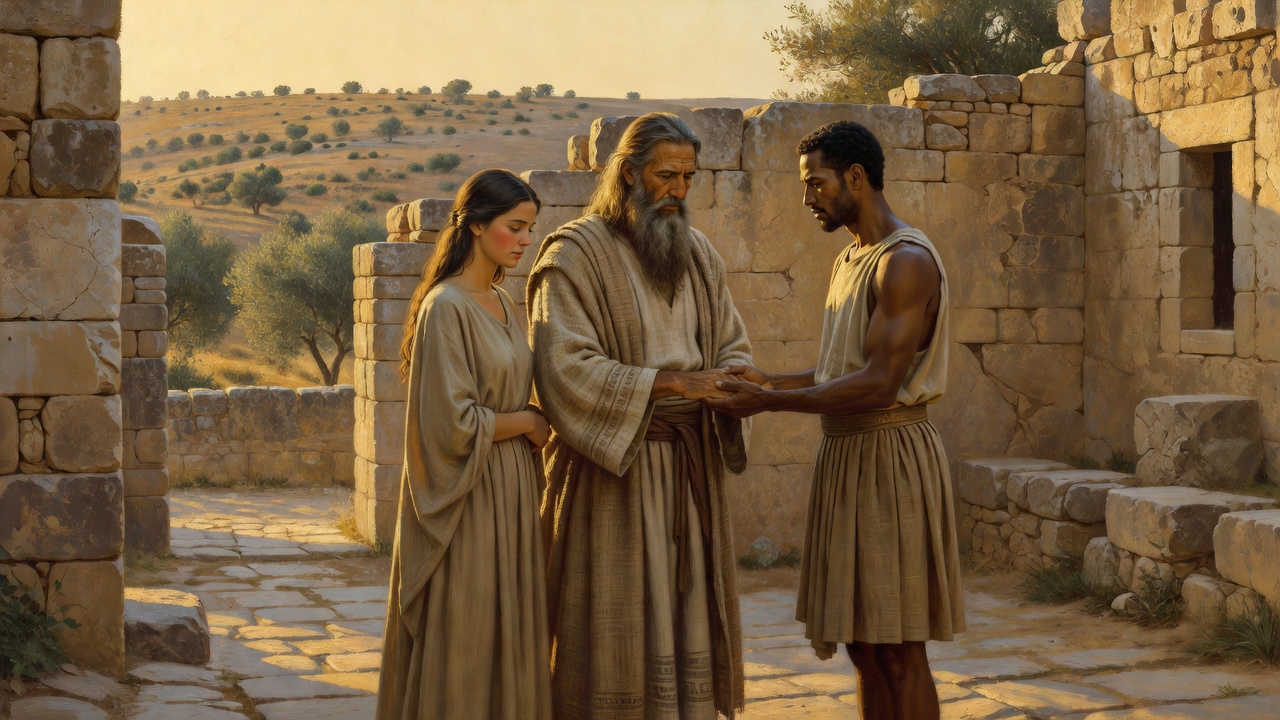
34Sesán no tuvo hijos sino hijas. Una de ellas fue concedida como esposa a Yarjá, esclavo suyo, procedente de Egipto. La esposa de Yarjá fue la madre de Atay.
36El hijo de Atay fue Natán; el hijo de Natán fue Zabad, 37el hijo de Zabad fue Eflal; el hijo de Eflal fue Obed; 38el hijo de Obed fue Jehú; el hijo de Jehú fue Azarías; 39el hijo de Azarías fue Heles; el hijo de Heles fue Elasá; 40el hijo de Elasá fue Sismay; el hijo de Sismay fue Salún; 41el hijo de Salún fue Jecamías; el hijo de Jecamías fue Elisama.
Descendientes de Caleb
42Caleb, hermano de Jeramel, fue el padre de Mesá y de Maresá. Mesá, el hijo mayor, fue el padre de Zif, y Maresá fue el padre de Hebrón.
43Los hijos de Hebrón fueron: Coré, Tapúaj, Requen y Semá.
44Semá fue el padre de Raham, el cual fue padre de Jorcoán. Requen fue el padre de Samay.
45El hijo de Samay fue Maón, y este fue el padre de Betsur.
46Efá, concubina de Caleb, dio a luz a Jarán, a Mosá y a Gazez. Jarán, a su vez, tuvo un hijo al que también llamó Gazez.
47Los hijos de Yaday fueron: Reguen, Jotán, Guesán, Pélet, Efá y Sagaf.
48Macá, otra de las concubinas de Caleb, fue la madre de Séber, Tirjaná y Sagaf, quien fue el padre de Madmana, y a Seva, que fue el padre de Macbena y de Guibeá. Caleb tuvo también una hija llamada Acsa.
50Los hijos de Jur, el hijo mayor de Caleb y Efrata, fueron: Sobal, padre de Quiriat Yearín, 51Salmá, padre de Belén, y Jaref, padre de Bet Gader.
52Los hijos de Sobal, padre de Quiriat Yearín, fueron: Haroé, la mitad de los manajatitas, 53las familias de Quiriat Yearín, los itritas, los futitas, los sumatitas y los misraítas, de los cuales descendieron los zoratitas y los estaolitas.
54Los descendientes de Salmá fueron: Belén, los netofatitas, Aterot Bet Joab, la mitad de los manajatitas y los zoreítas; 55se incluía también a las familias de los escribas que vivían en Jabés, que fueron los tirateos, los simeateos y los sucateos.
Todos estos fueron los quenitas que descendieron de Jamat, que fue el padre de la familia de Recab.
Did you know?
The Genealogy of Judah and the Royal Line
- The lineage in this chapter traces the descent of Judah through Perez and Hezron to Ram, culminating in David, the seventh son of Jesse. This line highlights significant ancestors, including Nahshon, a leader of the tribe during the wilderness journey, and Boaz of Bethlehem.Sources: the Bible text itself · Ram · Nahshon · Boaz
- Genealogies in 1 Chronicles often connect families directly to the settlements they established. Descendants of Hezron's son Caleb and his grandson Hur are identified as the fathers or founders of prominent Judean towns such as Bethlehem, Kiriath-jearim, and Madmannah.Sources: the Bible text itself · Caleb · Madmannah
- When Sheshan of the Jerahmeelite branch had no sons, he preserved his household line by marrying his daughter to his Egyptian servant Jarha, whose descendants are recorded across thirteen generations.Sources: the Bible text itself
Notes written with AI assistance from open sources (Theographic Bible Metadata, CC BY-SA 4.0; Easton’s Bible Dictionary, public domain) and reviewed before publishing.
Places in this chapter
- Gilead · Today: Gilead 1 · 32.187, 35.692 · verse 22
- Aram · 33.511, 36.306 · verse 23
- Geshur · 32.767, 35.700 · verse 23
- Havvoth-jair · 32.588, 35.726 · verse 23
- Tekoa · Today: Khirbet Teku’a · 31.632, 35.210 · verse 24
- Kiriath-jearim · Today: Deir el Azar · 31.809, 35.104 · verses 50, 52, 53
- Bethlehem · 31.704, 35.208 · verses 51, 54
Only places identified with high confidence are shown (90% or more according to the scholarly sources compiled by OpenBible). Period map: DARE (Digital Atlas of the Roman Empire), CC BY 4.0; modern map: © OpenStreetMap contributors; places: OpenBible.info (CC BY 4.0).
Credits and license for this translation
Biblica® Open Nueva Biblia Viva 2008
The Holy Bible in Spanish: Biblica® Open Nueva Biblia Viva 2008 (Bible)
copyright © 2008 Biblica, Inc.
Language: Español
Contributor: Biblica, Inc.
Biblica® Open Nueva Biblia Viva™
Copyright © 2006, 2008 by Biblica, Inc.
“Biblica” es una marca registrada en la oficina de Patentes y Marcas de los Estados Unidos por Biblica, Inc. Usado con permiso.
“Biblica” is a trademark registered in the United States Patent and Trademark Office by Biblica, Inc. Used with permission.
Creative Commons license
This work is made available under the Creative Commons Attribution-ShareAlike 4.0 International License (CC BY-SA). To view a copy of this license, visit https://creativecommons.org/licenses/by-sa/4.0 or send a letter to Creative Commons, PO Box 1866, Mountain View, CA 94042, USA.
You have permission to copy and distribute this Work, as long as you do not change it and you keep the title as it is. Changing or translating this Work will create a derivative work. When you publish this derivative work, you must list what changes you have made where people can see them, such as on a website. You must also show where the original Work is from: “The original Work by its copyright holders is available for free at www.biblica.com and open.bible .”
Notice of copyright must appear on the title or copyright page of the work as follows:
Biblica® Open Nueva Biblia Viva™
Copyright © 2006, 2008 by Biblica, Inc.
“Biblica” es una marca registrada en la oficina de Patentes y Marcas de los Estados Unidos por Biblica, Inc. Usado con permiso.
“Biblica” is a trademark registered in the United States Patent and Trademark Office by Biblica, Inc. Used with permission.
You must also make your derivative work available under the same license (CC BY-SA).
If you would like to notify Biblica, Inc. regarding your translation of this work, please contact us at https://open.bible/#feedback .
This translation is made available to you under the terms of the
Creative Commons Attribution Share-Alike license 4.0.
You have permission to share and redistribute this Bible translation in any format and to make reasonable revisions and adaptations of this translation, provided that:
You include the above copyright and source information.
If you make any changes to the text, you must indicate that you did so in a way that makes it clear that the original licensor is not necessarily endorsing your changes.
If you redistribute this text, you must distribute your contributions under the same license as the original.
Pictures included with Scriptures and other documents on this site are licensed just for use with those Scriptures and documents.
For other uses, please contact the respective copyright owners.
Note that in addition to the rules above, revising and adapting God's Word involves a great responsibility to be true to God's Word. See Revelation 22:18-19.
2025-05-21
Source: http://ebible.org/spaonbv/ · eBible.org