Jeremiah 47
Santa Biblia libre Latinoamericano · Tap a verse to see its cross-references.
Juicio contra los filisteos
1Esta es la palabra de Yahvé que vino al profeta Jeremías acerca de los filisteos, antes de que el faraón atacara a Gaza.
2Así dice Yahvé:
“Miren cómo suben las aguas desde el norte,
se convertirán en un torrente desbordado;
inundarán la tierra y todo lo que hay en ella,
la ciudad y los que viven en ella.
Los hombres gritarán de dolor,
y gemirán todos los habitantes de la tierra.
3Por el estruendo del galope de sus poderosos caballos,
por el correr de sus carros
y el retumbar de sus ruedas,
los padres no se vuelven para ayudar a sus hijos,
pues les faltan las fuerzas;
4porque ha llegado el día de destruir a todos los filisteos,
de privar a Tiro y a Sidón de todo aliado que les quede;
porque Yahvé destruirá a los filisteos,
al resto de la isla de Caftor.
5La calvicie llegó a Gaza;
Ascalón ha sido silenciada.
Tú, resto de su valle,
¿hasta cuándo te harás heridas de duelo?
6¡Ay, espada de Yahvé! ¿Hasta cuándo vas a seguir?
Vuelve a tu vaina,
descansa y quédate tranquila.
7¿Cómo podrá quedarse quieta,
si Yahvé le ha dado una orden?
Contra Ascalón y contra la orilla del mar,
allí la ha enviado”.
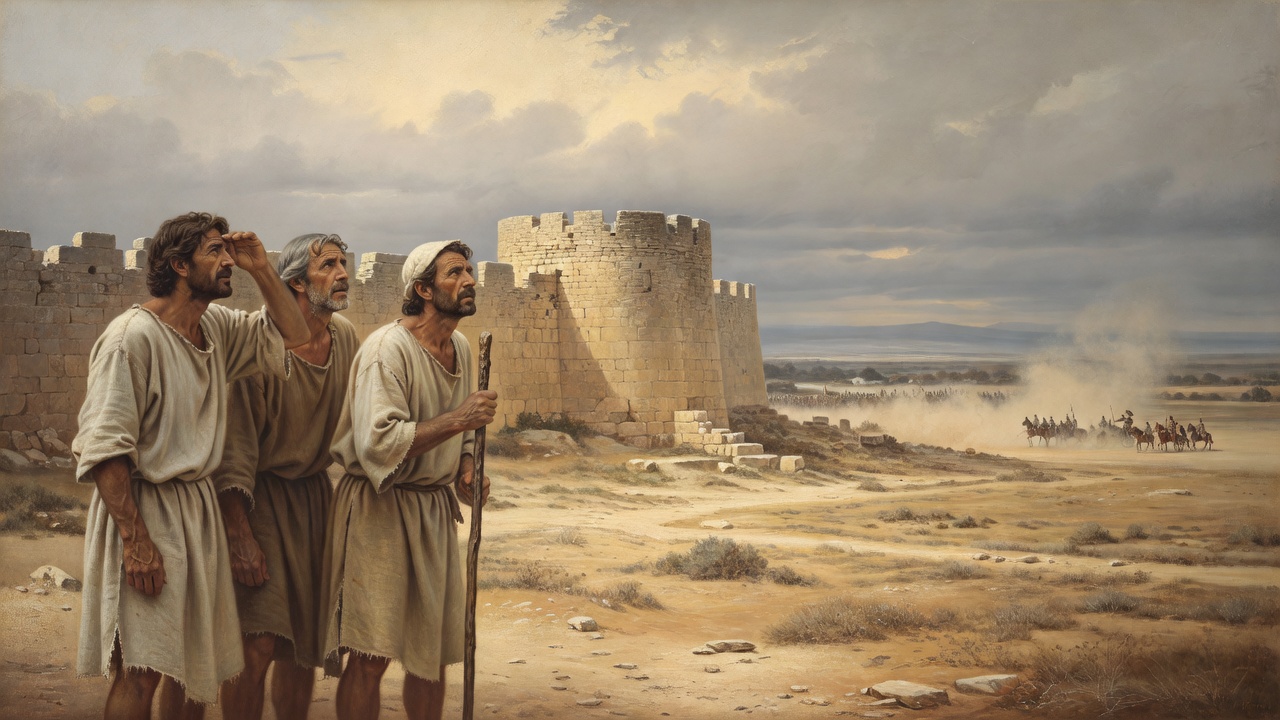
Did you know?
Judgment on the Philistines
- Jeremiah refers to the Philistines as the remnant from the coasts of Caphtor. Biblical traditions identify Caphtor as the place of origin of the Philistines, a location widely associated by scholars with Crete or parts of the eastern Mediterranean coast.Sources: the Bible text itself · Caphtor
- The chapter directs its warnings against Gaza and Ashkelon, two of the five prominent Philistine cities along the Mediterranean coast. Both were ancient centers known for their strategic position and trade links connecting Egypt and the surrounding regions.Sources: the Bible text itself · Gaza · Ashkelon
- The prophecy notes that the coming destruction would cut off every remaining ally from Tyre and Sidon. These two major Phoenician ports to the north were key maritime centers whose interests were closely intertwined with the coastal region.Sources: the Bible text itself · Tyre · Sidon
Notes written with AI assistance from open sources (Theographic Bible Metadata, CC BY-SA 4.0; Easton’s Bible Dictionary, public domain) and reviewed before publishing.
Places in this chapter
- Gaza · Today: Tell Harube · 31.504, 34.464 · verses 1, 5
- Sidon · Today: Sandikli archaeological site in Sidon · 33.561, 35.372 · verse 4
- Tyre · 33.271, 35.196 · verse 4
- Ashkelon · Today: Tel Ashkelon · 31.664, 34.546 · verses 5, 7
- Great Sea · Today: Mediterranean Sea · 31.805, 34.170 · verse 5
- Philistia · 31.664, 34.546 · verse 5
Only places identified with high confidence are shown (90% or more according to the scholarly sources compiled by OpenBible). Period map: DARE (Digital Atlas of the Roman Empire), CC BY 4.0; modern map: © OpenStreetMap contributors; places: OpenBible.info (CC BY 4.0).
Credits and license for this translation
Santa Biblia libre Latinoamericano
The Holy Bible in the Latin American dialect of Spanish, Biblia libre Latinoamericano translation
Public Domain
Language: Español (Spanish)
Dialect: Latin American
Este es un borrador de traducción. Está siendo revisado y editado. Si encuentra algún error, infórmenos en [email protected].
2026-10-02
Section headings adapted from the Berean Standard Bible (public domain); they are not part of this translation’s text.
Source: http://ebible.org/spabll/ · eBible.org