1 Kings 1
La Biblia en Español Sencillo · Tap a verse to see its cross-references.
About this book
About 1 Kings
- Easton's Bible Dictionary (1897) treats the authorship of the books of Kings as uncertain. A tradition that Jeremiah wrote them is, in Easton's view, supported by passages almost identical with parts of Jeremiah and by events Jeremiah knew personally, yet Easton thinks it more probable that Ezra, after the Captivity, compiled the books from earlier documents, perhaps written by David, Solomon, Nathan, Gad, and Iddo. Easton dates the composition between 561 B.C., when Jehoiachin was released from captivity by Evil-merodach, and 538 B.C., the decree of Cyrus.Sources: Easton: Kings, The Books of
- Easton says these books contain the annals of the kingdom from Solomon's accession until Nebuchadnezzar and the Babylonians subdued it, a period he estimates at about 453 years. 1 Kings opens while David is dying: Adonijah, his fourth son, who had become heir-apparent to the throne after the deaths of Amnon and Absalom, has himself proclaimed king, but Nathan and Bathsheba persuade David to enthrone Solomon at once. Solomon, David's son by Bathsheba, whose history is recorded in 1 Kings 1-11, came to the throne, Easton suggests, at about sixteen or eighteen.Sources: Easton: Kings, The Books of · Adonijah · Solomon
- In the Hebrew Scriptures the two books of Kings originally formed one book; the Septuagint first divided them and, with the Vulgate, numbers them as the third and fourth books of Kings, the books of Samuel being the first and second. Easton notes that Chronicles gives greater prominence to the priestly or Levitical office, while Kings gives greater prominence to the royal office, and that in the threefold division of the Scriptures by the Jews these books are ranked among the Prophets. The narrative points to earlier sources: the book of the acts of Solomon and the chronicles of the kings of Judah and of Israel.Sources: Easton: Kings, The Books of
- After Solomon's death the ten tribes revolted and invited Jeroboam, son of Nebat, to be their king; Easton calls him the first king of those tribes and dates his reign from 976 to 945 B.C. He had fled to Egypt under the protection of Shishak I, and later moved his residence from Shechem, his first capital, to Tirzah, which remained the chief residence of Israel's kings until Omri bought the hill of Shomeron from Shemer for two talents of silver and built Samaria. The later narrative includes Ahab, Omri's son and the seventh king of Israel, whose wife was Jezebel: to the calf worship introduced by Jeroboam he added the worship of Baal, and he was severely admonished by the prophet Elijah.Sources: Jeroboam · Tirzah · Samaria · Ahab
Notes written with AI assistance from open sources (Theographic Bible Metadata, CC BY-SA 4.0; Easton’s Bible Dictionary, public domain) and reviewed before publishing.
Abisag Cuida a David
1El rey David ya era muy anciano. Aunque lo cubrían con mantas, no lograba entrar en calor. 2Sus servidores le dijeron: «Busquemos una joven virgen para nuestro señor el rey. Ella lo cuidará, lo atenderá y dormirá a su lado para darle calor». 3Buscaron por todo Israel a una joven hermosa y encontraron a Abisag, de Sunem. La llevaron ante el rey. 4La joven era muy hermosa. Cuidaba al rey y lo atendía, pero el rey no tuvo relaciones sexuales con ella.
Adonías Usurpa el Trono
5Por entonces, Adonías, hijo de Haguit, se llenó de orgullo y dijo: «Yo seré rey». Se consiguió carros de guerra y jinetes, y cincuenta hombres que corrían delante de él. 6Su padre nunca lo había reprendido ni le había preguntado: «¿Por qué haces eso?». Adonías era muy apuesto y había nacido después de Absalón. 7Adonías habló con Joab, hijo de Sarvia, y con el sacerdote Abiatar. Ambos se pusieron de su lado y lo apoyaron. 8Pero el sacerdote Sadoc, Benaía hijo de Joiada, el profeta Natán, Simei, Rei y los valientes de David no apoyaron a Adonías. 9Adonías sacrificó ovejas, bueyes y animales engordados junto a la piedra de Zohelet, cerca de En-rogel. Invitó a todos sus hermanos, los hijos del rey, y a los funcionarios de Judá que servían al rey. 10Pero no invitó al profeta Natán, ni a Benaía, ni a los valientes, ni a su hermano Salomón.
Natán y Betsabé Ante David
11Entonces Natán le dijo a Betsabé, madre de Salomón: «¿No te has enterado de que Adonías, hijo de Haguit, se ha hecho rey sin que nuestro señor David lo sepa? 12Déjame aconsejarte cómo salvar tu vida y la de tu hijo Salomón. 13Ve al rey David y dile: “Mi señor el rey, ¿no me juraste a mí, tu sierva, que mi hijo Salomón reinaría después de ti y ocuparía tu trono? ¿Por qué, entonces, está reinando Adonías?”. 14Mientras todavía estés hablando con el rey, entraré yo y confirmaré lo que has dicho». 15Betsabé entró en la habitación del rey. David era ya muy anciano, y Abisag, de Sunem, lo atendía. 16Betsabé se inclinó rostro en tierra ante el rey. Él le preguntó: «¿Qué deseas?». 17Ella respondió: «Mi señor, tú me juraste por el Señor tu Dios que mi hijo Salomón reinaría después de ti y ocuparía tu trono. 18Pero ahora Adonías se ha hecho rey, y tú, mi señor el rey, no lo sabes. 19Ha sacrificado muchos bueyes, animales engordados y ovejas. Invitó a todos los hijos del rey, al sacerdote Abiatar y a Joab, jefe del ejército, pero no invitó a tu servidor Salomón. 20Ahora todo Israel espera que tú, mi señor el rey, anuncies quién ocupará tu trono después de ti. 21Si no lo haces, cuando mueras, mi hijo Salomón y yo seremos tratados como culpables». 22Mientras Betsabé aún hablaba con el rey, llegó el profeta Natán. 23Anunciaron al rey: «Aquí está el profeta Natán». Natán entró y se inclinó rostro en tierra ante el rey. 24Le dijo: «Mi señor el rey, ¿has ordenado tú que Adonías reine después de ti y ocupe tu trono? 25Hoy ha bajado y ha sacrificado muchos bueyes, animales engordados y ovejas. Invitó a todos los hijos del rey, a los jefes del ejército y al sacerdote Abiatar. Están comiendo y bebiendo ante él y gritan: “¡Viva el rey Adonías!”. 26Pero no nos invitó a mí, tu servidor, ni al sacerdote Sadoc, ni a Benaía hijo de Joiada, ni a tu servidor Salomón. 27¿Has dispuesto esto tú, mi señor el rey, sin informar a tus servidores quién ocupará tu trono después de ti?».
David Renueva su Juramento a Betsabé
28El rey David respondió: «Llamen a Betsabé». Ella entró y se presentó ante él. 29Entonces el rey juró: «Tan cierto como que vive el Señor, que me ha librado de todas mis dificultades, 30hoy cumpliré lo que te juré por el Señor, Dios de Israel: tu hijo Salomón reinará después de mí y ocupará mi trono». 31Betsabé se inclinó rostro en tierra ante el rey y dijo: «¡Que mi señor, el rey David, viva para siempre!».
Salomón Es Ungido Rey
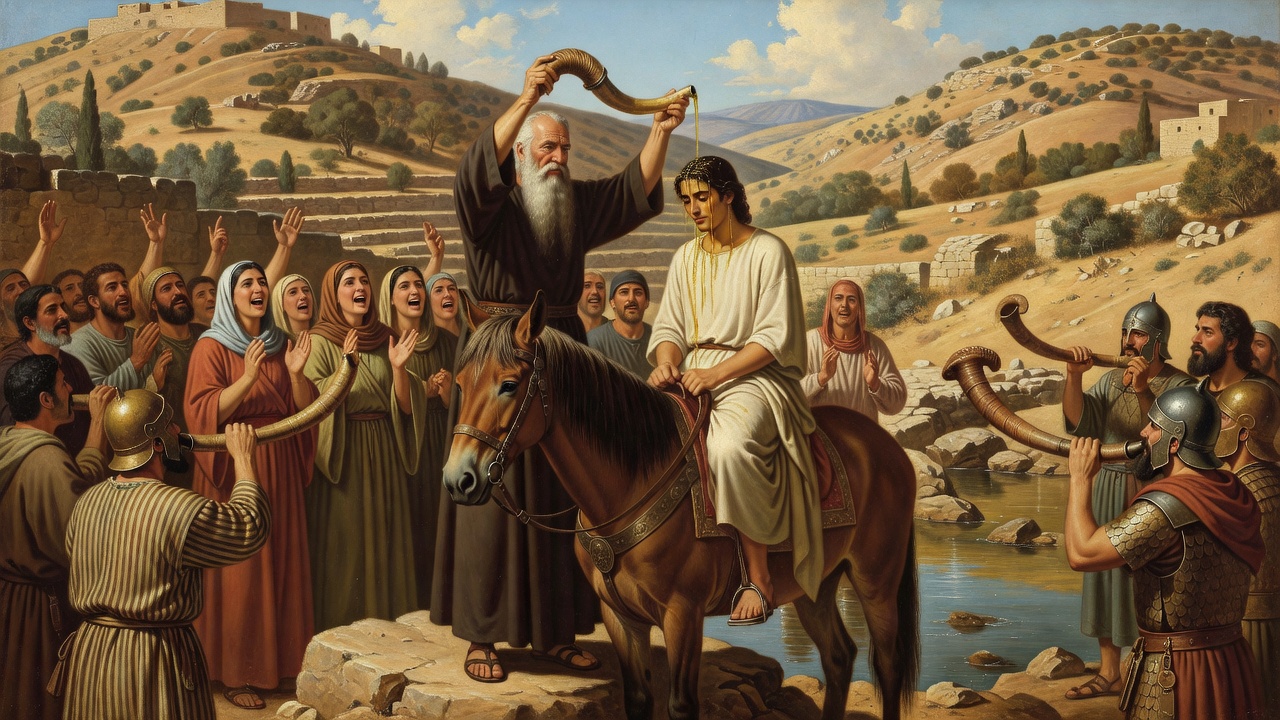
32Luego David dijo: «Llamen al sacerdote Sadoc, al profeta Natán y a Benaía hijo de Joiada». Los tres se presentaron ante él. 33El rey les ordenó: «Lleven con ustedes a mis servidores. Monten a mi hijo Salomón en mi propia mula y llévenlo a Gihón. 34Allí el sacerdote Sadoc y el profeta Natán lo ungirán como rey de Israel. Toquen el cuerno y griten: “¡Viva el rey Salomón!”. 35Después regresen siguiéndolo. Él entrará y se sentará en mi trono. Será rey en mi lugar, pues lo he nombrado gobernante de Israel y de Judá». 36Benaía, hijo de Joiada, respondió: «¡Así sea! Que el Señor, Dios de mi señor el rey, confirme tus palabras. 37Así como el Señor ha estado contigo, que esté con Salomón y haga su trono aún más grande que el tuyo, mi señor el rey David». 38El sacerdote Sadoc, el profeta Natán, Benaía hijo de Joiada, los cereteos y los peleteos bajaron, montaron a Salomón en la mula del rey David y lo llevaron a Gihón. 39El sacerdote Sadoc tomó del santuario el cuerno con aceite y ungió a Salomón. Tocaron el cuerno y todo el pueblo gritó: «¡Viva el rey Salomón!». 40Todo el pueblo regresó siguiéndolo. Tocaban flautas y celebraban con tanta alegría que la tierra parecía temblar con sus gritos.
Adonías se Entera del Reinado de Salomón
41Adonías y sus invitados oyeron el ruido cuando terminaban de comer. Joab oyó el cuerno y preguntó: «¿Por qué hay tanto alboroto en la ciudad?». 42Aún estaba hablando cuando llegó Jonatán, hijo del sacerdote Abiatar. Adonías le dijo: «Entra. Eres un hombre de bien; seguro que traes buenas noticias». 43Jonatán respondió: «Al contrario: nuestro señor, el rey David, ha hecho rey a Salomón. 44Envió con él al sacerdote Sadoc, al profeta Natán, a Benaía hijo de Joiada, a los cereteos y a los peleteos. Montaron a Salomón en la mula del rey. 45Sadoc y Natán lo ungieron rey en Gihón. Desde allí regresaron llenos de alegría, y toda la ciudad está alborotada. Ese es el ruido que han oído. 46Además, Salomón ya está sentado en el trono. 47Los servidores del rey fueron a felicitar a nuestro señor David y le dijeron: “Que Dios haga el nombre de Salomón más grande que el tuyo, y su trono más poderoso que el tuyo”. El rey se inclinó sobre su cama para adorar a Dios. 48También dijo: “Bendito sea el Señor, Dios de Israel, que hoy ha puesto a uno de mis descendientes en mi trono y me ha permitido verlo con mis propios ojos”». 49Todos los invitados de Adonías se llenaron de miedo, se levantaron y cada uno se fue por su lado. 50Adonías tuvo miedo de Salomón. Fue al altar y se aferró a sus cuernos. 51Informaron a Salomón: «Adonías tiene miedo del rey Salomón y se ha aferrado a los cuernos del altar. Dice: “Que el rey Salomón me jure primero que no matará a espada a su servidor”». 52Salomón respondió: «Si se porta como un hombre digno de confianza, no se le tocará ni un cabello. Pero si se descubre maldad en él, morirá». 53El rey Salomón mandó que lo hicieran bajar del altar. Adonías fue y se inclinó ante Salomón, quien le dijo: «Vete a tu casa».
Did you know?
The Succession to David's Throne
- As David's oldest surviving son after the deaths of Amnon and Absalom, Adonijah claimed the royal succession, backed by the military commander Joab and the high priest Abiathar. However, David chose his younger son Solomon, who was supported by the prophet Nathan, the priest Zadok, and the royal bodyguard under Benaiah.Sources: Adonijah · Solomon · the Bible text itself
- Riding the king's own mule was a decisive public declaration of royal authority. By David's explicit instruction, Solomon was escorted down to the spring of Gihon, where Zadok anointed him king with oil taken from the tabernacle to the sound of ram's horns and popular celebration.Sources: Gihon · Zadok · the Bible text itself
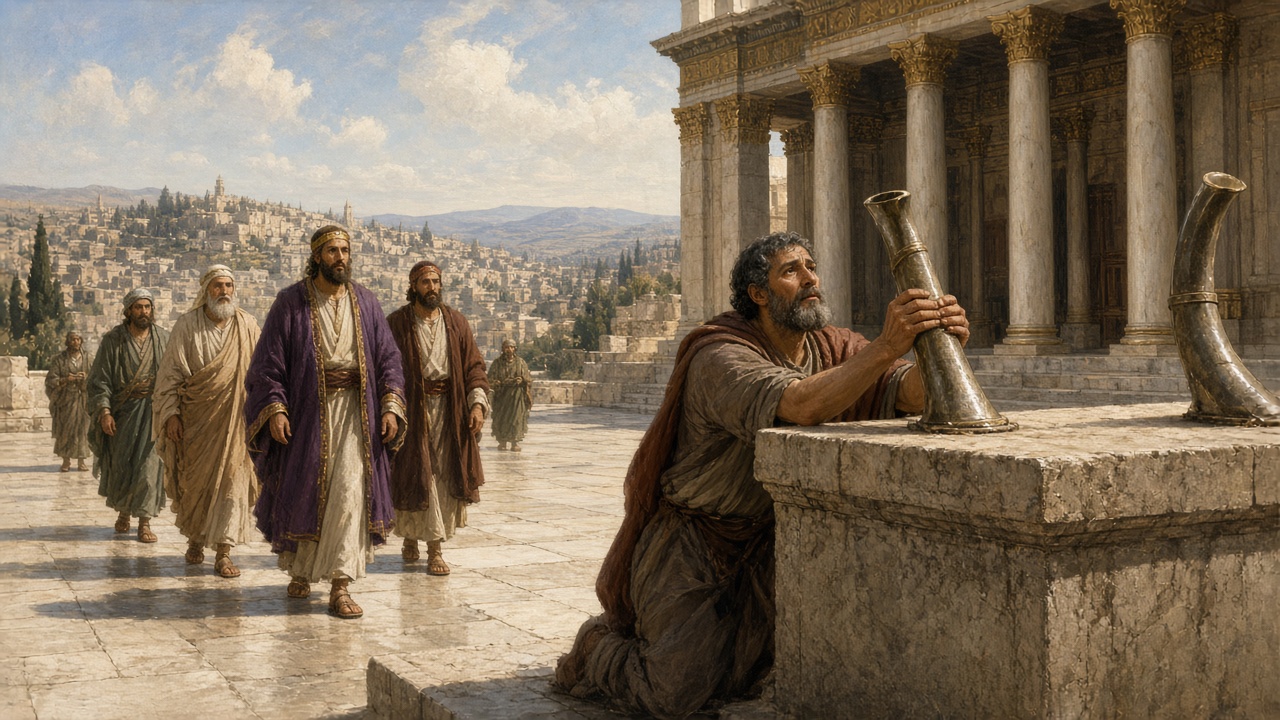
- Upon hearing of Solomon's public coronation, Adonijah fled in terror and sought asylum by taking hold of the horns of the sacrificial altar. Solomon granted him conditional clemency, sparing his life so long as he proved himself a worthy man.Sources: Adonijah · the Bible text itself
Notes written with AI assistance from open sources (Theographic Bible Metadata, CC BY-SA 4.0; Easton’s Bible Dictionary, public domain) and reviewed before publishing.
Places in this chapter
- Shunem · Today: Sulam · 32.606, 35.334 · verse 3
- Serpent’s Stone · Today: within 100 m of Bir Ayub · 31.767, 35.236 · verse 9
- Gihon · Today: Gihon Spring · 31.773, 35.236 · verses 33, 38, 44, 45
- Jerusalem · 31.777, 35.234 · verse 40
Only places identified with high confidence are shown (90% or more according to the scholarly sources compiled by OpenBible). Period map: DARE (Digital Atlas of the Roman Empire), CC BY 4.0; modern map: © OpenStreetMap contributors; places: OpenBible.info (CC BY 4.0).
Credits and license for this translation
La Biblia en Español Sencillo
The Holy Bible in Simple Spanish
copyright © 2018, 2019 AudioBiblia.org /Irma Flores
℗ AudioBiblia.org
Language: Español (Spanish)
Dialect: Latin America/Mexico
Translation by: AudioBiblia.org
La Biblia en Español Sencillo.
© 2018 AudioBiblia.org / Irma Flores
traducido y editado por Irma Flores
Esta obra esta publicada bajo la Licencia Creative Commons Reconocimiento 4.0 Internacional
Para ver una copia de esta licencia, visite http://creativecommons.org/licenses/by/4.0
Se puede copiar y redistribuir La Biblia en Español Sencillo con reconocimiento a AudioBiblia.org/Irma Flores
email: [email protected]
This translation is made available to you under the terms of the
Creative Commons Attribution license 4.0.
You may share and redistribute this Bible translation or extracts from it in any format, provided that:
You include the above copyright and source information.
If you make any changes to the text, you must indicate that you did so in a way that makes it clear that the original licensor is not necessarily endorsing your changes.
Pictures included with Scriptures and other documents on this site are licensed just for use with those Scriptures and documents.
For other uses, please contact the respective copyright owners.
Note that in addition to the rules above, revising and adapting God's Word involves a great responsibility to be true to God's Word. See Revelation 22:18-19.
2026-10-02
Section headings adapted from the Berean Standard Bible (public domain); they are not part of this translation’s text.
Source: http://ebible.org/spabes/ · eBible.org