1 Chronicles 24
La Biblia en Español Sencillo · Tap a verse to see its cross-references.
Veinticuatro turnos de sacerdotes
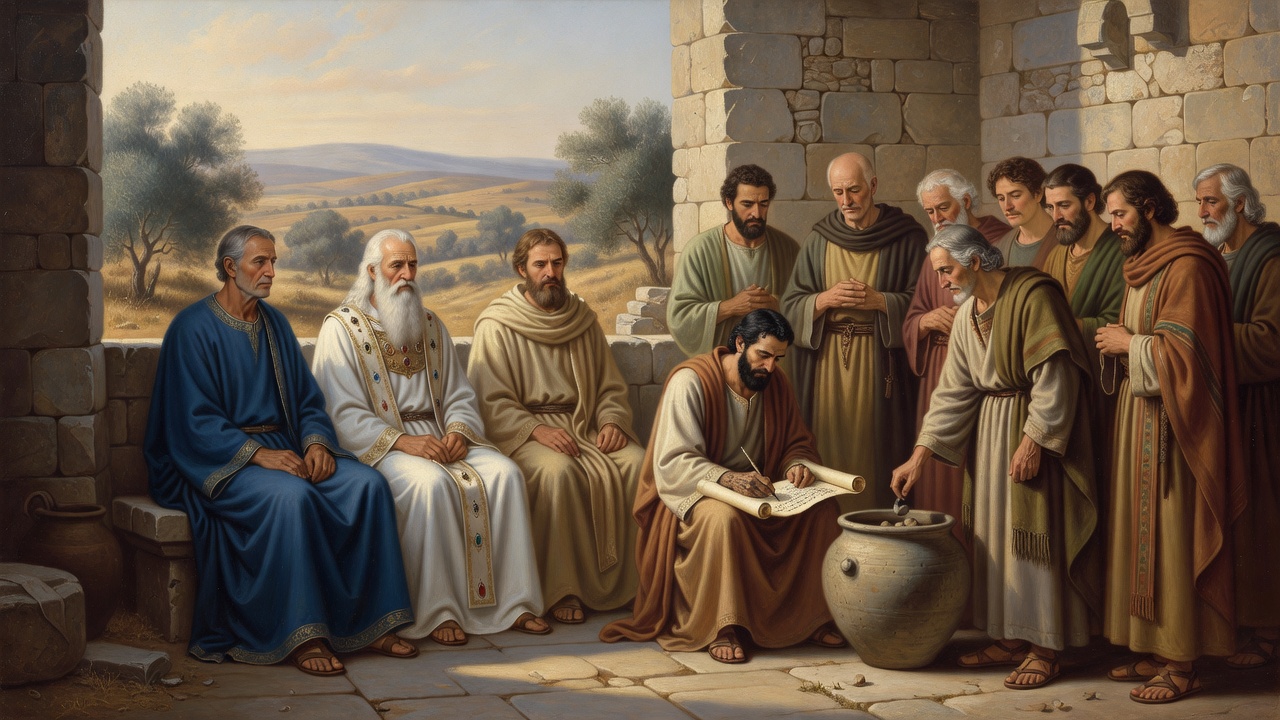
1Estas fueron las divisiones de los descendientes de Aarón: sus hijos fueron Nadab, Abiú, Eleazar e Itamar. 2Nadab y Abiú murieron antes que su padre y no tuvieron hijos. Eleazar e Itamar ejercieron el sacerdocio. 3David, junto con Sadoc de la familia de Eleazar y Ahimelec de la de Itamar, los organizó en grupos para su servicio. 4Como la familia de Eleazar tenía más jefes que la de Itamar, se organizaron dieciséis grupos de jefes de Eleazar y ocho de jefes de Itamar. 5Los grupos se asignaron por sorteo, pues ambas familias tenían dirigentes del santuario y de la casa de Dios. 6Semaías, hijo del levita Natanael, escribía los nombres ante el rey, los jefes, el sacerdote Sadoc, Ahimelec hijo de Abiatar y los jefes de las familias sacerdotales y levitas. Se elegía una familia de Eleazar y luego una de Itamar. 7El primer turno correspondió a Joiarib; el segundo, a Jedaías; 8el tercero, a Harim; el cuarto, a Seorim; 9el quinto, a Malquías; el sexto, a Mijamín; 10el séptimo, a Hacoz; el octavo, a Abías; 11el noveno, a Jesúa; el décimo, a Secanías; 12el undécimo, a Eliasib; el duodécimo, a Jaquim; 13el decimotercero, a Hupa; el decimocuarto, a Jesebeab; 14el decimoquinto, a Bilga; el decimosexto, a Imer; 15el decimoséptimo, a Hezir; el decimoctavo, a Hapises; 16el decimonoveno, a Petaías; el vigésimo, a Jehezquel; 17el vigesimoprimero, a Jaquín; el vigesimosegundo, a Gamul; 18el vigesimotercero, a Delaías; el vigesimocuarto, a Maazías. 19Así se establecieron los turnos para servir en la casa del Señor, según las normas que él había dado a Aarón, antepasado de ellos.
Los demás levitas
20Los otros descendientes de Leví fueron Subael, de la familia de Amram, y Jehdeías, hijo de Subael. 21De la familia de Rehabías, Isías era el jefe. 22De la familia de Izhar, Selomot; y de la de Selomot, Jahat. 23Los hijos de Hebrón fueron Jerías, el primero; Amarías, el segundo; Jahaziel, el tercero; y Jecameam, el cuarto. 24De la familia de Uziel, Micaías; y de la de Micaías, Samir. 25El hermano de Micaías fue Isías, cuyo hijo fue Zacarías. 26Los hijos de Merari fueron Mahli y Musi; de este linaje también era Jaazías. 27Los descendientes de Merari por Jaazías fueron Soham, Zacur e Ibri. 28El hijo de Mahli fue Eleazar, que no tuvo hijos varones. 29El hijo de Cis fue Jerameel. 30Los hijos de Musi fueron Mahli, Eder y Jeremot. Estos eran los descendientes de Leví por familias. 31También ellos echaron suertes, igual que sus parientes descendientes de Aarón, ante el rey David, Sadoc, Ahimelec y los jefes de las familias sacerdotales y levitas. Se trató por igual a las familias de los mayores y las de sus hermanos menores.
Did you know?
Organization of the Priests and Levites
- Because Aaron's two eldest sons, Nadab and Abihu, died without children after offering unauthorized fire, only the lines of Eleazar and Ithamar continued the priesthood. King David organized these descendants into twenty-four rotational divisions, sixteen from Eleazar and eight from Ithamar, to manage sanctuary duties.Sources: the Bible text itself · Eleazar · Ithamar · Nadab
- To ensure fairness between the two ancestral lines, the order of service was determined by casting lots in the presence of King David, Zadok, and Ahimelech. The scribe Shemaiah, a Levite, recorded the name of each family as their lot was drawn.Sources: the Bible text itself · Zadok · Ahimelech
- The remaining Levite clans, including descendants of Kohath and Merari, were also assigned their responsibilities by casting lots. The selection was conducted without regard to age or rank, treating family heads and their younger brothers equally.Sources: the Bible text itself · Merari
Notes written with AI assistance from open sources (Theographic Bible Metadata, CC BY-SA 4.0; Easton’s Bible Dictionary, public domain) and reviewed before publishing.
Places in this chapter
- Holy Place · Today: on Mount Moriah · 31.778, 35.236 · verse 5
Only places identified with high confidence are shown (90% or more according to the scholarly sources compiled by OpenBible). Period map: DARE (Digital Atlas of the Roman Empire), CC BY 4.0; modern map: © OpenStreetMap contributors; places: OpenBible.info (CC BY 4.0).
Credits and license for this translation
La Biblia en Español Sencillo
The Holy Bible in Simple Spanish
copyright © 2018, 2019 AudioBiblia.org /Irma Flores
℗ AudioBiblia.org
Language: Español (Spanish)
Dialect: Latin America/Mexico
Translation by: AudioBiblia.org
La Biblia en Español Sencillo.
© 2018 AudioBiblia.org / Irma Flores
traducido y editado por Irma Flores
Esta obra esta publicada bajo la Licencia Creative Commons Reconocimiento 4.0 Internacional
Para ver una copia de esta licencia, visite http://creativecommons.org/licenses/by/4.0
Se puede copiar y redistribuir La Biblia en Español Sencillo con reconocimiento a AudioBiblia.org/Irma Flores
email: [email protected]
This translation is made available to you under the terms of the
Creative Commons Attribution license 4.0.
You may share and redistribute this Bible translation or extracts from it in any format, provided that:
You include the above copyright and source information.
If you make any changes to the text, you must indicate that you did so in a way that makes it clear that the original licensor is not necessarily endorsing your changes.
Pictures included with Scriptures and other documents on this site are licensed just for use with those Scriptures and documents.
For other uses, please contact the respective copyright owners.
Note that in addition to the rules above, revising and adapting God's Word involves a great responsibility to be true to God's Word. See Revelation 22:18-19.
2026-10-02
Section headings adapted from the Berean Standard Bible (public domain); they are not part of this translation’s text.
Source: http://ebible.org/spabes/ · eBible.org