Song of Songs 2
Santa Biblia — Reina Valera 1909 · Tap a verse to see its cross-references.
La admiración de la amada
La amada
1YO soy la rosa de Sarón, y el lirio de los valles.
El amado
2Como el lirio entre las espinas, así es mi amiga entre las doncellas.
La amada
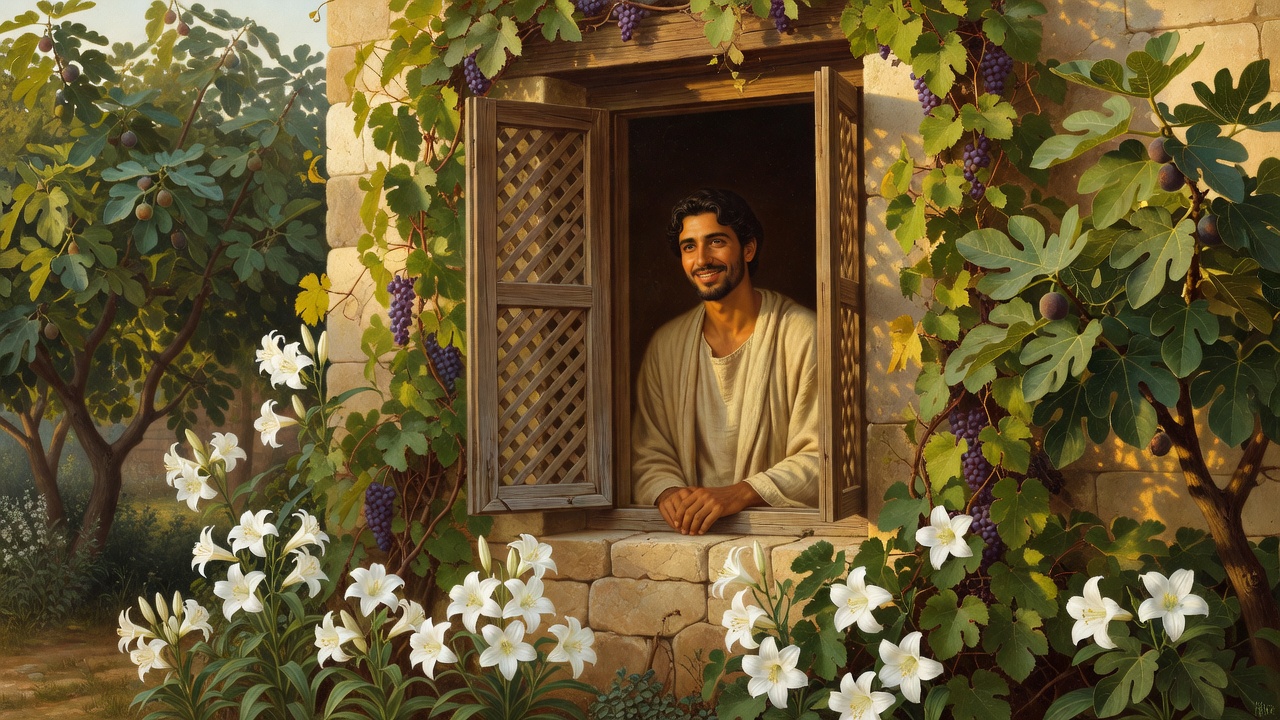
3Como el manzano entre los árboles silvestres, así es mi amado entre los mancebos: bajo la sombra del deseado me senté, y su fruto fué dulce á mi paladar. 4Llevóme á la cámara del vino, y su bandera sobre mí fué amor. 5Sustentadme con frascos, corroboradme con manzanas; porque estoy enferma de amor. 6Su izquierda esté debajo de mi cabeza, y su derecha me abrace. 7Yo os conjuro, oh doncellas de Jerusalem, por las gamas y por las ciervas del campo, que no despertéis ni hagáis velar al amor, hasta que quiera. 8¡La voz de mi amado! He aquí él viene saltando sobre los montes, brincando sobre los collados. 9Mi amado es semejante al gamo, ó al cabrito de los ciervos. Helo aquí, está tras nuestra pared, mirando por las ventanas, mostrándose por las rejas. 10Mi amado habló, y me dijo: Levántate, oh amiga mía, hermosa mía, y vente. 11Porque he aquí ha pasado el invierno, hase mudado, la lluvia se fué; 12Hanse mostrado las flores en la tierra, el tiempo de la canción es venido, y en nuestro país se ha oído la voz de la tórtola; 13La higuera ha echado sus higos, y las vides en cierne dieron olor: levántate, oh amiga mía, hermosa mía, y vente.
El amado
14Paloma mía, que estás en los agujeros de la peña, en lo escondido de escarpados parajes, muéstrame tu rostro, hazme oir tu voz; porque dulce es la voz tuya, y hermoso tu aspecto.
Las doncellas
15Cazadnos las zorras, las zorras pequeñas, que echan á perder las viñas; pues que nuestras viñas están en cierne.
La amada
16Mi amado es mío, y yo suya; él apacienta entre lirios. 17Hasta que apunte el día, y huyan las sombras, tórnate, amado mío; sé semejante al gamo, ó al cabrito de los ciervos, sobre los montes de Bether.
Did you know?
Springtime and Awakening Love
- Sharon was a fertile coastal plain stretching between the Mediterranean Sea and the hill country west of Jerusalem, celebrated for its beauty and vegetation, which gave rise to imagery like the rose of Sharon.Sources: Saron · the Bible text itself
- The poem marks the arrival of spring through natural changes in the countryside, such as the end of winter rains, the cooing of turtledoves, ripening fig trees, and flowering grapevines that needed protection from foraging foxes.Sources: the Bible text itself
- The speaker repeatedly appeals to the daughters of Jerusalem, framing her cautions about love around wild animals of the open hills, such as gazelles and does of the field.Sources: Jerusalem · the Bible text itself
Notes written with AI assistance from open sources (Theographic Bible Metadata, CC BY-SA 4.0; Easton’s Bible Dictionary, public domain) and reviewed before publishing.
Places in this chapter
Only places identified with high confidence are shown (90% or more according to the scholarly sources compiled by OpenBible). Period map: DARE (Digital Atlas of the Roman Empire), CC BY 4.0; modern map: © OpenStreetMap contributors; places: OpenBible.info (CC BY 4.0).
Credits and license for this translation
Santa Biblia — Reina Valera 1909
The Holy Bible in Spanish, Reina Valera translation of 1909
Public Domain
Language: Español (Spanish)
Dialect: Castellano 1909
Translation by: Reina y Valera
Dominio Público
2013-12-13
Section headings adapted from the Berean Standard Bible (public domain); they are not part of this translation’s text.
Source: http://ebible.org/spaRV1909/ · eBible.org