Malachi 1
Santa Biblia — Reina Valera 1909 · Tap a verse to see its cross-references.
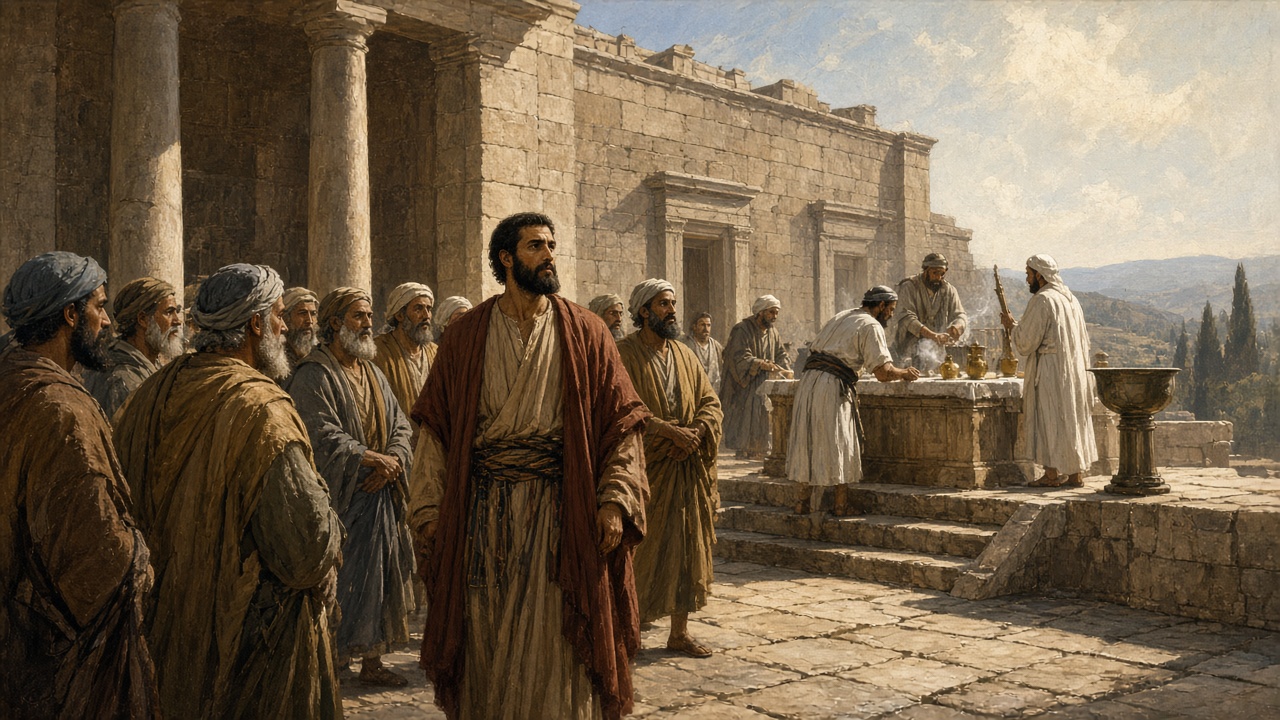
About this book
About Malachi
- Easton's Bible Dictionary (1897) presents Malachi, a name meaning "messenger" or "angel," as the last of the minor prophets and the writer of the last book of the Old Testament canon. Nothing is known of him beyond what is contained in his book of prophecies.Sources: Easton: Malachi · Malachi
- Some have supposed that the name is simply a title for a messenger of Jehovah, not a proper name. Easton's Bible Dictionary (1897) concludes, however, that there is reason to regard Malachi as the prophet's ordinary name.Sources: Easton: Malachi · Malachi
- Easton's Bible Dictionary (1897) dates the prophecies to about 420 B.C., after Nehemiah's second return from Persia, or possibly before that return. Because Ezra does not mention him and he does not mention the restoration of the temple, the dictionary infers that he prophesied after Haggai and Zechariah.Sources: Easton: Malachi
- Easton's Bible Dictionary (1897) treats Malachi as a contemporary of Nehemiah, comparing Malachi 2:8 with Nehemiah 13:15 and Malachi 2:10-16 with Nehemiah 13:23. It also notes that the temple services were still in existence, citing Malachi 1:10, 3:1 and 3:10.Sources: Easton: Malachi
Notes written with AI assistance from open sources (Theographic Bible Metadata, CC BY-SA 4.0; Easton’s Bible Dictionary, public domain) and reviewed before publishing.
El amor del Señor por Israel
1CARGA de la palabra de Jehová contra Israel, por mano de Malaquías. 2Yo os he amado, dice Jehová: y dijisteis: ¿En qué nos amaste? ¿No era Esaú hermano de Jacob, dice Jehová, y amé á Jacob, 3Y á Esaú aborrecí, y torné sus montes en asolamiento, y su posesión para los chacales del desierto? 4Cuando Edom dijere: Nos hemos empobrecido, mas tornemos á edificar lo arruinado; así ha dicho Jehová de los ejércitos: Ellos edificarán, y yo destruiré: y les llamarán Provincia de impiedad, y, Pueblo contra quien Jehová se airó para siempre. 5Y vuestros ojos lo verán, y diréis: Sea Jehová engrandecido sobre la provincia de Israel.
Las ofrendas indignas
6El hijo honra al padre, y el siervo á su señor: si pues soy yo padre, ¿qué es de mi honra? y si soy señor, ¿qué es de mi temor?, dice Jehová de los ejércitos á vosotros, oh sacerdotes, que menospreciáis mi nombre. Y decís: ¿En qué hemos menospreciado tu nombre? 7Que ofrecéis sobre mi altar pan inmundo. Y dijisteis: ¿En qué te hemos amancillado? En que decís: La mesa de Jehová es despreciable. 8Y cuando ofrecéis el animal ciego para sacrificar, ¿no es malo? asimismo cuando ofrecéis el cojo ó el enfermo, ¿no es malo? Preséntalo pues á tu príncipe: ¿acaso se agradará de ti, ó le serás acepto? dice Jehová de los ejércitos. 9Ahora pues, orad á la faz de Dios que tenga piedad de nosotros: esto de vuestra mano vino: ¿le seréis agradables? dice Jehová de los ejércitos. 10¿Quién también hay de vosotros que cierre las puertas ó alumbre mi altar de balde? Yo no recibo contentamiento en vosotros, dice Jehová de los ejércitos, ni de vuestra mano me será agradable el presente. 11Porque desde donde el sol nace hasta donde se pone, es grande mi nombre entre las gentes; y en todo lugar se ofrece á mi nombre perfume, y presente limpio: porque grande es mi nombre entre las gentes, dice Jehová de los ejércitos. 12Y vosotros lo habéis profanado cuando decís: Inmunda es la mesa de Jehová; y cuando hablan que su alimento es despreciable. 13Habéis además dicho: ¡Oh qué trabajo! y lo desechasteis, dice Jehová de los ejércitos; y trajisteis lo hurtado, ó cojo, ó enfermo, y presentasteis ofrenda. ¿Seráme acepto eso de vuestra mano? dice Jehová. 14Maldito el engañoso, que tiene macho en su rebaño, y promete, y sacrifica lo dañado á Jehová: porque yo soy Gran Rey, dice Jehová de los ejércitos, y mi nombre es formidable entre las gentes.
Did you know?
Honoring God and Defective Offerings
- The name Malachi means messenger or angel. While some have suggested it was a title rather than a proper name, scholars and traditions widely treat it as the prophet's personal name, placing his ministry during the period of Nehemiah, after Haggai and Zechariah.Sources: Malachi
- The opening dispute recalls the twin brothers Jacob and Esau, the ancestors of Israel and Edom. The text contrasts God's covenant love for Israel with the judgment and desolation coming upon the mountainous region of Edom.Sources: Esau (Edom) · Jacob (Israel) · Edom · the Bible text itself
- The priests are rebuked for offering blind, lame, and diseased animals on the altar rather than unblemished livestock. Malachi exposes their disrespect by asking whether a civil governor would accept such inferior gifts.Sources: the Bible text itself
Notes written with AI assistance from open sources (Theographic Bible Metadata, CC BY-SA 4.0; Easton’s Bible Dictionary, public domain) and reviewed before publishing.
Places in this chapter
- Edom · 30.746, 35.604 · verse 4
Only places identified with high confidence are shown (90% or more according to the scholarly sources compiled by OpenBible). Period map: DARE (Digital Atlas of the Roman Empire), CC BY 4.0; modern map: © OpenStreetMap contributors; places: OpenBible.info (CC BY 4.0).
Credits and license for this translation
Santa Biblia — Reina Valera 1909
The Holy Bible in Spanish, Reina Valera translation of 1909
Public Domain
Language: Español (Spanish)
Dialect: Castellano 1909
Translation by: Reina y Valera
Dominio Público
2013-12-13
Section headings adapted from the Berean Standard Bible (public domain); they are not part of this translation’s text.
Source: http://ebible.org/spaRV1909/ · eBible.org