Ezekiel 19
Santa Biblia — Reina Valera 1909 · Tap a verse to see its cross-references.
Lamento por los príncipes de Israel
1Y TÚ levanta endecha sobre los príncipes de Israel. 2Y dirás: ¡Cómo se echó entre los leones tu madre la leona! entre los leoncillos crió sus cachorros. 3E hizo subir uno de sus cachorros: vino á ser leoncillo, y aprendió á prender presa, y á devorar hombres. 4Y las gentes oyeron de él: fué tomado con el lazo de ellas, y lleváronlo con grillos á la tierra de Egipto. 5Y viendo ella que había esperado mucho tiempo, y que se perdía su esperanza, tomó otro de sus cachorros, y púsolo por leoncillo. 6Y él andaba entre los leones; hízose leoncillo, aprendió á hacer presa, devoró hombres. 7Y conoció sus viudas, y asoló sus ciudades; y la tierra fué asolada, y su abundancia, á la voz de su bramido. 8Y dieron sobre él las gentes de las provincias de alrededor, y extendieron sobre él su red; fué preso en su hoyo. 9Y pusiéronlo en cárcel con cadenas, y lleváronlo al rey de Babilonia; metiéronlo en fortalezas, para que su voz no se oyese más sobre los montes de Israel. 10Tu madre fué como una vid en tu sangre, plantada junto á las aguas, haciendo fruto y echando vástagos á causa de las muchas aguas. 11Y ella tuvo varas fuertes para cetros de señores; y levantóse su estatura por encima entre las ramas, y fué vista en su altura, y con la multitud de sus sarmientos. 12Empero fué arrancada con ira, derribada en tierra, y viento solano secó su fruto; fueron quebradas y secáronse sus varas fuertes; consumiólas el fuego. 13Y ahora está plantada en el desierto, en tierra de sequedad y de aridez. 14Y ha salido fuego de la vara de sus ramos, ha consumido su fruto, y no ha quedado en ella vara fuerte, cetro para enseñorear. Endecha es esta, y de endecha servirá.
Did you know?
A Lament for the Princes of Israel
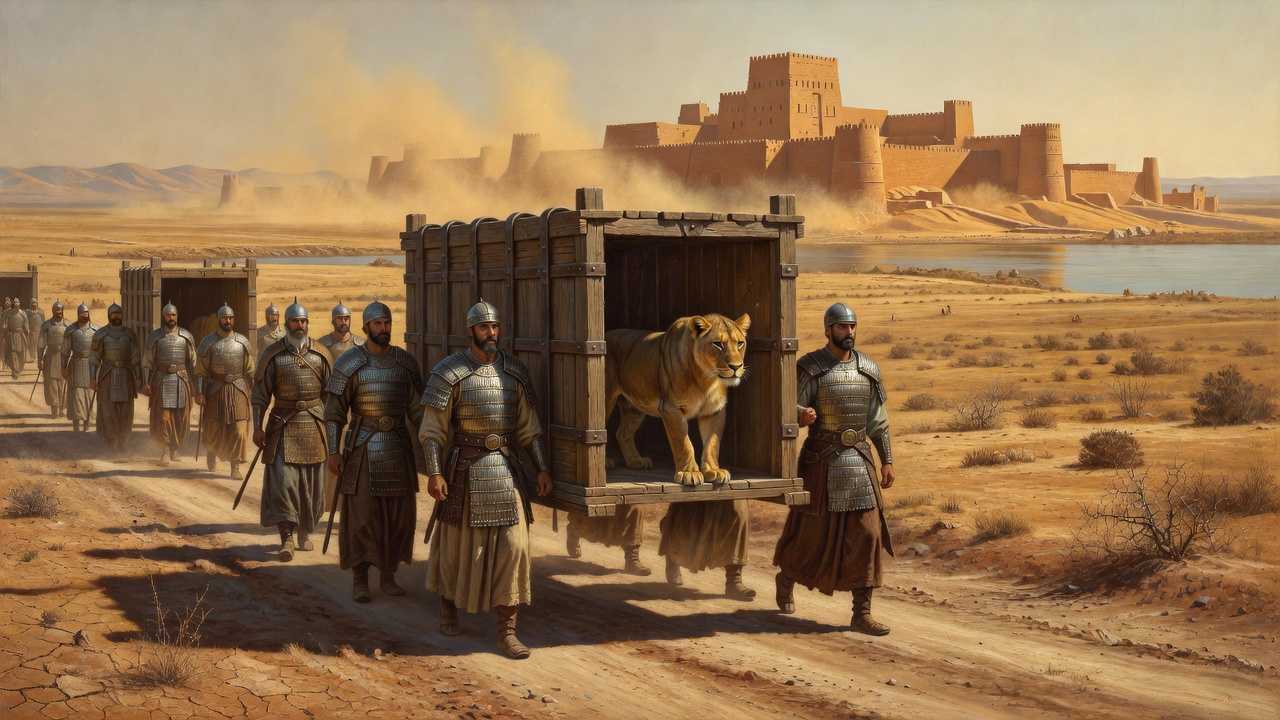
- Ezekiel frames this funeral song as an allegory of a mother lioness rearing her cubs. The first cub learns to tear prey but is captured with hooks and brought to Egypt, while the second cub is trapped in a net, placed in a cage, and led into captivity before the king of Babylon.Sources: the Bible text itself · Egypt · Babylon
- The second half of the lament compares the royal line to a flourishing vine planted beside abundant waters, bearing strong branches fit for rulers' scepters. It depicts the vine being uprooted in fury, scorched by the east wind, consumed by fire, and transplanted into a parched wilderness.Sources: the Bible text itself
Notes written with AI assistance from open sources (Theographic Bible Metadata, CC BY-SA 4.0; Easton’s Bible Dictionary, public domain) and reviewed before publishing.
Places in this chapter
Only places identified with high confidence are shown (90% or more according to the scholarly sources compiled by OpenBible). Period map: DARE (Digital Atlas of the Roman Empire), CC BY 4.0; modern map: © OpenStreetMap contributors; places: OpenBible.info (CC BY 4.0).
Credits and license for this translation
Santa Biblia — Reina Valera 1909
The Holy Bible in Spanish, Reina Valera translation of 1909
Public Domain
Language: Español (Spanish)
Dialect: Castellano 1909
Translation by: Reina y Valera
Dominio Público
2013-12-13
Section headings adapted from the Berean Standard Bible (public domain); they are not part of this translation’s text.
Source: http://ebible.org/spaRV1909/ · eBible.org