1 Kings 1
Biblica® Bhaibheri Dzvene Rakasununguka MuChiShona Chanhasi 2017 · Tap a verse to see its cross-references.

About this book
About 1 Kings
- Easton's Bible Dictionary (1897) treats the authorship of the books of Kings as uncertain. A tradition that Jeremiah wrote them is, in Easton's view, supported by passages almost identical with parts of Jeremiah and by events Jeremiah knew personally, yet Easton thinks it more probable that Ezra, after the Captivity, compiled the books from earlier documents, perhaps written by David, Solomon, Nathan, Gad, and Iddo. Easton dates the composition between 561 B.C., when Jehoiachin was released from captivity by Evil-merodach, and 538 B.C., the decree of Cyrus.Sources: Easton: Kings, The Books of
- Easton says these books contain the annals of the kingdom from Solomon's accession until Nebuchadnezzar and the Babylonians subdued it, a period he estimates at about 453 years. 1 Kings opens while David is dying: Adonijah, his fourth son, who had become heir-apparent to the throne after the deaths of Amnon and Absalom, has himself proclaimed king, but Nathan and Bathsheba persuade David to enthrone Solomon at once. Solomon, David's son by Bathsheba, whose history is recorded in 1 Kings 1-11, came to the throne, Easton suggests, at about sixteen or eighteen.Sources: Easton: Kings, The Books of · Adonijah · Solomon
- In the Hebrew Scriptures the two books of Kings originally formed one book; the Septuagint first divided them and, with the Vulgate, numbers them as the third and fourth books of Kings, the books of Samuel being the first and second. Easton notes that Chronicles gives greater prominence to the priestly or Levitical office, while Kings gives greater prominence to the royal office, and that in the threefold division of the Scriptures by the Jews these books are ranked among the Prophets. The narrative points to earlier sources: the book of the acts of Solomon and the chronicles of the kings of Judah and of Israel.Sources: Easton: Kings, The Books of
- After Solomon's death the ten tribes revolted and invited Jeroboam, son of Nebat, to be their king; Easton calls him the first king of those tribes and dates his reign from 976 to 945 B.C. He had fled to Egypt under the protection of Shishak I, and later moved his residence from Shechem, his first capital, to Tirzah, which remained the chief residence of Israel's kings until Omri bought the hill of Shomeron from Shemer for two talents of silver and built Samaria. The later narrative includes Ahab, Omri's son and the seventh king of Israel, whose wife was Jezebel: to the calf worship introduced by Jeroboam he added the worship of Baal, and he was severely admonished by the prophet Elijah.Sources: Jeroboam · Tirzah · Samaria · Ahab
Notes written with AI assistance from open sources (Theographic Bible Metadata, CC BY-SA 4.0; Easton’s Bible Dictionary, public domain) and reviewed before publishing.
Adhoniya anozvigadza Umambo
1Mambo Dhavhidhi akanga akwegura, ava namakore mazhinji, asi akanga asingadziyirwi kunyange vaimufukidza namagumbeze. 2Naizvozvo, varanda vake vakati kwaari, “Ngatitsvakirei mambo wedu mhandara kuti imushandire nokumuchengeta. Acharara padivi pake kuti ishe mambo wedu adziyirwe.”
3Naizvozvo, vakatsvaka musikana akanaka munyika yose yeIsraeri, vakawana Abhishagi, muShunami, vakauya naye kuna mambo. 4Musikana uyu akanga akanaka kwazvo; uye akachengeta mambo akamushandira, asi mambo haana kurara naye somukadzi wake.
5Zvino Adhoniya, uyo aiva namai vainzi Hagiti, akazvisimudzira akati, “Ini ndichava mambo.” Naizvozvo, akazvigadzirira ngoro navatasvi vamabhiza navarume makumi mashanu kuti vamhanye pamberi pake. 6Baba vake vakanga vasina kana kumbomutsiura paupenyu hwake hwose vachiti, “Ko, izvi nezvizvi wazviitirei?” Akanga ari murume akanaka pachiso chake uye ndiye aitevera Abhusaromu pakuberekwa.
7Adhoniya akarangana naJoabhu, mwanakomana waZeruya, naAbhiatari muprista uye vakamutsigira. 8Asi Zadhoki muprista, Bhenaya mwanakomana waJehoyadha, Natani muprofita, Shimei, naRei, namauto apamusoro aDhavhidhi, havana kutevera Adhoniya.
9Adhoniya akabayira makwai, mombe nemhuru dzakakodzwa paDombo reZohereti, pedyo nepaEnirogeri. Akakoka vakoma navanunʼuna vake vose, vanakomana vamambo, navarume vose veJudha vaiva vakuru vakuru, 10asi haana kukoka Natani muprofita, kana Bhenaya, kana mauto apamusoro, kana Soromoni mununʼuna wake.
11Ipapo Natani akabvunza Bhatishebha, mai vaSoromoni akati, “Hauna kunzwa here kuti Adhoniya, mwanakomana waHagiti, atova mambo ishe wedu Dhavhidhi asingazvizivi? 12Zvino chirega ndikubayire zanhi kuti uponese upenyu hwako noupenyu hwomwanakomana wako Soromoni. 13Chitoenda izvozvi kuna mambo Dhavhidhi unoti kwaari, ‘Ishe wangu mambo, hamuna kupikira ini murandakadzi wenyu here muchiti, “Zvirokwazvo Soromoni mwanakomana wako ndiye achanditevera paumambo, uye ndiye achagara pachigaro changu choushe?” Zvino Adhoniya ava mambo sei?’ 14Zvino iwe paunenge uchiri kutaura namambo, ini ndichapindawo ndichisimbisa zvaunenge wataura.”
15Naizvozvo, Bhatishebha akaenda kundoona mambo mumba make. Mambo akanga akwegura kwazvo, uye Abhishagi muShunami akanga achimushandira. 16Bhatishebha akakotama, akapfugama pamberi pamambo.
Mambo akati, “Unodeiko?”
17Iye akati kwaari, “Ishe wangu, makapikira muranda wenyu naJehovha Mwari wenyu mukati, ‘Soromoni mwanakomana wako ndiye achatevera paumambo, ndiye achagara pachigaro changu choushe.’ 18Asi zvino Adhoniya ava mambo, kunyange imi musingazvizivi. 19Abayira mombe dzakawanda, mhuru dzakakodzwa, namakwai, uye akoka vanakomana vose vamambo, Abhiatari muprista naJoabhu mutungamiri wamauto, asi haana kukoka Soromoni muranda wenyu. 20Zvino ishe wangu mambo, meso eIsraeri yose akatarisa kwamuri, kuti muvaudze kuti ndiani achagara pachigaro choushe chaishe wangu mambo, mushure make. 21Kana musina kudaro, kana ishe wangu mambo aradzikwa namadzibaba ake, ini nomwanakomana wangu Soromoni tichanzi tine mhosva.”
22Achiri kutaura namambo, Natani muprofita akabva asvika. 23Zvino vakaudza mambo kuti, “Natani muprofita ari pano.” Naizvozvo akaenda pamberi pamambo, akakotamisa uso hwake pasi.
24Natani akati, “Ishe wangu, mambo wangu, mareva here kuti Adhoniya ndiye achava mambo mushure menyu, uye kuti ndiye achagara pachigaro chenyu choushe? 25Nhasi aburuka akandobayira mombe dzakawanda, mhuru dzakakodzwa, namakwai. Akoka vanakomana vose vamambo, vatungamiri vamauto naAbhiatari muprista. Izvozvi vari kudya nokunwa naye vachiti, ‘Mambo Adhoniya ngaararame makore akawanda!’ 26Asi haana kukoka ini muranda wenyu naZadhoki muprista, naBhenaya mwanakomana waJehoyadha, nomuranda wenyu Soromoni. 27Izvi ndizvo here zvaitwa naishe wangu mambo vasina kuudza varanda vavo kuti ndiani achagara pachigaro choushe chaishe mambo wangu mushure mavo.”
Dhavhidhi anogadza Soromoni Umambo
28Ipapo Mambo Dhavhidhi akati, “Ndidanirei Bhatishebha.” Naizvozvo iye akauya kuna mambo akamira pamberi pake.
29Zvino mambo akapika akati, “NaJehovha mupenyu, uyo akandinunura pamatambudziko ose, 30zvirokwazvo, nhasi ndichazadzisa zvandakakupikira naJehovha, Mwari waIsraeri kuti, ‘Mwanakomana wako Soromoni achanditevera paumambo, uye achagara pachigaro changu choushe panzvimbo pangu.’ ”
31Ipapo Bhatishebha akakotama pasi nechiso chake akapfugamira mambo akati, “Ishe wangu, Mambo Dhavhidhi, ngaararame nokusingaperi!”
32Mambo Dhavhidhi akati, “Ndidanirei Zadhoki muprista, Natani muprofita naBhenaya mwanakomana waJehoyadha.” Vakati vauya pamberi pamambo, 33akati kwavari, “Endai navaranda vaishe, mutasvise Soromoni mwanakomana wangu panyurusi rangu chairo mugoenda naye zasi kuGihoni. 34Ikoko, Zadhoki muprista naNatani muprofita ngavamuzodze kuti ave mambo weIsraeri. Muridze hwamanda mugodanidzira muchiti, ‘Mambo Soromoni ngaararame makore akawanda!’ 35Zvino imi muchauya muchimutevera, kuti iye auye azogara pachigaro changu choushe, nokuti achava mambo panzvimbo pangu, uye ndamugadza kuti ave mutongi weIsraeri neJudha.”
36Bhenaya mwanakomana waJehoyadha akapindura mambo akati, “Ameni! Jehovha, Mwari waishe mambo wangu, ngaadarowo! 37Jehovha sezvaaiva naishe wangu mambo, saizvozvowo ngaave naSoromoni, aite kuti chigaro chake choushe chive chikuru kupfuura chigaro choushe chaishe wangu Mambo Dhavhidhi!”
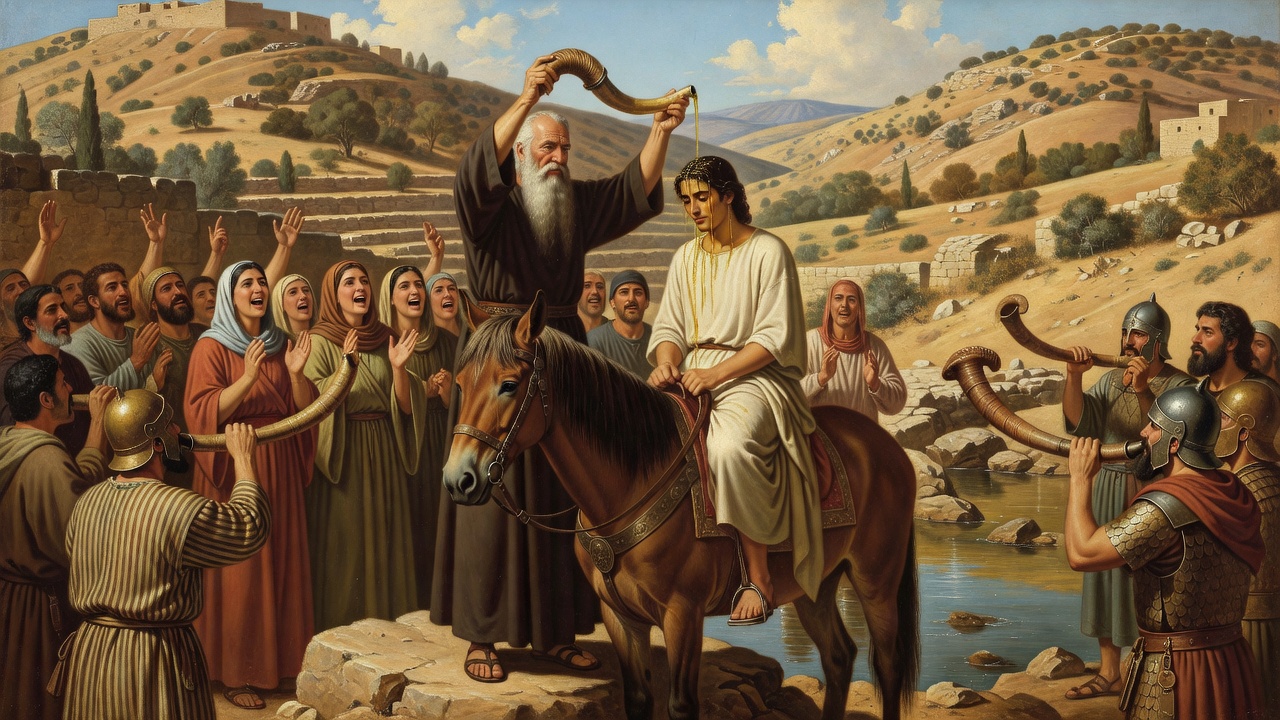
38Naizvozvo Zadhoki muprista, Natani muprofita, Bhenaya mwanakomana waJehoyadha, vaKereti navaPereti vakadzika, vakatasvisa Soromoni panyurusi raMambo Dhavhidhi, vakamutungamirira kuenda kuGihoni. 39Zadhoki muprista akatora gonamombe ramafuta mutende akazodza Soromoni. Ipapo vakaridza hwamanda vanhu vose vakadanidzira vachiti, “Mambo Soromoni ngaararame makore akawanda!” 40Zvino vanhu vose vakamutevera vachiridza mabhosvo vachipembera zvikuru zvokuti pasi pakatinhira noruzha rwavo.
41Adhoniya navose vaakanga akoka, vaakanga anavo, vakazvinzwa pavakanga vopedza kudya, Joabhu akati achinzwa ruzha rwehwamanda, akabvunza, akati, “Mheremhere yose iyi muguta ndeyeiko?”
42Achiri kutaura kudaro, Jonatani, mwanakomana waAbhiatari muprista, akasvika. Adhoniya akati, “Pinda! Murume akatendeka sewe anofanira kunge achiuya namashoko akanaka.”
43Jonatani akapindura akati, “Kwete, kwete! Ishe wedu Mambo Dhavhidhi agadza Soromoni paumambo. 44Mambo amutuma naZadhoki muprista, Natani muprofita, Bhenaya mwanakomana waJehoyadha, vaKereti navaPereti, uye vamutasvisa nyurusi ramambo, 45uye Zadhoki muprista naNatani muprofita vamuzodza kuti ave mambo paGihoni. Vabva ikoko vachipembera, zvokuti guta rose rangova zhowezhowe. Ndiyo mheremhere yamuri kunzwa. 46Pamusoro paizvozvo, Soromoni agara pachigaro choushe. 47Uyezve, machinda amambo auya kuzokorokotedza ishe wedu Mambo Dhavhidhi achiti, ‘Mwari wenyu ngaaite kuti zita raSoromoni rive nomukurumbira kupfuura renyu, uye chigaro chake choushe ngachive chakakura kupfuura chenyu!’ Zvino mambo akotama pamubhedha pake akanamata, 48akati, ‘Jehovha, Mwari waIsraeri, ngaarumbidzwe, iye anditendera kuti ndione mumwe wavana vangu achigara pachigaro changu choushe nhasi.’ ”
49Zvino vose vakanga vakokwa naAdhoniya vakabatwa nokutya vakasimuka vakati uyu ananga kwake, uyu ananga kwake. 50Asi Adhoniya akatya Soromoni, akasimuka akaenda kundobata nyanga dzearitari. 51Soromoni akaudzwa kuti, “Tarirai, Adhoniya ari kutya Mambo uye atobata nyanga dzearitari achiti, ‘Mambo Soromoni ngaandipikire nhasi kuti haasi kuzouraya muranda wake nomunondo.’ ”
52Zvino Soromoni akati, “Kana akazova munhu kwaye, hakuna rubvudzi rwomusoro wake ruchawira pasi; asi zvakaipa zvikawanikwa maari, achafa.” 53Ipapo Mambo Soromoni akatuma varume vakandouya naye kubva paaritari. Zvino Adhoniya akauya akakotamira Mambo Soromoni, Soromoni akati kwaari, “Enda kumba kwako.”
Did you know?
The Succession to David's Throne
- As David's oldest surviving son after the deaths of Amnon and Absalom, Adonijah claimed the royal succession, backed by the military commander Joab and the high priest Abiathar. However, David chose his younger son Solomon, who was supported by the prophet Nathan, the priest Zadok, and the royal bodyguard under Benaiah.Sources: Adonijah · Solomon · the Bible text itself
- Riding the king's own mule was a decisive public declaration of royal authority. By David's explicit instruction, Solomon was escorted down to the spring of Gihon, where Zadok anointed him king with oil taken from the tabernacle to the sound of ram's horns and popular celebration.Sources: Gihon · Zadok · the Bible text itself
- Upon hearing of Solomon's public coronation, Adonijah fled in terror and sought asylum by taking hold of the horns of the sacrificial altar. Solomon granted him conditional clemency, sparing his life so long as he proved himself a worthy man.Sources: Adonijah · the Bible text itself
Notes written with AI assistance from open sources (Theographic Bible Metadata, CC BY-SA 4.0; Easton’s Bible Dictionary, public domain) and reviewed before publishing.
Places in this chapter
- Shunem · Today: Sulam · 32.606, 35.334 · verse 3
- Serpent’s Stone · Today: within 100 m of Bir Ayub · 31.767, 35.236 · verse 9
- Gihon · Today: Gihon Spring · 31.773, 35.236 · verses 33, 38, 44, 45
- Jerusalem · 31.777, 35.234 · verse 40
Only places identified with high confidence are shown (90% or more according to the scholarly sources compiled by OpenBible). Period map: DARE (Digital Atlas of the Roman Empire), CC BY 4.0; modern map: © OpenStreetMap contributors; places: OpenBible.info (CC BY 4.0).
Credits and license for this translation
Biblica® Bhaibheri Dzvene Rakasununguka MuChiShona Chanhasi 2017 The Holy Bible in the Shona language of Zimbabwe: Biblica® Bhaibheri Dzvene Rakasununguka MuChiShona Chanhasi 2017 copyright © 2005, 2018 Biblica, Inc. Language: chiShona Contributor: Biblica, Inc. Biblica® Bhaibheri Dzvene Rakasununguka MuChiShona Chanhasi™ Kopakodzero © 2005, 2018 ne Biblica, Inc. Biblica® Open Shona Contemporary Bible™ Copyright © 2005, 2018 by Biblica, Inc. “Biblica” chiratidzo chekutengeserana chakanyoreswa mu United States uye chiratidzo chehofisi yeBiblica, Inc. Inoshandiswa zviripamutemo. “Biblica” is a trademark registered in the United States Patent and Trademark Office by Biblica, Inc. Used with permission. Creative Commons License Iri basa rinowanikwa pasi peCreative Commons Attribution-ShareAlike 4.0 International License (CC BY-SA). Kuti utarise kopi yeiri rezinesi, shanyira https://creativecommons.org/licenses/by-sa/4.0 kana kutumira tsamba kuCreative Commons, PO Box 1866, Mountain View, CA 94042, USA. Biblica® chiratidzo chinozikanwa chakanyorwa neBiblica, Inc., uye kushandiswa kwechiratidzo cheBiblica® kunoda mvumo yakanyorwa yeBiblica, Inc. Pasi pemitemo ye rizinesi re CC BY-SA, unogona kuteedzera uye kugovera patsva basa iri risina kugadziridzwa bedzi kana uchichengetedza chiratidzo che Biblica®. Kana iwe ukachinja kopi kana kushandura iri basa, nokudaro uchigadzira rimwe basa, unofanira kubvisa chiratidzo cheBiblica®. Pabasa rakatorwa, unofanirwa kuratidza shanduko dzawakaita uye woratidza sezvinotevera: “Basa rekutanga reBiblica, Inc. rinowanikwa mahara pa www.biblica.com uye nepa open.bible.” Cherechedzo yekopakodzero inofanirwa kuoneka pamusoro wenyaya kana peji rekopakodzero sezvinotevera: Biblica® Bhaibheri Dzvene Rakasununguka MuChiShona Chanhasi™ Kopakodzero © 2005, 2018 ne Biblica, Inc. Biblica® Open Shona Contemporary Bible™ Copyright © 2005, 2018 by Biblica, Inc. “Biblica” chiratidzo chekutengeserana chakanyoreswa mu United States uye chiratidzo chehofisi yeBiblica, Inc. Inoshandiswa zviripamutemo. “Biblica” is a trademark registered in the United States Patent and Trademark Office by Biblica, Inc. Used with permission. Unofanirwa zvakare kuita kuti basa rawachinja riwanikwe pasi pe rezinesi yakafanana (CC BY-SA). Kana iwe uchida kuzivisa Biblica, Inc. maererano neshanduro yako yebasa iri, taura nesu pa https://open.bible/contact-us . This work is made available under the Creative Commons Attribution-ShareAlike 4.0 International License (CC BY-SA). To view a copy of this license, visit https://creativecommons.org/licenses/by-sa/4.0 or send a letter to Creative Commons, PO Box 1866, Mountain View, CA 94042, USA. Biblica® is a trademark registered by Biblica, Inc., and use of the Biblica® trademark requires the written permission of Biblica, Inc. Under the terms of the CC BY-SA license, you may copy and redistribute this unmodified work as long as you keep the Biblica® trademark intact. If you modify a copy or translate this work, thereby creating a derivative work, you must remove the Biblica® trademark. On the derivative work, you must indicate what changes you have made and attribute the work as follows: “The original work by Biblica, Inc. is available for free at www.biblica.com and open.bible.” Notice of copyright must appear on the title or copyright page of the work as follows: Biblica® Bhaibheri Dzvene Rakasununguka MuChiShona Chanhasi™ Kopakodzero © 2005, 2018 ne Biblica, Inc. Biblica® Open Shona Contemporary Bible™ Copyright © 2005, 2018 by Biblica, Inc. “Biblica” chiratidzo chekutengeserana chakanyoreswa mu United States uye chiratidzo chehofisi yeBiblica, Inc. Inoshandiswa zviripamutemo. “Biblica” is a trademark registered in the United States Patent and Trademark Office by Biblica, Inc. Used with permission. You must also make your derivative work available under the same license (CC BY-SA). If you would like to notify Biblica, Inc. regarding your translation of this work, please contact us at https://open.bible/contact-us . This translation is made available to you under the terms of the Creative Commons Attribution Share-Alike license 4.0. You have permission to share and redistribute this Bible translation in any format and to make reasonable revisions and adaptations of this translation, provided that: You include the above copyright and source information. If you make any changes to the text, you must indicate that you did so in a way that makes it clear that the original licensor is not necessarily endorsing your changes. If you redistribute this text, you must distribute your contributions under the same license as the original. Pictures included with Scriptures and other documents on this site are licensed just for use with those Scriptures and documents. For other uses, please contact the respective copyright owners. Note that in addition to the rules above, revising and adapting God's Word involves a great responsibility to be true to God's Word. See Revelation 22:18-19. 2023-04-14
Source: http://ebible.org/sna/ · eBible.org