2 Corinthians 7
Ya habi ni apo namalyari: Bayon tsipan - Ayta Mag-antsi · Tap a verse to see its cross-references.
1Anlugurên kon patêl ha Panginoon, gawan habayto ya impangako ni Apo Namalyari kantamo, ay dapat alihên tamo ya kaganawan pamanyag karawakan ya ampakarêmêk hên nakêm, haka lawini tamo. Dapat mamiyay kitamo hên ayn kapintasan gawan ha pamanggalang tamo kana.
An-ikahigla ni apostol Pablo ya pamaghêhê lan patêl ha Panginoon ya angkapi-tsi-tsipon ha balayan Corinto
2Lugurên yo kay etaman dayi, ta ayn kay hên kasalanan kamoyu. A naên kaw inamuyot hên manyag karawakan ha pamanoro naên, o ha pamimiyay man. A naên kaw êt hên niloko. 3A kataw ampintasan, ta mana kinan hinabi, ya anlugurên naên kaw hinoman ya angkalyari ha pamimiyay tamo, o ha kamatsan man, ay a magbayo ya pamanlugud naên kamoyu. 4Pêtêg kataw hên ampagtsiwal-an, haka panay kataw hên andayêwên ha arapan hên kaatag. Ampakadanas kay man hên kaganawan kairapan, ay angkatalaba ko, haka hadyay kahiglaan nakêm ko.
5Agyan ha probinsyan Macedonia, ay ayn painawa ya lawini naên, ta hino-hino kay na hên ya kairapan ya nadanasan naên ta main nanalanghang kannaên, haka niyumagah êt ya nakêm naên. 6Noa, hi Apo Namalyari ya ampamitalaba kanlan angkahiraan nakêm, ay hiya êt, ya nanalaba kannaên ha pamanlumatêng ni Tito. 7Haka alwan bat ya pamanlumatêng na ya nanalaba kannaên, noa, nanalaba êt kannaên ya pamipamwang na kannaên hên tungkol ha pamitalaba yo kana, gawan ha hadyay lêngêw yo kangko, ta pinaghêhêan yoy dinyag yoy alwan mangêd, haka ha pamakigampi yo kangko. Pamakagilam kon imbalita na, ay lalo kon hinumigla.
8Nakab-i ko man hên kalungkutan kamoyu hên babayo yon tinanggap ya unan hulat ko, ay a kinan anhêhêên ya sarili ko ha pamanulat kon habayto, agyan hinêhê ko ya sarili ko pon hên namwangan ko ya nakbêk kaw bayro ha hinulat ko. 9Amêhên ay mahigla ko, alwan gawan ha nakab-i kon ikabêlêgêhbêg nakêm yo, noa, mahigla ko ta habaytoy namitolak kamoyu êmên yo paghêhêan ya pinaulayan yoy karawakan ya nalyari kamoyu. Habaytoy bêlêgêhbêg nakêm yo ay ayon ha kalabayan ni Apo Namalyari, kabay pinakinabangnan yoy habayto. 10Êmbayroy bêlêgêhbêg nakêm ya ayon ha kalabayan ni Apo Namalyari, ay ampamitolak kantamo hên manalibokot ha karawakan, ha ikaligtas tamo hên ayn nanan anhêhêên ya sarili. Noa, ya bêlêgêhbêg nakêm lan a ampagpalokop kan Apo Namalyari, ya a manalibokot ha karawakan, ay ampamitolak kanla ha kamatsan, ya kaparusaan ya ayn angga. 11Pakaihipên yoy nalyari ha biyay yo gawan ha bêlêgêhbêg nakêm yo, ya ayon ha kalabayan ni Apo Namalyari! Kinahêmêkan yoy sarili yo, haka hadyay limo yo, ya maparusaan kaw, kabay tampol yoy nan pinaral-an ya nanyag kasalanan ya pinaulayan yo hên hato. Ha êmbayro ay naipahlêk yoy na ha kaatag, ya anhumonol kaw na ha kalabayan ni Apo Namalyari. Labay-labay yo kon mahêlêk, ta êmên miúmang ya pamilalamo tamo.
12Amêhên ay malinaw no awta êmbayroy laman hên hatoy hulat ko kamoyu. Habaytoy alwan bat ha nanyag kasalanan o ha pinanyagan kasalanan, noa, ta êmên na êt maipamwang kamoyu ni Apo Namalyari, no ay-êmên ya pamanlugud yo kannaên. 13Ha dinyag yoy habayto, ay taganán tinalaba kay.
Alwan bêngat habayto, noa, napahigla kay êt ha kahiglaan ni Tito, gawan pinahigla yo ya haka hinumawang ya ihip na hên atsi ya bahên. 14Impagmahlay kataw kan Tito, bayo ya naniraw kamoyu, haka a ko etaman nipakarêng-êy kana, ta no ay-êmên hên pêtêg ya kaganawan intoro naên kamoyu, ay êmbayro êt, ay napaptêgan nay pamidayêw naên kamoyu, ha arapan na. 15Napahanan ya pamanlugud na kamoyu gawan ha pamanggalang yo ha pamananggap yo kana, haka ha boon nakêm yon hinonol ya hinabi na kamoyu. 16Hadyay kahiglaan ko gawan sigurado ko ya ihundo yoy pamanyag hên kalabayan ni Apo Namalyari.
Did you know?
Comfort after a painful letter
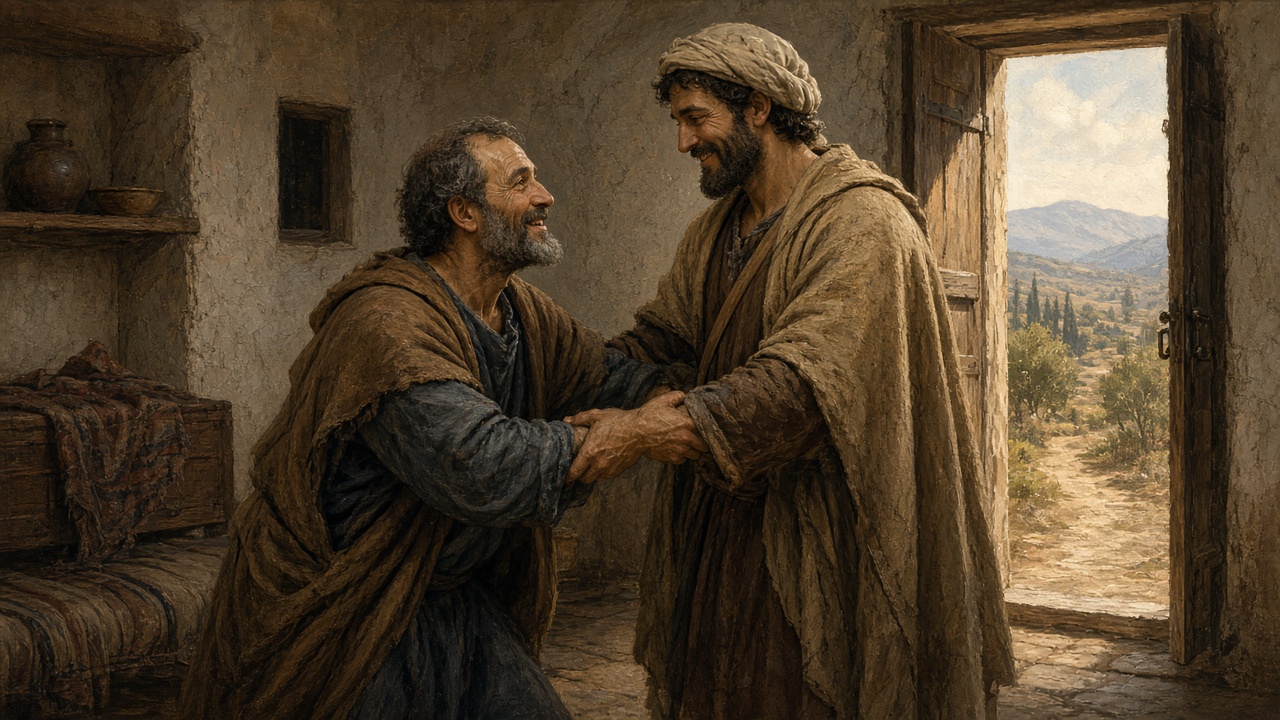
- Macedonia, where Paul says he arrived with no rest in his body—conflicts outside and fears within—was a Roman province north of Greece. There, he writes, the God who comforts the downcast comforted him by the arrival of Titus.Sources: Macedonia · the Bible text itself
- Paul speaks of a letter that made them sorrowful, but only for a short time. He now rejoices not because they were sorrowful, but because that sorrow led them to repentance; he says they felt the sorrow God intended, were not harmed by him, and showed earnestness, zeal, and innocence in the matter.Sources: the Bible text itself
- A short account describes Titus as a companion of Paul, apparently a Gentile chiefly engaged in ministering to Gentiles. In this chapter Paul says Titus’s arrival comforted him, that Titus reported their longing, mourning, and zeal, and that they welcomed Titus with fear and trembling.Sources: Titus · the Bible text itself
Notes written with AI assistance from open sources (Theographic Bible Metadata, CC BY-SA 4.0; Easton’s Bible Dictionary, public domain) and reviewed before publishing.
Places in this chapter
- Macedonia · 41.600, 22.540 · verse 5
Only places identified with high confidence are shown (90% or more according to the scholarly sources compiled by OpenBible). Period map: DARE (Digital Atlas of the Roman Empire), CC BY 4.0; modern map: © OpenStreetMap contributors; places: OpenBible.info (CC BY 4.0).
Credits and license for this translation
Ya habi ni apo namalyari: Bayon tsipan - Ayta Mag-antsi
New Testament in Ayta, Mag-antsi
copyright © 2006 Wycliffe Bible Translators, Inc.
Language: Mag-antsi Ayta (Ayta, Mag-antsi)
Translation by: Wycliffe Bible Translators
Contributor: Wycliffe Bible Translators, Inc.
Copyright Information
© 2006, Wycliffe Bible Translators, Inc. All rights reserved.
This translation text is made available to you under the
terms of the Creative Commons License: Attribution-Noncommercial-No Derivative Works.
( http://creativecommons.org/licenses/by-nc-nd/3.0/ )
In addition, you have permission to port the text to different file formats, as long as you
do not change any of the text or punctuation of the Bible.
You may share, copy, distribute, transmit, and extract portions
or quotations from this work, provided that you include the above copyright
information:
You must give Attribution to the work.
You do not sell this work for a profit.
You do not make any derivative works that change any of the actual words or punctuation of the Scriptures.
Permissions beyond the scope of this license may be
available if you contact
us with your request.
Printed book ISBN 9789718260654
The New Testament
in Ayta, Mag-antsi
© 2006, Wycliffe Bible Translators, Inc. All rights reserved.
This translation is made available to you under the terms of the
Creative Commons Attribution-Noncommercial-No Derivatives license 4.0.
You may share and redistribute this Bible translation or extracts from it in any format, provided that:
You include the above copyright and source information.
You do not sell this work for a profit.
You do not change any of the words or punctuation of the Scriptures.
Pictures included with Scriptures and other documents on this site are licensed just for use with those Scriptures and documents.
For other uses, please contact the respective copyright owners.
2015-03-17
Source: http://ebible.org/sgb/ · eBible.org