John 6
Hudani Kielien · Tap a verse to see its cross-references.
5000 Kunde Chudughazho
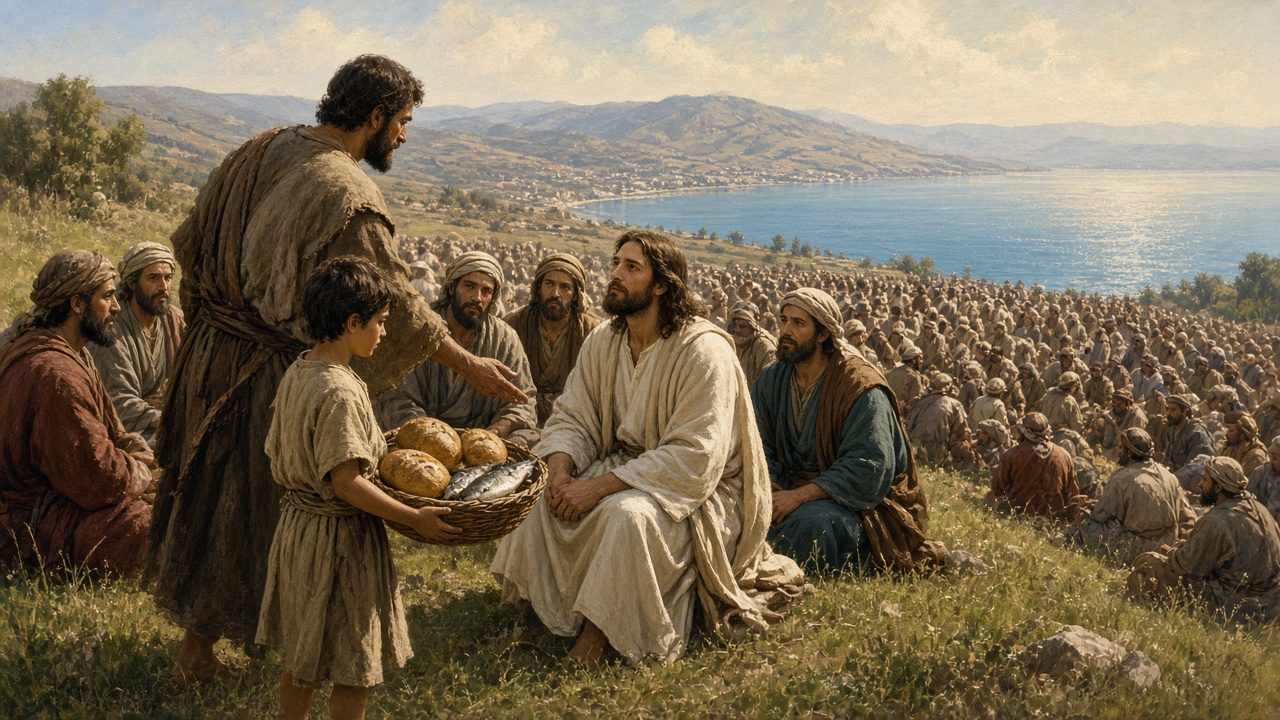
1Enense khuinashi Ersa Jialilihaini daowo. Hhei Qibiliyahai giezhi ye uruzho. 2Tebieji olon kunla hhe gientulai goudaghasan ghudureqii uzhedene hhei daghazho. 3Ersa ulade khirei tujilarene hhantu souwo. 4Hhe shihoude Yutai kunni Jiulidaosan Jie chadashizho. 5Ersa qiorunne qila uzhese tebieji olon kunla hhei melie iresei chanladene Feilide kieliewo, "Matan khalase imegheni ginan agizhi irezhi ene kunlade ijieghane?" 6Hhe ingiezhi kieliese Feilii shiizho. Goyane matui giekui eqie mejiene. 7Feili kieliewo, "200 gie miengughala ginan agise nie kunde goujinie ijiezhiye ulie kurune." 8Nie tujishi Ximun-Bedurui jiuni Andelie wo. Ersade kieliewo, 9"Enende nie ga kewon dunmaighala giesan tawun ginanji ghua zhaghasun bareizho. Imegheni kunlade yan gholune?" 10Ersa "Dajialai sougha." giezhi kieliewo. Hhe oronde osun henshi kunla souwo. Gon ere kun sanase chabudu 5000 wine. 11Ersa ginanyi barei Hudade mafan kieliedene sousan kunlade ghughazhi ogiwo. Zhaghasunyiye ingiezhi giedene kunlade ogiwo. Dajiala giedughonni ijiese giedughonni ogiwo. 12Hhela ijie chuduse Ersa tujiladene kieliewo, "Feiliesei zaota bu giedene man shidolozhi agi." 13Ingiese kunla ijiedene feiliesan tawun ginanni zhazhai shidolose 12 gie lanzi zhonlowo. 14Ersa giesan ghudureqini uzhedene kunla kieliezho, "Eneshi zhen duyade ireku hhe nie xienzhi enbene." 15Kunla iredene Ersai bareizhi biizhi honshan danlaghakui mejiedene Ersa niezheghanne pse ulade khireiwo.
Ersa Usu Mienzi Jiere Yozho
16Khara oluse tujilani haibienzide bouwo. 17Chon jiere khireidene hai hhemienni Jiabainunde yozhi qiiwo. Khara oluzhoma, Ersa hhelai hhende dou ese irezho. 18Nie fugie kei feiliese hai jiere lan yebeiseye fugiedawo. 19Tujila chonni huaizhi 10 jili yozho. Ingiekude hhela Ersa hai jiere yozhi chon shida iresei chujieghedene ayizho. 20Ingiese Ersa kieliewo, "Bi wo, bu ayi." 21Ingiese hhela hende bayasudene Ersai jienliezhi chon jiere khise echiku orondene deigo kuruwo.
Asimanse Iresan Ginan
22Khuichudu hai duimiende beisan kunla hhende zi niekozi chon bikui mejiene, pse chon uwo. Ersa tujilarene chon jiere hhantu uye khiseiye mejiene. Tujilani goyane echizho. 23Pse giedun chon Qibiliyase Ezhan mafan kieliedene kunlade ginan ijieghasan hhe oron shida irewo. 24Kunla Ersa, tujilai chanla dase chon souzhi Jiabainunde Ersai ereile echiwo.
25Hhela hai duimiense Ersai ereizhi oludene kieliewo, "Loushi, chi yan xienzide enende irewo?" 26Ersa kieliewo, "Bi tande shuhuajia kielieye, ta mii ereile irese bi xienjighasan ghudureqide ese oluzho, ginanni ijiezhi chudusande oluzho. 27Ta widaku ijiunide oluzhi wilie bu gie. Chanqiku amin wineku ijiunide oluzhi gie. Enei Kunnikewon tande ogine. Kunnikewonshi Huda Ada renjisan wo." 28Ingiese hhela asawo, "Bijien yan wilie giese Hudai wilie sanane?" 29Ersa kieliewo, "Huda peizhi ireghasan hhei xianxin giese, hheshi Hudai wilie wo." 30Hhela pse kieliewo, "Chi yan ghudureqi xienjighazhi bijienyi xianxin gieghane? Chi yan giene? 31Jinwun jiere, 'Asiman jierese hhe hhelade ginanyi ogizho.' giezhi huaisan mutun mai xienrenla hontande mana ijiewoma." 32Ingiese Ersa kieliewo, "Bi tande shuhuajia kielieye, asiman jierese tande ginanyi ogisanshi Musa pusho. Asiman jierese tande zhenzhenji ginan ogisanshi Adami wo. 33Hudai ginanshi asiman jierese bouzhesan hhe nie wo. Hhe duyani kunlade amin ogine."
34Ingiese hhela kieliewo, "Gujiu, chi imutu ginanyi bijiende chanqi ogi." 35Ersa kieliewo, "Bishi aminni ginan enbene. Mii enende iresan kunla ulie oliesune. Mii xianxin giese ibeizi ulie undasune. 36Ingieliuzhe, bi kieliezhi daozhoma, ta mii chujiegheseye, xianxin ulie giene. 37Adami made ogisan kunla mii enende irene. Mii enende iresanlai bi jiedui ulie danlane. 38Bi asiman jierese bouzhese goya isighalane ulie giene. Mii peizhi ireghasan hhei isighala giene. 39Mii peizhi ireghasan hhei isishi made ogisan kunlai bi nieda ulie widaghazhi duya barakudeni aminne olughane giezho. 40Adaimi isishi Kewonyini uzhedene xianxin giesan kunlade man chanqiku aminyi ogine. Duya barakudeni bi hhelai aminne olughane."
41Yutai kunla Ersa orunshi asiman jierese bouzhesan ginan wo giese hhei kieliendu qiiwo. 42Hhela kieliewo, "Eneshi Yusufui kewon Ersa pushonu? Ana adaini matan tanine. Hhe matugie imutui kielien kieliene? Orunshi asiman jierese bouzhesan wo giezho?" 43Ersa kieliewo, "Ta qingiezhi bu kieliendu. 44Mii peizhi ireghasan Adami ulie ireghase mii enende kiemada ire dane. Mii enende iresanlai duya barakudeni bi hhei aminne olughane. 45Xienzhii shu jiere, 'Hhela man Hudase suruzho.' giezhi huaizho. Adase chenliezhi surusan kunla man mii enende irene. 46Ene kielienshi kiema Adai chanlazhi daosan hhe isi pusho. Hudai hhense iresan hhense chugo kiemada Adai uzhezhi ese daozho. 47Bi shuhuajia kielieye, xianxin giesan kunde chanqiku amin wine. 48Bishi aminni ginan wo. 49Tai xienren hontande manai ijieliuzhe fuguwo. 50Eneshi asiman jierese bouzhesan ginan wo. Kun ijiese ulie fugune. 51Bishi asiman jierese bouzhesan amin ogiku ginan wo. Kun ijiese chanqi amitu wo. Ene ginanshi mii migha wo, duyai kunlai aminde oluzhi ogizho."
52Yutai kunla nieniedene jianjinduzho, "Ene kun matugie mighane ogizhi ijieghane?" 53Ersa kieliewo, "Bi shuhuajia kielieye, ta Kunnikewonyi mighai ulie ijiezhi chusunyi ulie ochise tai sudoro amin uwo. 54Mii mighai ijiezhi chusunyi ochisan kunde chanqiku amin wine. Duya barakudeni bi hhei aminne olughane. 55Mighamishi zhenzhenji ijiuni wo, chusunmishi zhenzhenji ochikui wo. 56Mighaimi ijiezhi chusunyimi ochisan kun mii sudoro beizho. Biye hhei sudoro beizho. 57Mii peizhi ireghasan ulie fuguku Adai kouizhi bi amituku mutun mighaimi ijiesan kunla mii kouizhi amiturane. 58Eneshi asiman jierese bouzhesan ginan wo. Enei ijiesan kun chanqi amitu wo. Tai xienrenghala buxian wo, manai ijieliuzhe fuguwo." 59Enezighan kielienshi Ersa Jiabainunni huitande kunlade sughazhi kieliesan wo.
Amitu Kielien
60Tujilani hhei kielienyi sonosudene kieliewo, "Ene kielien chijia wo. Kien dunjirene?" 61Ersa tujilani kieliendusei mejiedene hhelade kieliewo, "Ene kielien tai zhughei gojiolughawu? 62Qingiese Kunnikewon yenlaiku orondene khikui chanlase ta matugie sumulane? 63Kunde amin ogikushi Shenlin wo, beye yama oronde uwo. Bi tande kieliesan kielienshi ruhher wo, aminye enbene. 64Ingieseye tai dunda mii xianxin ese giesan kun wine." Ersa kaishi giekude kien hhei ghudandukuni mejiene. 65Ersa pse kieliewo, "Ene yenyin jiere bi tande kieliezhi daozho. Ada ulie ireghase kiemada mii enende ire dane."
66Enense khuinashi Ersai daghasan olon kunla yolazhi pse hhei ese daghawo. 67Ingiese Ersa 12 gie tujidene kieliewo, "Taye yolanu?" 68Ximun-Beduru kieliewo, "Ezhan, chade chanqiku amin ogiku kielien wine. Bijien pse kienyi daghane? 69Bijien chishi Hudase iresan hhe zhiguitu bikui xianxin giezhi mejiezho." 70Ersa kieliewo, "Bi tai 12 giei sunghuwola? Tai dunda niekozishi Ibilisi wo." 71Ersai ene kielienshi Jialie kun Ximunyi kewon Yudai kieliezho. Hheshi 12 gie tuji dundadu nie wo, khuinashi Ersai ghudandune.
Did you know?
The Bread of Life
- In this chapter John calls the lake both the Sea of Galilee and the Sea of Tiberias. Easton's Bible Dictionary describes it as twelve and a half miles long and from four to seven and a half miles wide, with its surface 682 feet below the Mediterranean. Tiberias, on the western shore, is said to have been founded by Herod Antipas in A.D. 16 and named for the emperor Tiberius; some boats from that city landed near the place where the people had eaten the bread.Sources: the Bible text itself · Sea of Galilee · Tiberias
- That evening the disciples set out by boat for Capernaum, and the next day the crowd crossed and found Jesus there. He delivered the teaching about the bread of life in the synagogue at Capernaum. Easton's Bible Dictionary notes that the city, not mentioned in the Old Testament, became Jesus' own city after his expulsion from Nazareth and was the scene of many episodes in his ministry.Sources: the Bible text itself · Capernaum
- As the crowd drew near, Jesus asked Philip where they could buy bread, a question the narrative says was meant to test him, for Jesus already knew what he would do. Philip, like Andrew and Peter, was from Bethsaida; he answered that two hundred denarii would not buy enough for each person to have a small piece. Andrew, Peter's brother, then pointed out a boy with five barley loaves and two small fish, and Easton's Bible Dictionary, citing this exchange among other passages, says Philip seems to have held a prominent place among the apostles.Sources: the Bible text itself · Phillip the Apostle · Andrew · Simon Peter
Notes written with AI assistance from open sources (Theographic Bible Metadata, CC BY-SA 4.0; Easton’s Bible Dictionary, public domain) and reviewed before publishing.
Places in this chapter
Only places identified with high confidence are shown (90% or more according to the scholarly sources compiled by OpenBible). Period map: DARE (Digital Atlas of the Roman Empire), CC BY 4.0; modern map: © OpenStreetMap contributors; places: OpenBible.info (CC BY 4.0).
Credits and license for this translation
Hudani Kielien
The New Testament in the Dongxiang language of China: Hudani Kielien
Copyright © 2020-2024 River Street Publishing
Language: (Dongxiang)
Contributor: Wycliffe Bible Translators, Inc.
This translation is made available to you under the terms of the
Creative Commons Attribution Share-Alike license 4.0.
You have permission to share and redistribute this Bible translation in any format and to make reasonable revisions and adaptations of this translation, provided that:
You include the above copyright and source information.
If you make any changes to the text, you must indicate that you did so in a way that makes it clear that the original licensor is not necessarily endorsing your changes.
If you redistribute this text, you must distribute your contributions under the same license as the original.
Pictures included with Scriptures and other documents on this site are licensed just for use with those Scriptures and documents.
For other uses, please contact the respective copyright owners.
Note that in addition to the rules above, revising and adapting God's Word involves a great responsibility to be true to God's Word. See Revelation 22:18-19.
2025-07-02
Source: http://ebible.org/sce/ · eBible.org