Matthew 2
Biblija tu limba Rrãmãnã · Tap a verse to see its cross-references.
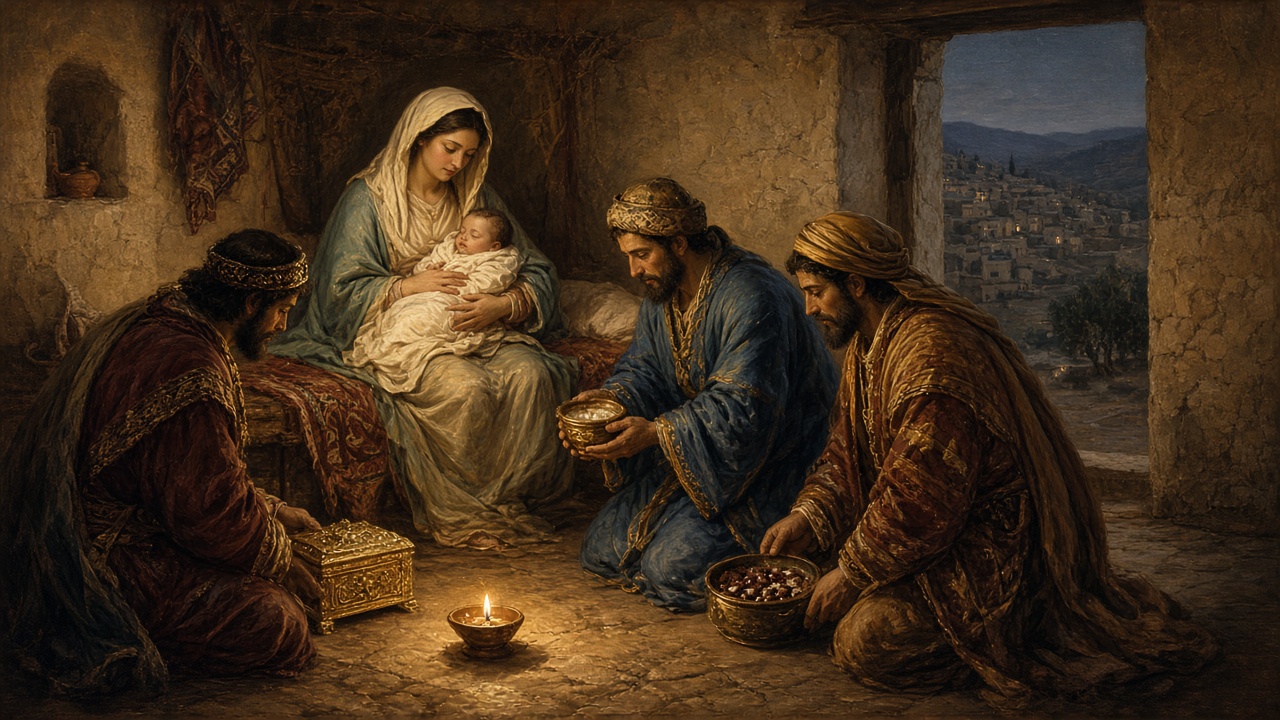
Shtiutslji dit Rãsãrit
1Dupã tsi Isusul s-amintã tu Betlehem a Iudeiljei tu chirolu al amirãlu Ierod. Ia, niscãntsã shtiuts di la Rãsãrit agiumsirã la Ierusalem, 2dzãcãnda: “Iu easti amirãlu a Iudeilor, tsi s-amintã? Cã vidzum steaua a lui la Rãsãrit sh-vinim s-nã ncljinãm.”
3Amirãlu Ierod, cãndu avdzã aesti zboari, s-tulburã, sh-deadun cu nãsu tut Ierusalemlu. 4Sh-dupã tsi lã adunã tuts mãrilji a preftsãlor shi scriblji a popului, lji ntribã iu prindi s-aminta Hristolu. 5Sh-elji lji dzãsirã: “Tu Betlehemlu a Iudeiljei, cã ashã easti scriatã di la prufitlu: 6‘Sh-tini, Betlehem, loc al Iuda, nu eshti ma njic di printsilji a Iudeiljei, cã di la tini va easã un conducãtor, tsi va pascã populu a meu, Israelu.’”
7Atumsea Ierodul lã acljimã pi ascumtu shtiutslji, sh-ntribã cu mari cãshtigã elji, di chirolu cãndu lu avea vidzutã steaua di prota oarã. 8Sh-lji pitricu la Betlehem sh-lã dzãsi: “Imnats shi ntribats ghini ti cilimeanlu. Sh-cãndu s-lu aflats, dimãndats-nji tsi s-yin sh-mini s-mi ncljinu.”
9Sh-elji, dupã tsi lu avdzãrã amirãlu, fudzirã. Sh-ia, steaua tsi avea vidzutã la rãsãrit, s-dutsea nãintea a lor pãnã s-dãnãsi la loclu iu eara cilimeanlu. 10Elji, cãndu u vidzurã steaua, s-hãrsirã multu. 11Sh-dupã tsi intrarã tu casã, vidzurã cilimeanlu cu Maria, muma a lui, shi cãdzurã pri dzinucljiu shi si ncljinarã. Deapoea disfeatsirã ayishtearea a lor sh-durusirã: furii, timeamã shi njir. 12Dupã tsi Dumnidzãlu lã dimãndã tu yis tsi s-nu s-turna la Irod, elji s-turnarã tu loclu a lor pri unã altã cali.
Fudzirea tu Eghyptu
13Tora, dupã tsi shtiutslji s-nchisirã, ia, un anghil a Domnului lji si fãnirusi tu yis al Iosif shi lj-dzãsi: “Scoalã-ti, ljea cilimeanlu shi muma a lui sh-fudzi tu Eghiptu, shi shedz aclo pãnã s-tsã dzãc mini, cã Ierodul va lu caftã cilimeanlu ti vãtãmari.”
14Elu, si sculã, lo cilimeanlu sh-muma a lui noaptea shi fudzi tu Eghiptu. 15Armasi aclo pãnã muri Irodul, tsi si mplinea tsi eara dzãsã di Domnul prit prufitlu: “Lu acljimai hiljilu a meu di Eghyptu.”
Vãtãmarea a Cilimenjilor
16Atumtsea Ierodul, vidzãnda cã shtiutslji lu avea arãs, s-nãrãi multu sh-ordinã si s-vatãmã tuts cilimenjilji mascuri tsi eara tu Betlehem shi tu tuti locurili di anvãrliga a lui, di la doi anji sh-nghios, dupã chirolu tsi lu avea aflatã di la shtiutslji. 17Atumtsea si mplini atsea tsi eara dzãsã di la prufitlu Ieremia cã: 18“Tu Ramã s-avdzã unã zghileari, unã vãitari, un plãngu shi patathimã mari. Rachela vãita hiljilji a ljei sh-nu va si s-diznjeardã, cã elji nu sãntu ma.”
Turnarea dit Eghyptu
19Dupã tsi Ierodul muri, ia un anghil a Domnului si lj-fãnirusi tu yis al Iosif tu Eghyptu, 20shi lj dzãsi: “Scoal-ti, ljea cilimeanlu sh-muma a lui sh-imnã tu loclu al Israel cã atselji tsi vrea s-lu vãtãma cilimeanlu au muritã.”
21Sh-elu si sculã, lo cilimeanlu sh-muma a lui shi s-dusi tu loclu al Israel. 22Ma, cãndu avdzã cã Arhelaul, domnea la Iudea tu loclu al Ierod, tatãl a lui, avu fricã si s-ducã aclo. Shi, dupã tsi s-urnipsi di la Dumnidzãlu tu yis, s-dusi tu loclu a Galileiljei. 23Sh-dupã tsi agiumsi aclo, shidzu la un cãsãbã tsi s-acljima Nazaret, tsi si mplinea atsea tsi eara dzãsã di la prufitsilji: “Elu va si s-acljeamã Nazareas.”
Did you know?
Magi, Herod, and Nazareth
- The King Herod of this chapter is Herod the Great. His son Archelaus, by Malthace, a Samaritan woman, inherited a third of the kingdom: Idumea, Judea, and Samaria. Until a few days before Herod's death another son, Antipas, had been named successor, but in his last moments Herod named Archelaus; for fear of him, Joseph turned aside from Judea and withdrew to Galilee.Sources: Archelaus · the Bible text itself
- Matthew links the deaths of the boys in Bethlehem to words spoken through the prophet Jeremiah: a voice in Ramah, Rachel weeping for her children. Rachel, one of Jacob's wives, died giving birth to Benjamin and was buried by the wayside on the road to Ephrath, that is Bethlehem, directly north of the town. Her sepulchre is regarded with great veneration by the Jews.Sources: the Bible text itself · Rachel · Bethlehem
- Bethlehem, in the hill country of Judah, was earlier called Ephrath and was also known as the city of David; under the Romans it lay in Judea, the southernmost of the three divisions of Palestine. Joseph and Mary went instead to Nazareth in Galilee, their home, a town not mentioned in the Old Testament. The name Nazareth is generally supposed to come from the Hebrew netser, a shoot or sprout, though some connect it with a word for guarding or watching.Sources: Bethlehem · Judea · Nazareth · the Bible text itself
Notes written with AI assistance from open sources (Theographic Bible Metadata, CC BY-SA 4.0; Easton’s Bible Dictionary, public domain) and reviewed before publishing.
Places in this chapter
- Bethlehem · 31.704, 35.208 · verses 1, 5, 6, 8, 9, 16
- East · Today: region around Amman · 31.955, 35.934 · verses 1, 2, 9
- Jerusalem · 31.777, 35.234 · verses 1, 3
- Judea · Today: Judea 1 · 31.777, 35.234 · verses 1, 5, 22
- Egypt · 30.129, 31.308 · verses 13, 14, 15, 19
- Galilee · 32.760, 35.527 · verse 22
- Nazareth · 32.702, 35.298 · verse 23
Only places identified with high confidence are shown (90% or more according to the scholarly sources compiled by OpenBible). Period map: DARE (Digital Atlas of the Roman Empire), CC BY 4.0; modern map: © OpenStreetMap contributors; places: OpenBible.info (CC BY 4.0).
Credits and license for this translation
Biblija tu limba Rrãmãnã
Portions of the Holy Bible in the Aromanian prestige dialect spoken in central and southern Albania.
copyright © 2024 The Word for the World International
Language: Armãneashti/Arumanisht
Contributor: The Word for the World Europe
Bibla Aromaneshti Frasherot dit Arbenishi
The Word for the World International 2024
www.twftw.org
Aromaneshtli Frasherot easti un din dialectili a limbaljei proto-latine balcanica tsi s-greashti ma multu tu teritorlu a Republicaljei dit Albania, tu Nordul Grecie, tsi s-acljeama Epiru shi tu niscants locurili a Republicaljei dit Nord Machidunia etc. Armanjilji dit Albania, dit Nord Machidunia poati s-lu ghavaseascu textul scriat.
Aromanian Frasherot Bible of Albania
Aromanian Frasherot belongs to the dialects of the Proto-Latin Balkanic language spoken mainly in the territory of the Republic of Albania and of Northern Greece, which was called Epirus and in some other pockets in the Republic of North Macedonia, etc. Aromanians from Albania, and the Republic of North Macedonia can read and understand the printed text.
Bibla Arumune Frasherot e Shqiperise
Arumanishtja Frasherote iu përket dialekteve te gjuhes proto-latine ballanike te folur të folur kryesisht në teritorin e Republikës se Shqiperise dhe te Greqise Veriore, qe quhej Epir dhe ne disa xhepa te tjere ne Republiken e Maqedonise se Veriut etj. Arumunët e Shqiperisë, te Republikës se Maqedonise se Veriut mund të lexojnë dhe kuptojnë tekstin e shtypur.
This translation is made available to you under the terms of the
Creative Commons Attribution Share-Alike license 4.0.
You have permission to share and redistribute this Bible translation in any format and to make reasonable revisions and adaptations of this translation, provided that:
You include the above copyright and source information.
If you make any changes to the text, you must indicate that you did so in a way that makes it clear that the original licensor is not necessarily endorsing your changes.
If you redistribute this text, you must distribute your contributions under the same license as the original.
Pictures included with Scriptures and other documents on this site are licensed just for use with those Scriptures and documents.
For other uses, please contact the respective copyright owners.
Note that in addition to the rules above, revising and adapting God's Word involves a great responsibility to be true to God's Word. See Revelation 22:18-19.
2025-07-02
Source: http://ebible.org/rup/ · eBible.org