John 4
Rote Dela Alkitab · Tap a verse to see its cross-references.
Lamatuaꞌ Yesus ola-olaꞌ no inaꞌ esa sia Samaria
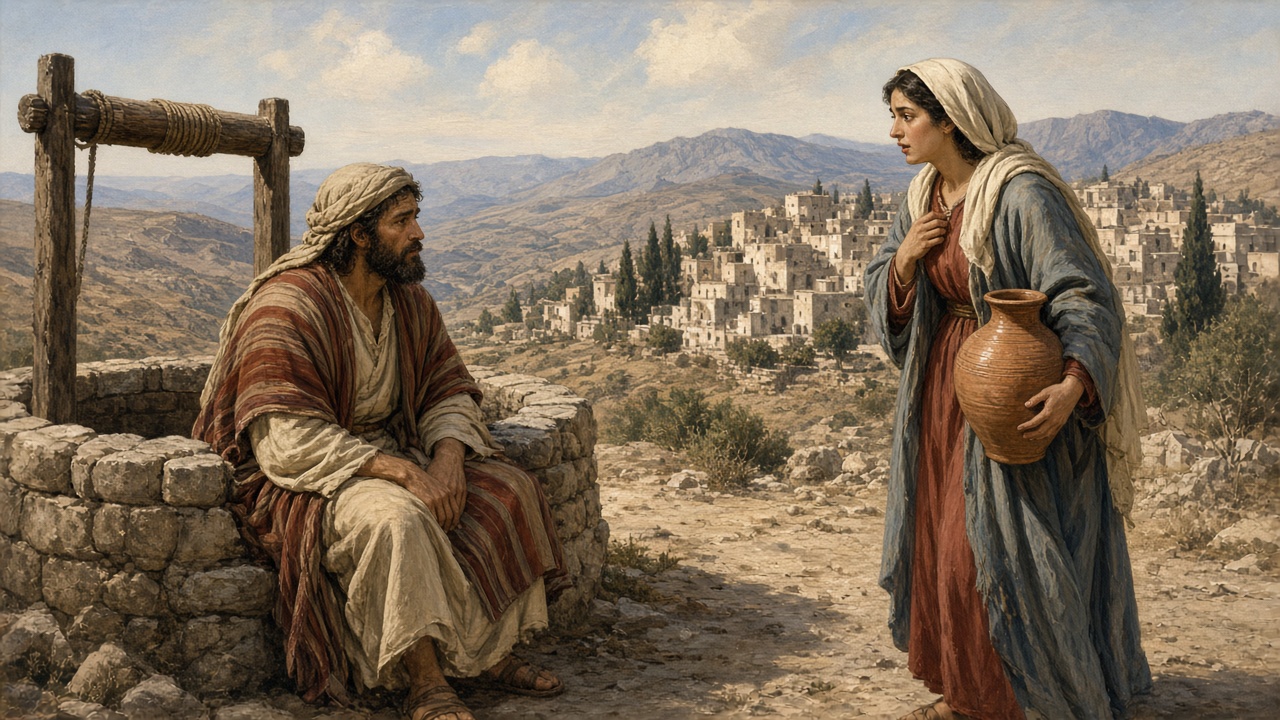
1Mete ma taꞌasasamaꞌ Yohanis no Yesus, na, Yesus ana mana tungga nara sarani atahori hetar lenaꞌ mana tungga E. Yesus nda sarani atahori sa, akaꞌ Eni ana mana tungga nara mana sarani atahori. Basa ma, leleꞌ Yesus bubꞌuluꞌ oi, atahori mia partei agama Farisi rena ara sarani atahori hetar lenaꞌ, 3boe ma no ana mana tungga nara lao hela nusa Yudea, de baliꞌ risiꞌ profinsi Galilea. 4Te ara musi lao tungga profinsi Samaria fo losa profinsi Galilea. 5Ara lao, ma ara losa kota esa sia Samaria, naran Sikar, deka-deka no rae fo baꞌi Yakob fee neu anan Yusuf. 6Sia naa, hambu oe mataꞌ esa, naran ‘Yakob oen’. Reorendu boe ma, Yesus se losa naa. Ana namedꞌa bengge mia sira lalao nara, de Ana endoꞌ hahae aon sia oe naa. Boe ma Ana mana tungga nara lao hela mesaꞌ ne neu naa, de reu hasa nanaat sia kota rala.
Boe ma inaꞌ esa mia kota naa nema haꞌi oe sia oe mataꞌ naa. Yesus noꞌe mbali e nae, “Aꞌa. Au bisa oꞌe oe nininuꞌ mbei, do?”
9Te inaꞌ naa nggengger, huu atahori Yahudi nda nau raꞌabꞌue ro atahori Samaria ra sa. De ana natane baliꞌ Yesus nae, “Weh! Toꞌo atahori Yahudi. Au ia, atahori Samaria. Nda sala sa, do? Toꞌo moꞌe minu sia au e?”
10Yesus nafadꞌe nae, “Taꞌo ia. Mete ma aꞌa bubꞌuluꞌ saa fo Lamatualain nae fee basa atahori, ma muhine Au mana oꞌe inu ia, Seka, na tantu aꞌa noꞌe oe mia Au. Boe ma Au fee oe mana nendi masodꞌaꞌ.”
11Inaꞌ naa nae, “Toꞌo nda ma ember hahandoꞌ sa. Boe ma oe mataꞌ ia, roman seli. Mia bee nema Toꞌo hambu oe mana nendi masodꞌaꞌ naa? Oe naa hambu sia bee fai? 12Tantu Toꞌo nda manaseliꞌ lenaꞌ hai baꞌi Yakob ma sa! Eni mana lao hela oe mataꞌ ia fee hai. Boe ma eni o ninu mia oe mataꞌ ia boe. Eni ana nara, ro banda nara o onaꞌ naa boe.”
13Yesus nataa nae, “Musunedꞌa, e! Atahori mana ninu mia oe mataꞌ ia, dei fo ana naꞌamadꞌa seluꞌ fai. 14Te atahori mana ninu oe fo Au feeꞌ a, dei fo ana nda naꞌamadꞌa seluꞌ sa ena. Huu oe fo Au feeꞌ naa, onaꞌ oe mataꞌ sa mana nasapupuraꞌ dea nema. Oe naa, nendi masodꞌaꞌ matetuꞌ nda mana etuꞌ sa.”
15Inaꞌ naa nae, “Mete ma taꞌo naa, na, Toꞌo fee au oe naa leo, fo onaꞌ bee na, au sudꞌi boe uꞌumadꞌa fai! No taꞌo naa, au sudꞌi boe uma haꞌi usufafali oe sia ia fai.”
16Boe ma Yesus denu nae, “Taꞌo ia. Aꞌa baliꞌ dei. Moꞌe aꞌa sao ma. fo baliꞌ uma sia ia.”
17Ana nataa nae, “Te au nda masaoꞌ sa.”
Boe ma Yesus nae, “Tebꞌe. Mufadꞌe no rala ndoos. Huu sao ma lima ena. Boe ma mana sia aleꞌ ia, nda sao ma sa.”
19Boe ma inaꞌ naa nae, “Awii! Ia naa au uhine ena, Toꞌo ia, Lamatualain mana ola-olan esa. 20Naa, au ae utane. Hai atahori Samaria ra bei-baꞌi mara beꞌutee neu Lamatualain sia lete Gerisim. Te hei atahori Yahudi mae, mete ma nau beꞌutee neu Lamatualain, basa atahori musi reu sia Yerusalem. Tungga Toꞌo, matetun, taꞌo bee?”
21Yesus nataa nae, “Aꞌa mumuhere neu oꞌola ngga ia dei, huu ia tebꞌe. Mae beꞌutee neu Lamatualain sia leteꞌ ia do, sia Yerusalem do, dei fo fai na nema, ruꞌa se nda raꞌena ngguna sa ena. 22Hei atahori Samaria nda mihine naeꞌ sa, soꞌal mimihere neu seka. Te hai atahori Yahudi mihine naeꞌ, soꞌal Lamatualain fo hai beꞌutee neuꞌ a. Huu Ana nae pake hai fo soi dalaꞌ, naa fo atahori hambu masoi-masodꞌaꞌ mia sala-kilu nara. 23Dei fo fai na nema, naeni mia leleꞌ ia, atahori mana beꞌutee tebꞌe neu hita Aman sia sorga, na, ara beꞌutee neu E tungga Dula-dalen, ma tungga ndoo-tetuꞌ a. Huu Amaꞌ sia sorga hii atahori mataꞌ naa ra mana beꞌutee neu E. 24Huu Lamatualain naa, Dula-daleꞌ. De atahori mana beꞌutee neu E musi beꞌutee tungga Dula-dalen, ma tungga matetuꞌ a.”
25Inaꞌ naa nafadꞌe nae, “Au bubꞌuluꞌ Mesias naa nae nema ena, naeni atahori ingga rae, ‘Kristus’, fo Lamatualain helu-fuli memaꞌ nae haitua nemaꞌ a. Leleꞌ Ana nema ena, na dei fo nafadꞌe basa-bꞌasaꞌ e neu nggita.”
26Yesus nataa nae, “Ia eni, Au ena, fo mana ola-olaꞌ leleꞌ ia.”
27Nandaa no leleꞌ naa, Ana mana tungga nara baliꞌ mia kota rala rema. Ara heran, huu rita E ola-olaꞌ no ina Samaria esa. Te nda hambu esa natane mbali inaꞌ naa nae, “Nau saa?” Boe ma nda hambu esa natane Yesus nae, “Saa de Papa ola-olaꞌ mo inaꞌ ia?”
28Basa ma, inaꞌ a lao hela nggusi na sia naa, de lao baliꞌ kota rala neu. Boe ma ana dui neu atahori sia naa ra nae, 29“Ima mete sobꞌa Atahori ia dei! Te Ana nafadꞌe relo-relo basa-bꞌasa saa fo au tao itaꞌ ra ena. Seꞌu-seꞌu te Eni ia, Kristus, fo Lamatualain helu nae haitua nemaꞌ a!” 30De atahori ra dea rema mia kota naa, de reu seꞌu E.
31Leleꞌ inaꞌ naa feꞌe baliꞌ neu sia kota rala, Yesus ana mana tungga nara kokoe E rae, “Papa Meser! Uma mua dei!”
32Te nataa nae, “Au uꞌena nanaat ena, te hei nda bubꞌuluꞌ sa.”
33Ana mana tungga nara esa natane esa rae, “Taꞌo bee, ia? Seka mana nema de fee Ne nanaat?”
34Te Yesus nafadꞌe nae, “Taꞌo ia. Lamatualain denu Au fo tao tungga Eni hihii-nanaun, ma ulalao ue-tataon losa basa. Naa onaꞌ nanaat soaꞌ neu Au. 35Naa, hei biasa memeteꞌ sia tine-osi, basa fo takseer mae, ‘Feꞌe fula haa fai, dei fo feꞌe bisa etu-oru ena.’ Rena, e! Au ufadꞌe. Mete ma hei mete maꞌabebꞌesa, tine-osi ra leleꞌ ia randaa etu-oru ena. Tine ra, onaꞌ atahori hetar sia naa rema risiꞌ hita. Huu sira rahehere ramahere neu Au ena. 36Nda akaꞌ taꞌo naa sa, te mana etu-oru mana raduru buna-bꞌoa nara sia nggudꞌan rala, sangga rae simbo rala nggadꞌi nara ena. Sira onaꞌ atahori mana natudꞌu dalaꞌ fo atahori ramahere neu Lamatualain, fo hambu masodꞌa ndoo-tetuꞌ nda mana etuꞌ sa. No taꞌo naa, atahori mana sela fini, no atahori mana etu-oru buna-bꞌoaꞌ ra, ramahoꞌo reu esa. 37Atahori rae, ‘Atahori esa sela fini; atahori laen mana naduru buna-bꞌoa nara.’ Naa tebꞌe ena. 38Au denu nggi fo mii miduru buna-bꞌoaꞌ mia atahori laen ue-osan. Memaꞌ hei nda tao ues naa sa, te hei o hambu hahambuꞌ mia bebengge nara.”
39Leleꞌ naa, hambu atahori Samaria hetar sia kota naa ramahere neu Yesus, huu inaꞌ naa oꞌolan nae, “Ana nakambembela nabasaꞌ basa-bꞌasa saa fo au tao itaꞌ ra.” 40Basa ma leleꞌ ara rema risiꞌ Yesus, ara kokoe tebꞌe-tebꞌe mbali E rae, “Papa leo mo hai sia ia leo!” Boe ma Ana leo naꞌatataaꞌ fai rua sia naa.
41Boe ma atahori laen hetar o ramahere neu E, huu Eni oꞌolan. 42Boe ma ara rafadꞌe inaꞌ naa rae, “Afis naa, hai renaꞌ a oꞌolam. Te ia na hai mimihere neu E, huu hai rena mataꞌ mia E. Hai bubꞌuluꞌ tebꞌe mae, Atahori ia, mana bisa fee basa nggita masoi-masodꞌaꞌ sia raefafoꞌ ia mia sala-kilu tara.”
Lamatuaꞌ Yesus tao nahaiꞌ pagau esa anan
43Yesus se leo fai rua mia naa, boe ma ara lao rakandoo risiꞌ profinsi Galilea. 44(Lao esa Yesus olaꞌ nita nae, “Atahori nda hii fee hadꞌa-hormat neu Lamatualain mana ola-olan sia eni kambon sa.”) 45Dalahulun, leleꞌ nda feꞌe feta Paska sa, atahori Galilea hetar reu sia kota Yerusalem fo tao fai malole sia naa. Boe ma ara hambu rita basa saa fo Yesus tao sia Yerusalem. Naeni de leleꞌ Ana baliꞌ Galilea neu, ara simbo E no malole. 46Basa ma Yesus se lao rakandoo reu seluꞌ sia kambo Kana sia profinsi Galilea. Ana tao nita oe dadꞌi anggor sia naa.
Leleꞌ naa, hambu pagau esa sia kota Kapernaum. Ana monen namahedꞌi. 47Leleꞌ pagau naa rena oi, Yesus baliꞌ nisiꞌ Galilea mia profinsi Yudea, ma ana lao neu sia Kana de sangga Yesus. Nandaa, ma ana akaꞌ kokoe fo Yesus onda nema tao nahaiꞌ anan. Huu anaꞌ naa naeꞌ a mate ena.
48Yesus nafadꞌe pagau naa nae, “Mete ma hei nda mita Au tao manadadꞌiꞌ mataꞌ-mataꞌ sa na, hei nda nau mimihere Au sa!”
49Pagau naa nataa nae, “Papa, tulun uma dei. Te hokoꞌ, na, ana ngga mate a ia ena.”
50Basa ma Yesus nafadꞌe neu e nae, “Baliꞌ leo. Te anam naa, masodꞌaꞌ.”
Boe ma ana heoꞌ baliꞌ neuꞌ ena, huu ana namahere Yesus oꞌolan naa. 51Leleꞌ ana baliꞌ, atahori mana tao ues nara rema randaa ro e sia dalaꞌ rae, “Amaꞌ afiꞌ susa fai, huu amaꞌ anan masodꞌaꞌ.”
52Basa ma natane se nae, “Ana hai eniꞌ a mia liiꞌ hira?”
Ara rataa rae, “Eniꞌ a afis a liiꞌ esa, matobꞌiꞌ a onda memaꞌ.” 53Basa ma pagau a nasanedꞌa neuꞌ ena nae, anan hai neuꞌ ena, eniꞌ a mia leleꞌ Yesus nafadꞌe nae, “Amaꞌ anan masodꞌaꞌ.” Boe ma ana no basa ume isi nara ramahere neu Yesus.
54Dadꞌi ia, manadadꞌi-manaseliꞌ ka ruan fo Yesus tao leleꞌ Ana lao hela Yudea, fo neu sia Galilea.
Did you know?
Living Water in Samaria
- Jesus left Judea to return to Galilee, and the Gospel says he had to pass through Samaria. Under the Romans in Jesus' time, Judea was the southernmost of Palestine's three divisions, distinguished from Samaria and Galilee, and the narrative notes that Jews did not associate with Samaritans.Sources: the Bible text itself · Judea
- He came to Sychar, near the plot of ground that Jacob had given his son Joseph, and, weary from the journey, sat down by Jacob's well. Easton's Bible Dictionary (1897) records that from the time of the Crusaders Sychar was usually identified with Shechem, but that explorations had identified it with 'Askar, a small Samaritan town on the southern base of Ebal, about a mile north of the well.Sources: the Bible text itself · Sychar
- The woman contrasted worship on this mountain with the Jewish claim that one must worship in Jerusalem, and she spoke of a coming Messiah, called Christ. When the disciples returned from buying food in the town, they were surprised that Jesus was speaking with a woman.Sources: the Bible text itself
Notes written with AI assistance from open sources (Theographic Bible Metadata, CC BY-SA 4.0; Easton’s Bible Dictionary, public domain) and reviewed before publishing.
Places in this chapter
- Galilee · 32.760, 35.527 · verses 3, 43, 45, 46, 47, 54
- Judea · Today: Judea 1 · 31.777, 35.234 · verses 3, 47, 54
- Samaria · Today: Samaria 2 · 32.276, 35.195 · verses 4, 5, 7, 9
- Jerusalem · 31.777, 35.234 · verses 20, 21, 45
- Mount Gerizim · 32.199, 35.273 · verse 20
Only places identified with high confidence are shown (90% or more according to the scholarly sources compiled by OpenBible). Period map: DARE (Digital Atlas of the Roman Empire), CC BY 4.0; modern map: © OpenStreetMap contributors; places: OpenBible.info (CC BY 4.0).
Credits and license for this translation
Rote Dela Alkitab
Genesis and the New Testament in the Rote Dela language of Indonesia
Kejadian dan Perjanjian Baru dalam bahasa Rote Dela
copyright © 2016 Unit Bahasa dan Budaya
Language: Rote Dela (Dela-Oenale)
Translation by: Wycliffe Bible Translators
This translation is made available to you under the terms of the
Creative Commons Attribution Share-Alike license 4.0.
You have permission to share and redistribute this Bible translation in any format and to make reasonable revisions and adaptations of this translation, provided that:
You include the above copyright and source information.
If you make any changes to the text, you must indicate that you did so in a way that makes it clear that the original licensor is not necessarily endorsing your changes.
If you redistribute this text, you must distribute your contributions under the same license as the original.
Pictures included with Scriptures and other documents on this site are licensed just for use with those Scriptures and documents.
For other uses, please contact the respective copyright owners.
Note that in addition to the rules above, revising and adapting God's Word involves a great responsibility to be true to God's Word. See Revelation 22:18-19.
2022-03-11
Source: http://ebible.org/row/ · eBible.org