Genesis 49
Rote Dela Alkitab · Tap a verse to see its cross-references.
Yakob nafadꞌe ana nara esa-esaꞌ dala masodꞌa nara
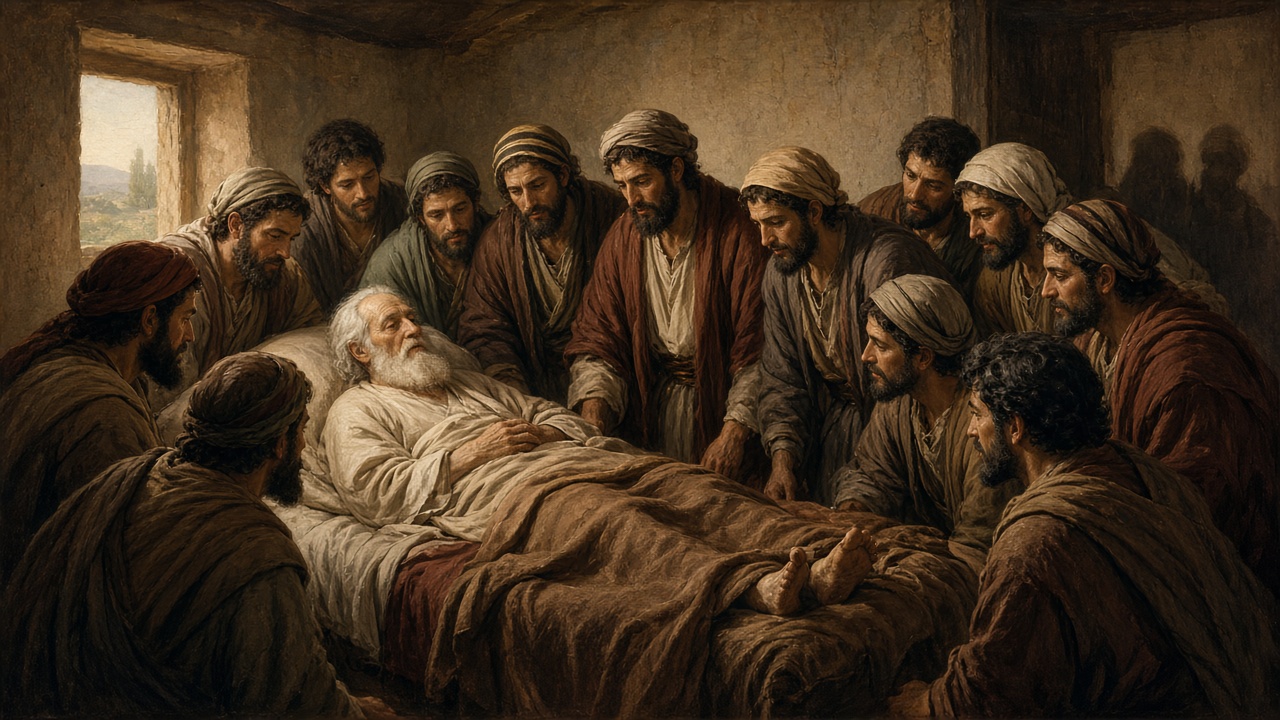
1Basa naa ma, Yakob denu roꞌe basa ana nara. Ara rema ma, nafadꞌe nae, “Ana nggare! Ima miꞌibꞌue deka mo au dei. Au ae ufadꞌe hei esa-esaꞌ dala masodꞌa na sia fai maꞌabui na.” 2Basa ma Yakob nafadꞌe memaꞌ ana nara nae,
“Taꞌo ia! Yakob ana nara! Ima, mimbiriiꞌ rereoꞌ au.
Rena ama ma Israꞌel oꞌolaꞌ na.
3Ruben! Ho ia, au ana ulu ngga! Au teteas ngga, ma lima ona ngga. Atahori fee hadat lenaꞌ neu nggo. 4Te rala ma nda matetuꞌ sa, nda mitaꞌ mae hihii-nanau ma bee sa boe, onaꞌ tasiꞌ ree na neu-nema. Aiboiꞌ ma, muu sungguꞌ mo sao ngga Bilha, de munggenggeo ama ma koi na. Naa de, ho panggat aꞌa ma mopo e.
5Simeon ma Lewi! Hei ruꞌa nggi ona esaꞌ, huu ama akaꞌ mae mitati, tao miꞌisususaꞌ atahori. 6Hei maꞌahe tati miꞌetuꞌ sapi ra ei ua nara, fo ara sorereo reuꞌ a mamana nara. Hei deꞌulaka mara fai, hei miminasa seli ma henggu nisi mara, losa misa atahori ra. Naa de, au nda nau rena hei oꞌola mara sa. Au o nda nau sambor o hei dedꞌea ma sa. 7De ia naa, au sumba-ndoo nasaborii mara, huu naseliꞌ ena. Ma nasa mara nda miꞌena sue-laiꞌ mbei sa boe. Dei fo mesaꞌ nggi lemba-dꞌoi deꞌulaka mara naa. Lamatualain mbia-nggari tititi-nonosi mara, fo ara leo nggari-nggari sudꞌiꞌ a bee reu sia rae Israꞌel.
8Yahuda! Nara ma sosoa na nae ‘koa-kio’. Dei fo odꞌi-aꞌa mara koa ma fee hadat neu nggo. Boe ma ho tuni-ndeni musu mara, losa ara nda botiꞌ rala langga nara sa. 9Ho onaꞌ a meoaku manaseliꞌ, sangga nanaat ao ma. Meoaku mone lea ao na fo nae sungguꞌ, ma nda hambu atahori rambarani reti ngganggu sa. Meoaku ine nanea ana na, ma nda hambu atahori rambarani reti ngganggu sa. Atahori o ramatau nggo, de nda rambarani tao mataꞌ-mataꞌ neu nggo sa. 10Dei fo ho ia, toꞌu parendaꞌ. Tititi-nonosi mara boe o toꞌu parendaꞌ tungga-tungga, losa esa mana naena hak manaseliꞌ endoꞌ toꞌu parendaꞌ naa. Basa leo ra ramahere ma rena e. 11Dei fo musodꞌa no nemehoꞌot. Hii saa, naa, akaꞌ a sia. Mae tao saa o, dadꞌiꞌ a. Banda mara, no osi ra mbule-bꞌoa nara o nae na seli, losa leꞌa-nggari. 12Ho nana-nininu mara, maladꞌa-maladꞌaꞌ, nda basa-bꞌasa sa.
13Sebulon! Ho rae-oe mara loa na seli, deka noꞌ a tasiꞌ, natooꞌ no kota Sidꞌon. Ofai mia bee-bꞌee rema nggari nafuꞌ no leo nenee sia namo ma.
14Isaskar! Ho ia, onaꞌ banda keledei maꞌadereꞌ, huu langga fatu ma nda nenelabꞌan sa. Mete ma keledei luꞌu sia dalaꞌ taladꞌa na, esa o nda bisa nafefelaꞌ e sa, fo laoꞌ nakandoo fai. Mete ma keledei nita kambo maloleꞌ sia seriꞌ na, naa, nda denu sa o, lemba nala neꞌefufuan fo lao neuꞌ ena. Ho, onaꞌ naa boe.
16Dan! Nara ma sosoa na ‘mana nggero’. Ho ia, mo tititi-nonosi mara, dei fo miꞌetuꞌ Israꞌel ra dedꞌea nda misilaꞌe esa saꞌ boe. 17Ho ia onaꞌ mengge mana sungguꞌ sia dalaꞌ suu na. Mete ma atahori sae ndara tungga naa, aiboiꞌ na, mengge a ero ndara ei na, de atahori naa tudꞌa. Ho o muꞌutetee hahambuꞌ, naa mata muu.
18LAMATUALAIN! Au hule-huleꞌ fo fee masodꞌaꞌ neu basa hai.
19Gad! Nara ma lii na naeꞌ a onaꞌ a ‘netati’. Dei fo mana rambok ra ratati ro nggo, te mutati musenggiꞌ se.
20Aser! Dei fo osi mara mbule-bꞌoa nara malole na seli. Losa ho bisa tao kokis mataꞌ-mataꞌ, fo maneꞌ ra rema hasa sia nggo.
21Naftali! Ho ia, onaꞌ banda rusa ine mana nela fuiꞌ, huu nda hambu atahori ralalao nggo sa. Ho o bꞌonggi mala ana mara akaꞌ a meulauꞌ ra.
22Yusuf! Ho onaꞌ hau huu mana malonggeꞌ nasodꞌa deka no oe mataꞌ. Ho dꞌana mara nama risiꞌ lutu naruꞌ. 23Hambu atahori fua rala mera nara neu nggo, onaꞌ musu a busu nggo. 24Te Lamatualain fo au umuhereꞌ a, tulu-fali nggo. Ana tao lima ma maꞌadereꞌ, fo busu labꞌan baliꞌ se. Mae mia dꞌoo-dꞌooꞌ o, ho musenggiꞌ se, huu Lamatualain tulun nggo. Koasa Na memaꞌ manaseliꞌ tebꞌe. De au umuhena E, huu Ana mana nanea au. 25Dei fo Ana nanea nggo. Ana fee nggo papala-babꞌanggiꞌ mia lalai ma raefafoꞌ. Ana o fee papala-babꞌanggiꞌ fo bꞌonggi anaꞌ ao meulauꞌ hetar. 26Mbuku-leteꞌ ra nda mopo sa. Ma au papala-babꞌanggi ngga ia, naeꞌ lenaꞌ basa papala-babꞌanggi mia mbuku-leteꞌ ra! Basa papala-babꞌanggiꞌ ia ra, mbori-mboꞌa neu nggo, huu ho manaseliꞌ lenaꞌ odꞌi-aꞌa mara.
27Benyamin! Mbarani ma onaꞌ busa fui mana ndoeꞌ. Feꞌe fefetuꞌ, ana neu sombu nala nanaat na ena. Te mete ma tetembaꞌ, ana neu babanggi sisa-sisa nara, fee ana nara. Tititi-nonosi mara o manaseliꞌ onaꞌ naa boe!”
28No taꞌo naa, Yakob nafadꞌe memaꞌ ana nara dala masodꞌa nara sia fai maꞌabui na, esa-esaꞌ no tititi-nonosi na. Basa se mana raꞌondaꞌ leo Israꞌel kasanahulu ruaꞌ ra.
Yakob mate
29Basa boe ma, Yakob noꞌe ana nara fo helu nae, “Nda dooꞌ sa te, au mate. Mete ma au mate, naa hei musi miꞌoi au sia Baꞌi Abraham rates na. Rates naa sia luat, deka no kambo Makpela no Mamre sia rae Kanaꞌan. Maꞌahulu na, Baꞌi Abraham hasa luat naa no osi fo tao neu mamana rates. Ana hasa etu mia atahori Het, naran Efron. 31Sia naa raꞌoi hita baꞌi Abraham no bei Sara, ma ama ngga Isak no ina ngga Ribka. Dadꞌi hei musi miꞌoi au sia naa, sia sao ngga Lea bobꞌoa na. 32De hei afiꞌ liliiꞌ miꞌoi au sia luat fo baꞌi Abraham hasa nalaꞌ naa.”
33Yakob olaꞌ basa ma, ana sungguꞌ bali neu koi, ma mate e boe.
Did you know?
Last Blessings for Israel's Twelve Tribes
- Jacob's sayings play on the meanings of his sons' names. Judah (Hebrew Yehudah) comes from Leah's words, "Now will I praise" (odeh), and Jacob says that Judah's brothers will praise him. Dan's name echoes his mother Bilhah's "God hath judged me" (dananni); Jacob says Dan will judge, or provide justice for, his people, and Easton's Bible Dictionary (1897) suggests this probably alludes to Samson, a later judge from the tribe of Dan.Sources: Judah (patriarch) · Dan · the Bible text itself
- The chapter calls each speech a blessing, yet some are stern. Reuben, firstborn of Jacob and Leah, whose name means "Behold a son!", is told he will no longer excel because he defiled his father's bed. Simeon and Levi, who took violent revenge on Hamor and the Shechemites, hear their anger cursed and are told they will be dispersed in Jacob and scattered in Israel; the Authorized Version's "they digged down a wall" is rendered in the Revised Version "they houghed an ox," as this chapter says they hamstring oxen.Sources: Reuben · Simeon · Levi (patriarch) · the Bible text itself
- Jacob then asks to be buried with his fathers in the cave in the field of Ephron the Hittite, which Abraham bought as a family grave. Machpelah, a name understood to mean "portion" or "double cave," stood on a hillside east of Hebron, facing Mamre in the land of Canaan. Abraham and Sarah, Isaac and Rebekah, and Leah were already buried there.Sources: Machpelah · Ephron · Mamre · the Bible text itself
Notes written with AI assistance from open sources (Theographic Bible Metadata, CC BY-SA 4.0; Easton’s Bible Dictionary, public domain) and reviewed before publishing.
Places in this chapter
- Shiloh · Today: Khirbet Seilun · 32.056, 35.290 · verse 10
- Sidon · Today: Sandikli archaeological site in Sidon · 33.561, 35.372 · verse 13
- Canaan · 32.767, 35.333 · verse 30
- Machpelah · Today: Cave of the Patriarchs · 31.525, 35.111 · verse 30
Only places identified with high confidence are shown (90% or more according to the scholarly sources compiled by OpenBible). Period map: DARE (Digital Atlas of the Roman Empire), CC BY 4.0; modern map: © OpenStreetMap contributors; places: OpenBible.info (CC BY 4.0).
Credits and license for this translation
Rote Dela Alkitab
Genesis and the New Testament in the Rote Dela language of Indonesia
Kejadian dan Perjanjian Baru dalam bahasa Rote Dela
copyright © 2016 Unit Bahasa dan Budaya
Language: Rote Dela (Dela-Oenale)
Translation by: Wycliffe Bible Translators
This translation is made available to you under the terms of the
Creative Commons Attribution Share-Alike license 4.0.
You have permission to share and redistribute this Bible translation in any format and to make reasonable revisions and adaptations of this translation, provided that:
You include the above copyright and source information.
If you make any changes to the text, you must indicate that you did so in a way that makes it clear that the original licensor is not necessarily endorsing your changes.
If you redistribute this text, you must distribute your contributions under the same license as the original.
Pictures included with Scriptures and other documents on this site are licensed just for use with those Scriptures and documents.
For other uses, please contact the respective copyright owners.
Note that in addition to the rules above, revising and adapting God's Word involves a great responsibility to be true to God's Word. See Revelation 22:18-19.
2022-03-11
Source: http://ebible.org/row/ · eBible.org