Genesis 44
Rote Dela Alkitab · Tap a verse to see its cross-references.
Yusuf mok lilo fula na mopo
1Ara raa basa ma, Yusuf naꞌauꞌutuꞌ malangga mana tao ues na nae, “We! Muu ombo are neu atahori ia ra karon nara losa sofe se. Ma tao baliꞌ doi nara nisiꞌ esa-esaꞌ karon na rala. 2Boe ma haꞌi mala au mok lilo fula ngga, fo tao nisiꞌ ana muriꞌ a karon na.” De ana neu tao tungga Yusuf parenda na.
3Mbila fefetu ana na, Yusuf mboꞌi se lao baliꞌ rendi nanaat no keledei nara. 4Ara nda feꞌe raꞌadooꞌ kamboꞌ sa ma, Yusuf nafadꞌe malangga mana tao ues na nae, “Muu tungga atahori naa ra lai-lai. Mete ma hambu se, naa, mufadꞌe maꞌo ia: ‘Taꞌo bee de rala mara deꞌulakaꞌ mbali toulasiꞌ a? Losa hei balas malole na mo deꞌulakaꞌ taꞌo ia. 5Taꞌo bee de loi mendi malangga mok lilo fula na? Hei nda bubꞌuluꞌ sa, do? Naa nda akaꞌ a mok nininuꞌ sa. Ana o sangga atahori uanale nara nendiꞌ mok naa. Naa mok mahineꞌ! Hei tatao mara ia, deꞌulaka na seli ma!’”
6Basa de, malangga mana tao ues neu tungga de hambu se. Ana nafadꞌe se, tungga Yusuf oꞌola na.
7Ara rataa rae, “Amaꞌ masud na taꞌo bee ia? Hai sumba. Hai nda tao deꞌulakaꞌ taꞌo naa sa. 8Amaꞌ bubꞌuluꞌ, to? Doi-doiꞌ mana mia karon rala faiꞌ naa, hai fee baliꞌ neu amaꞌ, to? De taꞌo bee de hai loi malangga lilo fula na mia umen fai. Hokoꞌ o! 9Amaꞌ paresaꞌ neuꞌ ena. Hambu sia seka karon na, naa hukun misa e leo. Ma hai ruma dadꞌi ate ma.”
10Malangga mana tao ues a nae, “Hokoꞌ! Taꞌo ia. Mete ma hambu mok sia seka, naa, ana dadꞌi au ate ngga. Ruma baliꞌ.”
11Boe ma ara raꞌondaꞌ karon naa ra lai-lai, de sefi se. 12Malangga mana tao ues a paresaꞌ lutu-leloꞌ karon naa ra esa-esaꞌ, mia aꞌa ka karon na, losa odꞌiꞌ a ena na. De ana hambu mok lilo fulaꞌ mia Benyamin karon na.
13Boe ma Benyamin aꞌa nara rala nara rambalulutu. De ara fua baliꞌ karon naa ra keledei ata reu, ma baliꞌ kambo reu.
14Losa Yusuf ume na boe, ana feꞌe sia naa. De ara sendeꞌ lululangga nara neu mata na. 15Yusuf bua se nae, “He! Taꞌo bee de hei tao onaꞌ ia neu au. Hei nda mihine mae atahori monaen onaꞌ au ia, sangga atahori rahasia na endiꞌ mahineꞌ naa sa, do?”
16Yahuda nataa nae, “Awi! Lamatualain natudꞌu hai sala mara ena. Hai mae saa fai, amaꞌ? Hai mae misilaꞌe ao ma, onaꞌ bee fai. Mete ma amaꞌ nae hela hai odꞌi muri ma ia, naa, malole lenaꞌ amaꞌ hela basa hai. Haꞌi mala basa hai dadꞌi ate ma.”
17Yusuf nataa nae, “Hokoꞌ! Hambu mok a sia seka e, na eni mana dadꞌi au ate ngga. Hei ruma, nenemboꞌit. Baliꞌ misiꞌ ama ma leo!”
Yahuda noꞌe nataa neu Yusuf fo eni nggati Benyamin
18Yahuda neu deka-deka no Yusuf, de olaꞌ nae, “Ama fetor! Au bubꞌuluꞌ amaꞌ koasa na onaꞌ maneꞌ a boe. Huu naa, de afiꞌ mumunasa au dei. Au oꞌe ola-olaꞌ mbei o amaꞌ. 19Maꞌahulu na amaꞌ natane hai mae, ‘Hai ama ma no odꞌi ma esa feꞌe sia, do?’
20Hai mitaa mae, ‘Hai ama ma lasiꞌ ena. Boe ma odꞌi muri ma, esa. Leleꞌ bꞌonggi e, hai ama ma lasiꞌ ena. Aꞌa bꞌonggi na esaꞌ a, te ana nese ena. Ruꞌa se ina na mate ena. De ia naa, helaꞌ a mesaꞌ ne. Naa de, hai ama ma sue nala e seli.’
21Basa de, amaꞌ denu hai mo e, fo mita e. 22Te hai mitaa mae, anaꞌ naa nda lao hela ama na sa. Mete ma ana lao hela e, naa, hai ama ma mate, neuꞌ ena.
23Boe ma amaꞌ nataa nae, ‘Mete ma hei nda mendi odꞌi ma sa, naa, hei nda bisa mita mata ngga sa ena.’
24Basa de hai baliꞌ. Mifadꞌe basa amaꞌ oꞌola na neu hai ama ma. 25Dꞌoo-dꞌoo ma, hai nanaa mara basa boe. De hai ama ma denu ima hasa seluꞌ nanaat fai. 26Hai mitaa seluꞌ mae, ‘Amaꞌ e! Hai nda mi sia naa sa. Te fetor a, nafadꞌe ena, mete ma hai nda mo odꞌi muriꞌ a sa, naa, hai sudꞌi mindaa mo e. Dadꞌi hai odꞌi muri ma musi tungga, dei fo hai feꞌe lao naa.’
27Hai ama ma olaꞌ fai nae, ‘Hei bubꞌuluꞌ, to? Au sao ngga Rahel, ana na akaꞌ ruaꞌ a. 28Ana uluꞌ a nese ena. Banda fui ra raa hendi ena. Naa de, losa faiꞌ ia au nda undaa o e sa. 29Mete ma hei haꞌi mala ana muriꞌ ia mia au fai, boe ma ana taꞌo esa naa, hei boe tao miꞌisususaꞌ au lasiꞌ ia, de au mate neuꞌ ena.’
30De onaꞌ naa, ama fetor. Mete ma au baliꞌ isiꞌ ama ngga, nda o baliꞌ odꞌi muriꞌ ia sa, naa, hai ama ma mate neuꞌ ena, huu rala na esa no anaꞌ naa. Ana namalasi seli ena, naa de mete ma hai boe tao miꞌisususaꞌ e, naa, ana mate neuꞌ ena. 32Boe ma au o helu ama ngga, au mana o baliꞌ anaꞌ naa. Au helu ae, mete ma nda o baliꞌ anaꞌ ia sa, naa au tanggon salaꞌ losa mate.
33Dadꞌi au oꞌe taꞌo ia, amaꞌ: Au leo uhatiꞌ a ia nggati e, fo dadꞌi amaꞌ ate na. Hela e baliꞌ no aꞌa nara. 34Mete ma anaꞌ naa nda tungga sa, naa, au o nda baliꞌ saa boe. Au nda nau ita ama ngga doidꞌoso losa mate sa.”
Did you know?
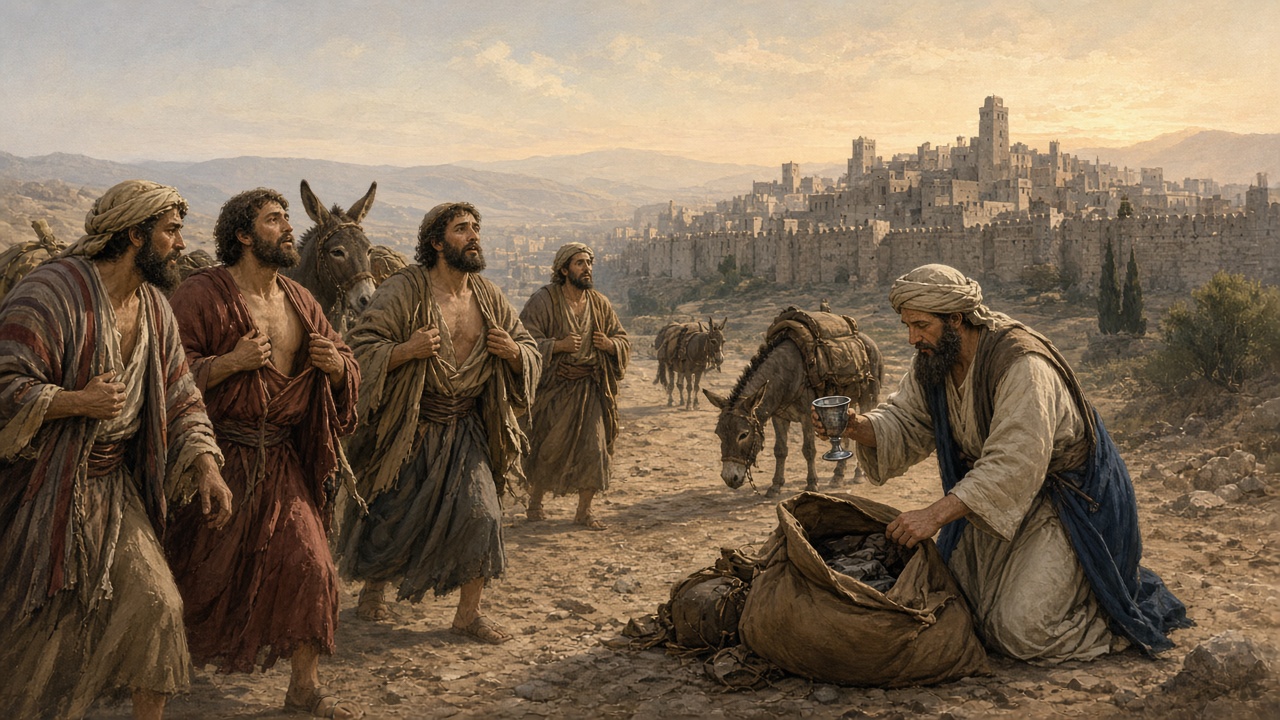
The Hidden Cup and Judah's Plea
- Judah, Jacob's fourth son by Leah, speaks for the brothers and offers to remain as a slave in the boy's place so that Benjamin may return with his brothers. Easton's Bible Dictionary (1897) notes that Judah had earlier intervened to spare Joseph's life, and that he took the lead in the family's affairs, including in the appeal recorded in this chapter.Sources: Judah (patriarch) · the Bible text itself
- Benjamin was the younger of Jacob's two sons by Rachel; she died giving birth to him and called him Ben-oni, "son of my pain," before his father named him Benjamin. The brothers tell Joseph that the boy is the only son of his mother still living, and that their father believes the other was torn to pieces. They say this to Joseph himself—Rachel's elder son, loved by Jacob as the child of his old age—while still speaking to him as a lord equal to Pharaoh.Sources: Benjamin (patriarch) · Joseph (son of Jacob) · the Bible text itself
- On Joseph's orders, the steward hid Joseph's silver cup—the cup he drank from and used for divination—in Benjamin's sack, along with the silver paid for the grain. When it was found, the brothers tore their clothes and returned to the city. Joseph then asked whether they did not know that a man like him could divine the truth, although the narrative shows that he had arranged for the cup to be found.Sources: the Bible text itself
Notes written with AI assistance from open sources (Theographic Bible Metadata, CC BY-SA 4.0; Easton’s Bible Dictionary, public domain) and reviewed before publishing.
Places in this chapter
- Canaan · 32.767, 35.333 · verse 8
Only places identified with high confidence are shown (90% or more according to the scholarly sources compiled by OpenBible). Period map: DARE (Digital Atlas of the Roman Empire), CC BY 4.0; modern map: © OpenStreetMap contributors; places: OpenBible.info (CC BY 4.0).
Credits and license for this translation
Rote Dela Alkitab
Genesis and the New Testament in the Rote Dela language of Indonesia
Kejadian dan Perjanjian Baru dalam bahasa Rote Dela
copyright © 2016 Unit Bahasa dan Budaya
Language: Rote Dela (Dela-Oenale)
Translation by: Wycliffe Bible Translators
This translation is made available to you under the terms of the
Creative Commons Attribution Share-Alike license 4.0.
You have permission to share and redistribute this Bible translation in any format and to make reasonable revisions and adaptations of this translation, provided that:
You include the above copyright and source information.
If you make any changes to the text, you must indicate that you did so in a way that makes it clear that the original licensor is not necessarily endorsing your changes.
If you redistribute this text, you must distribute your contributions under the same license as the original.
Pictures included with Scriptures and other documents on this site are licensed just for use with those Scriptures and documents.
For other uses, please contact the respective copyright owners.
Note that in addition to the rules above, revising and adapting God's Word involves a great responsibility to be true to God's Word. See Revelation 22:18-19.
2022-03-11
Source: http://ebible.org/row/ · eBible.org