Genesis 42
Rote Dela Alkitab · Tap a verse to see its cross-references.
Yusuf aꞌa nara reu hasa nanaat sia Masir
1Leleꞌ naa, Yusuf ama na Yakob rena atahori rafadꞌe oi hambu are sia Masir. De ana ola-olaꞌ no ana nara nae, “Ana nggare! Taꞌo bee de hei endoꞌ onaꞌ nggoa ra taꞌo naa! 2Au rena oi hambu nanaat sia Masir. Malole lenaꞌ mi hasa sia naa dei, fo ata afiꞌ mate ndoes.”
3De Yusuf aꞌa ka sanahulu nara, raote rae reu hasa nanaat sia Masir. 4Te Yakob nda nau mboꞌi Yusuf odꞌi muri na Benyamin fo neu no se sa. Ana duꞌa, “Afiꞌ losa anaꞌ a hambu sususaꞌ fai!” 5Dadꞌi, huu atahori sia bee-bꞌee rena oi hambu nanaat sia Masir, naa de ara reu hasa sia naa. Fula-fai ndoes o losa rae Kanaꞌan. De Yakob ana nara o reu hasa sia naa boe.
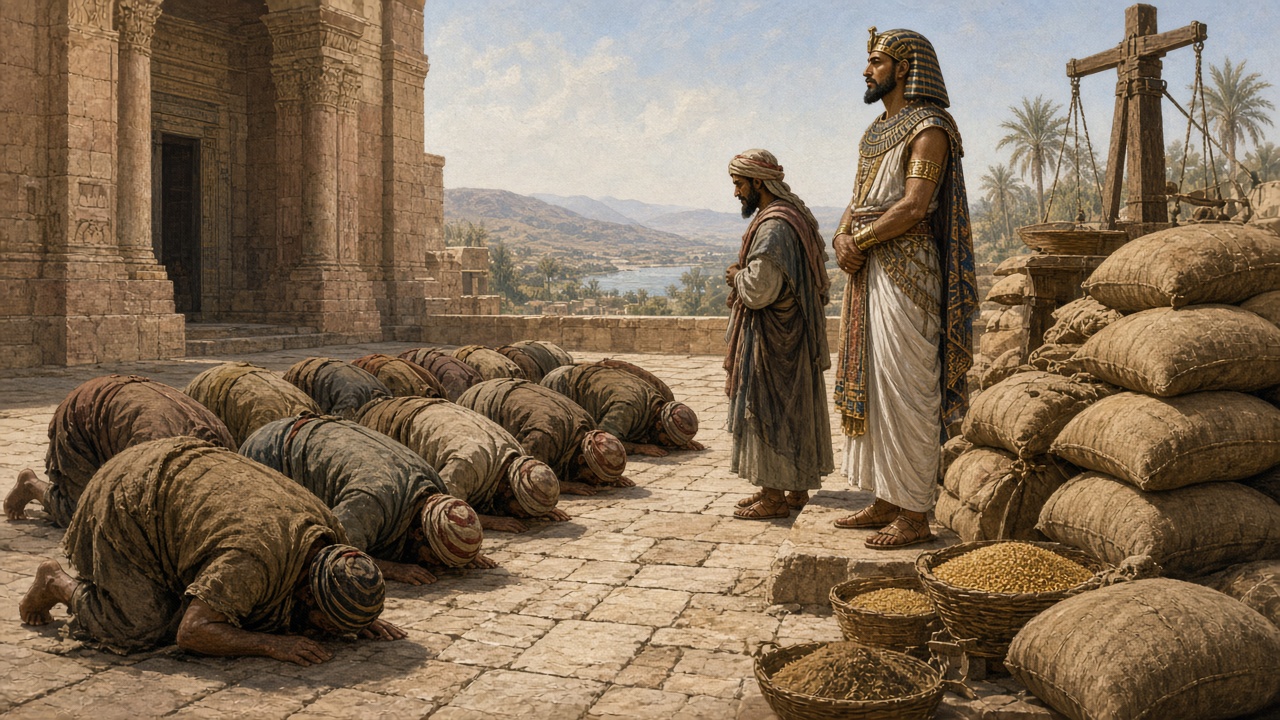
6Leleꞌ naa, Yusuf dadꞌi fetor sia Masir. Mete ma atahori rema mia bee-bꞌee hasa are, Yusuf mana seo neu se. Naeni de, leleꞌ aꞌa nara losa, ara reu sendeꞌ lululangga nara fee hadat neu e, losa langga nara dai rae a. 7Leleꞌ nita se, ana nahine memaꞌ. Te Yusuf tao ao na onaꞌ atahori Masir, de ara nda rahine e sa. Ana natane se no deres nae, “Hei ia, mia bee ima?”
Rataa rae, “Hai mia Kanaꞌan. Hai ima mae hasa nanaat sia ama fetor.”
9Boe ma Yusuf nasanedꞌa meit na. De ana naꞌatatauꞌ se nae, “Au nda umuhere sa! Neꞌo basa hei ia ra mana maku-maꞌu. Hei ima mae mihine nusa Masir rahasia na, fo mitati mo hai.”
10Te rataa rae, “Hokoꞌ, amaꞌ! Hai amaꞌ atahori dedenu na. Tebꞌe-tebꞌeꞌ hai ima mae hasa nanaat. 11Basa hai amaꞌ esa. Hai nda maku-maꞌu sa, amaꞌ! Hai atahori maloleꞌ.”
12Te Yusuf olaꞌ nahereꞌ nae, “He! Ombo koson! Afiꞌ peko-leleloꞌ au. Memaꞌ hei ia ra, mana maku-maꞌuꞌ. Hei ima mae mihine nusaꞌ ia rahasia nara!”
13Ara rahara rae, “Hokoꞌ, amaꞌ! Hai amaꞌ dedenu na. Hai ima mia rae Kanaꞌan. Hai odꞌi-aꞌa atahori sanahulu rua. Basa hai ama esa. Hai odꞌi muri ma leo nahani no hai ama ma, ma esa nese ena.”
14Yusuf nataa se nae, “Hokoꞌ! Saa fo au olaꞌ faꞌ ra, tebꞌe! Hei ia ra memaꞌ mana maku-maꞌuꞌ. 15De hei musi fee bukti dei, fo au uhine hei oꞌola ma naa, memaꞌ tebꞌe, do hokoꞌ. Au sumba! Mete ma hei odꞌi muri ma nda nema sia ia sa, hei nda lao hela nusaꞌ ia sa! 16Dadꞌi hei tengga atahori sa fo neu nala hei odꞌi muri ma ia nema. Ma hela hei ruma. Au ae ita hei oꞌola ma naa, tebꞌe do hokoꞌ. Mete ma hokoꞌ, hei memaꞌ mana maku-maꞌu.” 17Boe ma Yusuf denu tao se bui rala reu fai telu.
18Fai ka telu na boe, Yusuf neu olaꞌ no se sia bui a nae, “Au ia, umutau neu Lamatualain ma tungga hiihii-nanau Na. Au nau mboꞌi hei, naa fo misodꞌa. Te hambu dalaꞌ esa. 19Mete ma hei olaꞌ no matetuꞌ na, hei musi fee bukti neu au dei. Eni dala na taꞌo ia: au tao esa sia bui rala. Rumaꞌ baliꞌ fo mendi nanaat fee ume isi mara. Te ara rahani hei ena. 20Basa naa, mendi odꞌi ma nema, fo dadꞌi bukti hei atahori maloleꞌ. Fo au afiꞌ hukun isa hei.” Rena taꞌo naa, ma raꞌaheiꞌ.
21De ara esa olaꞌ no esa rae, “Ia naa hita hambu bala-bꞌaeꞌ mia hita tatao na, fo hita tao neu hita odꞌi na. Hita tita ana doidꞌoso nala seli. Ana noꞌe tulun te, hita nda tao-afiꞌ sa. Naa de, ia naa hita doidꞌoso onaꞌ ia ena.”
22Boe ma Ruben fee nesenenedꞌaꞌ neu se nae, “We, odꞌiꞌ re! Maꞌahulu na, au ai hei ena, fo afiꞌ tao saa-saa neu anaꞌ naa boe, to? Te hei nda tao-afiꞌ neu au oꞌola ngga sa. Naa de, ia naa hita lemba Yusuf raa na ena.” 23Ara ola-olaꞌ taꞌo naa, te nda rahine rae Yusuf nahine sira dedꞌea na sa. Huu, Yusuf ola-olaꞌ no se nendiꞌ dedꞌea Masir, dei fo mana ola-olaꞌ na olaꞌ nisiꞌ dedꞌea Ibrani.
24Rena ara ola-olaꞌ taꞌo naa, Yusuf fela hela se, de neu nggae mia mamana feaꞌ. Ana nggae basa dei de, baliꞌ nisiꞌ se. De ana denu ara futu Simeon mia odꞌi-aꞌa nara mata na.
Yusuf aꞌa nara baliꞌ Kanaꞌan reu
25Basa naa ma, Yusuf parenda pagau nara, fo ombo are nisiꞌ aꞌa nara karon nara. Ma tao baliꞌ doi nara risiꞌ karon nara rala. Ana o denu tao fee se lepa-ngges. De pagau nara tao tungga Yusuf parenda na. 26Basa de, Yusuf aꞌa nara rafufuaꞌ karon are ra risiꞌ kaledei ata. De ara lao baliꞌ.
27Mia dalaꞌ taladꞌa na, ara hahae. Boe ma, esa sefi karon tali na, fo nae fee keledei na naa. Te nita doi na sia are ata. 28Ana nggengger nala seli. Boe ma ana randu aꞌa nara nae, “Awiii! Mete dei! Hita soe ena. Ara tao baliꞌ au doi ngga sia karon rala.”
Ara rita taꞌo naa ma, bingun ma ramatau. De ara ola-olaꞌ rae, “Lamatualain tao sa neu hita fai ia?”
29Basa naa ma, ara lao rakandoo. Losa Kanaꞌan ma, ara dui ama na, basa saa mana dadꞌi neu se. 30Rafadꞌe rae, “Amaꞌ e! Fetor Masir a, manaseliꞌ. Oꞌola na nda no hadat sa. Ana napepenggo hai oi, hai mana maku-maꞌu nusaꞌ naa. 31Te hai mitaa mae, “Hokoꞌ! Hai olaꞌ no matetuꞌ. Hai ia ra nda mana maku-maꞌu sa. 32Hai atahori maloleꞌ. Basa hai, odꞌi-aꞌa atahori sanahulu rua mia amaꞌ esa. Te esa mate ena, ma muriꞌ a leo no hai ama ma sia Kanaꞌan.’
33Boe ma, fetor a nae, ‘Au ae sobꞌa, hei ia ra ndos do hokoꞌ! Hei esa musi leo sia ia. Ruma baliꞌ mendi are fee ume isi mara, fo ara afiꞌ mate ndoes. 34Basa naa, hei musi mendi odꞌi ma dei. No taꞌo naa, dei fo au bubꞌuluꞌ hei ia ra nda mana maku-maꞌu sa, te memaꞌ hei atahori ndos. Boe ma, au mboꞌi hei torono ma mia bui a. Ma mboꞌi hei, fo sudꞌiꞌ a bee mii, sia nusaꞌ ia.’”
35Dꞌui basa ma, ara bonggar karon nara isi na. Aiboiꞌ ma rita doi nara, feꞌe sia karon rala. De Yakob no ana nara ramatau rae mate.
36Basa naa ma, Yakob olaꞌ no se nae, “Hei ia ra tao mimopoꞌ ana nggara. Yusuf nese ena. Simeon o nese boe. Ia naa hei mae mendi Benyamin fai, do? Hei ia ra tebꞌe-tebꞌeꞌ mae tao doidꞌoso au, ma!”
37Boe ma Ruben olaꞌ no ama na nae, “Amaꞌ e! Fee Benyamin neu au. Au unea e. Au helu, dei fo au endi baliꞌ e nisiꞌ amaꞌ. Te mete ma hokoꞌ, tao misa ana mone karua nggara.”
38Te Yakob olaꞌ nae, “Hokoꞌ! Hei nda bole mo Benyamin sa. Aꞌa na Yusuf mate ena. Helaꞌ a mesaꞌ ne. Mete ma ana taꞌo esa sia dalaꞌ, naa, hei tao au susa sambe mate.”
Did you know?
The Brothers Come to Egypt for Grain
- Jacob heard that there was grain in Egypt, the land of the Nile, and sent ten of his sons from Canaan to buy some so the family would not die in the famine. The seven-year famine is dated to a beginning in 1707 BC, and the brothers' journey to Egypt to 1706 BC.Sources: the Bible text itself · Egypt · 7 years of famine · Joseph's brothers go to Egypt
- Joseph, ruler of the land and the one who sold grain to its people, recognized his brothers when they bowed before him, but they did not recognize him. An interpreter stood between them, so they did not realize that he understood what they said. He turned away and wept, then had Simeon, Jacob's second son by Leah, bound before their eyes and held as a hostage.Sources: the Bible text itself · Simeon
- Benjamin, the younger son of Jacob and Rachel, stayed behind with his father; Joseph was Rachel's elder son, and Jacob believed that brother was already dead. Jacob refused to let Benjamin go down to Egypt, saying that harm to him would bring his gray hair down to Sheol in sorrow. Reuben, the eldest son of Jacob and Leah, who had earlier saved Joseph when the other brothers would have put him to death, pledged his own life and the lives of his two sons if he failed to bring Benjamin back.Sources: the Bible text itself · Benjamin (patriarch) · Joseph (son of Jacob) · Reuben
Notes written with AI assistance from open sources (Theographic Bible Metadata, CC BY-SA 4.0; Easton’s Bible Dictionary, public domain) and reviewed before publishing.
Places in this chapter
Only places identified with high confidence are shown (90% or more according to the scholarly sources compiled by OpenBible). Period map: DARE (Digital Atlas of the Roman Empire), CC BY 4.0; modern map: © OpenStreetMap contributors; places: OpenBible.info (CC BY 4.0).
Credits and license for this translation
Rote Dela Alkitab
Genesis and the New Testament in the Rote Dela language of Indonesia
Kejadian dan Perjanjian Baru dalam bahasa Rote Dela
copyright © 2016 Unit Bahasa dan Budaya
Language: Rote Dela (Dela-Oenale)
Translation by: Wycliffe Bible Translators
This translation is made available to you under the terms of the
Creative Commons Attribution Share-Alike license 4.0.
You have permission to share and redistribute this Bible translation in any format and to make reasonable revisions and adaptations of this translation, provided that:
You include the above copyright and source information.
If you make any changes to the text, you must indicate that you did so in a way that makes it clear that the original licensor is not necessarily endorsing your changes.
If you redistribute this text, you must distribute your contributions under the same license as the original.
Pictures included with Scriptures and other documents on this site are licensed just for use with those Scriptures and documents.
For other uses, please contact the respective copyright owners.
Note that in addition to the rules above, revising and adapting God's Word involves a great responsibility to be true to God's Word. See Revelation 22:18-19.
2022-03-11
Source: http://ebible.org/row/ · eBible.org