Genesis 40
Rote Dela Alkitab · Tap a verse to see its cross-references.
Yusuf nafadꞌe atahori bui rua meit nara sosoa na
1Sia bui naa, hambu atahori rua. Maꞌahulu na, ruꞌa se malangga tao mataꞌ sia mane Masir ume panggat na. Esa tao mataꞌ neu maneꞌ a nininu na, ma esa tao mataꞌ neu maneꞌ a roti na. Lao esa ara tao rasalaꞌ maneꞌ a. Maneꞌ a namanasa, de tao se bui rala reu. De ruꞌa se leo mamanaꞌ sa ro Yusuf. 4Boe ma, malangga bui a parenda Yusuf tao mataꞌ neu ruꞌa se. Ara leo sia naa losa too esa do rua.
5Tetembaꞌ esa, ruꞌa se ralamein. Esa-esaꞌ no meit na. Meit naa ra esaꞌ no sosoa na. 6Mbilaꞌ neu ma, Yusuf nema, nita ruꞌa se mata nara susa. 7Ana natane se nae, “Taꞌo bee de mata mara nda matetuꞌ sa?”
8Ara rataa rae, “Tembaꞌ a hai milimein, te hai nda bubꞌuluꞌ sosoa na sa.”
Boe ma Yusuf olaꞌ nae, “Nda hambu atahori esa nahine meit ra sosoa na sa, akaꞌ a Lamatualain. Hei dui sobꞌa dei. Dei fo au sangga sosoa na mia Lamatualain.”
9Basa naa ma, atahori mana tao mataꞌ neu maneꞌ a nininu na, dui nae, “Taꞌo ia. Sia meit ngga, au ita hau huuꞌ anggor esa, 10nasaranggaa telu. Hau huuꞌ naa naroo neuꞌ ena, nabuna, ma naboa latu nggingginuꞌ. 11Basa ma ita, au toꞌu maneꞌ a nggala nininu na. Boe ma au haꞌi boa anggor de eꞌee oe na nisiꞌ maneꞌ a nggala na. Basa de, au loo fee maneꞌ a fo ninu.”
12Rena taꞌo naa, boe ma Yusuf nafadꞌe nae, “Amaꞌ. Meit naa sosoa na taꞌo ia: masaranggaaꞌ telu naa, sosoa na fai telu. 13Siaꞌ a fai telu rala ia, maneꞌ a fee amaꞌ kalua mia bui ia. Basa naa ana soꞌu baliꞌ amaꞌ, fo tao mataꞌ seluꞌ neu nininu na onaꞌ maꞌahulu na. 14Mete ma amaꞌ uanale ma taꞌo naa, naa, afiꞌ liliiꞌ au o! Mete ma amaꞌ sue au, tulun mufadꞌe maneꞌ a, fo ana tao au deaꞌ uu mia mamanaꞌ ia dei. 15Te tungga matetuꞌ na, ara haꞌi raꞌasususaꞌ au mia atahori Ibrani ra kambo na. Sia ia, au nda tao deꞌulakaꞌ saa saꞌ boe. Tao-tao te, ara tao au bui rala uu ena, onaꞌ au, atahori deꞌulakaꞌ.
16Atahori mana tao roti a rena nala meit a sosoa na meulaun taꞌo naa ma, ana dui Yusuf nae, “Odꞌiꞌ e. Au o ulumein taꞌo ia: au suu boa telu. 17Sia boa ata ka, hambu maneꞌ a kokis na mataꞌ-mataꞌ. Te mbuiꞌ ra rema de raa hendi basa se, mia langga ngga ata.”
18Yusuf rena nala ma, nataa nae, “Amaꞌ meit na, sosoa na taꞌo ia: boa ka teluꞌ naa ra, sosoa na fai telu. 19Siaꞌ a fai telu rala ia, maneꞌ a denu atahori rema tati hendi amaꞌ langga na. De ara londa amaꞌ ao na neu rii. Boe ma mbuiꞌ ra rema bidꞌo rabasa amaꞌ ao sisi na.”
20Seli fai telu ma, nandaa no maneꞌ a fai bobꞌonggi na, ana tao fefeta monaeꞌ fee basa pagau nara. Ana parenda se reu kalua pagau karuaꞌ ra dea reu. 21Basa ma, ana soꞌu baliꞌ pagau mana tao mataꞌ neu maneꞌ a nininu na, neu baliꞌ panggat fefeu na, fo ana tao mataꞌ baliꞌ neu maneꞌ a nininu na.
22Te pagau mana tao mataꞌ neu maneꞌ a roti na, ara londa risa e, onaꞌ a Yusuf oꞌola na.
23Te pagau mana tao mataꞌ nininuꞌ a, nda nasanedꞌa Yusuf sa. Ana liliiꞌ hendi e.
Did you know?
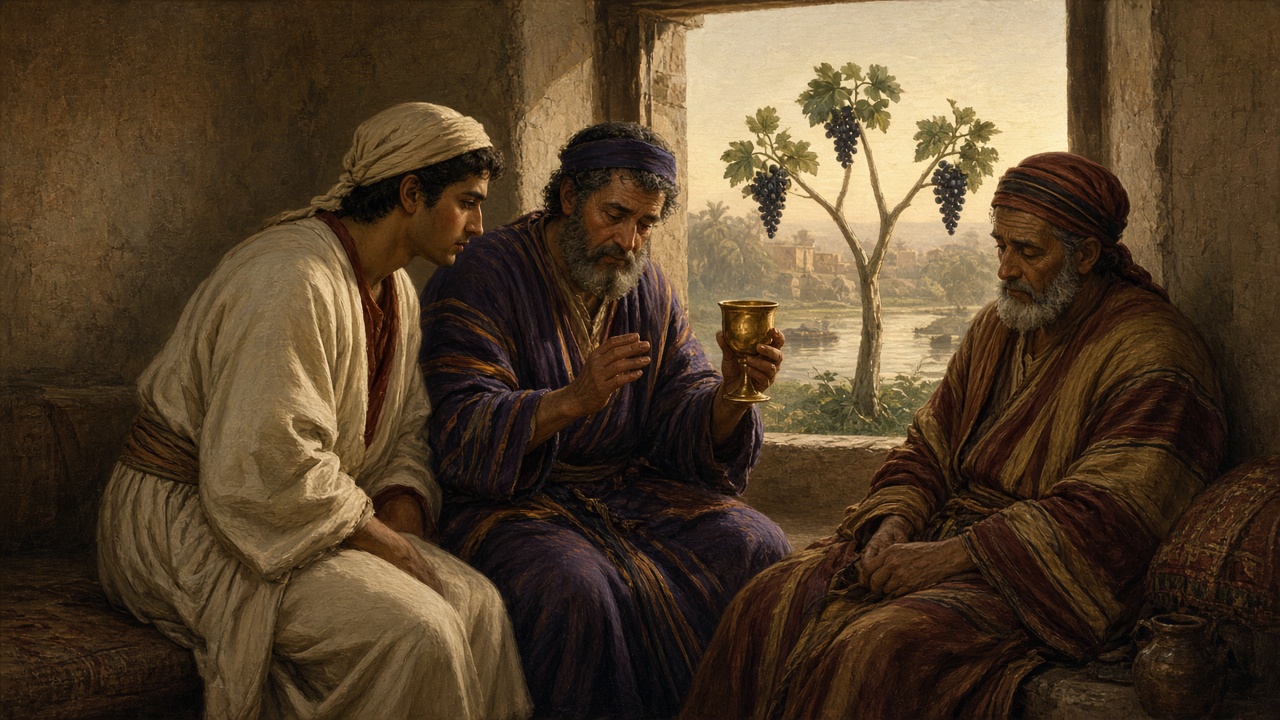
Dreams in Pharaoh's Prison
- Pharaoh was angry with two officers, the chief cupbearer and the chief baker, and put them in the house of the captain of the guard, the same prison where Joseph was confined. The captain assigned them to Joseph, who became their personal attendant.Sources: the Bible text itself
- On the same night the cupbearer and the baker each dreamed, and Joseph said that interpretations belong to God. He took the three branches and the three baskets to mean three days: Pharaoh would lift up the cupbearer's head and restore him, but lift off the baker's head and hang him on a tree. On the third day, Pharaoh's birthday, the king held a feast for his officials, restored the cupbearer, and hanged the baker.Sources: the Bible text itself
- Joseph asked the cupbearer to remember him and mention him to Pharaoh after his restoration. He said he had been kidnapped from the land of the Hebrews and had done nothing for which he should have been put in the dungeon. Easton's Bible Dictionary (1897) identifies the Pharaoh of Joseph's days as probably Apopi, or Apopis, the last of the Hyksos kings; some argue instead that Joseph came to Egypt later, under Thothmes III.Sources: the Bible text itself · Pharaoh (of Joseph)
Notes written with AI assistance from open sources (Theographic Bible Metadata, CC BY-SA 4.0; Easton’s Bible Dictionary, public domain) and reviewed before publishing.
Places in this chapter
Only places identified with high confidence are shown (90% or more according to the scholarly sources compiled by OpenBible). Period map: DARE (Digital Atlas of the Roman Empire), CC BY 4.0; modern map: © OpenStreetMap contributors; places: OpenBible.info (CC BY 4.0).
Credits and license for this translation
Rote Dela Alkitab
Genesis and the New Testament in the Rote Dela language of Indonesia
Kejadian dan Perjanjian Baru dalam bahasa Rote Dela
copyright © 2016 Unit Bahasa dan Budaya
Language: Rote Dela (Dela-Oenale)
Translation by: Wycliffe Bible Translators
This translation is made available to you under the terms of the
Creative Commons Attribution Share-Alike license 4.0.
You have permission to share and redistribute this Bible translation in any format and to make reasonable revisions and adaptations of this translation, provided that:
You include the above copyright and source information.
If you make any changes to the text, you must indicate that you did so in a way that makes it clear that the original licensor is not necessarily endorsing your changes.
If you redistribute this text, you must distribute your contributions under the same license as the original.
Pictures included with Scriptures and other documents on this site are licensed just for use with those Scriptures and documents.
For other uses, please contact the respective copyright owners.
Note that in addition to the rules above, revising and adapting God's Word involves a great responsibility to be true to God's Word. See Revelation 22:18-19.
2022-03-11
Source: http://ebible.org/row/ · eBible.org