Genesis 8
Gapapaiwa New Testament · Tap a verse to see its cross-references.
Kutukutuva damona.
1God, Nowa ma ghamoghamo peyarisi waka kamonai inotanotisi. Ma yanunu ivonatawei da ivosisina ma okowa ivi karei da iororu. 2Ma namada dowiyai vusira igudupotapota ma iberai da kunumai garewakatuna ivoterei. 3Ma okowa na mara 150 kamonai nuwatuwai iororu. 4Kutukutuva ivi karei inenae da nawaravi miikovi murinai na waka Ararati koyana ku tepana ivi kiikenei. 5Okowa patana iororu da nawaravi kana vi 10 ina karena na koya vovosi irumatara.
6Garewa ikatuna ikovi murinai, Nowa ikoyagha da mara 40 ikovi ma waka tarabogina kana gudu ivotawei. 7Ma oghogha ivonatawei ikiibau ma ke ita vovira. Irovorovo yawara ma ivivi koyakoyagha da okowa ita mamaghatawei. Ma Nowa, oghogha ikoyagha kavai. 8Ina kayowana da akova ita viiya da okowa ioru da imapatana, tuna kubiine bade gabubu ivonatawei inae. 9Ma kegha, okowa patana da dobu ikiimumui da gabubu gawara iekwa kavai da iti yakam. Irovo ivovira ku waka ma Nowa ivororona da iviiya, ma itereruwei ku waka. 10Ivi koyakoyagha da mara 7 ikovi ma gabubu ivonatawe meyei. 11Raviyai ivovira kurina ma mutunai na oliv kiina ruguruguna matina ikaratani. Nowa nani ruguruguna ikitai na iakovi da okowa namada ioru kirakai. Gabubu oliv ruguruguna ikaratani ikavarapiyei Noah kurina.|alt="Noah & dove" src="co00632c.TIF" size="col" loc="Gen 8:11" copy="© DCC" ref="Gen 8:11" 12Ivi koyakoyagha da mara 7 ikovi na gabubu ivonatawe meyei. Ma ke ita vovirame kurina, ine vaghata.
13Nowa kana madegha 601 ma nani madeghina karenai okowa imamaghatawei. Waka kana tarasovo ivotawei ikitavirevire ma ikitai da dowa ivovokanakana. 14Ma mara kana vi 27 nawaravi kana viruwa kamonai na dobu kudubina ikanakana tuwanonowa.
15Vaghina ma God, Nowa ivonei bo, 16“Tam kawam yavata ma natunatum ere kakawasi na waka kokiibutawei. 17Ma bade ghamoghamo waka kamonai, kiu, ghamoghamo manamisi, siya dipa ma dowatetetesi na peyarina kerutinakiibuwesi. Ina kiibau da ini tuwa ma ina peyari kirakai dobuwai.”
18Ma vaghina, Nowa kawana yavata ikiibau, ma natunatusi ere kakawasi na peyarisi waka ikiibutawei. 19Ma bade ghamoghamo manamisi, siya dipa, dowatetetesi ma kiu na peyarina ere kii nevaneva waka ikiibutawei.
Nowa ina suwara.
20Nani murinai Nowa wakima ivi daburi da suwara kana kema iyamoni. Ma meni ghamoghamosi ma kiusi Bada ivi vaghinei da suwara kubiine na kamosiyai viya iviinisi ma ivunuwa da suwara kana kema tepanai ikapuna, Bada God kurina isuwara. 21Bada suwara ghabuna iyoni ma nuwanuwana iviiya ma ivona bo, “Ke meyani dobu animaga meyei wawaya i berabero kubiine. Akovi da gegeyai da i ku rabobo na i nota didibarisi emakamakai. Akovi ma namanaki, ke meyani da bera yavu yawayawana ana kiipupuna meyei.
22Karako da dobu ku damona na iri atereterei
da vao kana mara ma yaba kana mara,
nuba kana mara ma muyamuya kana mara,
bodu ma kwamra,
mara ma didibara,
ina nenae da ke meyani ina kovi.”
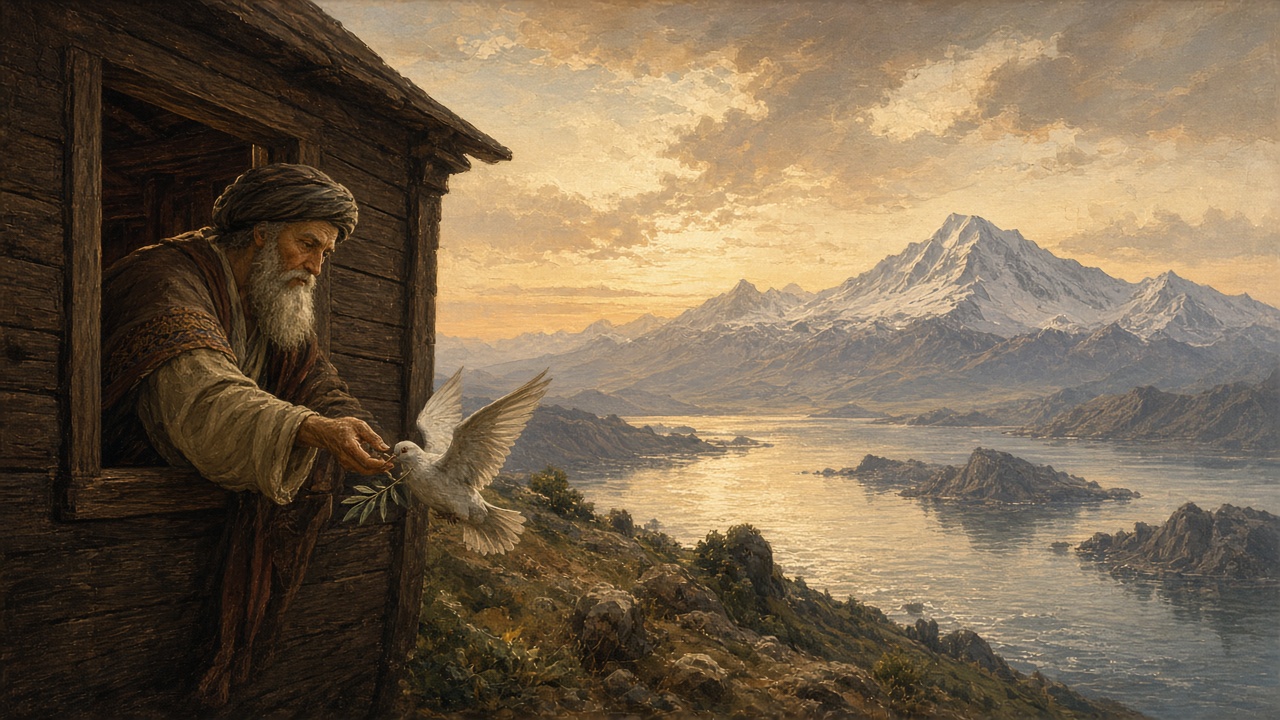
Did you know?
The Waters Recede
- The ark came to rest on the mountains of Ararat, a name meaning “sacred land” or “high land” for a country on whose mountains the ark settled after the flood. Easton's Bible Dictionary (1897) suggests those mountains were probably the Kurdish range of southern Armenia, though the name is also commonly applied to a high, almost inaccessible peak rising from the plain of the Araxes. In 2 Kings 19:37 and Isaiah 37:38 the Authorized Version renders the name “Armenia” and the Revised Version “land of Ararat,” while Jeremiah 51:27 uses it for central or southern Armenia.Sources: Ararat · the Bible text itself
- Noah’s Hebrew name means “rest,” and in this chapter the ark itself comes to rest as the waters go down. He was the son of Lamech and the grandson of Methuselah, and the father of Shem, Ham, and Japheth. Easton's Bible Dictionary describes him as the connecting link between the old world and the new, and as a second great progenitor of the human family.Sources: Noah · the Bible text itself
- Chronological notes place the Great Flood in 2347 BC, lasting one year; the subsiding of the waters in 2346 BC, over 220 days; and the leaving of the ark in 2346 BC, as a single day. In the chapter itself, the waters have gone down after 150 days and the ark rests on the seventeenth day of the seventh month; on the first day of the first month of Noah’s six hundred and first year the waters have dried up, and by the twenty-seventh day of the second month the earth is fully dry.Sources: The Great Flood · The flood subsides · Leaving the Ark · the Bible text itself
Notes written with AI assistance from open sources (Theographic Bible Metadata, CC BY-SA 4.0; Easton’s Bible Dictionary, public domain) and reviewed before publishing.
Places in this chapter
- Ararat · Today: Urartu · 39.703, 44.300 · verse 4
Only places identified with high confidence are shown (90% or more according to the scholarly sources compiled by OpenBible). Period map: DARE (Digital Atlas of the Roman Empire), CC BY 4.0; modern map: © OpenStreetMap contributors; places: OpenBible.info (CC BY 4.0).
Credits and license for this translation
Gapapaiwa New Testament
The New Testament in the Gapapaiwa Language of Papua New Guinea
Nupela Testamen long tokples Gapapaiwa long Niugini
copyright © 2009-2018 Wycliffe Bible Translators, Inc.
Language: Gapapaiwa
Translation by: Wycliffe Bible Translators
This translation is made available to you under the terms of the
Creative Commons Attribution-No Derivatives license 4.0.
You may share and redistribute this Bible translation or extracts from it in any format, provided that:
You include the above copyright and source information.
You do not make any derivative works that change any of the actual words or punctuation of the Scriptures.
Pictures included with Scriptures and other documents on this site are licensed just for use with those Scriptures and documents.
For other uses, please contact the respective copyright owners.
2022-11-07
Source: http://png.bible/pwg/ · eBible.org