Genesis 8
Suha' Maseho: Kadadiam anna Pa'dandiam Bakahu · Tap a verse to see its cross-references.
Mehe uwai
1Sapo' tä' ungkalembei Nuh Puang Allataala sola ingganna olo'-olo' malaihanna anna manahanna indo napasola illaam kappala', lambi' napasule Puang Allataala hibu' ussimbuhu'i indo uwai nasuhum napahandu'um mehe. 2Aka mondam uham anna tä'um ma'kalimbuä liu uwai dio mai litä', nasuhum tuttuam mehe uwai. Tappana sahatu' lima puloi benginna muäbä indo kappala', iya tiandanga'um yabo pusu'na tanete Ararat. Allo eta too tanggala' sapulo pitu bulam pitu. 5Iya tahhu' lium mehe uwai lambi' tanggala' mesai bulam sapulo, silosam pole' dokko diita sanaka-naka pusu'na tanete malangka'.
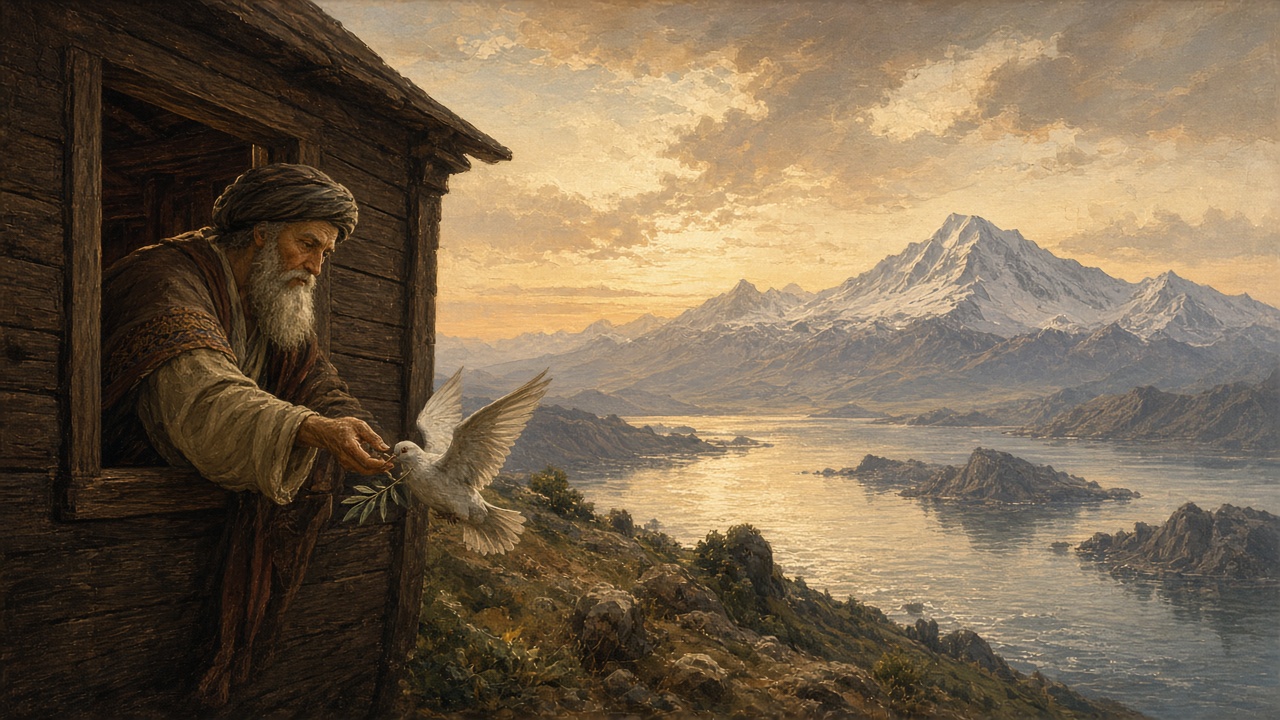
6Lessu'i appa' pulo benginna, nabukkaim Nuh indo suleba'na kappala' 7anna ullappa'i mesa kadoaja. Sapo' tä'um ma'pasule indo kadoaja aka lao mandam katia'-tia' lako dio mai sampe matti' uwai. 8Iya ullappa' pole oom mesa dangam-dangam, aka la napengngissanni battu la mehe gegem uwai. 9Sapo' indo dangam-dangam ma'pasule ia sule umpellambi'i Nuh aka tä'pi deem naongei hampo, aka inde lino nalimbäi asampi uwai. Iya umpengkandoammi limanna Nuh tama sulibam anna nahampoi indo dangam-dangam anna malai tama sule kappala'. 10Naampai oom pitu benginna anna mane nalappa' oi indo dangam-dangam. 11Tappana kahubenni, sulem indo dangam-dangam untoä salamba' daum zaitun mane naala. Iam too anna naissammi Nuh naua: “Mehe gegem pole' uwai.” 12Iya naampai oom pitu benginna mane nalappa' oi indo dangam-dangam, sapo' tä'um pole' deem ma'pasule.
13Tappana tanggala' mesai bulam mesa, iya matti' lium pole' indo uwai. (Wattu eta too annam hatu'um mesa taunna dadinna Nuh.) Nabukkaim Nuh papana indo kappala' anna kanenne'-nenne'i lao. Iya naitam mabangim galantangam. 14Tappana tanggala' dua pulo pitui bulam dua, mabangi asammi pole' lao galantangam.
15Pissananna ma'kadam Puang Allataala lako Nuh naua: 16“Pessubummokoa' illaam mai kappala' sola bainemu, änä'mu anna manintummu. 17Passubunni duka' ingganna indo olo'-olo' umpasola: ingganna dassi anna ingganna hupanna olo'-olo' si yabo galantangam anna mala membea' umponnoi lino.”
18Iya messubummi Nuh sola änä'na anna bainena anna manintunna. 19Messubum asammi duka' indo ingganna olo'-olo' ma'bitti' appa'na sola tissollo'na anna ingganna dassi pantam ma'mesa sahhupa oi.
20Pissananna umpasitodo'-todo'um batu Nuh naongei mehumala'. Puhai, naalam sanda si sahhupa dassi anna olo'-olo' senga' indo la sipäto'na napake menomba dio olona DEBATA anna natunui yabo indo ongeam pehumalasam, napopemala'. 21Iya bubanau' naudu' DEBATA indo tunuam. Napolalam nadandi illaam penabanna naua: “Tä'um la kutädo inde litä' anna tä'um la kutallanni ingganna issinna inde lino kahana gau' kadakena hupatau susi inde mane puha kupogau', moinna anna kuissam kuua kadake pattuju penabanna hupatau mengkalao dio mai bahinni'na.
22Dadi maka' tontä liupi da'da' inde lino la deem liu wattu pantanangam anna wattu pamuppusanna bua pengkähä, wattu masäkke' anna wattu makula', wattu kulla' anna palauham, allo anna bengi.”
Did you know?
The Waters Recede
- The ark came to rest on the mountains of Ararat, a name meaning “sacred land” or “high land” for a country on whose mountains the ark settled after the flood. Easton's Bible Dictionary (1897) suggests those mountains were probably the Kurdish range of southern Armenia, though the name is also commonly applied to a high, almost inaccessible peak rising from the plain of the Araxes. In 2 Kings 19:37 and Isaiah 37:38 the Authorized Version renders the name “Armenia” and the Revised Version “land of Ararat,” while Jeremiah 51:27 uses it for central or southern Armenia.Sources: Ararat · the Bible text itself
- Noah’s Hebrew name means “rest,” and in this chapter the ark itself comes to rest as the waters go down. He was the son of Lamech and the grandson of Methuselah, and the father of Shem, Ham, and Japheth. Easton's Bible Dictionary describes him as the connecting link between the old world and the new, and as a second great progenitor of the human family.Sources: Noah · the Bible text itself
- Chronological notes place the Great Flood in 2347 BC, lasting one year; the subsiding of the waters in 2346 BC, over 220 days; and the leaving of the ark in 2346 BC, as a single day. In the chapter itself, the waters have gone down after 150 days and the ark rests on the seventeenth day of the seventh month; on the first day of the first month of Noah’s six hundred and first year the waters have dried up, and by the twenty-seventh day of the second month the earth is fully dry.Sources: The Great Flood · The flood subsides · Leaving the Ark · the Bible text itself
Notes written with AI assistance from open sources (Theographic Bible Metadata, CC BY-SA 4.0; Easton’s Bible Dictionary, public domain) and reviewed before publishing.
Places in this chapter
- Ararat · Today: Urartu · 39.703, 44.300 · verse 4
Only places identified with high confidence are shown (90% or more according to the scholarly sources compiled by OpenBible). Period map: DARE (Digital Atlas of the Roman Empire), CC BY 4.0; modern map: © OpenStreetMap contributors; places: OpenBible.info (CC BY 4.0).
Credits and license for this translation
Suha' Maseho: Kadadiam anna Pa'dandiam Bakahu
The New Testament and Genesis in the Bambam language of Indonesia
Perjanjian Baru dan bagian dari Perjanjian Lama dalam bahasa Bambam dari Indonesia
copyright © 2004 Lembaga Alkitab Indonesia
Language: Bambam
Translation by: Wycliffe Bible Translators
This translation is made available to you under the terms of the
Creative Commons Attribution-No Derivatives license 4.0.
You may share and redistribute this Bible translation or extracts from it in any format, provided that:
You include the above copyright and source information.
You do not make any derivative works that change any of the actual words or punctuation of the Scriptures.
Pictures included with Scriptures and other documents on this site are licensed just for use with those Scriptures and documents.
For other uses, please contact the respective copyright owners.
2022-03-11
Source: http://ebible.org/ptu/ · eBible.org