Genesis 4
Suha' Maseho: Kadadiam anna Pa'dandiam Bakahu · Tap a verse to see its cross-references.
Kain sola Habel
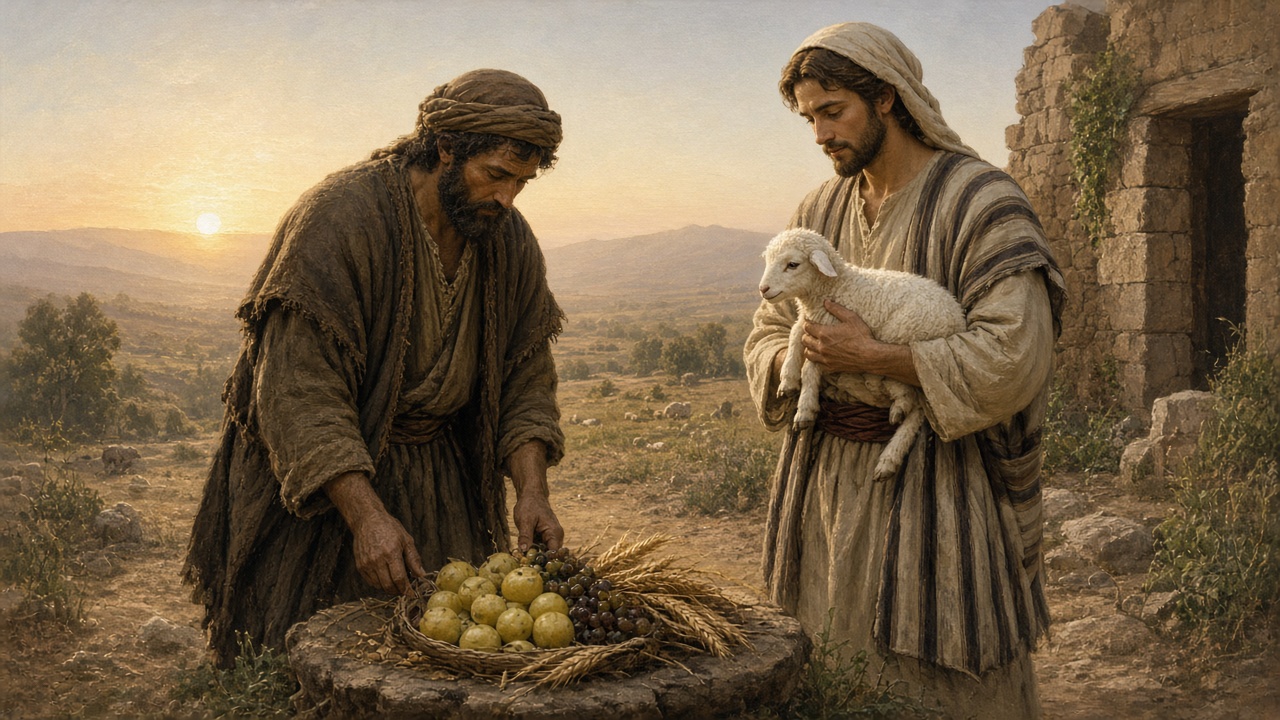
1Iya solam metindo Adam anna Hawa bainena lambi' kebättä Hawa sampe undadiam mesa muane. Iya ma'kadam Hawa naua: “Pa'kamasenam too DEBATA nasuhum malaä' undadiam mesa muane.” Iam too anna nasangaim Kain. 2Mane undadiam polei mesa muane, nasangai ia Habel. Tappana kasalle indo dua änä'na, iya si ma'kambi' ia Habel anna si mengkähä litä' ia Kain.
3Pissam wattu muala sabaheam bua pengkähäna indo Kain, anna napehumalasanni längäm DEBATA. 4Naala duka' Habel sanaka-naka uhu änä'na dombana, natunu, anna naala asanni lompona napehumalasam. Lambi' tä' deem pada sanapohäe DEBATA Habel sola bua pemala'na. 5Sapo' Kain ia sola bua pemala'na tä' napohäe DEBATA. Tä' deem pada sameali-ali Kain anna hosso penabanna.
6Iya ma'kadam DEBATA lako Kain naua: “Akanna keaha'ko anna umpahosso penabammu? 7Aka indo kela ma'gau' mapiako la ussi'dim dako tia duka' kakassiam. Sapo' maka' tä'ko ma'gau' mapia, dosa sihhapam to mantoho' natoho'ungko la napentamai. Sapo' pahallu la umpentaloi.”
8Iya ma'kadam Kain lako adinna naua: “Habel, talao lako bela'.” Sulei lako bela'na, tappa uhhopäi Habel adinna napatei.
9Iya ma'kadam DEBATA lako Kain naua: “Umba ngei Habel adimmu?” Natimba' Kain naua: “Tä' kuissam. Aka kao haka too kao si unjagai?”
10Iya ma'kada pole oom DEBATA naua: “Akanna umpogau'ko kakadakeam? Indo hahana adimmu sihhapam kamaha napengkaalaiä' dio mai naua: ‘Napateiä'.’ 11Dadi temo kutädoko, tä'ungko la mala ungkähä litä', aka naongei titollo hahana adimmu indo anna umpatei. 12Aka moiko la mantanam tä' siam la kembua. Dadi la laoko kalao-lao bäbä ussambai lino ma'dassi tahampo.”
13Natimba' Kain naua: “O DEBATA moi kela daa itim pesämbä'mu tama kaleku tä' punala la kubela kupendudum. 14Aka ussuamä' lao umpellei inde ongeam anna tä'ungki' deem la siita. Aka la kalao-lao bäbämä' ussambai lino, anna la napateimä' too tau ke deenni kusitammuam.”
15Nauam DEBATA: “Tää'! Maka' deengko la umpatei, la dipabala'i pempitu tiluppi'.” Iya napapiaammi DEBATA tanda dio kalena anna mala tä' la napatei tau ke deenni nasitammuam. 16Iya le'ba'um Kain umpellei DEBATA lu dekke tandai mata allona Eden anna tohhoi dio Nod.
Pessubunna Kain
17Iya solam metindo Kain anna bainena, lambi' kebättä bainena sampe undadiam mesa muane nasangai Henokh. Pissananna umpapiam mesa kota anna nasangai Henokh napasikona änä'na. 18Indo Henokh undadiam Irad, Irad undadiam Mehuyael, Mehuyael undadiam Metusael, Metusael undadiam Lamekh.
19Indo Lamekh baju'. Isanga Ada mesa bainena, anna isanga Zila mesa. 20Ada ia ungkeänäsam Yabal. Yabal-um too handam yolo umpatubo olo'-olo' anna si ma'pentieli'-eli'i mebahum. 21Adinna Yabal isanga Yubal. Yubal-um too handam yolo ma'katapi anna ma'sulim. 22Zila ia ungkeänäsam Tubal-Kain. Iam too handam yolo mendadi pande gällä anna bassi. Deempi adinna Tubal-Kain baine isanga ia Naama.
23Pissam wattu ma'kada Lamekh lako indo dua bainena naua:
“O Ada solakoa' Zila, patananniia' talinga inde tula'ku: Puhaä' umpatei mesa änä' muane aka nabasaiä'; umpaletta' sungnga'ä' mesa to mangnguha aka sukka'-sukka' kaleku nahabi'.
24Maka' deem la umpatei Kain, la dipabala'i ia pempitu tiluppi', sapo' maka' kao deem tau la umpateiä' la dipabala'i ia pempitu pulona anna pitu tiluppi'.”
25Iya sola oom metindo Adam anna Hawa lambi' undadiam pole oom mesa muane. Iya nasangaim ia Set, aka naua Hawa: “Nabala'iannä' Puang Allataala indo kakanna isanga Habel aka puha napatei Kain.” 26Indo Set undadiam mesa muane isanga Enos.
Wattu etam too anna napahandu'i hupatau umpenombai DEBATA.
Did you know?
Cain, Abel, and Life East of Eden
- Abel’s Hebrew name means “breath” or “vanity.” He kept sheep, while his brother Cain tilled the soil: Abel brought the best portions of the firstborn of his flock, and Cain brought fruit of the ground. Easton's Bible Dictionary (1897) reads the phrase “in process of time” (margin, “at the end of days”) as probably referring to the Sabbath.Sources: Abel · Cain · the Bible text itself
- After Abel’s death, Cain settled in the land of Nod, east of Eden, a name meaning exile, wandering, or unrest. There he built a city and named it after his son Enoch. Easton's Bible Dictionary notes that this is the first city mentioned in Scripture.Sources: Nod · Enoch (son of Cain) · the Bible text itself
- Lamech, fifth in descent from Cain, married two women, Adah and Zillah. Easton's Bible Dictionary calls his address to them the only extant example of antediluvian poetry, sometimes known as “Lamech’s sword-song.” Their children are tied to early ways of life: Jabal with tents and livestock, Jubal with the harp and flute, and Tubal-cain with forging bronze and iron.Sources: Lamech (descendant of Cain) · Adah (wife of Lamech) · Zillah · the Bible text itself
Notes written with AI assistance from open sources (Theographic Bible Metadata, CC BY-SA 4.0; Easton’s Bible Dictionary, public domain) and reviewed before publishing.
Credits and license for this translation
Suha' Maseho: Kadadiam anna Pa'dandiam Bakahu
The New Testament and Genesis in the Bambam language of Indonesia
Perjanjian Baru dan bagian dari Perjanjian Lama dalam bahasa Bambam dari Indonesia
copyright © 2004 Lembaga Alkitab Indonesia
Language: Bambam
Translation by: Wycliffe Bible Translators
This translation is made available to you under the terms of the
Creative Commons Attribution-No Derivatives license 4.0.
You may share and redistribute this Bible translation or extracts from it in any format, provided that:
You include the above copyright and source information.
You do not make any derivative works that change any of the actual words or punctuation of the Scriptures.
Pictures included with Scriptures and other documents on this site are licensed just for use with those Scriptures and documents.
For other uses, please contact the respective copyright owners.
2022-03-11
Source: http://ebible.org/ptu/ · eBible.org