Genesis 26
Suha' Maseho: Kadadiam anna Pa'dandiam Bakahu · Tap a verse to see its cross-references.
Ishak tohho dio Gerar
1Pissam wattu sule oom kakobeam susi indo anna tubopi Abraham. Napolalam le'ba' Ishak lako Abimelekh tomahajanna to Filistin anna tohhoi dio Gerar, 2aka puha umpa'paitaam kalena DEBATA lako Ishak anna nauaanni: “Daa ullao lako Mesir, tohho dioko indo to la kutulasangko. 3Etangko too pessihuhu anna la kukambi'ko sola kutamba'. Ingganna inde pa'lembängam la kupadokkoangko lisu pala'mu sule lako pessubummu. Aka la kupasule lako pa'dandiangku, indo puha kudandi lako ambemu Abraham. 4Anna la kupalohom banne taummu susi budanna bintä yabo langi' anna inde pa'lembängam la kupadokkoam asam lisu pala'na pessubummu. Anna pessubummu la kupa'polalanni pa'tamba' lako issinna lino. 5Ia anna la kutamba'koa' aka untuhu'i liu tula'ku Abraham anna naanti manda' natobe matoto' ingganna kada pepaondongangku, pahentaku, sola pelahangangku.” 6Iya iam too anna tohho diom Gerar Ishak.
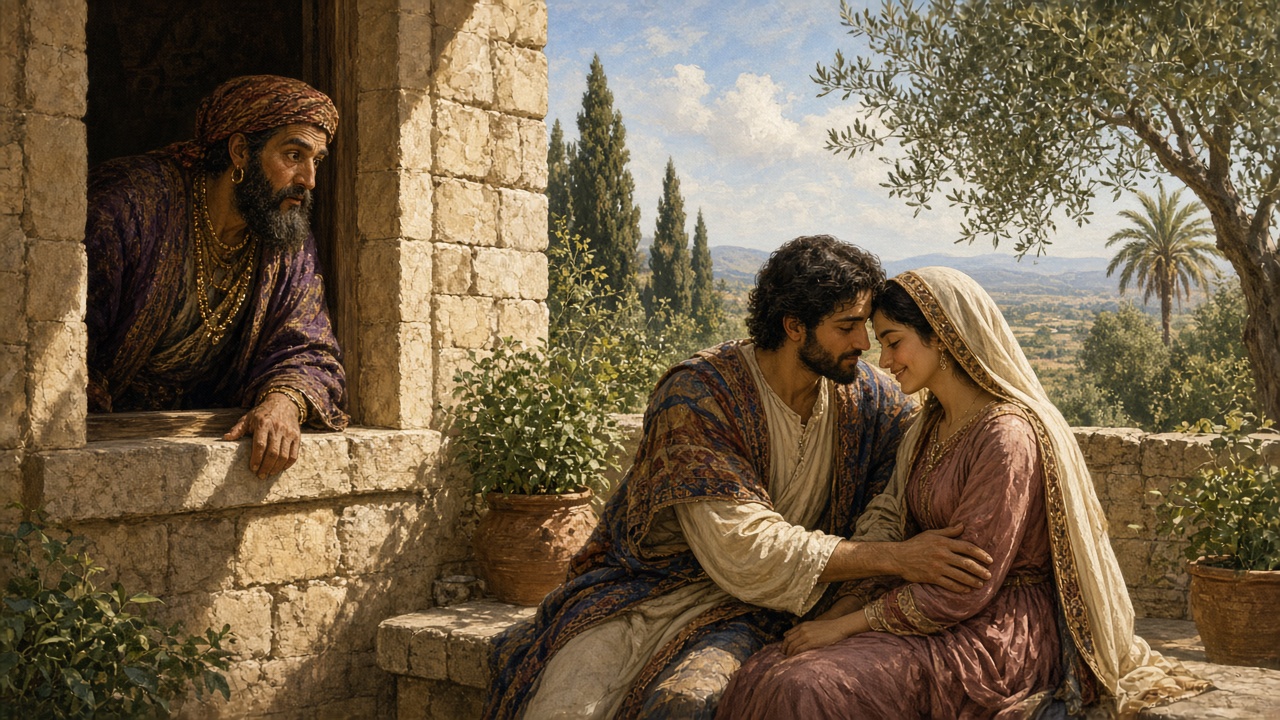
7Tappana napekutanaanni pa'botto diona bainena, iya nauam Ishak: “Indee adingku hi to kao.” Moka muuai: “Baineku,” aka naua inabanna: “Deem manii pa'botto umpateiä' aka umpohäe Ribka aka mapi'dä' hupanna.”
8Masäe-säei tohho Ishak dio indo ongeam, iya ma'pahandam-handammi Abimelekh tomahajanna to Filistin dio suleba'na, iya muitam Ishak sianda'i lelem Ribka. 9Iya untambaim Ishak anna nauaanni: “Bainemu hiko päläe' itim baine, akanna muua hiko: ‘Adingku’?” Iya natimba'im Ishak naua: “Aka kupenaba-nabaam kuua deem manii umpateiä' ke kuuai: ‘Baineku’.”
10Nauaammi Abimelekh: “Akanna ma'pateem ongko duka'? Kahapa too deemmi taungku umpempakoi bainemu, iya umpaalaingkam kami' sala.”
11Iya napa'pahentaammi Abimelekh lako ingganna pakketauanna naua: “Menna-menna la ussägäi Ishak, battu haka bainena, tä' mala tala dipatei.”
12Tappana lambi' wattunna pengkähängam, mangngambo'um duka' Ishak, iya tiluppi' sahatu' pa'taunna aka natamba' DEBATA. 13Tuttuam kehängäm katomakakaanna, sampe sugi' tangkalantungam. 14Tä' deem pada sabuda dombana, bekena, sapinna anna sabua'na, nasuhum nakembuhui to Filistin. 15Lambi' natambunni asam to Filistin indo bujum puha nabo'bä' sabua'na Abraham, ambena Ishak, indo anna tubopi.
16Iya ma'kadam Abimelekh lako Ishak naua: “Äläiko lao kalemu illaam mai inde botto litä'ki aka kuasa puha hangko iko anna la kami'.” 17Iya le'ba'um Ishak lu lako lembä Gerar anna tohho dioi mebahum. 18Dioi, iya nakahoi asammi sule Ishak indo bujum nabo'bä' Abraham indo anna tubopi, aka natambunni to Filistin tappana mate Abraham. Anna nasangai asam sule Ishak indo bujum susi passangainna Abraham.
19Pissam wattu umbo'bä' bujum sabua'na Ishak dio lembä ia too, iya ullambi'um uwai tä' deem pada sabuda. 20Sapo' keaha' indo to ma'kambi' dio Gerar lako indo to ma'kambi'na Ishak naua: “Anungki hi to kami',” sampe nasikalla-kallai. Iam too anna nasangaim Ishak indo bujum, Esek, kalembasanna Kasikallaam.
21Iya nabo'bä' polem ia indo sabua'na Ishak bujum senga' sapo' napa'keahasam pole oo, sampe nasikalla-kallai oo. Iya nasangaim ia Ishak, Sitna, kalembasanna Kasipobaliam. 22Mentieli' pole oom kapentallunna umbo'bä' bujum. Iya tä'um pole' napa'keahasam. Iam too anna nasangaim ia Ishak, Rehobot, kalembasanna Dipalonda, aka naua: “Temo nabeemmakia' DEBATA kalondaam tohho illaam inde pa'lembängam la membea' lampa'.”
23Mane mengkalaoi Ishak lu lako Bersyeba. 24Bengii umpa'paitaammi kalena DEBATA lako Ishak anna ma'kadai naua: “Kaom too inde Puang Allataala to napenombai ambemu Abraham. Daa ummahea' aka la kuundu'ko. La kutamba'ko anna lohonni banne taummu aka puha kudandi lako sabua'ku Abraham.”
25Puhai ia too, umpapiam pehumalasam anna umpenombai DEBATA dio indo ongeam. Iya mebahummi Ishak eta, anna umbo'bä' polei bujum sabua'na.
26Iya sulem Abimelekh dio mai Gerar napasola Ahuzat to si umbalii ma'pikki' anna Pikhol pangngulu sohodadunna umpellambi'i Ishak. 27Iya mekutanam Ishak naua: “Akanna sulekoa' umpellambi'iä'? Kusanga ungkahi'di'ä' indo lessu' sampe ussuaä' illaam mai botto litä'mua'.”
28Natimba'um naua: “Kiissam kiua iko to naundu'ko DEBATA. Dadi kiua: Mapia ke umpadeengkia' kasitallisam. La sitalli'kia' 29anna mala tä'ko deem la ma'pogau' kadake lako kami', umba susi kami' duka' tä'kam deem la ma'gau' kadake matim. Sapo' tontäkam ma'pogau' mapia matim anna kipäbäingko le'ba' sola kamasannangam indo lessu'. Anna abana hia to natamba'ko DEBATA.”
30Iya natosabe manappam Ishak, napande anna napaihu'. 31Makale'nai mebengngi', sitalli'um pole'. Puhai ia too, nauaammi Ishak: “La masakke hakoa' too illaam pangngola-lalangammu.”
32Allo eta siam too anna sulei sabua'na Ishak ma'tula' naua: “Indo bujum kibo'bä' kilambi'um uwai.” 33Iya nasangaim Ishak indo bujum, Syeba, kalembasanna Kasitallisam. Susim too tulasanna anna disangai indo kota Bersyeba sule lako temo.
34Tappana appa' puloi taunna Esau, iya umpobainem dua änä' daha to buttu dio mai Het, isanga Yudit, änä'na Beeri, anna Basmat, änä'na Elon. 35Baine ia too umpomasussa penabanna Ishak sola Ribka.
Did you know?
Isaac in Gerar
- During a famine, Isaac sought refuge with Abimelech, king of Gerar, an ancient town and district on the southern border of Palestine. Easton's Bible Dictionary (1897) notes that Isaac acted toward his wife Rebekah much as his father Abraham had acted toward Sarah there: he said she was his sister. Abimelech later rebuked him when the deception was discovered.Sources: Abimelech (King of Gerar) · Gerar · the Bible text itself
- The names of wells in the Valley of Gerar recall the disputes over them. Esek means “quarrel,” because the herdsmen of Gerar claimed the water, and Sitnah means “strife.” Isaac also reopened wells that his father Abraham’s servants had dug and that the Philistines had stopped up, and he gave them the same names his father had given them.Sources: Esek · Sitnah · the Bible text itself
- Beersheba means “well of the oath” or “well of seven.” According to Easton's Bible Dictionary (1897), Abraham dug a well there and named it after a compact with Abimelech, and Isaac gave it the same name when he reopened it. The dictionary also identifies Phicol—“great”—as chief captain of Abimelech’s army, and says he took part in Abraham’s alliance over that well.Sources: Beersheba · Phichol · the Bible text itself
Notes written with AI assistance from open sources (Theographic Bible Metadata, CC BY-SA 4.0; Easton’s Bible Dictionary, public domain) and reviewed before publishing.
Places in this chapter
- Egypt · 30.129, 31.308 · verse 2
- Valley of Gerar · Today: about 3 km around Tel Haror · 31.382, 34.606 · verses 17, 19
Only places identified with high confidence are shown (90% or more according to the scholarly sources compiled by OpenBible). Period map: DARE (Digital Atlas of the Roman Empire), CC BY 4.0; modern map: © OpenStreetMap contributors; places: OpenBible.info (CC BY 4.0).
Credits and license for this translation
Suha' Maseho: Kadadiam anna Pa'dandiam Bakahu
The New Testament and Genesis in the Bambam language of Indonesia
Perjanjian Baru dan bagian dari Perjanjian Lama dalam bahasa Bambam dari Indonesia
copyright © 2004 Lembaga Alkitab Indonesia
Language: Bambam
Translation by: Wycliffe Bible Translators
This translation is made available to you under the terms of the
Creative Commons Attribution-No Derivatives license 4.0.
You may share and redistribute this Bible translation or extracts from it in any format, provided that:
You include the above copyright and source information.
You do not make any derivative works that change any of the actual words or punctuation of the Scriptures.
Pictures included with Scriptures and other documents on this site are licensed just for use with those Scriptures and documents.
For other uses, please contact the respective copyright owners.
2022-03-11
Source: http://ebible.org/ptu/ · eBible.org