Revelation 6
Yesu Kerisoné So Whi̧ Tao Sere Kisi Fo Wisi · Tap a verse to see its cross-references.
Diriróló kinó betere o̧larape
1Téró, kale Sipsip hupu malené bopeyóló mole asȩre sóku diriróló kinó betere wȩikéró o̧la beta̧ tukóló teraatepa kaae taremó, ai douró betere o̧lakó beta̧né “Ape!” dere fo be sapalaa dere kaae yalepó. 2Atétepa kelalemó, beta̧ dȩi hos hupu ȩ daalepaae anóló mo tumó daalepó. Ai hos hupu tómó betere whi̧né diki tawóo, doasi tȩteróló kaae tare whi̧né deratene topo tao mené a̧ maletei deróo erepó. Atéró deróló, bóe whi̧ dóló torokó̧ falaai mo doakale ketekȩ buló felepó.
3Kale Sipsip hupu malené kolosale noma kinóló dateka̧ró betere o̧la tukóló da̧ayalemó, kale kolosale noma betere o̧lané, “Ape!” yalepó. 4Teró me hos hupu sókó wapa kelalemó, mo si mi sonaa kaae erepó. Ai hupu tómó betóló wale whi̧paae, i haemó mole so whi̧ hosaa muni deyóló dua betere ala fasó sóró, bóe dóló u du i du yó̧póló, mené fotoko̧ a̧mó malepó. Téturaalu, a̧paae doasi bóe dele sepakekélé mené melalepó.
5Téró, kale Sipsip hupu malené dou̧ noma o̧la tukóló da̧ayalemó, kale dou̧ noma betere o̧lané duraalu, “Ape!” yalepó. Atétepa kaae taremó, dilikii hos hupu wóló ȩ daalepaae anóló daalu, beta̧ sekȩ da̧le sere o̧la skel tarepó. 6Atétepa, ya̧lo wosalemó, kale dou̧ró betere o̧larape kuamó whi̧né fo kaae yóló duraalu, “ Beta̧ whi̧ beta̧ be dȩmó kutó diteremó sere moniné whit o beta̧ lita ó bali o sore lita wuti senérapó. Térapa, nokole Olip wel wȩiró wain wȩitamo beta̧ dorao̧sóró hotowaró kaae tawae,” yalepó.
7Téró, kale Sipsip hupu malené dou̧ kinó betere o̧la tukóló teraatepa kaae taremó, dou̧ betere o̧lané duraalu, “Ape!” yalepó. 8Atétepa kelalemó, ȩ daalepaae anóló beta̧ sini tiki daale hos hupu daalepó. Ai hos hupu tómóta, sukutere ala bete tare whi̧ beterepó. Ai hos-né sisómó sukutere ala betepa, ai hupuné ki̧limó sukutere so whi̧ betere tiki ama doi Hedis wou betalepó. Ai whi̧ tamopaae, hae kwia feamó betóló fale so whi̧ dó̧póló fotoko̧ bulalepó. Ti so whi̧ daaireteita, atimaamoné bóe dele sepakenékélé, wote alinékélé, doakale hepo alinékélé, i haemó betó mole syaae kaae o̧lanékélé, dilé kwȩyó̧póló fotoko̧ su̧mó melalepó. Atéró dilé kuturaalu, douró fake beteretei beta̧ fake duraalu, sore fake beteró̧póló taaraalopó. I hae kwia feamó betóló fale so whi̧ atéró dilé kwȩyóló kemerae, yóló fotoko̧ su̧mó matepa tarepó.
9Téró kale Sipsip hupu malené apo kinó betere o̧la tukóló teraatepa kaae taremó, momatere kapo daale ao̧mó keperape betó mupa kelalepó. Ai keperapeta, Kótóné fo yó matere alaró Yesu Keriso etei kaae Talepóló yó matere alatamo deremó, mepaae whi̧né dale keperapó. 10Ai sekȩ́rape atimané fo fake yóló duraalu, “Mo fo fa̧anuraalu betere bete tale bitu, fea ala tȩteróló kaae tare Tale-ó, i haemó betó mole so whi̧né dowi alaró da̧ duraalu sókó farale sameatamomó tale yóló kwia melaaire be dȩ wó̧póló meteró felimó kaae tawóló betaaloé?” yalepó. 11Atéró atima doko̧ feamó deróló sókó fatere dȩi kuti melóló duraalu, “Dia̧ beta̧ kutó diratere norape atimakélé mené dó̧póló sawa kaae tawae. Ti noatepae, i dosa̧ayale daaire whi̧rape fea su̧mó dóló kemeréni teópó,” yalepó.
12Ya̧lo kaae taremó, apomiró dateka̧ró betere o̧la tukóló teraayalepó. Atéró teraateremó, doakale bao yóló, suka mo ti diliki yóo, wéliékélé mo samea beta̧ae fo erepó. 13Sa̧mó daae mole ho̧rerapekélé, doakale besȩ́né nose du hara torokó derótu dere kaae torokó deralepó. 14Sa̧ta, asȩtere sóku bopetu dere kaae bopeté fóló alune felepó. Hae kwia feamó daae mole hasi fosórapekélé, wȩiné tukóló bopéró betere haerapekélé, daale tiki taaróló, kae tikipaae daane felepó.
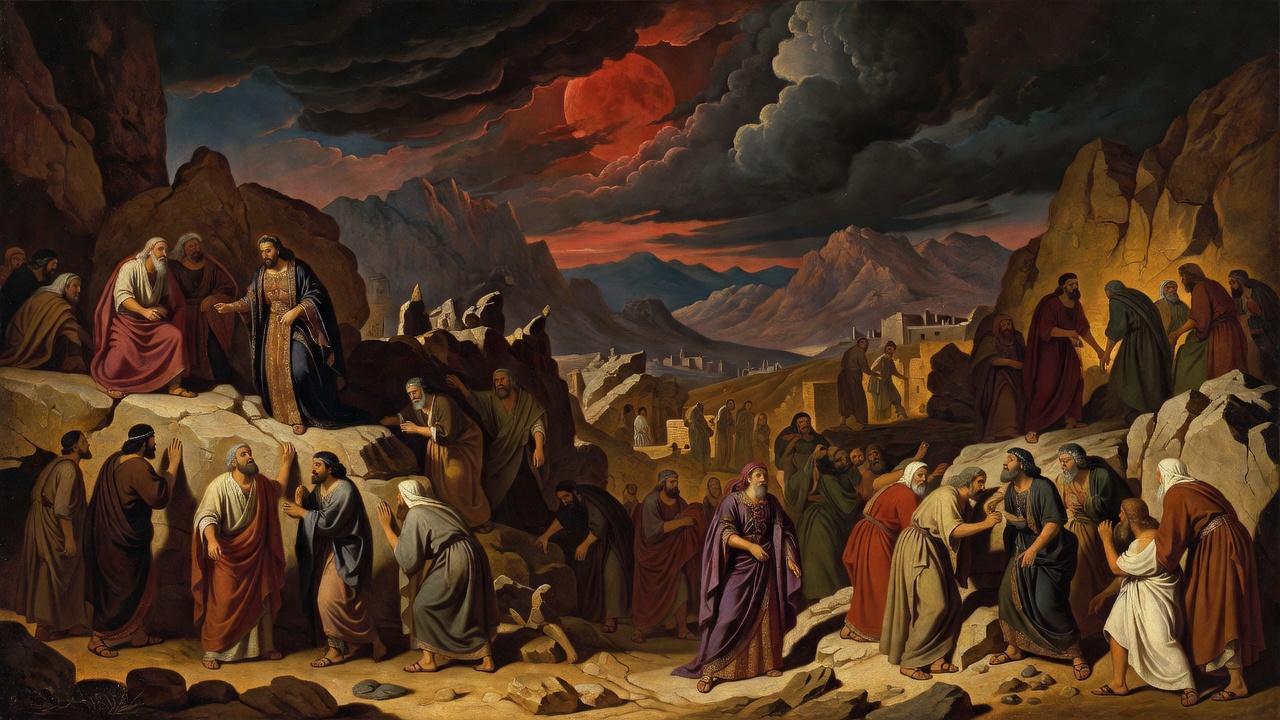
15Hae kwia fea tȩteróló kaae tare topo whi̧rapekélé, atima betale sirimó betaaire naalerapekélé, diki tare whi̧rape tȩteróló kaae tare topo whi̧rapekélé, néli whi̧rapekélé, bóe dele fotoko̧ bole whi̧rapekélé, wae sóró beteratere whi̧rapekélé, ko̧leaané betó mole whi̧kélé, kapo dolopaae hyó̧ muni fóo, kapo beléli dolopaae hyó̧ muni fóo yalepó. 16Atima atéró fóló bituraalu, hasi fosópaaekélé, kapo fakepaaekélé duraalu, “Kolokó dorowouraalu da̧ tȩiyane dere ape. Ti noatepae, tȩteróló kaae tare tikimó betere sekȩ́né kelepaaró Sipsip hupu maaletamoné fopaae bole alatamo da̧né kelao̧sóró kinae. 17Ti noatepa meipó. Atimaamoné doakale fopaae butu kwia matere be dȩ ai sókó wale ape. Atétere be dȩmó de daanére? Mo daayókélé enénipa wiyae,” du betalepó.
Did you know?
The Opening of the Six Seals
- The first four seals reveal four riders on white, bright red, black, and pale green horses, summoned one by one by the four living creatures. Each horseman brings a distinct affliction across the earth, ranging from conquest and the loss of peace to widespread famine, plague, and death.Sources: the Bible text itself
- The third horseman holds a pair of scales, accompanied by a proclamation setting the price of a quart of wheat or three quarts of barley at a denarius, reflecting severe inflation and food rationing while oil and wine are preserved.Sources: the Bible text itself
- When the fifth and sixth seals are opened, the focus shifts to the souls of slain believers waiting under the altar, followed by immense cosmic and earthly upheavals that lead people of every social station to hide in mountain caves.Sources: the Bible text itself
Notes written with AI assistance from open sources (Theographic Bible Metadata, CC BY-SA 4.0; Easton’s Bible Dictionary, public domain) and reviewed before publishing.
Credits and license for this translation
Yesu Kerisoné So Whi̧ Tao Sere Kisi Fo Wisi
The New Testament in the Falopa Language of Papua New Guinea
copyright © 2005 Wycliffe Bible Translators, Inc.
Language: (Folopa)
This translation is made available to you under the terms of the
Creative Commons Attribution-No Derivatives license 4.0.
You may share and redistribute this Bible translation or extracts from it in any format, provided that:
You include the above copyright and source information.
You do not make any derivative works that change any of the actual words or punctuation of the Scriptures.
Pictures included with Scriptures and other documents on this site are licensed just for use with those Scriptures and documents.
For other uses, please contact the respective copyright owners.
2009-10-31
Source: http://png.bible/ppo/ · eBible.org