John 17
Yesu Kerisoné So Whi̧ Tao Sere Kisi Fo Wisi · Tap a verse to see its cross-references.
Yesuné Alimapaae momayale fo
1Yesuné ai forape yale ki̧lipaae ó hepen-paae kese holóló momaturaalu,
“Aya-ó, mió kale tukóló muló betere be dȩ i sókó walapa, naao Naalené ya̧ tua̧mó ere ala wisinaale so whi̧ feapaae ha̧kearó̧póló, naao ama ere ala wisi ha̧kearae.
2Ti noatepae, i haemó betó mole so whi̧ fea tȩteróló kaae tanó̧póló, naao ȩ sóró beteralepó. Naao ȩpaae ai melale so whi̧paae mo ti betaaire bete meló̧póló, naao fotoko̧ ȩ su̧mó melalepó.
3Mo ti betere bete i ape. So whi̧né ya̧ta, mo beta̧ betere Kótópóló tuȩ́ yóo, naao dotȩyale whi̧ Yesu Kerisokélé tuȩ́ yóo, dere alata, mo ti betere betepó.
4Naao ȩpaae i haemó dirae yale kutó fea ya̧lo diyóló kemeraleteiné, naao ere ala wisinaale i haemó betere so whi̧né koló̧póló, ha̧kearalepó.
5Aya-ó, i haekélé kaaraaipa da̧mo wusuró bitu, naao ere ala wisi ha̧kearótu yale kaae, mió ȩ i hae taaróló ya̧ beterepaae fesaae wóló betepakélé, ai ala momó eraasepóló dapó,” yalepó.
Yesuné ama yó matere whi̧rapemó momarale fo
6“Aya-ó, i haemó betó mole so whi̧ kuamó, mepaae naao sóró ȩpaae melale so whi̧paae ti naao ere ala wisi ya̧lo ha̧keamó erótu betalepó. Atimata take naao so whi̧ betaletei, naao sóró ȩpaae melalepó. Atéyale so whi̧né naao fo mo beta̧ wosóló, erótu betalepó.
7Naao ȩpaae melale alarape feata, ya̧ betemó kaayóló walepóló, mió atimané tuȩ́rapó.
8Ti noatepae, naao ȩpaae yó melale fo fea ya̧lomo atimapaae yó matepa, atimané mopóló wosalepó. Atéturaalu, ȩ ya̧tamo betóló naao ȩ dotonatepa wale whi̧póló, atimané ȩpaae kisipa tiralepó.
9Naao atima tao só̧póló, ya̧lo momarótu beterapó. Ya̧lo i dere momata, i haemó ha̧le betó mole so whi̧mó dumitei, naao sóró ȩpaae melale so whi̧mó kisipa mutu i detere ape. Ti noatepae, atimata mo naao so whi̧tórótipó.
10Naao so whi̧ta, ti ya̧lo so whi̧tórótipó. Ya̧lo so whi̧ fea ti naaotórótipó. Atimapaae erale ala so whi̧ feané kilitu, ya̧lo ere ala wisinaale ha̧kearalepó.
11Mió ȩ i haemó doa fo̧lo sukamó betaalomeitei, i whi̧rape atimata i haemó ha̧le betepa, ȩ ya̧ beterepaae walapó. Mo kae betere Aya-ó, i whi̧rape atima me ala yao̧sóró, naao ere ala tua̧mó beteró̧póló kaae tawae. So whi̧né naao ere ala wisinaale kisipa yó̧póló, naao doasi doi mole fotoko̧né ȩ tua̧paae eralepó. Térapa, da̧mo mo beta̧tóró biture kaae, atimakélé atérótóró beteró̧póló, naao ȩ male doiné tȩteróló kaae tawae.
12Ȩ atimatamo beta̧mó betale sukamó, naao ȩpaae melale doiné atima mo wisiyóló kaae tawalepó. Atéró, kaae tawale sukamó mo beta̧ whi̧kókélé alunipó. Kale asȩmó ere fo dokonóturaalu, aluyaai yale whi̧ a̧ beta̧ mo ti aluyalepó.
13Mió ȩ ya̧ beterepaae waai, i haemó atimatamo betere féli, ȩ tua̧mó mole hai̧tere ala mo turó atima tua̧mókélé muló̧póló, i forape atimapaae du beterapó.
14Ȩ i hae tale bitiniru ere kaae, atimakélé i hae tale bitinipó. Naao ȩpaae erae yale fo ya̧lo atimapaae yó melalemó, i haemó betó mole so whi̧né atimatamo bóe dóló hó̧ralepó.
15Aya-ó, ya̧lo i dere momata, atima i haemó beteretei tokó̧ sóró, naao kae tikipaae beterae yóló dumitei, dowi kepené atima dorao̧sóró, seséyae yóló dapó.
16Ȩ i hae tale bitinirure kaae, atimakélé i hae tale bitinipó.
17Atima me alatamo hoseké yóló betao̧sóró, mo fonétei atima kae sóró beterae. Naao fota me kae mei, mo bete mole fopó.
18Ȩ i hae so whi̧tamo beteró̧póló, naao ȩ i haepaae dotonótu yale kaae, i whi̧rape atimakélé, i haemó betó mole so whi̧tamo beteró̧póló, ya̧lo dotonatapó.
19Atimakélé me alatamo hosekéni, mo kae beteró̧póló, ȩ mo naao alatóró eraai kisipa mutu, ya̧lotei ȩ kae sóró beteratapó,” yalepó.
Yesuné i haemó betó mole so whi̧mó momarale fo
20“Ya̧lo i dere momata, i whi̧rape atima maaté tao só̧póló dumitei, mepaae so whi̧ de atima yó matere fo wosóló, ȩpaae kisipa tiraaire so whi̧mókélé i dere ape.
21Aya-ó, ya̧lo i dere momata, ȩ ya̧ tua̧mó betóo, ya̧ ȩ tua̧mó betóo iru, mo beta̧tóró biture kaae, atimakélé fea atérótóró beteró̧póló yae. I haemó betó mole so whi̧né ȩ naao dotȩyale whi̧póló kisipa tiró̧póló, atima da̧mo tua̧mó beteró̧póló yae.
22Naao ere ala wisinaale ha̧kearóló ȩpaae melaletei, ya̧lomo atimapaae melalepó. Até yaleteita, da̧mo mo beta̧ kisipa muóló biture kaae, atimakélé atéró beteró̧póló yalepó.
23Naao ȩ dotȩyóo, ȩpaae yaala sókó fóo, ere ala atimapaaekélé eró beterapóló, i haemó betó mole so whi̧né kisipa yó̧póló, atima fea mo beta̧ faketóró alerae.
24Aya-ó, naao ȩpaae melale so whi̧ ȩ betere tikimótóró beta̧mó bitu, ȩ tua̧mó ere ala wisinaale atimané koló̧póló kisipa mutapó. Ti naao ai ere ala wisinaaleta, take sa̧ró haetamo kaaraaipatei, yaala sókó furaalu, ȩpaae melalepó.
25Mo donoi ala maaté yó tare Aya-ó, i haemó betó mole so whi̧né ya̧ tuȩ́nitei, ya̧lo ya̧ tuȩ́rapó. I whi̧rape atimanéta, naao ȩ dotȩyalepóló kisiparapó.
26Naao ȩpaae yaala sókó fole ala atima tua̧mó muóo, ȩkélé atima tua̧mó betóo eró̧póló, ya̧lo ya̧ etei kaae Tale beterapóló, atimapaae ha̧kearóló yó maté wou betalepó. Ai ala taaréni, miókélé ha̧le detétóró fu betaalopó,” yalepó.
Did you know?
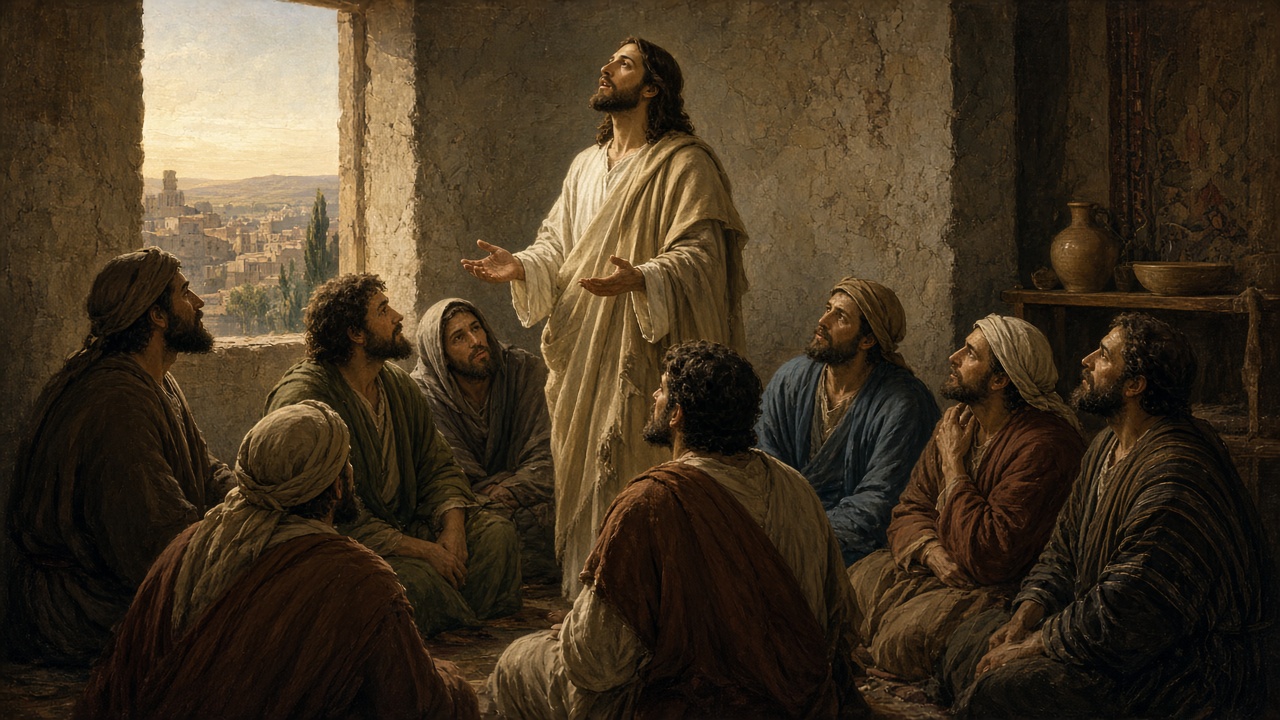
John 17: the hour has come
- The prayer opens when Jesus, having spoken these things, lifts his eyes to heaven and says that the hour has come. It is associated with the Upper Room Discourse, listed as lasting one day, and with Holy Week, listed as lasting eight days.Sources: the Bible text itself · Upper Room Discourse · Holy Week
- Here eternal life is knowing the only true God and Jesus Christ, whom the Father sent. Jesus also speaks of the glory he had with the Father before the world existed, and of the Father's love for him before the foundation of the world.Sources: the Bible text itself
- He prays for those the Father gave him out of the world, who have kept the word, and also for people who will believe through their message, asking that they may be one. He does not ask that they be taken out of the world, but that they be kept from the evil one and sanctified by the truth, which he identifies as the Father's word.Sources: the Bible text itself
Notes written with AI assistance from open sources (Theographic Bible Metadata, CC BY-SA 4.0; Easton’s Bible Dictionary, public domain) and reviewed before publishing.
Credits and license for this translation
Yesu Kerisoné So Whi̧ Tao Sere Kisi Fo Wisi
The New Testament in the Falopa Language of Papua New Guinea
copyright © 2005 Wycliffe Bible Translators, Inc.
Language: (Folopa)
This translation is made available to you under the terms of the
Creative Commons Attribution-No Derivatives license 4.0.
You may share and redistribute this Bible translation or extracts from it in any format, provided that:
You include the above copyright and source information.
You do not make any derivative works that change any of the actual words or punctuation of the Scriptures.
Pictures included with Scriptures and other documents on this site are licensed just for use with those Scriptures and documents.
For other uses, please contact the respective copyright owners.
2009-10-31
Source: http://png.bible/ppo/ · eBible.org