Hebrews 3
Yesu Kerisoné So Whi̧ Tao Sere Kisi Fo Wisi · Tap a verse to see its cross-references.
Yesuné Moses tȩteró beterapó ere fo
1Térapa, dowi ala fokóló kae beteró betere no nerape-ó, da̧kélé dia̧kélé Kótóné hepen bepaae faai ape yóló mo beta̧ kaae fotóró erapa, dia̧né tuȩ́ tiki mo turó Yesupaaetóró muló betae. Ti a̧ta, Kótóné ama fo yó meló̧póló dotȩyale whi̧ betóo, da̧mó momaratere topo whi̧ betóo erapóló da̧né i du betere ape. 2Moses-né Kótóné ama fake so whi̧ mo wisiyóló kaae taru yale kaae, Yesunékélé a̧ sóró beterale sekȩ́né a̧paae erae yale ala fea mo turó eraté fu betalepó. 3Beta̧ be tȩtere whi̧né be wisinaale tȩpa, so whi̧né ai be siratua dapó. Tépatei, ai be tȩyale whi̧ dukiratere foné be wisinaale tȩnapóló, siratere ala tȩteró beterapó. Atétu dere kaae, Yesuné doasi doi mole alané Moses-né doi muale ala, mo bosene falapó. 4Be fea tȩnetei ama ko̧leaané daani, whi̧né tȩyóló mulótua erapó. Atére kaae, o̧la o̧la fea Kótóné amatóró aleyóló muló beterapó. 5Ti Moses a̧ Kótóné kutó diratere whi̧ bitu, Talené so whi̧ mo wisiyóló kaae taté fu bitipakalepó. Tétu, ama du betere alata, take nalopaae Talené mo eraalopóló, ama ha̧kearóló yó mótu bitipakalepó. 6Téyaletei, Keriso a̧ Kótóné naalematóró bitu, Talené ama fake so whi̧ fea mo hotowayóló kaae taté fu beterapó. Atétu, take nalo waaire be dȩmó Talené da̧paae wisi ala eraalopóló, hai̧tamo kaae taru, halaainé ama ala ha̧le eró tapa, ti da̧ Kótóné ama fake so whi̧tóró beterapóló kisipa muae.
Kisipa tirénire so whi̧paae wisiyóló kaae tawae ere fo
7Atéreteiné Dȩi Kepe Wisiné i fo dapó.
“Whi̧ bitini ha̧le kópu ka̧ae fi tikimó, Kótóné diaao̧ noutererape su̧ sóró ka̧ae kelalemó, ama dere fo woseni, dowa̧ae fóló hosaa ta̧ ipakalepó.
Atéyale kaae, mió diaao̧kélé ama fotamo wosetepa, dia̧né hosaa ta̧ yao̧sóró yae.
9Diaao̧ noutererape atima atéró kuturaalu, 40 ba fo tua̧mó ȩ ka̧ae kolóló su̧ siré fu betepa, ya̧lo erótu betale ala atimané kilitu betalepó.
10Atéyale betené ai alimó betale so whi̧tamo fopaae butu, ya̧lo i fo yalepó.
‘Atimané hosaa mo turó kae tikipaae muluraalu, ya̧lo erótu betere ala mo tuȩ́kélé inipó,’
11Atétepa, ȩ fopaae butu etei dirii fo yóló mulalepó.
‘Ya̧lo hosaa muni deyóló dua betere ala tua̧mó, atima sókókélé mo waalomeipó,’” erapó.
12No nerape-ó, dia̧kó mepaae whi̧né hosaa tua̧mó mole dowi alaró, mo ti betere Kótópaae tuȩ́ tiki tirénitere alatamo iru, Kótó taaróló fao̧sóró, hotowaró kaae tawae. 13Téturaalu, miópó du betere be dȩ kemeyaai epatei, dowi alané dia̧ dilikó̧ló diaao̧ hosaa ta̧rao̧sóró, betere doko̧ dia̧sisi ketekȩ u bulótu i bulótu du betae. 14Folosóró kaae suraalu, da̧né tuȩ́ tiki tirale ala tua̧mó taaréni, mo diriyóló bitiré fóló, kemene fole kwiamó sókó fupa, ti Keriso tua̧mó mole ala da̧nékélé serapó. 15Kótóné ai fo ereteiné da̧né u deté wale fo momó i dere ape.
“Whi̧ bitini ha̧le kópu ka̧ae fi tikimó, diaao̧ noutererapené Kótóné dere fo woseni, hosaa ta̧yóló dowa̧ae fu betale kaae, mió dia̧kélé ama fo wosetepa, diaao̧ hosaa ta̧ yóló dowa̧ae fao̧sóró yae.”
16Talené atimapaae yale fo wosaalo hó̧yóló dowa̧ae fele so whi̧-a, deé? Aita, Isip hae taaróló, Moses-né dapesó fele so whi̧tórótipó. 1740 ba fo tua̧mó, Kótóné fopaae bualetei-a, detamo maaté yaleé? Aita dowi ala yaleteiné kópu ka̧ae fi tikimó, ha̧le sisiraae fele so whi̧tórótipó. 18Kótóné ama dirii malo duraalu, “Ya̧lo hosaa muni deyóló dua betere tikimó, atima beta̧kókélé mo sókó waalomeipó,” ere fo depaae maaté yaleé? Aita, ama fo tikitu betere so whi̧paaetóró erapó. 19Ti atima Kótóné dua betere ala tua̧paae sókó fenire beteta, Kótóné fo wosóló, tuȩ́ tiki tiréni yaleteiné erapó.
Did you know?
Greater Glory Than Moses
- Hebrews asks its readers to fix their attention on Jesus, the apostle and high priest they confess. He was faithful to the one who appointed him, just as Moses was faithful in all God's house, but Jesus is counted worthy of greater glory than Moses, as the builder of a house has greater honor than the house. Moses was faithful as a servant; Christ is faithful as the Son over God's house.Sources: the Bible text itself
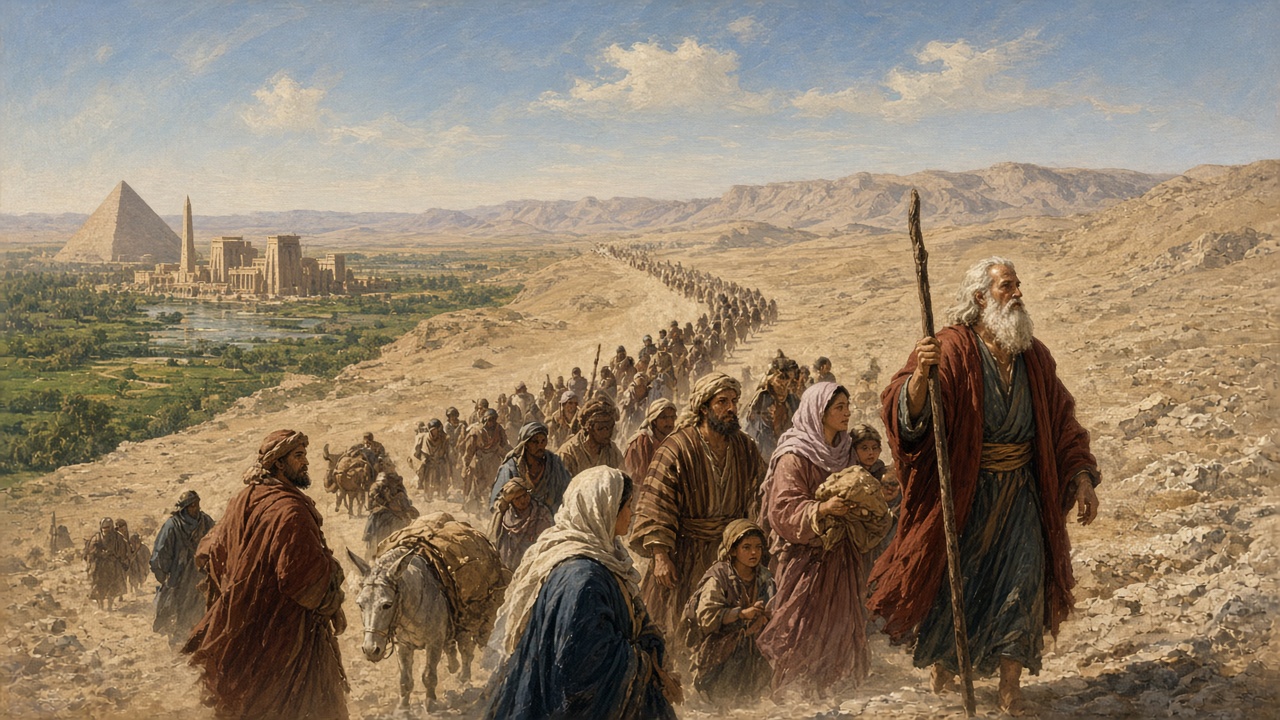
- The warning looks back to the people Moses led out of Egypt. For forty years in the wilderness they tested God, who was angry with that generation and swore they would never enter his rest; their bodies fell in the wilderness. The chapter says that unbelief kept them from entering.Sources: the Bible text itself
- Egypt, the land they left with Moses, is the land of the Nile and the pyramids. Easton's Bible Dictionary (1897) explains the name Moses as Drawn, or links it with the Egyptian word mesu, meaning son.Sources: the Bible text itself · Egypt · Moses
Notes written with AI assistance from open sources (Theographic Bible Metadata, CC BY-SA 4.0; Easton’s Bible Dictionary, public domain) and reviewed before publishing.
Places in this chapter
- Egypt · 30.129, 31.308 · verse 16
Only places identified with high confidence are shown (90% or more according to the scholarly sources compiled by OpenBible). Period map: DARE (Digital Atlas of the Roman Empire), CC BY 4.0; modern map: © OpenStreetMap contributors; places: OpenBible.info (CC BY 4.0).
Credits and license for this translation
Yesu Kerisoné So Whi̧ Tao Sere Kisi Fo Wisi
The New Testament in the Falopa Language of Papua New Guinea
copyright © 2005 Wycliffe Bible Translators, Inc.
Language: (Folopa)
This translation is made available to you under the terms of the
Creative Commons Attribution-No Derivatives license 4.0.
You may share and redistribute this Bible translation or extracts from it in any format, provided that:
You include the above copyright and source information.
You do not make any derivative works that change any of the actual words or punctuation of the Scriptures.
Pictures included with Scriptures and other documents on this site are licensed just for use with those Scriptures and documents.
For other uses, please contact the respective copyright owners.
2009-10-31
Source: http://png.bible/ppo/ · eBible.org