Acts 20
Yesu Kerisoné So Whi̧ Tao Sere Kisi Fo Wisi · Tap a verse to see its cross-references.
Pol Masedonia hae kwiaró Krik hae kwiatamopaae fele fo
1Téró, kale so whi̧ fo tiki whaa du betaletei kemetepa, Pol-né Yesuné ala erótu betere whi̧rape tao sóró fotoko̧ bulóló diri eratere fo yalepó. Atéró atimapaae ko̧leó yóló, a̧ Masedonia hae kwiapaae felepó. 2A̧ ai hae kwia tua̧mó Keriso so whi̧ ketekȩ bulóló fotoko̧ratere fo dekéró yó melaté fóló nalo kemene furaalu, Kirik hae kwiapaae sókó felepó. 3A̧ ai bemó betepa, wélié sore kemeyalepó. Atéyóló nalo ti a̧ wȩi nukumó Siria haepaae faai yaletei, kale Juda whi̧rapené a̧ daalopó dere fo woseturaalu, taaróló momó Masedonia hae kwiapaae hae tu̧mó faai yalepó. 4Atéró faairaalu, Beria whi̧kó Pirus naalema Sopatakélé, Tesalonaika whi̧ tamo Aristarkus-ró Sekundus-tamokélé, Derbe whi̧kó Kaius-kélé, Timotikélé, Esia hae kwiaró wale whi̧tamo Tikikas-ró Tropimus-tamokélé, atima atéró felepó. 5Téró, ai kale whi̧rape atimapi fóló, Troas bemó Pol-sépi da̧ kaae tawóló beterepó. 6Atéró da̧ Juda whi̧rape atimané mara mole ala sya furaalu, fopei bred o bula yóló o̧la detere be dȩ kemetepa, wȩi nuku sóró Filipai be taaróló, Troas bemó mepaae whi̧rapetamo hokolaa yaai furaalu, nuku tómó aporó diki fité felepó. Téró, da̧ fea touyóló Troas bemó wȩikeró be dȩ betalepó.
Troas bemó Yutikus kepaarale fo
7Atéró fula kaae sere be dȩmó, da̧ so whi̧ fea o̧la naairaalu beta̧paae touróló betó mupa, Pol-né ai so whi̧paae fo yó maté fu betepatei, be mo ti dikiralepó. Hi̧ka be dȩtepa a̧ ai be taaróló me bepaae faai kisipa muturaalu, dilikitamokélé ha̧le yó maté fu betalepó. 8Da̧ touróló fo yó mótu betere siki be kemó, sa̧ ha̧le o̧la kaae wolée molepó. 9Aimó beta̧ kokopei whi̧ ama doi Yutikus-ta, dȩ sókó wó̧póló muló betere tu̧mó bituraalu, Pol-né yó mótu betere fo wosó tarepó. Pol-né ama yó matere fo mo fo̧lo si̧yóló yó maté fu betepa, kale sekȩ́ noke kȩlené sukutu betalepó. Atéturaalu, kale whi̧ dukó fóló, biliyó salepó. Atéró biliyó saleteita, tamo be ke teraae horóló, sore be kemó yalepó. Téró kale whi̧ biliyó sóró mupa da̧ doropóló kelalemó, sukó̧ló molepó. 10Atépa, Pol a̧ doropóló Yutikus-né bopé tómó deraapisa fóló mulu, ama naasené apuó sóró duraalu, “Turukó holaaitei kapala asiri ai firapa whaalia ekesé,” yalepó. 11Téró, Pol ó siki be kepaae momó holóló atima bred o kolokóló a̧liyóló nalepó. Atéró, kale sekȩ́né fo momó yó maté fu beteró, be dȩtepa hi̧ka a̧ felepó. 12Kale kokopei whi̧ Yutikus momó kepaayóló betepa, whi̧rapené bepaae dapesó fóló atima hosaa muni deyóló hai̧yóló betalepó.
Pol a̧ faairaalu Efesus Keriso whi̧ disirapepaae ko̧leó yale fo
13Atéró mepaae whi̧rape da̧pi folosóró wȩi nukumó Asosi bepaae faai felepó. Pol-né da̧paae atéró fae yóló, da̧tamo Asosi bemó hokolaa yaairaalu, a̧ hae tu̧mó felepó. 14Da̧ a̧tamo ai Asosi bemó hokolaa yóló a̧ nukupaae dape sóró, Mitilini bepaae felepó. 15Téró da̧ aimó fiyóló, hi̧ka ti wȩi nukumó wȩiné bopéró daaló betere hae Kios dekeróló felepó. Téró diki me nuku tómó fiyóló ai hi̧ka ti da̧ tua̧mó tukóló fóló Samos hae felekemó epa dȩró dekeróló felepó. Téró, diki mekélé kale dere kaae nuku tómó fiyóló, ai hi̧ka ti da̧ Miletus bemó sókó felepó. 16Atéró Pol a̧ Esia hae kwiamó kutu betepa suka kele kemeyao̧sóró, Jerusalem bemó Pentikos be dȩmó dere ala kelaai a̧ ai Efesus be bosenóló mo hapale faai kisipa mualepó.
17Atéró da̧ Miletus bemó sókó fóló bituraalu, Efesus Keriso whi̧ disirapepaae a̧ beterepaae toura̧le ape, yó faralepó. 18Atima atéró dorowóló betó mupa, atimapaae duraalu, “Ȩta, Esia hae kwiamó folosóró sókó wale sukamó kaae sóró wóló, dia̧tamo beta̧mó bitu yale alarape feata, ti dia̧ feané kisiparapó. 19Ȩta, so whi̧ ao̧mó dua sukó̧ló bituraalu, Tale Kótóné ama kutó beta̧ mo ketekȩ buóló, wole kaapetamo du betalepó. Atéteremó, Juda whi̧rapené ȩ daairaalu kemei fo dokotu betaleteita, ai alané ȩ noa kaae whi̧ beteréró su̧ sóró ka̧ae kilitu yalepó. 20Atépatei, Kótóné dia̧ tao saaire fo wisi ya̧lo hiréni, ȩ mo ha̧keamó daalukélé, dia̧né be doko̧ doko̧kélé, Talené fo dia̧ tuȩ́ yó̧póló yó mótua yaletei, dia̧ feané kisipa ai ere ape. 21Juda so whi̧paaekélé, Kirik so whi̧paaekélé, dia̧né du betere dowi ala taaróló, Tale Yesupaae kisipa tiróló mo dua betae yóló ha̧kearóló ai yó male ape.
22Térapa, mió kale Dȩi Kepe Wisiné Jerusalem bepaae sȩyóló dapesó fóló betepa, ȩpaae noa alakó eraaloró ȩ tuȩ́nipó. 23Be hulua doko̧ fea fo yó maté kotopa, kale Dȩi Kepe Wisiné ȩpaae duraalu, sekȩi alaró dipula beteratere alatamo ya̧paae eraalo ai ape yale fo beta̧ ya̧lo kisiparapó. 24Atérené, ȩ sukao̧sóró ya̧lo tó tikimó wiyaalo meipó. Tale Yesuné ȩpaae dirae yóló male kutó beta̧ diróturaalu, so whi̧paae Kótóné da̧paae yaala sókó furaalu, ha̧le tao sere fo wisi beta̧ yó maté fóló tukóló muló betere da̧lemó sókó faai dapó.
25Mió ya̧lo kisipa fatepa, Kótóné tȩteróló daale ao̧mó mole ala dia̧ tuȩ́ yó̧póló ya̧lo yó matepa, wosetu betale whi̧rape diaao̧ ya̧lo kelepaa momó kae kelaalo meipó. 26Térené ya̧lo dia̧paae ha̧kearóló i dere ape. Mió i alimó dia̧ tua̧mó whi̧ me dené i fo wisi taaróló dowi ala ene fupa, ti aita, ȩpaae kwia muni diaao̧tei ai ape. 27Ti Kótóné ama yaai kisipa mole ala mekó hiréni, mo turó ya̧lo dia̧paae ai yó melale ape. 28Dia̧ta, Kótóné ama Dȩi Kepe Wisiné ama sipsip hupu wisiyóló kaae tanó̧póló sóró ai beteró beterapa, ai hupurape wisiyóló kaae taru, dia̧kélé mo wisiyóló kaae tawae. Yesuné ama sameané dupure Kótóné so whi̧ beta̧ mo dua wisiyóló kaae tawae. 29I dere fota noa betené dumipó. Ȩ fole sisópaae dowi bete hao̧rape dia̧ tua̧paae wóló, Kótóné sipsip hupurape dóló nale waalo ai ape. 30Dia̧kó mepaae whi̧né kale Yesuné ala eró tare whi̧rape dei nó̧póló eratere alané, kale mo fo wisi kó̧paae wȩ́róló, dia̧ a̧lisóró kae tu̧paae faraalo ai ape. 31Até yao̧sóró, dia̧ mo wisiyóló kaae tawae. Atei ala yaairemó dia̧ kisipa muló beteró̧póló ba fo sore ȩ dia̧tamo bituraalu ai yale ape. Dȩtamokélé, dikitamokélé, yó maté fu bitu woletamo du betalepó.
32Téró mióta, dia̧ Talené ama ko̧lené sukuturaalu, ha̧le tao sere alané dia̧ wisiyóló tao só̧póló i dere ape. Ai fonétei, diaao̧ kisipa tiratere ala fotoko̧róló, Kótóné ama wisi wisi o̧la dia̧ ama kae sóró beteró betere so whi̧mó ai mótu betere ape. 33Ya̧lo dia̧né silpa kapa ó kold kapa ó kutikélé senée yóló au nokole ala inipó. 34Ya̧lo fotoko̧nétei kutó diyóló, ya̧lo ya̧ya̧re o̧la o̧lakélé, ó ya̧lo fulumu whi̧rapemókélé mótua yaletei diaao̧ ai tuȩ́re ape. 35Ya̧lo ai dua yale alata, o̧la o̧la fea da̧né naasenétei depe tukó wei ala yóló sirapóló, diaao̧ koló̧póló ai yale ape. Até duraalu, mepaae atimanétei kutó diyóló nénire so whi̧ tao sóró ha̧le melae. Ti noatepae, Tale Yesuné duraalu, ‘O̧la o̧la ha̧le tao sóró matere whi̧né hai̧ kisipatamo matere alané matepa sere whi̧né dere hȩkese tȩteró beterapó’ ere fo kisipa muae,” yalepó.
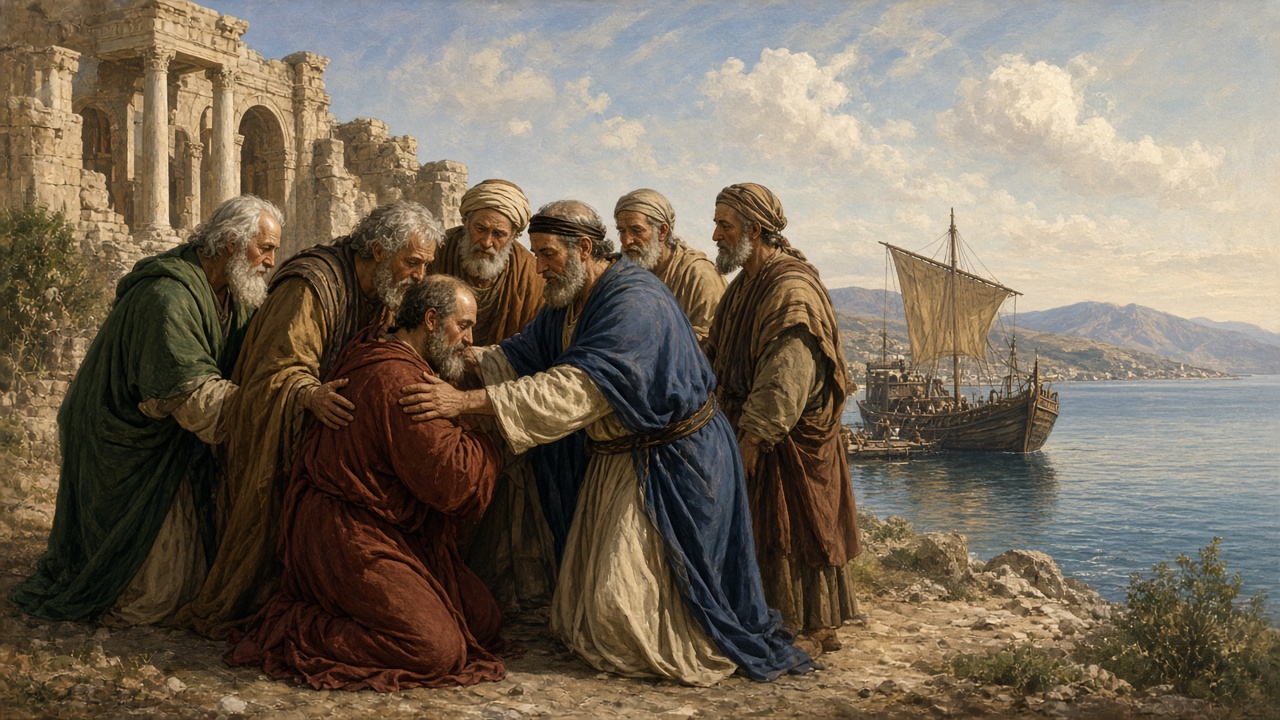
36Téró, Pol-né ai fo yóló ki̧lipaae atima bukutiri teya̧ró bituraalu, ama moma yalepó. 37Atéró a̧ faaitepa, kale so whi̧ feané Pol apuó taruraalu ko̧ló tukó nóló wole du betalepó. 38Atétepa, kale sekȩ́né duraalu, ya̧lo kelepaa diaao̧ momó kae kelaalo meipó yale fo kisipa mutu, atima doasi dekȩné sinitu wole du betalepó. Atétu beteró, atimané a̧ dapesó fóló, wȩi nukumó beteralepó.
Did you know?
Farewell on the way to Jerusalem
- Leaving Troas, Paul sent his companions ahead by ship and walked to Assos along the Roman road. Assos was a seaport of Proconsular Asia in Mysia, on the north shore of the Gulf of Adramyttium; the walk was about 20 miles, the sea route about 30, and the island of Lesbos lay about 7 miles offshore.Sources: the Bible text itself · Assos
- Paul sailed past Ephesus to avoid spending time in the province of Asia—the Roman province in western Asia Minor, with Ephesus as its capital—because he hoped, if possible, to reach Jerusalem by the day of Pentecost. He stopped at Miletus, a seaport and the ancient capital of Ionia about 36 miles south of Ephesus, and summoned the elders of the Ephesian church.Sources: the Bible text itself · Asia · Miletus
- Seven men traveled with him: Sopater of Berea, Aristarchus and Secundus of Thessalonica, Gaius of Derbe, Timothy, and Tychicus and Trophimus from Asia. Aristarchus of Thessalonica later shared Paul’s imprisonment in Rome, and Trophimus, an Ephesian, accompanied him on this part of the journey and was with him in Jerusalem.Sources: the Bible text itself · Aristarchus · Trophimus
Notes written with AI assistance from open sources (Theographic Bible Metadata, CC BY-SA 4.0; Easton’s Bible Dictionary, public domain) and reviewed before publishing.
Places in this chapter
- Macedonia · 41.600, 22.540 · verses 1, 3, 6
- Greece · 37.972, 23.727 · verse 2
- Syria · Today: Syria 2 · 33.511, 36.306 · verse 3
- Asia · 38.400, 28.300 · verses 4, 16, 18
- Berea · Today: Veria · 40.518, 22.200 · verse 4
- Thessalonica · Today: Thessaloniki · 40.638, 22.946 · verse 4
- Troas · Today: Alexandria Troas · 39.752, 26.159 · verses 5, 6
- Philippi · 41.012, 24.285 · verse 6
- Assos · 39.491, 26.337 · verses 13, 14
- Mitylene · Today: ancient theater at Mitylene · 39.110, 26.547 · verse 14
- Chios · 38.373, 26.137 · verse 15
- Miletus · 37.531, 27.276 · verses 15, 17
- Samos · 37.750, 26.833 · verse 15
- Trogyllium · Today: Cape Mycale · 37.659, 27.003 · verse 15
- Ephesus · 37.939, 27.341 · verses 16, 17
- Jerusalem · 31.777, 35.234 · verses 16, 22
Only places identified with high confidence are shown (90% or more according to the scholarly sources compiled by OpenBible). Period map: DARE (Digital Atlas of the Roman Empire), CC BY 4.0; modern map: © OpenStreetMap contributors; places: OpenBible.info (CC BY 4.0).
Credits and license for this translation
Yesu Kerisoné So Whi̧ Tao Sere Kisi Fo Wisi
The New Testament in the Falopa Language of Papua New Guinea
copyright © 2005 Wycliffe Bible Translators, Inc.
Language: (Folopa)
This translation is made available to you under the terms of the
Creative Commons Attribution-No Derivatives license 4.0.
You may share and redistribute this Bible translation or extracts from it in any format, provided that:
You include the above copyright and source information.
You do not make any derivative works that change any of the actual words or punctuation of the Scriptures.
Pictures included with Scriptures and other documents on this site are licensed just for use with those Scriptures and documents.
For other uses, please contact the respective copyright owners.
2009-10-31
Source: http://png.bible/ppo/ · eBible.org