Psalms 42
Biblica® Open Nova Bíblia Viva 2007 · Tap a verse to see its cross-references.
Para o mestre de música. Um poema dos coraítas.
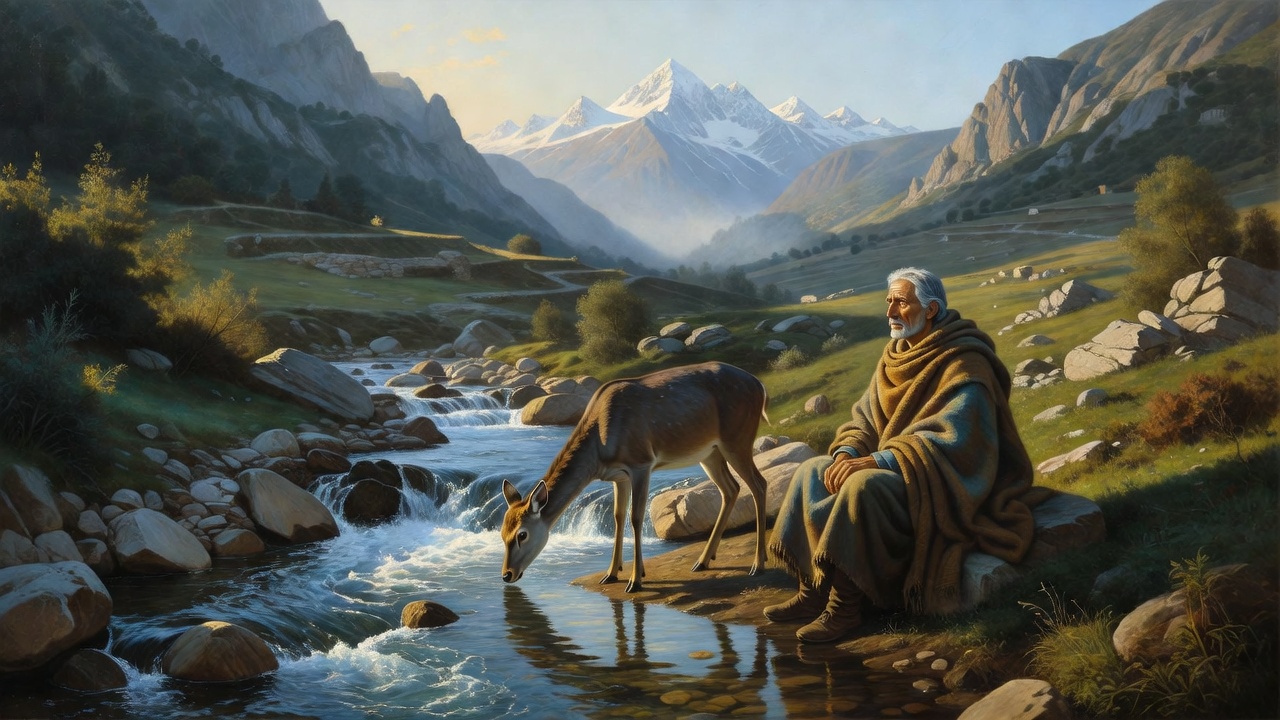
Como a corça anseia pelas águas
1Como a corça procura ansiosamente um riacho, assim a minha alma tem sede pelo Senhor, ó meu Deus.
2A minha alma tem sede de Deus, do Deus vivo; quando poderei estar de novo na sua presença?
3As minhas lágrimas têm me servido de alimento de dia e de noite, enquanto meus inimigos zombam de mim, perguntando: “Onde anda o seu Deus?”
4Quando me lembro de como costumava ir à frente do povo que subia ao templo para adorar, cantando de alegria e louvando a Deus numa grande festa, choro de tristeza.
5Por que você está tão triste ó minha alma? Por que está assim tão desanimada? Tenha confiança em Deus! Pois ainda voltarei a louvá-lo; ele é o meu Salvador e 6meu Deus. Sinto a minha alma profundamente abatida e por isso procuro lembrar do seu poder, desde a terra do rio Jordão, do monte Hermom e do monte Mizar.
7Um abismo chama outro abismo; ouço o ruído das suas fortes correntes de tristeza que me encobrem, fazendo lembrar o barulho de grandes cachoeiras.
8Mas, para vencer tudo isso, conceda-me, Senhor, o seu amor cuidadoso e constante de dia. E durante a noite quero cantar em seu louvor e orar ao meu Deus, que me dá vida.
9Digo a Deus, a minha Rocha: “Por que o Senhor se esqueceu de mim? Por que tenho que viver sofrendo e chorando por causa dos ataques dos meus inimigos?”
10Cada vez que, zombando, eles perguntam: “Então onde anda esse seu Deus?”, é como se meus ossos sofressem agonia mortal.
11Por que você está tão triste, ó minha alma? Por que está assim tão desanimada? Espere em Deus! Pois eu ainda o louvarei; ele é o meu Salvador e o meu Deus.
Did you know?
Thirsting for God Far from Home
- The psalm is introduced as a song of the sons of Korah, a Levitical family descended from the Levite Korah who took part in temple music and worship.Sources: the Bible text itself · Korah (Levite)
- The speaker longs for God from the northern borderlands, mentioning the Jordan, Mount Hermon, and Mount Mizar. Hermon is a towering range with multiple peaks reaching over 9,000 feet, while Mizar (meaning 'smallness') represents a lesser neighboring summit.Sources: the Bible text itself · Hermon · Hill Mizar
- The poem uses vivid water metaphors, moving from a thirsty deer longing for mountain streams to roaring waterfalls and crashing waves that symbolize overwhelming emotional distress.Sources: the Bible text itself
Notes written with AI assistance from open sources (Theographic Bible Metadata, CC BY-SA 4.0; Easton’s Bible Dictionary, public domain) and reviewed before publishing.
Places in this chapter
Only places identified with high confidence are shown (90% or more according to the scholarly sources compiled by OpenBible). Period map: DARE (Digital Atlas of the Roman Empire), CC BY 4.0; modern map: © OpenStreetMap contributors; places: OpenBible.info (CC BY 4.0).
Credits and license for this translation
Biblica® Open Nova Bíblia Viva 2007
Portuguese: Biblica® Open Nova Bíblia Viva 2007 (Bible)
copyright © 2007, 2010 Biblica, Inc.
Language: Português
Dialect: Brazil
Contributor: Biblica, Inc.
Biblica® Open Nova Bíblia Viva™
Copyright © 2007, 2010 by Biblica, Inc.
“Biblica” é uma marca registrada na Oficina de Patentes e Marcas dos Estados Unidos por Biblica, Inc. Usado com permissão.
“Biblica” is a trademark registered in the United States Patent and Trademark Office by Biblica, Inc. Used with permission.
――――――
Creative Commons license
This work is made available under the Creative Commons Attribution-ShareAlike 4.0 International License (CC BY-SA). To view a copy of this license, visit https://creativecommons.org/licenses/by-sa/4.0 or send a letter to Creative Commons, PO Box 1866, Mountain View, CA 94042, USA.
You have permission to copy and distribute this Work, as long as you do not change it and you keep the title as it is. Changing or translating this Work will create a derivative work. When you publish this derivative work, you must list what changes you have made where people can see them, such as on a website. You must also show where the original Work is from: “The original Work by its copyright holders is available for free at www.biblica.com and open.bible .”
Notice of copyright must appear on the title or copyright page of the work as follows:
Biblica® Open Nova Bíblia Viva™
Copyright © 2007, 2010 by Biblica, Inc.
“Biblica” é uma marca registrada na Oficina de Patentes e Marcas dos Estados Unidos por Biblica, Inc. Usado com permissão.
“Biblica” is a trademark registered in the United States Patent and Trademark Office by Biblica, Inc. Used with permission.
You must also make your derivative work available under the same license (CC BY-SA).
If you would like to notify Biblica, Inc. regarding your translation of this work, please contact us at https://open.bible/#feedback .
This translation is made available to you under the terms of the
Creative Commons Attribution Share-Alike license 4.0.
You have permission to share and redistribute this Bible translation in any format and to make reasonable revisions and adaptations of this translation, provided that:
You include the above copyright and source information.
If you make any changes to the text, you must indicate that you did so in a way that makes it clear that the original licensor is not necessarily endorsing your changes.
If you redistribute this text, you must distribute your contributions under the same license as the original.
Pictures included with Scriptures and other documents on this site are licensed just for use with those Scriptures and documents.
For other uses, please contact the respective copyright owners.
Note that in addition to the rules above, revising and adapting God's Word involves a great responsibility to be true to God's Word. See Revelation 22:18-19.
2025-05-20
Section headings adapted from the Berean Standard Bible (public domain); they are not part of this translation’s text.
Source: http://ebible.org/poronbv/ · eBible.org