Genesis 40
Biblica® Open Nova Bíblia Viva 2007 · Tap a verse to see its cross-references.
O Copeiro e o Padeiro
1Algum tempo depois, o chefe dos copeiros e o padeiro real ofenderam o seu senhor, o rei do Egito. 2O Faraó ficou indignado com seus dois oficiais, o chefe dos copeiros e o chefe dos padeiros, 3e mandou prendê-los na casa do comandante da guarda, na mesma prisão em que José estava. 4O comandante da guarda encarregou José de cuidar deles.
Ficaram lá presos por algum tempo. 5Certa noite, os dois tiveram um sonho. O chefe dos copeiros e o chefe dos padeiros perceberam que cada sonho tinha seu próprio significado.
6Na manhã seguinte, José notou que ambos estavam abatidos. 7Então perguntou aos oficiais do faraó, que também estavam presos na casa do seu senhor: “O que aconteceu? Por que vocês estão tão tristes?”
8Eles responderam: “Cada um de nós teve um sonho esta noite, mas ninguém aqui é capaz de interpretá-los”.
Disse-lhes José: “Não pertence a Deus a interpretação de sonhos? Contem-me os sonhos”.
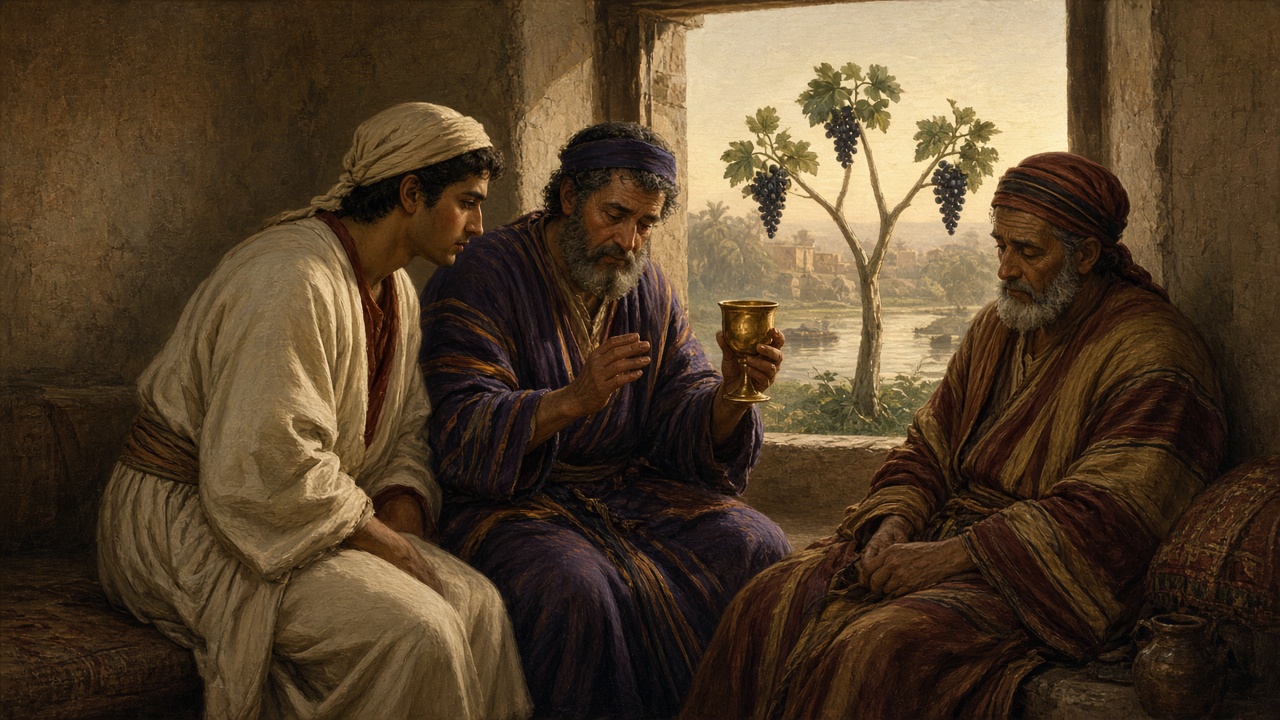
9Então o chefe dos copeiros contou o seu sonho a José. Ele disse: “Em meu sonho havia uma videira na minha frente, 10com três ramos. Ela brotou, depois produziu flores, que por sua vez deram cachos de uvas maduras. 11A taça do faraó estava na minha mão. Peguei as uvas e as espremi na taça do faraó, e a entreguei pessoalmente em sua mão”.
12Então José lhe disse: “Esta é a interpretação: Os três ramos são três dias. 13Dentro de três dias, o faraó vai mandar soltar você e restaurá-lo ao seu cargo como chefe dos copeiros, e você servirá a taça pessoalmente a ele, como costumava fazer quando você era o copeiro. 14Agora, ouça. Quando tudo estiver bem com você, lembre-se de mim. Peço que seja bondoso comigo e fale de mim ao faraó para me tirar desta prisão, 15porque me tiraram da terra dos hebreus à força; e não fiz nada para merecer estar neste lugar”.
16O chefe dos padeiros ficou entusiasmado ao ouvir a boa interpretação, e também contou o seu sonho a José. “No meu sonho”, disse ele, “vi três cestas de pão branco empilhadas sobre a minha cabeça. 17Na cesta de cima havia todo tipo de comidas gostosas que o faraó costumava comer. Mas as aves vieram e comeram da cesta que eu trazia na cabeça”.
18E José lhe disse: “A interpretação é esta: As três cestas significam três dias. 19Dentro de três dias, o faraó vai mandar cortar a sua cabeça e pendurar você num poste. E as aves vão comer a sua carne!”
20Três dias depois, era o aniversário do faraó. Ele deu um grande banquete a todos os oficiais e a todo o pessoal de serviço do palácio. No meio da festa, ele mandou soltar o chefe dos copeiros e o chefe dos padeiros e mandou que viessem ao banquete. 21Ele reintegrou o chefe dos copeiros, que voltou a servir pessoalmente ao faraó. 22Mas o chefe dos padeiros teve seu corpo pendurado numa estaca, como José tinha anunciado.
23Entretanto, o chefe dos copeiros não se lembrou de José. Não pensou mais nele.
Did you know?
Dreams in Pharaoh's Prison
- Pharaoh was angry with two officers, the chief cupbearer and the chief baker, and put them in the house of the captain of the guard, the same prison where Joseph was confined. The captain assigned them to Joseph, who became their personal attendant.Sources: the Bible text itself
- On the same night the cupbearer and the baker each dreamed, and Joseph said that interpretations belong to God. He took the three branches and the three baskets to mean three days: Pharaoh would lift up the cupbearer's head and restore him, but lift off the baker's head and hang him on a tree. On the third day, Pharaoh's birthday, the king held a feast for his officials, restored the cupbearer, and hanged the baker.Sources: the Bible text itself
- Joseph asked the cupbearer to remember him and mention him to Pharaoh after his restoration. He said he had been kidnapped from the land of the Hebrews and had done nothing for which he should have been put in the dungeon. Easton's Bible Dictionary (1897) identifies the Pharaoh of Joseph's days as probably Apopi, or Apopis, the last of the Hyksos kings; some argue instead that Joseph came to Egypt later, under Thothmes III.Sources: the Bible text itself · Pharaoh (of Joseph)
Notes written with AI assistance from open sources (Theographic Bible Metadata, CC BY-SA 4.0; Easton’s Bible Dictionary, public domain) and reviewed before publishing.
Places in this chapter
Only places identified with high confidence are shown (90% or more according to the scholarly sources compiled by OpenBible). Period map: DARE (Digital Atlas of the Roman Empire), CC BY 4.0; modern map: © OpenStreetMap contributors; places: OpenBible.info (CC BY 4.0).
Credits and license for this translation
Biblica® Open Nova Bíblia Viva 2007
Portuguese: Biblica® Open Nova Bíblia Viva 2007 (Bible)
copyright © 2007, 2010 Biblica, Inc.
Language: Português
Dialect: Brazil
Contributor: Biblica, Inc.
Biblica® Open Nova Bíblia Viva™
Copyright © 2007, 2010 by Biblica, Inc.
“Biblica” é uma marca registrada na Oficina de Patentes e Marcas dos Estados Unidos por Biblica, Inc. Usado com permissão.
“Biblica” is a trademark registered in the United States Patent and Trademark Office by Biblica, Inc. Used with permission.
――――――
Creative Commons license
This work is made available under the Creative Commons Attribution-ShareAlike 4.0 International License (CC BY-SA). To view a copy of this license, visit https://creativecommons.org/licenses/by-sa/4.0 or send a letter to Creative Commons, PO Box 1866, Mountain View, CA 94042, USA.
You have permission to copy and distribute this Work, as long as you do not change it and you keep the title as it is. Changing or translating this Work will create a derivative work. When you publish this derivative work, you must list what changes you have made where people can see them, such as on a website. You must also show where the original Work is from: “The original Work by its copyright holders is available for free at www.biblica.com and open.bible .”
Notice of copyright must appear on the title or copyright page of the work as follows:
Biblica® Open Nova Bíblia Viva™
Copyright © 2007, 2010 by Biblica, Inc.
“Biblica” é uma marca registrada na Oficina de Patentes e Marcas dos Estados Unidos por Biblica, Inc. Usado com permissão.
“Biblica” is a trademark registered in the United States Patent and Trademark Office by Biblica, Inc. Used with permission.
You must also make your derivative work available under the same license (CC BY-SA).
If you would like to notify Biblica, Inc. regarding your translation of this work, please contact us at https://open.bible/#feedback .
This translation is made available to you under the terms of the
Creative Commons Attribution Share-Alike license 4.0.
You have permission to share and redistribute this Bible translation in any format and to make reasonable revisions and adaptations of this translation, provided that:
You include the above copyright and source information.
If you make any changes to the text, you must indicate that you did so in a way that makes it clear that the original licensor is not necessarily endorsing your changes.
If you redistribute this text, you must distribute your contributions under the same license as the original.
Pictures included with Scriptures and other documents on this site are licensed just for use with those Scriptures and documents.
For other uses, please contact the respective copyright owners.
Note that in addition to the rules above, revising and adapting God's Word involves a great responsibility to be true to God's Word. See Revelation 22:18-19.
2025-05-20
Section headings adapted from the Berean Standard Bible (public domain); they are not part of this translation’s text.
Source: http://ebible.org/poronbv/ · eBible.org