Exodus 2
Biblica® Open Nova Bíblia Viva 2007 · Tap a verse to see its cross-references.
O nascimento e a adoção de Moisés
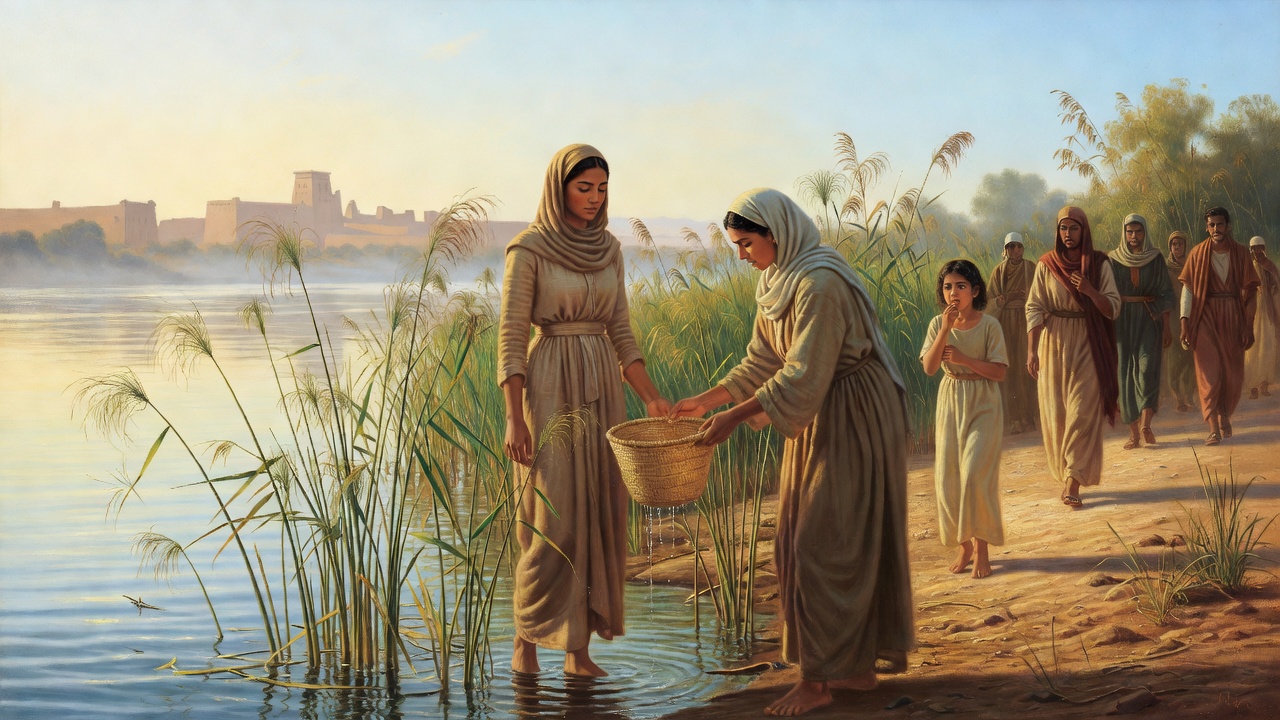
1Um homem e uma mulher da tribo de Levi se casaram, 2ela engravidou e deu à luz um filho. Vendo que o menino era bonito, escondeu-o por três meses. 3Como já não era mais possível manter o bebê escondido, ela pegou um cesto feito de junco e o vedou com betume e pôs nele o menino. Depois deixou o cesto entre os juncos à beira do rio. 4A irmã do menino ficou vigiando de longe, para ver o que aconteceria com ele.
5A filha do faraó desceu ao Nilo para tomar banho, acompanhada das suas servas, que ficaram passeando pela margem do rio. A princesa viu um cesto entre os juncos e mandou sua serva buscá-lo. 6Quando abriu o cesto, viu o menino que estava chorando. Ela teve compaixão dele e disse: “Deve ser um menino hebreu!”
7Então a irmã do menino aproximou-se e perguntou à filha do faraó: “A senhora quer que eu vá e arranje uma ama hebreia para criar o bebê?”
8“Sim, faça isso”, respondeu a filha do faraó. E a moça foi chamar a mãe do menino. 9Então a filha do faraó disse a ela: “Leve este menino e crie-o para mim. Pagarei pelo seu trabalho”. A mulher levou o menino e o criou. 10Quando o menino cresceu, a mãe o levou à filha do faraó, que o adotou. Assim ele passou a ser o filho da filha do faraó. Ela o chamou de Moisés, dizendo: “Porque eu o tirei das águas”.
A rejeição e a fuga de Moisés
11Anos mais tarde, quando Moisés já era adulto, foi visitar seus irmãos hebreus e viu o quanto estavam sofrendo. Ele viu um egípcio espancar um hebreu, que pertencia ao seu povo. 12Moisés olhou para um lado e para o outro e, como não viu ninguém, matou o egípcio e o escondeu na areia.
13No dia seguinte, saiu de novo e viu que dois hebreus estavam brigando. Então perguntou ao culpado: “Por que você está espancando o seu irmão?” 14O homem respondeu: “Quem o colocou como príncipe e juiz sobre nós? Quer matar-me como matou o egípcio?” Moisés ficou com medo e pensou: “Com certeza já descobriram!”
15O faraó ficou sabendo desse caso e decretou a morte de Moisés. Mas Moisés fugiu do faraó e foi para a terra de Midiã. Quando chegou lá, sentou na beira de um poço. 16O sacerdote de Midiã tinha sete filhas. Elas vieram tirar água e encheram os bebedouros para dar de beber aos rebanhos de seu pai. 17Então vieram os pastores daquela região e expulsaram as moças dali. Moisés se apressou em defender as jovens e deu água ao rebanho delas.
18Quando voltaram para casa, seu pai Reuel perguntou: “Por que vocês voltaram tão cedo hoje?”
19Elas responderam: “Um egípcio nos defendeu dos pastores. Além disso, tirou água e deu de beber ao rebanho”.
20“E onde ele está?”, perguntou o pai a elas. “Por que o deixaram lá? Convidem o homem para jantar conosco”.
21Moisés aceitou morar na casa de Reuel; e ele deu a Moisés sua filha Zípora como esposa. 22Eles tiveram um filho, a quem ele chamou de Gérson, dizendo: “Sou forasteiro em terra estrangeira”.
Deus ouve o clamor dos israelitas
23Depois de muito tempo, morreu o rei do Egito. Os israelitas estavam gemendo debaixo da terrível escravidão e clamaram a Deus. 24Deus ouviu o seu gemido e atentou para a aliança que tinha feito com Abraão, com Isaque e com Jacó. 25E Deus deu atenção aos sofrimentos dos israelitas.
Did you know?
The birth and flight of Moses
- Pharaoh’s daughter named the child Moses, explaining that she had drawn him out of the water. Easton's Bible Dictionary (1897) links his name with “drawn,” or with the Egyptian word mesu, “son”—the element from which the dictionary also explains Rameses as “royal son.”Sources: the Bible text itself · Moses
- In Exodus 2 a daughter of Levi hides her son for three months, and Pharaoh’s daughter, finding him among the Nile reeds, recognizes a Hebrew child. Easton's Bible Dictionary (1897) links the Israelites’ affliction to “the new king who knew not Joseph,” long supposed to be Aahmes I, called Amosis by Josephus, though the dictionary, citing discoveries then recent, names Seti instead. Their hardship, it says, began after the Hyksos, masters of Egypt for some five centuries, were driven out and the old dynasty restored.Sources: the Bible text itself · Pharaoh
- After Pharaoh sought to kill him, Moses fled to Midian and sat down beside a well; he later married Zipporah, one of the seven daughters of the priest of Midian. The Midianites were nomadic Arabians descended from Midian, Abraham’s fourth son by Keturah, and they pastured their flocks in the Sinai peninsula and in the desert north of the Arabian peninsula. This chapter calls the priest Reuel, whom Easton's Bible Dictionary (1897) names Raguel, regarding that form as his personal name and Jethro—“excellency”—as an official title if the two are identified.Sources: the Bible text itself · Midian · Midian · Jethro
Notes written with AI assistance from open sources (Theographic Bible Metadata, CC BY-SA 4.0; Easton’s Bible Dictionary, public domain) and reviewed before publishing.
Places in this chapter
- Nile · Today: Nile River · 31.465, 30.367 · verses 3, 5
- Midian · 28.495, 35.012 · verses 15, 16
- Egypt · 30.129, 31.308 · verse 23
Only places identified with high confidence are shown (90% or more according to the scholarly sources compiled by OpenBible). Period map: DARE (Digital Atlas of the Roman Empire), CC BY 4.0; modern map: © OpenStreetMap contributors; places: OpenBible.info (CC BY 4.0).
Credits and license for this translation
Biblica® Open Nova Bíblia Viva 2007
Portuguese: Biblica® Open Nova Bíblia Viva 2007 (Bible)
copyright © 2007, 2010 Biblica, Inc.
Language: Português
Dialect: Brazil
Contributor: Biblica, Inc.
Biblica® Open Nova Bíblia Viva™
Copyright © 2007, 2010 by Biblica, Inc.
“Biblica” é uma marca registrada na Oficina de Patentes e Marcas dos Estados Unidos por Biblica, Inc. Usado com permissão.
“Biblica” is a trademark registered in the United States Patent and Trademark Office by Biblica, Inc. Used with permission.
――――――
Creative Commons license
This work is made available under the Creative Commons Attribution-ShareAlike 4.0 International License (CC BY-SA). To view a copy of this license, visit https://creativecommons.org/licenses/by-sa/4.0 or send a letter to Creative Commons, PO Box 1866, Mountain View, CA 94042, USA.
You have permission to copy and distribute this Work, as long as you do not change it and you keep the title as it is. Changing or translating this Work will create a derivative work. When you publish this derivative work, you must list what changes you have made where people can see them, such as on a website. You must also show where the original Work is from: “The original Work by its copyright holders is available for free at www.biblica.com and open.bible .”
Notice of copyright must appear on the title or copyright page of the work as follows:
Biblica® Open Nova Bíblia Viva™
Copyright © 2007, 2010 by Biblica, Inc.
“Biblica” é uma marca registrada na Oficina de Patentes e Marcas dos Estados Unidos por Biblica, Inc. Usado com permissão.
“Biblica” is a trademark registered in the United States Patent and Trademark Office by Biblica, Inc. Used with permission.
You must also make your derivative work available under the same license (CC BY-SA).
If you would like to notify Biblica, Inc. regarding your translation of this work, please contact us at https://open.bible/#feedback .
This translation is made available to you under the terms of the
Creative Commons Attribution Share-Alike license 4.0.
You have permission to share and redistribute this Bible translation in any format and to make reasonable revisions and adaptations of this translation, provided that:
You include the above copyright and source information.
If you make any changes to the text, you must indicate that you did so in a way that makes it clear that the original licensor is not necessarily endorsing your changes.
If you redistribute this text, you must distribute your contributions under the same license as the original.
Pictures included with Scriptures and other documents on this site are licensed just for use with those Scriptures and documents.
For other uses, please contact the respective copyright owners.
Note that in addition to the rules above, revising and adapting God's Word involves a great responsibility to be true to God's Word. See Revelation 22:18-19.
2025-05-20
Section headings adapted from the Berean Standard Bible (public domain); they are not part of this translation’s text.
Source: http://ebible.org/poronbv/ · eBible.org