2 Kings 1
Biblica® Open Nova Bíblia Viva 2007 · Tap a verse to see its cross-references.
About this book
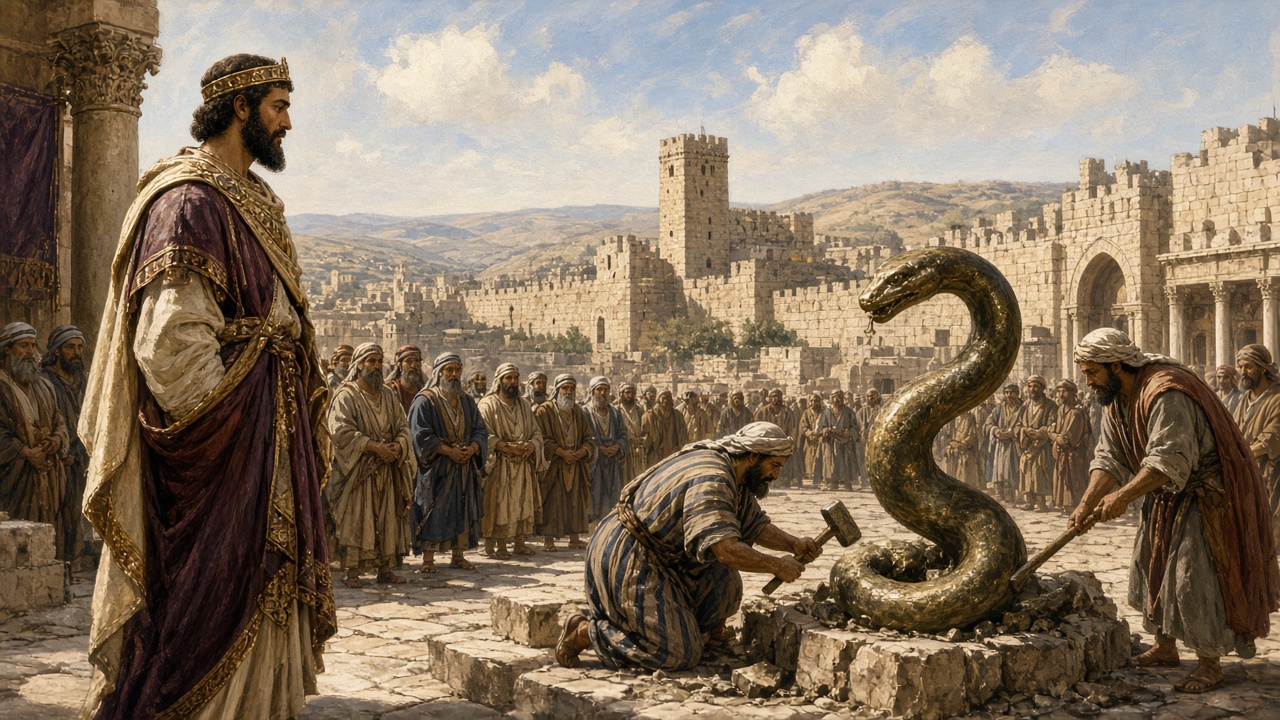
About 2 Kings
- Easton's Bible Dictionary (1897) states that the authorship of the books of Kings is uncertain. Nearly identical passages shared with Jeremiah, together with events Jeremiah knew personally, give some support to the tradition that he wrote them, yet Easton regards it as more probable that Ezra compiled the books after the Captivity from earlier documents. Easton dates their composition between 561 B.C., when Evil-merodach released Jehoiachin, and 538 B.C., the year of Cyrus's decree of deliverance.Sources: Easton: Kings, The Books of
- The two books of Kings originally formed a single book in the Hebrew Scriptures. The Septuagint first divided them into two, and together with the Vulgate numbers them as the third and fourth books of Kings, counting the books of Samuel as the first and second.Sources: Easton: Kings, The Books of
- These books contain the annals of the Jewish commonwealth from the accession of Solomon until the subjugation of the kingdom by Nebuchadnezzar and the Babylonians, a period Easton describes as apparently about four hundred and fifty-three years. While Chronicles gives greater prominence to the priestly or Levitical office, Kings gives greater prominence to the kingly office, and the narrative refers to sources such as the book of the acts of Solomon and the chronicles of the kings of Judah and of Israel.Sources: Easton: Kings, The Books of
- In the threefold division of the Scriptures by the Jews, the books of Kings are ranked among the Prophets. Easton notes that they are frequently quoted or alluded to by Jesus and the apostles.Sources: Easton: Kings, The Books of
Notes written with AI assistance from open sources (Theographic Bible Metadata, CC BY-SA 4.0; Easton’s Bible Dictionary, public domain) and reviewed before publishing.
Elias denuncia Acazias
1Depois da morte do rei Acabe, os moabitas se revoltaram contra Israel. 2Acazias, o novo rei de Israel, tinha caído do terraço do andar de cima do seu palácio em Samaria, e ficou muito machucado. Aflito, mandou mensageiros ao templo de Baal-Zebube, deus de Ecrom, para saber se ele se recuperaria da queda sofrida.
3Ao mesmo tempo, um anjo do Senhor apareceu diante do profeta Elias e disse: “Elias, vá falar com os mensageiros do rei de Samaria que estão indo ao templo do deus Baal-Zebube e pergunte a eles: Assim diz o Senhor: Por acaso não existe Deus em Israel? Por que vocês vão consultar Baal-Zebube, o deus de Ecrom? 4Assim diz o Senhor: ‘Você não se levantará mais dessa cama; aí mesmo você vai morrer’ ”. Elias obedeceu sem demora à ordem do anjo do Senhor; procurou os mensageiros do rei, e repetiu a eles as palavras do anjo.
5Os mensageiros voltaram depressa ao palácio. O rei, com a chegada deles, perguntou: “Por que vocês voltaram tão depressa?”
6Eles responderam: “Um homem veio ao nosso encontro e nos disse: ‘Voltem imediatamente ao rei que os enviou e digam a ele: Assim diz o Senhor: Por acaso não existe Deus em Israel? Por que vocês vão consultar Baal-Zebube, o deus de Ecrom? Você não se levantará mais dessa cama; aí mesmo você vai morrer’ ”.
7“Como era o homem que disse isso?”, perguntou o rei.
8“Era um homem que vestia roupa de pelos e usava um cinto de couro bem largo na cintura”, responderam.
O rei concluiu: “Já sei quem é. Só pode ser o profeta tesbita Elias”.
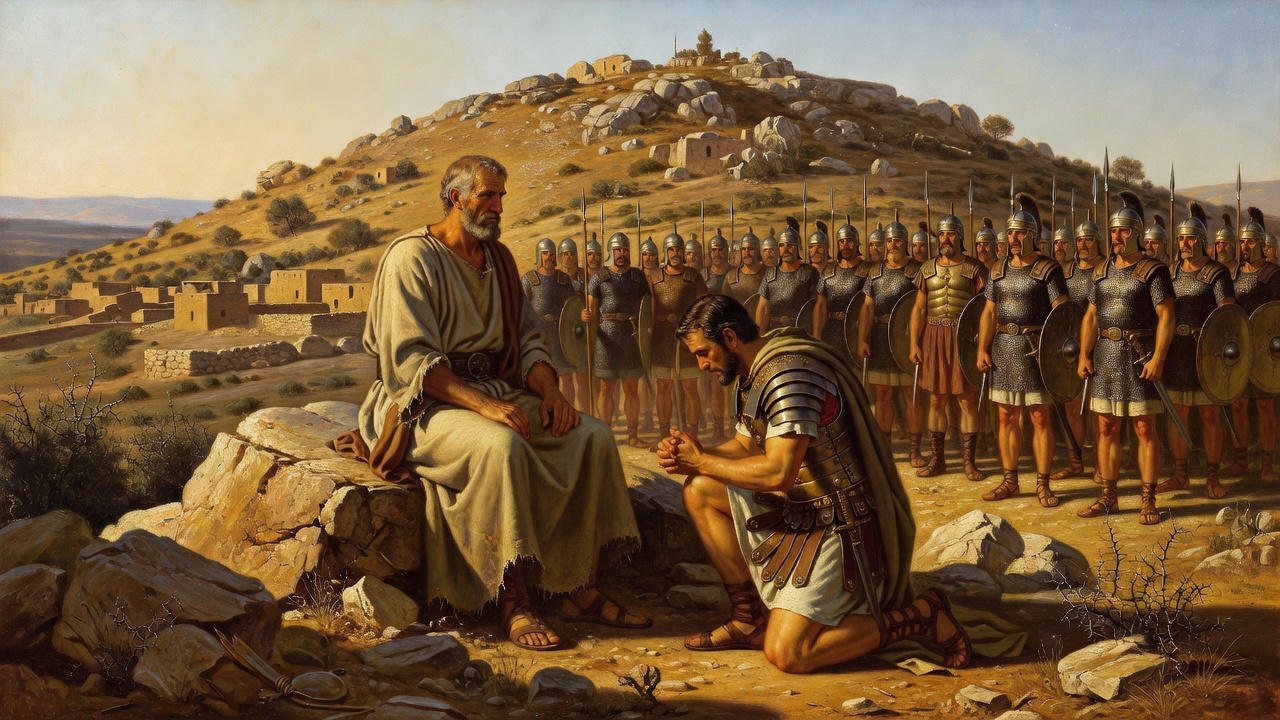
9Então o rei Acazias mandou um oficial com cinquenta soldados procurar Elias e levá-lo até o palácio. O oficial encontrou Elias sentado no alto de uma colina e disse a ele: “Homem de Deus, por ordem do rei, desça e vamos ao palácio!”
10Elias, porém, respondeu ao oficial: “Se eu sou um homem de Deus, que desça fogo do céu e destrua você e os seus cinquenta soldados!” Na mesma hora desceu fogo do céu e destruiu o oficial e os cinquenta soldados.
11O rei, vendo que os soldados não voltavam, chamou outro oficial com mais cinquenta soldados, que deu a mesma ordem: “Homem de Deus, o rei ordena que o senhor desça depressa ao palácio!”
12“Se eu sou um homem de Deus”, respondeu Elias, “que desça fogo do céu para destruir você e seus cinquenta soldados!” Novamente desceu fogo do céu e matou o oficial e os seus soldados.
13Pela terceira vez o rei mandou outro oficial com mais cinquenta soldados a fim de buscar Elias. O oficial subiu o monte, ajoelhou-se aos pés de Elias e, tremendo, implorou: “Homem de Deus, por favor tenha pena da minha vida e da vida destes cinquenta soldados, seus servos! 14Sei que os outros dois oficiais e os seus soldados foram mortos pelo fogo do céu. Tenha misericórdia de mim!”
15Então o anjo do Senhor falou a Elias: “Não tenha medo; agora você pode ir com eles até o palácio para falar com o rei”. Elias se levantou, desceu com ele e foi falar com o rei.
16Quando chegou ao palácio, o profeta disse ao rei: “Assim diz o Senhor: ‘Acaso não há Deus em Israel? Por que você mandou consultar Baal-Zebube, o deus de Ecrom? Por isso você não se levantará mais da cama e certamente morrerá!’ ”.
Jorão sucede a Acazias
17Assim, conforme o Senhor havia falado pela boca do profeta, morreu o rei Acazias. Como ele não tinha filhos para reinar em seu lugar, subiu ao trono o seu irmão Jorão. Isso aconteceu no segundo ano do reinado de Jeorão, filho de Josafá, em Judá. 18Os demais acontecimentos da história do reinado de Acazias estão registrados no Livro da História dos Reis de Israel.
Did you know?
Elijah and King Ahaziah
- Ahaziah sought an oracle from Baal-zebub, a deity worshiped at Ekron, the northernmost of the five major Philistine cities. The name means "fly-lord," as the deity was believed to ward off plagues of flies feared in that region.Sources: Baal-zebub · Ekron · the Bible text itself
- King Ahaziah immediately identified the prophet when his messengers described a hairy man wearing a leather belt around his waist. This description was characteristic of Elijah the Tishbite.Sources: Elijah · the Bible text itself
- Ahaziah's reign was marked by external crisis and personal disaster, including the revolt of Moab after the death of Ahab and a severe injury caused by falling through the lattice of his palace in Samaria.Sources: Ahaziah · the Bible text itself
Notes written with AI assistance from open sources (Theographic Bible Metadata, CC BY-SA 4.0; Easton’s Bible Dictionary, public domain) and reviewed before publishing.
Places in this chapter
- Moab · Today: Moab 1 · 31.181, 35.701 · verse 1
- Ekron · Today: Tel Miqne · 31.777, 34.852 · verses 2, 3, 6, 16
- Samaria · 32.276, 35.195 · verses 2, 3
Only places identified with high confidence are shown (90% or more according to the scholarly sources compiled by OpenBible). Period map: DARE (Digital Atlas of the Roman Empire), CC BY 4.0; modern map: © OpenStreetMap contributors; places: OpenBible.info (CC BY 4.0).
Credits and license for this translation
Biblica® Open Nova Bíblia Viva 2007
Portuguese: Biblica® Open Nova Bíblia Viva 2007 (Bible)
copyright © 2007, 2010 Biblica, Inc.
Language: Português
Dialect: Brazil
Contributor: Biblica, Inc.
Biblica® Open Nova Bíblia Viva™
Copyright © 2007, 2010 by Biblica, Inc.
“Biblica” é uma marca registrada na Oficina de Patentes e Marcas dos Estados Unidos por Biblica, Inc. Usado com permissão.
“Biblica” is a trademark registered in the United States Patent and Trademark Office by Biblica, Inc. Used with permission.
――――――
Creative Commons license
This work is made available under the Creative Commons Attribution-ShareAlike 4.0 International License (CC BY-SA). To view a copy of this license, visit https://creativecommons.org/licenses/by-sa/4.0 or send a letter to Creative Commons, PO Box 1866, Mountain View, CA 94042, USA.
You have permission to copy and distribute this Work, as long as you do not change it and you keep the title as it is. Changing or translating this Work will create a derivative work. When you publish this derivative work, you must list what changes you have made where people can see them, such as on a website. You must also show where the original Work is from: “The original Work by its copyright holders is available for free at www.biblica.com and open.bible .”
Notice of copyright must appear on the title or copyright page of the work as follows:
Biblica® Open Nova Bíblia Viva™
Copyright © 2007, 2010 by Biblica, Inc.
“Biblica” é uma marca registrada na Oficina de Patentes e Marcas dos Estados Unidos por Biblica, Inc. Usado com permissão.
“Biblica” is a trademark registered in the United States Patent and Trademark Office by Biblica, Inc. Used with permission.
You must also make your derivative work available under the same license (CC BY-SA).
If you would like to notify Biblica, Inc. regarding your translation of this work, please contact us at https://open.bible/#feedback .
This translation is made available to you under the terms of the
Creative Commons Attribution Share-Alike license 4.0.
You have permission to share and redistribute this Bible translation in any format and to make reasonable revisions and adaptations of this translation, provided that:
You include the above copyright and source information.
If you make any changes to the text, you must indicate that you did so in a way that makes it clear that the original licensor is not necessarily endorsing your changes.
If you redistribute this text, you must distribute your contributions under the same license as the original.
Pictures included with Scriptures and other documents on this site are licensed just for use with those Scriptures and documents.
For other uses, please contact the respective copyright owners.
Note that in addition to the rules above, revising and adapting God's Word involves a great responsibility to be true to God's Word. See Revelation 22:18-19.
2025-05-20
Section headings adapted from the Berean Standard Bible (public domain); they are not part of this translation’s text.
Source: http://ebible.org/poronbv/ · eBible.org