2 Chronicles 1
Biblica® Open Nova Bíblia Viva 2007 · Tap a verse to see its cross-references.
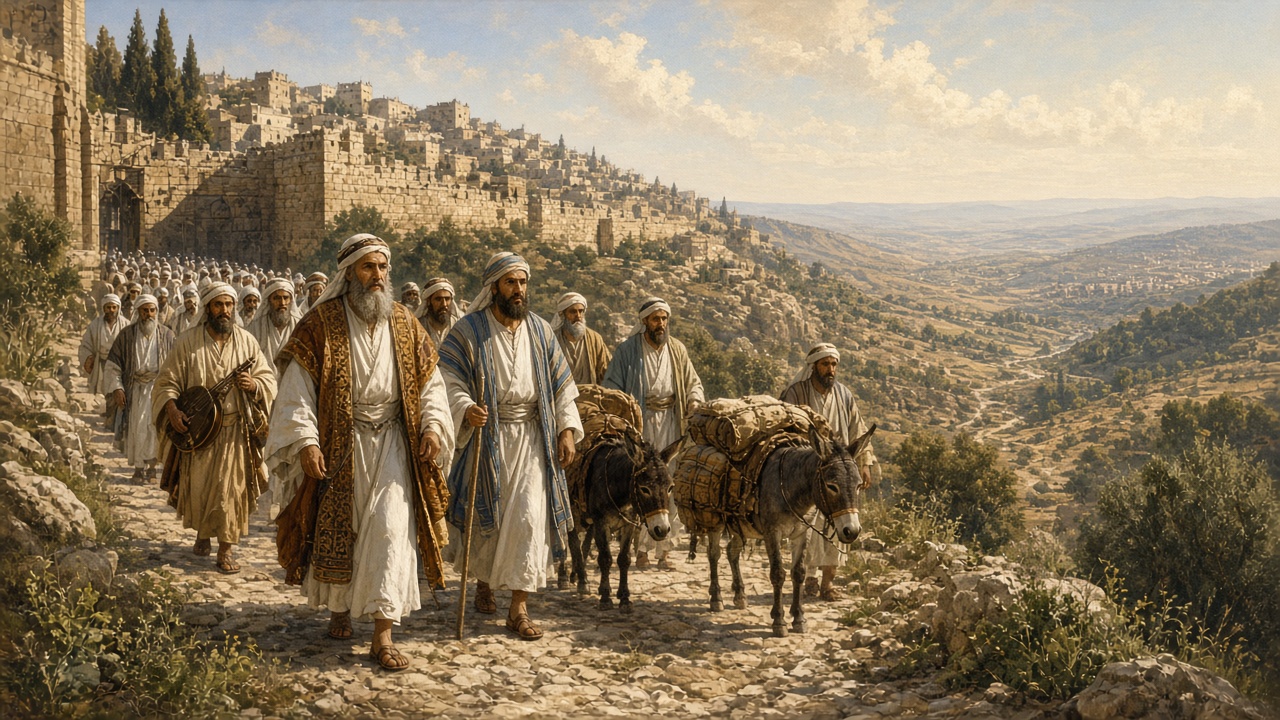
About this book
About 2 Chronicles
- Easton's Bible Dictionary (1897) reports that Jewish tradition, which he says was universally received until the middle of the seventeenth century, regarded Ezra as the author of Chronicles, an opinion he finds supported by many points of resemblance and contact with the Book of Ezra. He dates the composition after the Babylonian exile, probably between 450 and 435 B.C., noting that the language is, in its general character, Aramaean, like other books written after the exile, and that the writer gives details of Zerubbabel's family.Sources: Easton: Chronicles, Books of
- The two books of Chronicles were originally one. In the Masoretic Hebrew the title is Dibre hayyamim, “Acts of the Days,” which Jerome rendered Chronicon, hence Chronicles; the Septuagint divides the work and calls it Paraleipomena, “things omitted” or “supplements,” because it contains many things omitted in the Books of Kings. Easton groups the contents in four parts: genealogies in the line of Israel down to David, the reign of David, Solomon’s reign in the first nine chapters of the second book, and the history of the separate kingdom of Judah until the return from the Babylonian exile.Sources: Easton: Chronicles, Books of
- Easton presents these books as didactic rather than primarily historical: the writer’s principal aim appears to be moral and religious truth, and he gives less prominence to political events than Samuel and Kings do, and more to ecclesiastical institutions. He adds that the genealogies were an important part of the Hebrew state’s public records, the basis both for distributing and holding land and for arranging and conducting temple service, to which the Levites and their descendants alone were entitled.Sources: Easton: Chronicles, Books of
- The first nine chapters of 2 Chronicles recount the reign of Solomon, David’s son by Bathsheba, whom his father chose as successor. The remaining chapters follow the separate kingdom of Judah until the return from the Babylonian exile. Rehoboam succeeded Solomon, while the ten tribes revolted and invited Jeroboam, who had fled to Egypt, to become their first king.Sources: Easton: Chronicles, Books of · Solomon · Rehoboam · Jeroboam
- The book closes with the proclamation of Cyrus permitting the Jews to return to their own land. Easton notes that this ending and the beginning of Ezra are almost identical in expression, and he treats Ezra as a continuation of Chronicles.Sources: Easton: Chronicles, Books of
Notes written with AI assistance from open sources (Theographic Bible Metadata, CC BY-SA 4.0; Easton’s Bible Dictionary, public domain) and reviewed before publishing.
Salomão Pede Sabedoria
1Salomão, filho do rei Davi, fortaleceu-se no seu reino, pois o Senhor, o seu Deus, estava com ele e fez dele um rei poderoso. 2O rei Salomão falou a todo o Israel: os líderes do exército de mil e de cem, os juízes, todos os líderes políticos de Israel e os chefes de famílias. 3Salomão subiu com todos eles ao monte de Gibeom, onde estava o antigo Tabernáculo, que Moisés, servo do Senhor, construiu, enquanto ele esteve no deserto. 4Havia outro Tabernáculo em Jerusalém, construído pelo rei Davi para a arca de Deus, quando ele a levou de Quiriate-Jearim para lá. 5O altar de bronze feito por Bezalel, filho de Uri e neto de Hur, ainda estava ali em frente do antigo Tabernáculo do Senhor, em Gibeom. Então Salomão e todos os que ele havia convidado se reuniram ali para consultarem o Senhor. 6Salomão ofereceu ao Senhor mil sacrifícios queimados sobre o altar de bronze, no Tabernáculo.
7Naquela noite Deus apareceu a Salomão e disse: “Peça o que quiser, e eu darei a você!”
8Salomão respondeu: “Ó Deus, o Senhor foi tão bondoso com o meu pai Davi, e me colocou como rei em seu lugar. 9Agora, ó Senhor Deus, meu desejo é que o Senhor cumpra a promessa que fez a meu pai Davi, porque me fez rei sobre uma nação tão numerosa como o pó da terra! 10Peço que o Senhor me dê sabedoria e conhecimento para governar esse povo. Pois quem pode, sozinho, dirigir uma nação tão grande como esta?”
11Deus respondeu: “Já que o seu maior desejo é ajudar o seu povo e, em vez de pedir tesouros, riqueza pessoal, honras, a destruição dos seus inimigos, ou vida longa, pediu sabedoria e conhecimento para dirigir bem o meu povo sobre o qual o coloquei como rei, 12eu vou dar a sabedoria e o conhecimento que você pediu! Mas também vou dar riquezas, bens e honra, como nenhum outro rei antes de você teve e nenhum outro terá depois de você!”
13Então Salomão deixou o Tabernáculo, desceu do monte Gibeom e voltou a Jerusalém para governar Israel.
As Riquezas de Salomão
14Ele formou um exército de mil e quatrocentos carros e doze mil cavaleiros, para guardar as cidades, bem como para ficar perto dele, em Jerusalém. 15Durante o reinado de Salomão, havia tanta prata e tanto ouro em Jerusalém que se tornaram comuns como as pedras na estrada, e a madeira de cedro, tão numerosa como os sicômoros da Sefelá! 16Salomão enviou negociantes de cavalos ao Egito e à Cilícia, para comprarem grandes quantidades de cavalos. 17Naquele tempo os carros egípcios eram vendidos por sete quilos e duzentos gramas de prata cada um, e cada cavalo custava um quilo e oitocentos gramas de prata. Muitos desses carros e desses cavalos eram vendidos depois aos reis dos heteus e aos reis da Síria.
Did you know?
Solomon’s Wisdom and Wealth
- At the start of Solomon's reign, Israel's primary sacred furnishings were divided between two sites. The wilderness Tent of Meeting made under Moses, along with the bronze altar crafted by Bezalel, was stationed at the high place in Gibeon, while the Ark of the Covenant rested in a separate tent pitched by David in Jerusalem.Sources: the Bible text itself · Gibeon · Bezaleel
- When God appeared to Solomon at Gibeon and invited him to make a request, the young king asked specifically for wisdom and knowledge to govern his numerous people. In response, God granted him discernment alongside unmatched riches, wealth, and honor.Sources: the Bible text itself · Solomon
- Solomon established a lucrative international trade network, importing horses from Egypt and Kue and chariots from Egypt. Royal merchants acted as middlemen, exporting these valuable military assets to the kings of the Hittites and of Aram.Sources: the Bible text itself · Kue · Egypt
Notes written with AI assistance from open sources (Theographic Bible Metadata, CC BY-SA 4.0; Easton’s Bible Dictionary, public domain) and reviewed before publishing.
Places in this chapter
- Gibeon · Today: El Jib · 31.847, 35.183 · verses 3, 5, 13
- Jerusalem · 31.777, 35.234 · verses 4, 13, 14, 15
- Kiriath-jearim · Today: Deir el Azar · 31.809, 35.104 · verse 4
- Shephelah · 31.692, 34.875 · verse 15
- Egypt · 30.129, 31.308 · verses 16, 17
- Syria · Today: Aram · 33.511, 36.306 · verse 17
Only places identified with high confidence are shown (90% or more according to the scholarly sources compiled by OpenBible). Period map: DARE (Digital Atlas of the Roman Empire), CC BY 4.0; modern map: © OpenStreetMap contributors; places: OpenBible.info (CC BY 4.0).
Credits and license for this translation
Biblica® Open Nova Bíblia Viva 2007
Portuguese: Biblica® Open Nova Bíblia Viva 2007 (Bible)
copyright © 2007, 2010 Biblica, Inc.
Language: Português
Dialect: Brazil
Contributor: Biblica, Inc.
Biblica® Open Nova Bíblia Viva™
Copyright © 2007, 2010 by Biblica, Inc.
“Biblica” é uma marca registrada na Oficina de Patentes e Marcas dos Estados Unidos por Biblica, Inc. Usado com permissão.
“Biblica” is a trademark registered in the United States Patent and Trademark Office by Biblica, Inc. Used with permission.
――――――
Creative Commons license
This work is made available under the Creative Commons Attribution-ShareAlike 4.0 International License (CC BY-SA). To view a copy of this license, visit https://creativecommons.org/licenses/by-sa/4.0 or send a letter to Creative Commons, PO Box 1866, Mountain View, CA 94042, USA.
You have permission to copy and distribute this Work, as long as you do not change it and you keep the title as it is. Changing or translating this Work will create a derivative work. When you publish this derivative work, you must list what changes you have made where people can see them, such as on a website. You must also show where the original Work is from: “The original Work by its copyright holders is available for free at www.biblica.com and open.bible .”
Notice of copyright must appear on the title or copyright page of the work as follows:
Biblica® Open Nova Bíblia Viva™
Copyright © 2007, 2010 by Biblica, Inc.
“Biblica” é uma marca registrada na Oficina de Patentes e Marcas dos Estados Unidos por Biblica, Inc. Usado com permissão.
“Biblica” is a trademark registered in the United States Patent and Trademark Office by Biblica, Inc. Used with permission.
You must also make your derivative work available under the same license (CC BY-SA).
If you would like to notify Biblica, Inc. regarding your translation of this work, please contact us at https://open.bible/#feedback .
This translation is made available to you under the terms of the
Creative Commons Attribution Share-Alike license 4.0.
You have permission to share and redistribute this Bible translation in any format and to make reasonable revisions and adaptations of this translation, provided that:
You include the above copyright and source information.
If you make any changes to the text, you must indicate that you did so in a way that makes it clear that the original licensor is not necessarily endorsing your changes.
If you redistribute this text, you must distribute your contributions under the same license as the original.
Pictures included with Scriptures and other documents on this site are licensed just for use with those Scriptures and documents.
For other uses, please contact the respective copyright owners.
Note that in addition to the rules above, revising and adapting God's Word involves a great responsibility to be true to God's Word. See Revelation 22:18-19.
2025-05-20
Section headings adapted from the Berean Standard Bible (public domain); they are not part of this translation’s text.
Source: http://ebible.org/poronbv/ · eBible.org