Psalms 120
Bíblia Livre · Tap a verse to see its cross-references.
Cântico dos degraus:
Na minha angústia clamei ao SENHOR
1Em minha angústia clamei ao SENHOR, e ele me respondeu. 2Ó SENHOR, livra minha alma dos lábios mentirosos, da língua enganadora. 3O que ele te dará, e o que ele fará contigo, ó língua enganadora? 4Flechas afiadas de um guerreiro, com brasas de zimbro. 5Ai de mim, que peregrino em Meseque, e habito nas tendas de Quedar! 6Minha alma morou tempo demais com os que odeiam a paz. 7Eu sou da paz; mas quando falo, eles entram em guerra.
Did you know?
A Plea for Peace in Exile
- Psalm 120 opens the series of fifteen "songs of ascents", beginning with a personal cry for deliverance from deceitful speech and hostile surroundings.Sources: the Bible text itself
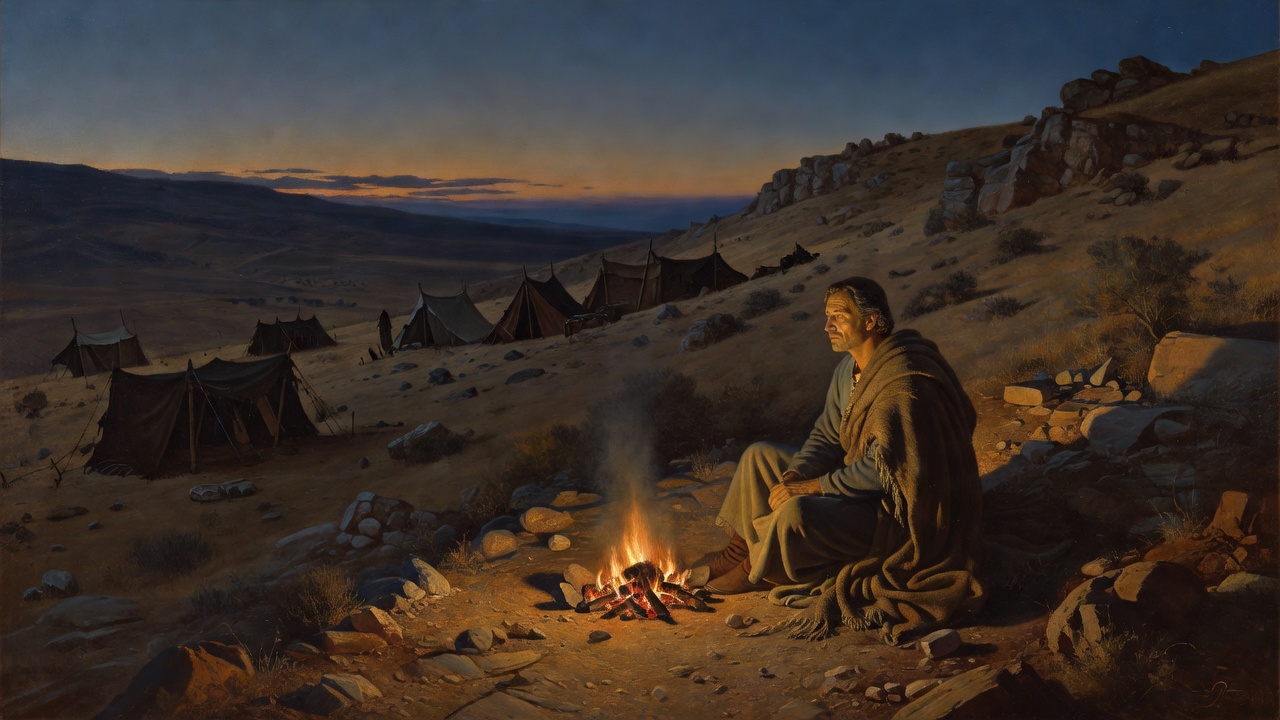
- The psalmist laments living in Meshech and among the tents of Kedar. Meshech was associated with northern peoples near the Black and Caspian Seas, while Kedar referred to nomadic tribes living in black tents in northwestern Arabia; together they symbolize distant, alien lands far from the community of worship.Sources: Meshech · Kedar · the Bible text itself
Notes written with AI assistance from open sources (Theographic Bible Metadata, CC BY-SA 4.0; Easton’s Bible Dictionary, public domain) and reviewed before publishing.
Places in this chapter
- Jerusalem · 31.777, 35.234 · verse 1
- Kedar · 29.811, 39.868 · verse 5
- Meshech · Today: about 200 km around Gordion · 39.655, 31.994 · verse 5
Only places identified with high confidence are shown (90% or more according to the scholarly sources compiled by OpenBible). Period map: DARE (Digital Atlas of the Roman Empire), CC BY 4.0; modern map: © OpenStreetMap contributors; places: OpenBible.info (CC BY 4.0).
Credits and license for this translation
Bíblia Livre
The Holy Bible in Brazilian Portuguese, updated from from the 1819 translation by João Ferreira de Almeida, Textus Receptus edition
A Bíblia Sagrada em português do Brasil, atualizada a partir da tradução de 1819 de João Ferreira de Almeida, edição Textus Receptus
copyright © 2018 Diego Santos, Mario Sérgio, e Marco Teles
Language: Português (Portuguese)
Dialect: Brasil
Como dar crédito à Bíblia Livre
A Bíblia Livre tem uso livre, porém a menção da obra de forma adequada é obrigatória. Essa menção pode ser feita de qualquer maneira razoável, dependendo do meio, em conformidade com a Licença Creative Commons Atribuição 4.0 Brasil. Uma sugestão de créditos é a seguinte:
Todas as Escrituras em português citadas são da Bíblia Livre (BLIVRE), Copyright © Diego Santos, Mario Sérgio, e Marco Teles, http://sites.google.com/site/biblialivre/ - fevereiro de 2018. Licença Creative Commons Atribuição 4.0 Brasil ( http://creativecommons.org/licenses/by/4.0/br/ ). Reprodução permitida desde que devidamente mencionados fonte e autores.
Lembre-se que a Bíblia Livre é um trabalho em andamento, por isso sempre indique a data correta da versão.
Onde o espaço não for suficiente, tal como tweets, folhetos pequenos, slides de apresentações etc. basta usar a sigla BLIVRE.
This translation is made available to you under the terms of the
Creative Commons Attribution license 4.0.
You may share and redistribute this Bible translation or extracts from it in any format, provided that:
You include the above copyright and source information.
If you make any changes to the text, you must indicate that you did so in a way that makes it clear that the original licensor is not necessarily endorsing your changes.
Pictures included with Scriptures and other documents on this site are licensed just for use with those Scriptures and documents.
For other uses, please contact the respective copyright owners.
Note that in addition to the rules above, revising and adapting God's Word involves a great responsibility to be true to God's Word. See Revelation 22:18-19.
2022-03-08
Section headings adapted from the Berean Standard Bible (public domain); they are not part of this translation’s text.
Source: http://ebible.org/porbr2018/ · eBible.org