Leviticus 1
Bíblia Livre · Tap a verse to see its cross-references.
About this book
About Leviticus
- Easton's Bible Dictionary (1897) presents Leviticus as the third book of the Pentateuch and as the third book of Moses. The name, used in the Vulgate following the LXX, reflects the book's chief concern: the Levitical service.Sources: Easton: Leviticus
- Easton states that every ordinance in the book was delivered within one month, the first month of the second year after the Exodus. His entry on Sinai, also called Horeb, says the Hebrews reached that mountain district in the third month after the Exodus and remained encamped for about a whole year, and that the whole of Leviticus records what occurred there.Sources: Easton: Leviticus · Mount Sinai
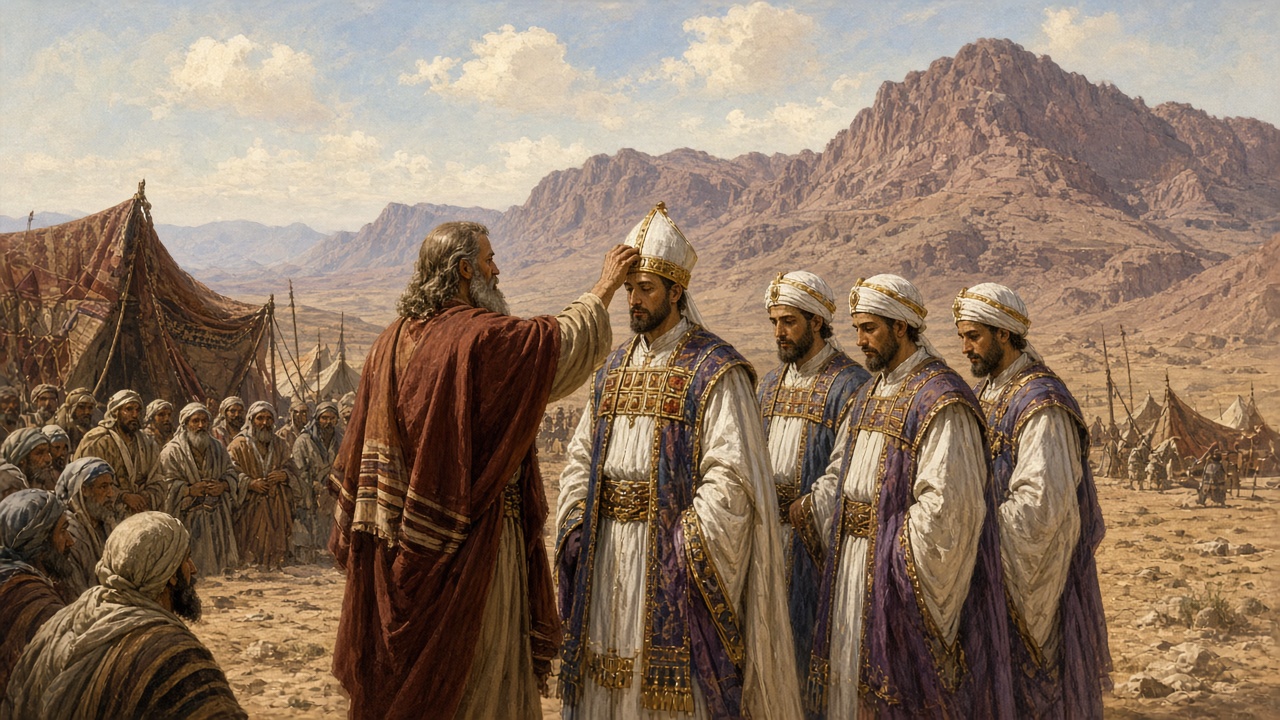
- Chapters 1–7 give laws for burnt offerings, meat offerings, and thank offerings, then for sin offerings and trespass offerings, and for the priests' duties in offering sacrifice. Chapters 8–10 recount the consecration of Aaron and his sons, Aaron's first offering for himself and the people, and the death of Nadab and Abihu, who were struck dead and buried outside the camp after offering strange, or common, fire not taken from the great brazen altar. Chapters 11–16 concern purity and the sacrifices and ordinances for putting impurity away.Sources: Easton: Leviticus · Nadab · Abihu
- Easton describes chapters 17–20 as laws marking the separation between Israel and other peoples. Further laws concern the priests' personal purity and their eating of holy things, offerings without blemish, and the due celebration of the great festivals in chapters 23 and 25. Promises and warnings about obedience follow, the book closes with a section on vows, and Easton notes that God is the direct speaker through almost the whole of it.Sources: Easton: Leviticus
- In the rites of chapter 16, one goat is associated with Azazel, which the Authorized Version renders scapegoat and the Revised Version leaves as Azazel. Easton reports that some Jewish interpreters take it as a place in the wilderness about twelve miles east of Jerusalem, while others take it as an evil spirit or even Satan, and he also notes a root meaning of separation.Sources: Azazel
Notes written with AI assistance from open sources (Theographic Bible Metadata, CC BY-SA 4.0; Easton’s Bible Dictionary, public domain) and reviewed before publishing.
Leyes sobre os holocaustos
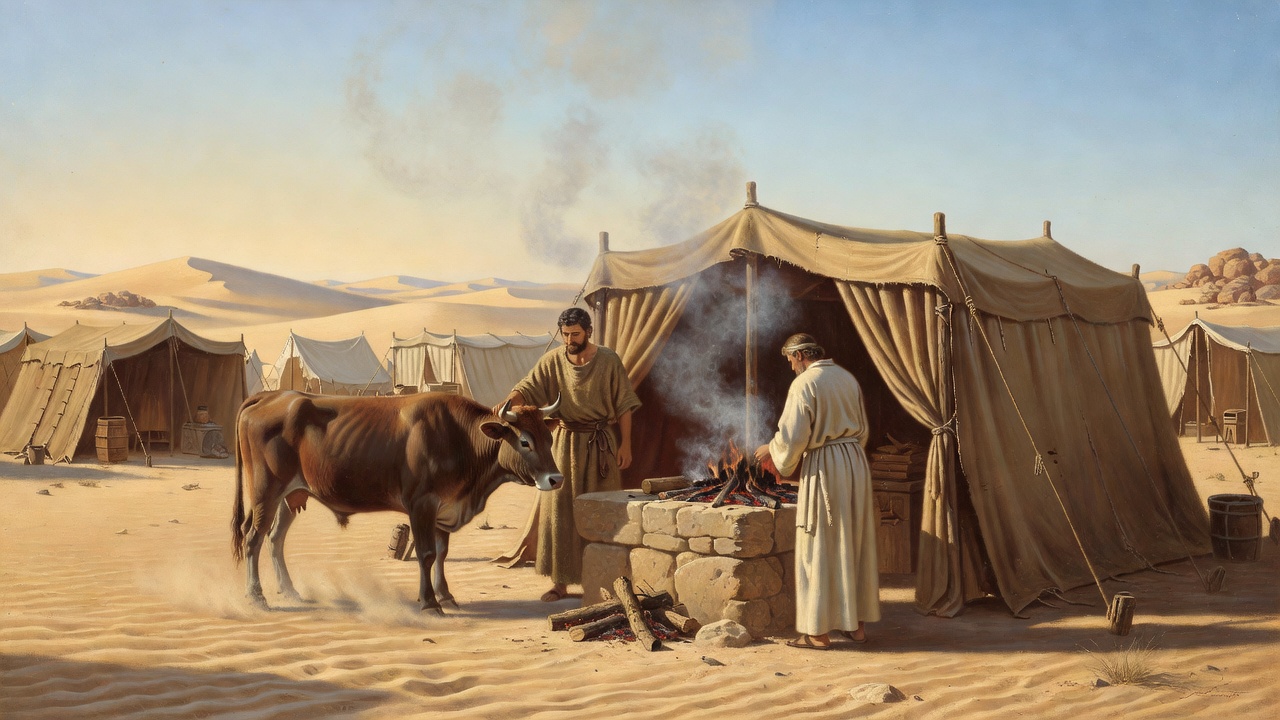
1E chamou o SENHOR a Moisés, e falou com ele desde o tabernáculo do testemunho, dizendo: 2Fala aos filhos de Israel, e dize-lhes: Quando algum dentre vós oferecer oferta ao SENHOR, de gado vacum ou ovelha fareis vossa oferta. 3Se sua oferta for holocausto de vacas, macho sem mácula o oferecerá: de sua vontade o oferecerá à porta do tabernáculo do testemunho diante do SENHOR. 4E porá sua mão sobre a cabeça do holocausto; e ele o aceitará para expiar-lhe. 5Então degolará o bezerro na presença do SENHOR; e os sacerdotes, filhos de Arão, oferecerão o sangue, e o espargirão ao redor sobre o altar, o qual está à porta do tabernáculo do testemunho. 6E tirará a pele do holocausto, e o dividirá em suas peças. 7E os filhos de Arão sacerdote porão fogo sobre o altar, e porão a lenha sobre o fogo. 8Logo os sacerdotes, filhos de Arão, acomodarão as peças, a cabeça e o redenho, sobre a lenha que está sobre o fogo, que haverá encima do altar: 9E lavará com água seus intestinos e suas pernas: e o sacerdote fará arder tudo sobre o altar: holocausto é, oferta acesa de cheiro suave ao SENHOR. 10E se sua oferta para holocausto for de ovelhas, dos cordeiros, ou das cabras, macho sem defeito o oferecerá. 11E há de degolá-lo ao lado norte do altar diante do SENHOR: e os sacerdotes, filhos de Arão, espargirão seu sangue sobre o altar ao redor. 12E o dividirá em suas peças, com sua cabeça e seu redenho; e o sacerdote as acomodará sobre a lenha que está sobre o fogo, que haverá encima do altar; 13E lavará suas entranhas e suas pernas com água; e o sacerdote o oferecerá tudo, e o fará arder sobre o altar; holocausto é, oferta acesa de cheiro suave ao SENHOR. 14E se o holocausto se houver de oferecer ao SENHOR de aves, apresentará sua oferta de rolinhas, ou de pombinhos. 15E o sacerdote a oferecerá sobre o altar, e há de tirar-lhe a cabeça, e fará que arda no altar; e seu sangue será espremido sobre a parede do altar. 16E lhe há de tirar o papo e as penas, o qual lançará junto ao altar, até o oriente, no lugar das cinzas. 17E a fenderá por suas asas, mas não a dividirá em dois: e o sacerdote a fará arder sobre o altar, sobre a lenha que estará no fogo; holocausto é, oferta acesa de cheiro suave ao SENHOR.
Did you know?
The Burnt Offering
- The instructions for the burnt offering accommodate different economic means by allowing offerings from the herd, the flock (sheep or goats), or birds (turtledoves or young pigeons). For livestock, the animal was required to be a male without blemish.Sources: the Bible text itself
- The ritual required a clear division of roles between the worshiper and the priests. The worshiper brought the animal, laid a hand on its head for atonement, slaughtered it, skinned it, and washed its inner parts, while the sons of Aaron sprinkled the blood and burned the entire offering on the altar.Sources: the Bible text itself · Aaron
Notes written with AI assistance from open sources (Theographic Bible Metadata, CC BY-SA 4.0; Easton’s Bible Dictionary, public domain) and reviewed before publishing.
Credits and license for this translation
Bíblia Livre
The Holy Bible in Brazilian Portuguese, updated from from the 1819 translation by João Ferreira de Almeida, Textus Receptus edition
A Bíblia Sagrada em português do Brasil, atualizada a partir da tradução de 1819 de João Ferreira de Almeida, edição Textus Receptus
copyright © 2018 Diego Santos, Mario Sérgio, e Marco Teles
Language: Português (Portuguese)
Dialect: Brasil
Como dar crédito à Bíblia Livre
A Bíblia Livre tem uso livre, porém a menção da obra de forma adequada é obrigatória. Essa menção pode ser feita de qualquer maneira razoável, dependendo do meio, em conformidade com a Licença Creative Commons Atribuição 4.0 Brasil. Uma sugestão de créditos é a seguinte:
Todas as Escrituras em português citadas são da Bíblia Livre (BLIVRE), Copyright © Diego Santos, Mario Sérgio, e Marco Teles, http://sites.google.com/site/biblialivre/ - fevereiro de 2018. Licença Creative Commons Atribuição 4.0 Brasil ( http://creativecommons.org/licenses/by/4.0/br/ ). Reprodução permitida desde que devidamente mencionados fonte e autores.
Lembre-se que a Bíblia Livre é um trabalho em andamento, por isso sempre indique a data correta da versão.
Onde o espaço não for suficiente, tal como tweets, folhetos pequenos, slides de apresentações etc. basta usar a sigla BLIVRE.
This translation is made available to you under the terms of the
Creative Commons Attribution license 4.0.
You may share and redistribute this Bible translation or extracts from it in any format, provided that:
You include the above copyright and source information.
If you make any changes to the text, you must indicate that you did so in a way that makes it clear that the original licensor is not necessarily endorsing your changes.
Pictures included with Scriptures and other documents on this site are licensed just for use with those Scriptures and documents.
For other uses, please contact the respective copyright owners.
Note that in addition to the rules above, revising and adapting God's Word involves a great responsibility to be true to God's Word. See Revelation 22:18-19.
2022-03-08
Section headings adapted from the Berean Standard Bible (public domain); they are not part of this translation’s text.
Source: http://ebible.org/porbr2018/ · eBible.org