Proverbs 5
Waratau Siaga Tatuei mo Vilegi · Tap a verse to see its cross-references.

About this book
About Proverbs
- Easton's Bible Dictionary (1897) describes Proverbs as a collection of moral and philosophical maxims on a wide range of subjects, presented in poetic form. It considers it probable that Solomon gathered and recast many proverbs from human experience in earlier ages and also formed new ones from his own experience, and that some of his later sayings were gathered by other hands toward the end of the book. Solomon is said to have written three thousand proverbs, and those in this book may be a selection from them.Sources: Easton: Proverbs, Book of
- The entry on Solomon calls him Shelomoh, “peaceful,” David’s son by Bathsheba, who succeeded his father as king; his history is recorded in 1 Kings 1–11 and 2 Chronicles 1–9. A later setting also appears in the book: chapters 25–29 are proverbs of Solomon which the men of Hezekiah, king of Judah, collected, and the entry on Hezekiah gives his reign as twenty-nine years, 726–697 B.C.Sources: Solomon · Easton: Proverbs, Book of · Hezekiah
- Easton's Bible Dictionary (1897) usually divides the book into three parts: chapters 1–9, an exhibition of wisdom as the highest good; chapters 10–24; and chapters 25–29. Two supplements follow: “The words of Agur” (chapter 30) and “The words of king Lemuel” (chapter 31). The dictionary describes the work as a “philosophy of practical life” and stresses the value of intelligence, prudence, a good education, and a careful view of the finer shades of human character.Sources: Easton: Proverbs, Book of
- Agur, explained as “gatherer” or “the collector,” is named as the author of the sayings in chapter 30; nothing further is known of him, and Jakeh is named as his father. Lemuel, “dedicated to God,” is a king whom his mother instructed in Proverbs 31:1–9; nothing is certainly known of him, though the rabbis identified him with Solomon. Ucal is named as a person to whom Agur’s words are addressed.Sources: Agur · Jakeh · Lemuel · Ucal
- Easton's Bible Dictionary (1897) notes that the New Testament contains thirty-five direct quotations from this book or allusions to it.Sources: Easton: Proverbs, Book of
Notes written with AI assistance from open sources (Theographic Bible Metadata, CC BY-SA 4.0; Easton’s Bible Dictionary, public domain) and reviewed before publishing.
Mese Vaivei Esi Mena Vavine
1Netungu mwera go rorontagi na nogu lolorani me gon ronghuri na nogu leoi gaidumu. 2Huri nigo gon leohuri na dorimu me a singomu vin wiribibi na iloiloi. 3Huri a singoi vavine, gaihora i tangaloi dolue u lulumu mwere na tovu me a nona leo u minu dena vurei. 4Nge lo tagugi a vavine u gogona mwere na ngoli sala u magegeni mwere na buei vuro hogogi gairue. 5Nge vin tomuegi nigo talo ingwei mateana me nge mo dige lo turegi mateana. 6Nge u geluvegi na turegi mwasoana siu, nge a turegine rau tatagi he iloe tea ve u beragi dena turegi vovohoi.
7Siu renetugu mwera, siserigi ngaha nein rorontagi eu; nein mese beragi nge nen lado bibi na nogu leo. 8Nei huri na turegi vagahao dena vavine ngehi, nei mese vano gangarani lobei matai turegi valena. 9Tarave goin vei mwere ngaha, vatevai gom bete na nom huireana lawe na tangaloi wagineu me nom mwasoana lawe na tangaloi esi. 10Vatevai a tangaloi wagineu ram lai vohogi na nom hagogineu me ram ratahigi lo valera lo nom gagarasi. 11Tavohe gom sesea goi eno lo heremu gom rave, betumu vin soi a huimu vin eno vurogi. 12?Goi tugutugu, huri havai nau leo masi vena ran tau vovohoigi eu? Siu goi veve, “?Huri havai nam rao ve tangaloi na vovohoigi eu? 13Tuei nai ronghuri na nogu huhui tea, na he taran tea tamwere vena rongohurire. 14Me siserigi ngaha, nai hili lai tea huri a sinobu rau iloau beno, siu mo vaieu nam maemae lawuagi lo nagoi sinobu.”
15Go inu na wai dena nom tungu sibomu, a wai meuri mo hale dena loloi nom tungu. 16Tareve a vavine dolue vin bamba netumu varea, a roromu mena henamu vinhe garea tea. 17Siu, he garea tea huri ve goi teu na maresu sao lo turegi, nge go tau na maresu na sao lo valemu sibomu, huri rain gogo gorogo me rain bului go. 18Nomu bubugiana mei gaihoramu na roroa, me vataha tarogi goin hevuhevu huri gom bulu meie lolo mwalagelo. 19Ngeie a memu tovu lulumu mwere na bebe mo vaihuri na waigarea u rerega; nona vaigarea vin vei gareagi nigo vin tuei me a domine vin veuhi bibigo tuqaravu. 20Netungu mwera, go mese lenga hurie dolue, siu go mese lado ve a vavine wagineu u garea liu deni gaihoramu.
21A Huqe mo leo bibi vataha na gineu gom vaie, me mo mata bibigo lo turegi doluegi gom dige lune. 22Tavohe a tangaloi mo galegaleasi, nge u mwerehi mo siegi na vune mo vidie sibona. 23Nge vin mate huri na nona domi wiriwiri, me a nona lengana me doridori esi doluegi vin leie talolo dalona.
Did you know?
Wisdom, Fidelity, and the Pitfalls of Seduction
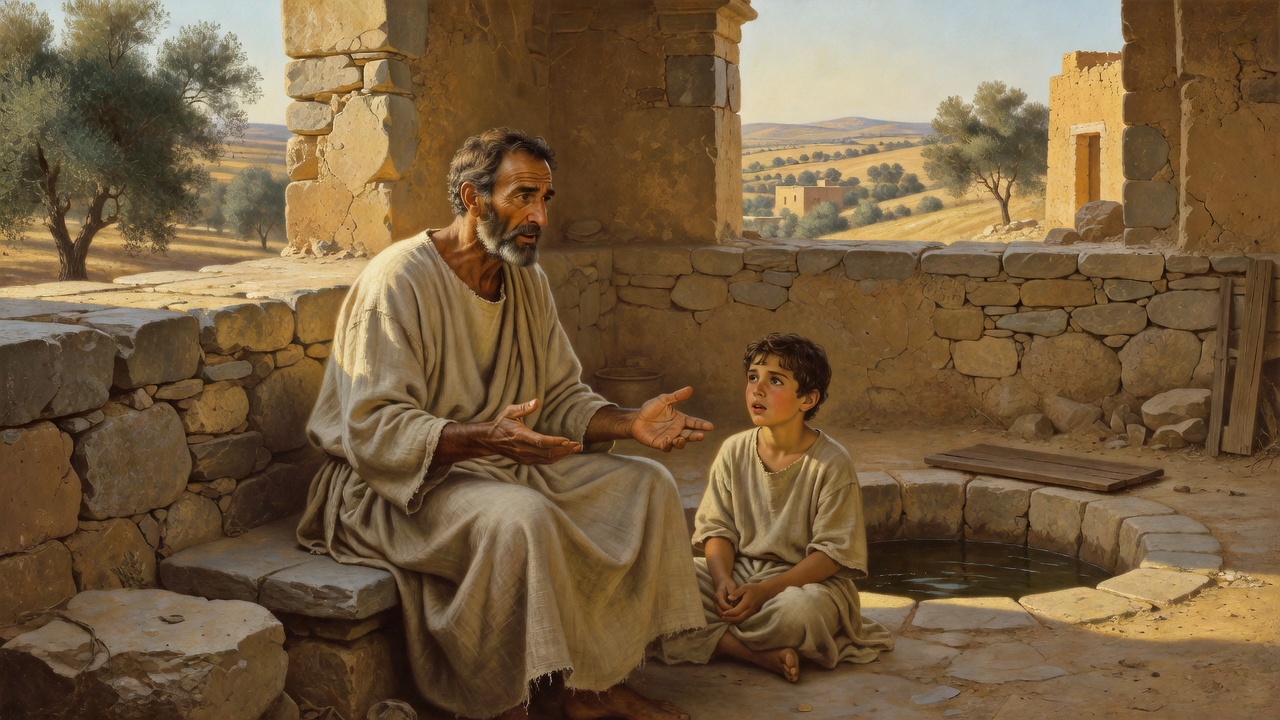
- The passage uses domestic water sources, such as a personal cistern and well, as metaphors for marital intimacy and fidelity. The father advises finding satisfaction at home rather than letting one's springs and streams scatter into public streets and squares.Sources: the Bible text itself
- Seductive speech is contrasted with its consequences: while its words are portrayed as sweet like honey and smooth like oil, the ultimate outcome is described as bitter like wormwood, piercing like a double-edged sword, and leading to death and Sheol.Sources: the Bible text itself
- The warning highlights both practical and spiritual costs of infidelity, from the loss of personal wealth and physical vigor to public disgrace before the community assembly, concluding that all human ways are examined by the LORD.Sources: the Bible text itself
Notes written with AI assistance from open sources (Theographic Bible Metadata, CC BY-SA 4.0; Easton’s Bible Dictionary, public domain) and reviewed before publishing.
Credits and license for this translation
Waratau Siaga Tatuei mo Vilegi
Ambae, East: Waratau Siaga Tatuei mo Vilegi (Old Testament)
copyright © 2022 Pioneer Bible Translators
Language: Havai (Ambae, East)
Contributor: The Seed Company
© Pioneer Bible Translators of Dallas, Texas, USA.
This translation is made available to you under the terms of the
Creative Commons Attribution Share-Alike license 4.0.
You have permission to share and redistribute this Bible translation in any format and to make reasonable revisions and adaptations of this translation, provided that:
You include the above copyright and source information.
If you make any changes to the text, you must indicate that you did so in a way that makes it clear that the original licensor is not necessarily endorsing your changes.
If you redistribute this text, you must distribute your contributions under the same license as the original.
Pictures included with Scriptures and other documents on this site are licensed just for use with those Scriptures and documents.
For other uses, please contact the respective copyright owners.
Note that in addition to the rules above, revising and adapting God's Word involves a great responsibility to be true to God's Word. See Revelation 22:18-19.
2025-05-20
Source: http://ebible.org/omb/ · eBible.org