Isaiah 8
Waratau Siaga Tatuei mo Vilegi · Tap a verse to see its cross-references.

About this book
About Isaiah
- Easton's Bible Dictionary (1897) attributes the book to Isaiah, son of Amoz, dating his ministry from 762 B.C., the fourth year before Uzziah's death, to 698 B.C., Hezekiah's last year, sixty-four years under Uzziah, Jotham, Ahaz, and Hezekiah, and says he may have outlived Hezekiah. Some critics, following a theory Easton traces to Koppe, assign chapters 40-66 to a later "deutero-Isaiah" near the end of the Babylonian captivity, and other passages to further unknown prophets; Easton notes that the Septuagint (about 250 B.C.) ascribes the whole book to Isaiah, and that the New Testament quotes disputed passages as his words.Sources: Easton: Isaiah, The Book of · Isaiah
- These prophecies were delivered during the reigns of kings of Judah, with Assyria the enemy in view in the earlier part of the book and Babylon in the later part. Isaiah ministered under Ahaz, who appealed to Tiglath-pileser of Assyria against Rezin, king of Damascus, and Pekah, king of Israel, and under Hezekiah, Ahaz's son. Easton's dictionary says Hezekiah reigned twenty-nine years (726-697 B.C.) and set himself to abolish idolatry in Judah; part of his reign is narrated in Isaiah 36-39.Sources: Easton: Isaiah, The Book of · Ahaz · Hezekiah
- Easton divides the book into three main parts: chapters 1-35, almost wholly prophetic, with Assyria as Israel's enemy and the Messiah presented as a mighty ruler and king; chapters 36-39, historical narratives from Hezekiah's time; and chapters 40-66, prophetic, with Babylon as the enemy and the Messiah described as a suffering victim, meek and lowly. He also groups the prophecies by reign: Uzziah (chapters 1-5), Jotham (6), Ahaz (7 through 14:28), the first half of Hezekiah's reign (14:28-35), and the second half (36-66).Sources: Easton: Isaiah, The Book of
- Isaiah's father, Amoz, was apparently a man of humble rank, and little is positively known of his life. His wife is called "the prophetess," either because she was endowed with the prophetic gift, like Deborah and Huldah, or simply because she was the prophet's wife, and he had two sons who bore symbolic names.Sources: Isaiah · Amoz
Notes written with AI assistance from open sources (Theographic Bible Metadata, CC BY-SA 4.0; Easton’s Bible Dictionary, public domain) and reviewed before publishing.
Huqe mo gato mei Tangaloi ligoligogi Asaea
11I Huqe nge mo veve laweau, mwere hi a limana huire mo eno lungu, goi mese huri na turegi tangaloi tau Juda. Mo veve vena,
12“Mese bulu mena tangaloi nora lalangogi rau esi
mwere hi a tangaloi ram ladolado he huri na tamwata tea,
siu mese matagu gina havagi hi a tangaloi ram matagu ginie,
me go mese matagu.
13Nge i Huqe Managi nge u vuivuire,
me nein ladomava ginie,
ngeie gategale hogosie nein tabea,
ngeie gategale hogosie nein matagu ginie.
14Ngeie vin vuragi na ute gogona tanoi hilihili;
nge Israel mei Juda
ngeie vin voragi vatu ngehi vin vei na tangaloi ram taturegi me
a vatu ngehi vin veire rain soi.
Me lawera tangaloi tau Jerusalem
ngeie vin vindire rain dule lo vune.
15Sao denire rain teturegi,
ngere rain soi rain mevurivuri,
ngere rain dule lo vune me vin wiribibire.”
16Wesi bimbi na leogarea noi Huqe,
bulu bimbi na huhuiana noi Huqe Mauri lawe na nongu rorong taigi.
17Nain toga rarai na Huqe,
ngehi u hiligi na nagona dena valei Jekob.
Me nain toga raraie gena nongu ladohogo.
18Ngelehe neu
mena maresu ngehi Huqe u betera laweau.
Ginde a gigilegi mena nunui gineu tau lolo Israel,
dein Huqe Managi,
ngehi mo toga rorongo lo Vusi Saeon.
19Tavohe ngere rain veve lawe gimiu gon hui dena tangaloi uviuvi, me ngere hi ram ngutugi nora huihui. ?Nge huri ve a tangaloi rain hui telai dena nora Huqe Mauri? ?Huri havai ram hui dena tangaloi mate lo taraniana nora ram mwaso? 20Gon hui Huqe huri na huhuiana mena nona leogarea mo waregi sere huri na veveraga. Tareve hine tea vin he toretore tea vena huri na leo ngaha, hate nora leleoi robongi.
21Rongo masi mena mwaruruhie vin vano turu na vanue; ngere rain mweruruhi garagara me ngere rain lolobute, me ram danda su eulu rain arahi na nora ratahigi mena nora huqe. 22Siu ngere rain leo suvohi na ureure, me ngere rain lehi na dodo mena romasi rain matagu lawagi me rain tulire ta lolo dodo maeto.
Did you know?
The Impending Flood and the Trustworthy Sign
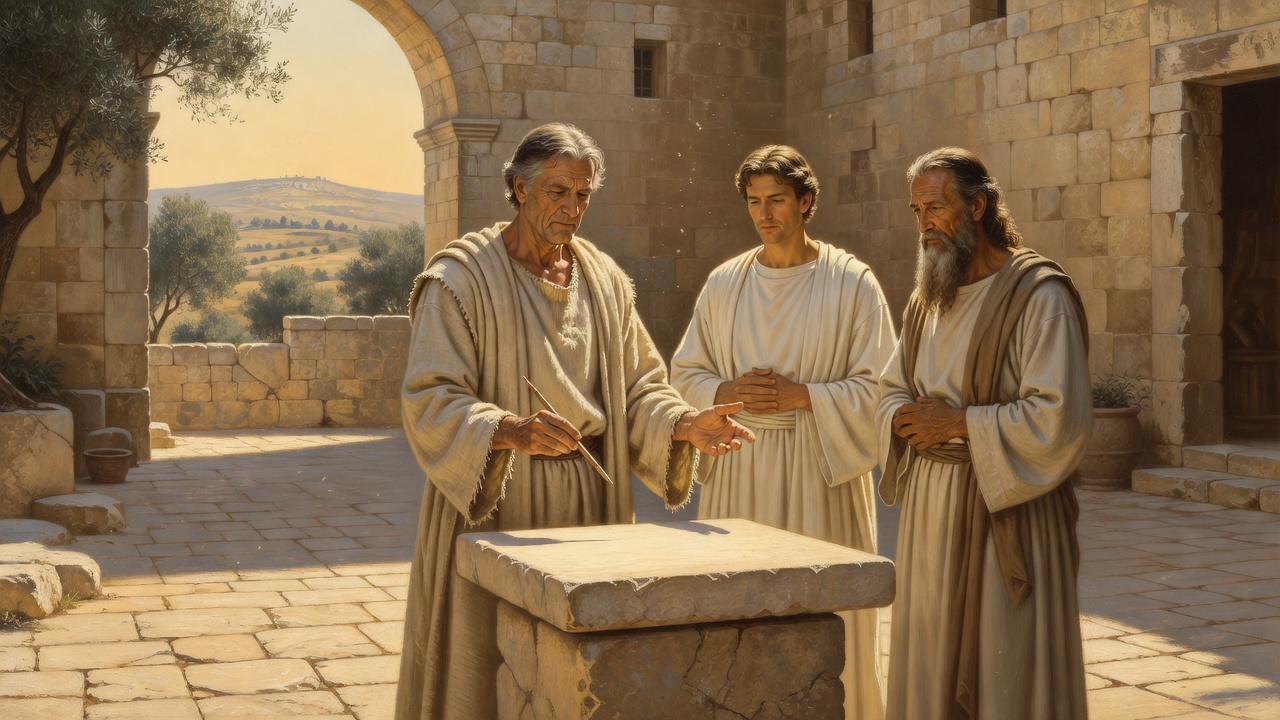
- The name Maher-shalal-hash-baz means "plunder speedeth; spoil hasteth." Isaiah was instructed to record this name publicly before reliable witnesses—Uriah the priest and Zechariah—and then give it to his newborn son, signifying that Damascus and Samaria would soon be plundered by the king of Assyria.Sources: the Bible text itself · Maher-shalal-hash-baz · Urijah
- The passage contrasts the gently flowing waters of Shiloah in Jerusalem with the raging floodwaters of the Euphrates River. Because the people rejected calm trust, the imagery depicts the invading king of Assyria sweeping across the land like a catastrophic deluge reaching up to the neck.Sources: the Bible text itself · Shiloah · River · Assyria
- Isaiah presents himself and his children as living signs and symbols given by the Lord to Israel. In a time of national crisis, he warns the people not to consult mediums and spiritists who whisper and mutter, insisting that they must seek God and His testimony instead.Sources: the Bible text itself
Notes written with AI assistance from open sources (Theographic Bible Metadata, CC BY-SA 4.0; Easton’s Bible Dictionary, public domain) and reviewed before publishing.
Places in this chapter
- Assyria · 36.359, 43.153 · verses 4, 7
- Damascus · 33.511, 36.306 · verse 4
- Samaria · 32.276, 35.195 · verse 4
- Shiloah · Today: Pool of Siloam · 31.771, 35.235 · verse 6
- Euphrates · Today: Euphrates River · 31.004, 47.442 · verse 7
- Jerusalem · 31.777, 35.234 · verse 14
- Mount Zion · 31.772, 35.229 · verse 18
Only places identified with high confidence are shown (90% or more according to the scholarly sources compiled by OpenBible). Period map: DARE (Digital Atlas of the Roman Empire), CC BY 4.0; modern map: © OpenStreetMap contributors; places: OpenBible.info (CC BY 4.0).
Credits and license for this translation
Waratau Siaga Tatuei mo Vilegi
Ambae, East: Waratau Siaga Tatuei mo Vilegi (Old Testament)
copyright © 2022 Pioneer Bible Translators
Language: Havai (Ambae, East)
Contributor: The Seed Company
© Pioneer Bible Translators of Dallas, Texas, USA.
This translation is made available to you under the terms of the
Creative Commons Attribution Share-Alike license 4.0.
You have permission to share and redistribute this Bible translation in any format and to make reasonable revisions and adaptations of this translation, provided that:
You include the above copyright and source information.
If you make any changes to the text, you must indicate that you did so in a way that makes it clear that the original licensor is not necessarily endorsing your changes.
If you redistribute this text, you must distribute your contributions under the same license as the original.
Pictures included with Scriptures and other documents on this site are licensed just for use with those Scriptures and documents.
For other uses, please contact the respective copyright owners.
Note that in addition to the rules above, revising and adapting God's Word involves a great responsibility to be true to God's Word. See Revelation 22:18-19.
2025-05-20
Source: http://ebible.org/omb/ · eBible.org