Deuteronomy 5
Waratau Siaga Tatuei mo Vilegi · Tap a verse to see its cross-references.

About this book
About Deuteronomy
- Easton's Bible Dictionary (1897) explains that the Greek name Deuteronomion, the second law, gave us Deuteronomy: a second statement of laws already promulgated. It says the division of the Pentateuch into five books was probably first made by the Greek translators, whom the Vulgate follows. Jews name the book from its opening Hebrew words, 'Elle haddabharim, These are the words.Sources: Easton: Deuteronomy
- Easton's Bible Dictionary (1897) presents Deuteronomy as chiefly three discourses delivered by Moses a short time before his death, spoken to all Israel in the eleventh month of the last year of their wanderings in the wilderness. It says the story of his death and burial was written by some other hand, probably that of Joshua, who succeeded him as leader of Israel.Sources: Easton: Deuteronomy · Joshua
- The discourses of Deuteronomy are set in the plains of Moab, east of the Jordan and opposite Jericho, Israel's last encampment before entering Canaan, a region then held by the Amorites. East of the Jordan the Israelites had defeated Sihon, king of the Amorites, whose country ran from the Arnon to the Jabbok, and Og, king of Bashan, whose kingdom was given to Reuben, Gad, and half the tribe of Manasseh.Sources: Easton: Deuteronomy · Moab · Sihon · Og
- Easton's Bible Dictionary (1897) describes three discourses: the first (1-4:40) recapitulates forty years in the wilderness, exhorts obedience to the divine ordinances, and warns against forsaking the God of their fathers; the second (5-26:19), the body of the book, restates the law given at Mount Sinai and instructs Israel for life in Canaan; the third (chapters 27-30) sets out blessings for the obedient and the curse on the rebellious, urging faithfulness to the covenant.Sources: Easton: Deuteronomy
- Easton's Bible Dictionary (1897) adds three appendices after the addresses: a song which God had commanded Moses to write (32:1-47), blessings pronounced on the separate tribes (chapter 33), and the story of his death (32:48-52) and burial (chapter 34). In Hebrew manuscripts the Pentateuch forms one scroll; Jews divided this book into eleven parshioth, and the English Bible contains thirty-four chapters.Sources: Easton: Deuteronomy
Notes written with AI assistance from open sources (Theographic Bible Metadata, CC BY-SA 4.0; Easton’s Bible Dictionary, public domain) and reviewed before publishing.
Leohora noi Huqe lawe Mosis
1Mosis mo warera Israel doluegi me mo veve vena, “Ei Israel, ne rongo na leoi tamwata mena leo vevegi nam veve sere lawe gimiu bagataha. Nein huhuire me siu nein huri vurugegi nire. 2Noda Huqe Mauri u teu na waratau siaga mei ginde lo vusi Saenai. 3I Huqe hi teu na waratau siaga ngaha tea lawe retamada, nge lawe ginde, ginde doluegi hano dam mwaso bagataha. 4Huqe u gato mei go lo nagomu lo vusi dena livugei avi. 5Lo taro ngehi neu nau labe lo livugei Huqe me lo livuge miu ve nain matamwasaragi na leo noi Huqe lawe gimiu, ba huri gimiu neu matagu gena avi me nein hage tea lo vusi. Me mo veve vena:
6‘Neu nom nomu Huqe Mauri, nau lei vohogi niko dena vanue Ijib, a vanuei tangaloi gimiu neu tabana gagarasi lune.
7Goin mese huduhudu goro na huqe wagineu. Neu Huqe gategale.
8Goin mese vai na nunui huqe tau eulu lolo taetae, sige nunui gineu mwaso talo tano me lo vavai tano, me lo buloi tahi vuine.
9Goin mese huduhudu goro na huqe vurogi huri neu nomu Huqe Mauri, neu a domi gagarasi. Nain vevegi na maresu huri na bugui tamara vin dadari lo bambai maresu gaitolu, gaivesigi ngere hi rau leo masi eu. 10Nge a noku vaigarea lawe na sinobu teriteri ngere hi rau leogareagi eu me ram wiribibi na noku leohora.
11Goin mese ware vurogi na henai nomu Huqe Mauri, huri Huqe vin vevegi nire ram ware vurogi na henana.
12Goin wiribibi na rani gaibitugi vin gogona, a rani mangana mwere hi nomu Huqe Mauri u veve lawego. 13Lolo rani gaiono goin tabana me goin vei na tabanagi doluegi lolona. 14Nge a rani gaibitugi a rani mangana noi nomu Huqe Mauri. Goin mese vai na tabana lune, niko mei renetumu, sige a nomu tangaloi tabanagi doluegi sige a bulugi sige a donki, sige hala. Sige hine bulemu gangarue, me hala lolo nomu ara, huri a nomu tangaloi tabanagi rain manga mwereigo. 15Huri goin lado bibi ve niko a tangaloi tabana vurogi, lolo Ijib, nge a nomu Huqe Mauri u lei vohogi niko dena Ijib gena nona huireana. Siu nomu Huqe Mauri mo veve lawego huri ve goin wiribibi na rani gaibitugi.
16Goin lado mavagi tamamu mei retahimu mwerei nomu Huqe Mauri u veve lawego, huri nein mwaso vin tuei, me nein toga vurugegi vin qaravu lolo vanue nomu Huqe Mauri vin betea lawego.
17Goin mese ue vagamate na tangaloi.
18Goin mese maturu mena vavine dolue nge hate i horamu sige a mwera hate tamainetumu.
19Goin mese balubelu.
20Goin mese gaivutugi retuemu gena leo kalikeli.
21Goin mese vai huri gaihorai tuemu, a valena, a nona tano, a nona tangaloi tabanagi, a bulana gangarue, sige a nona gineu doluegi.’”
Havahava tau Israel ram matagu
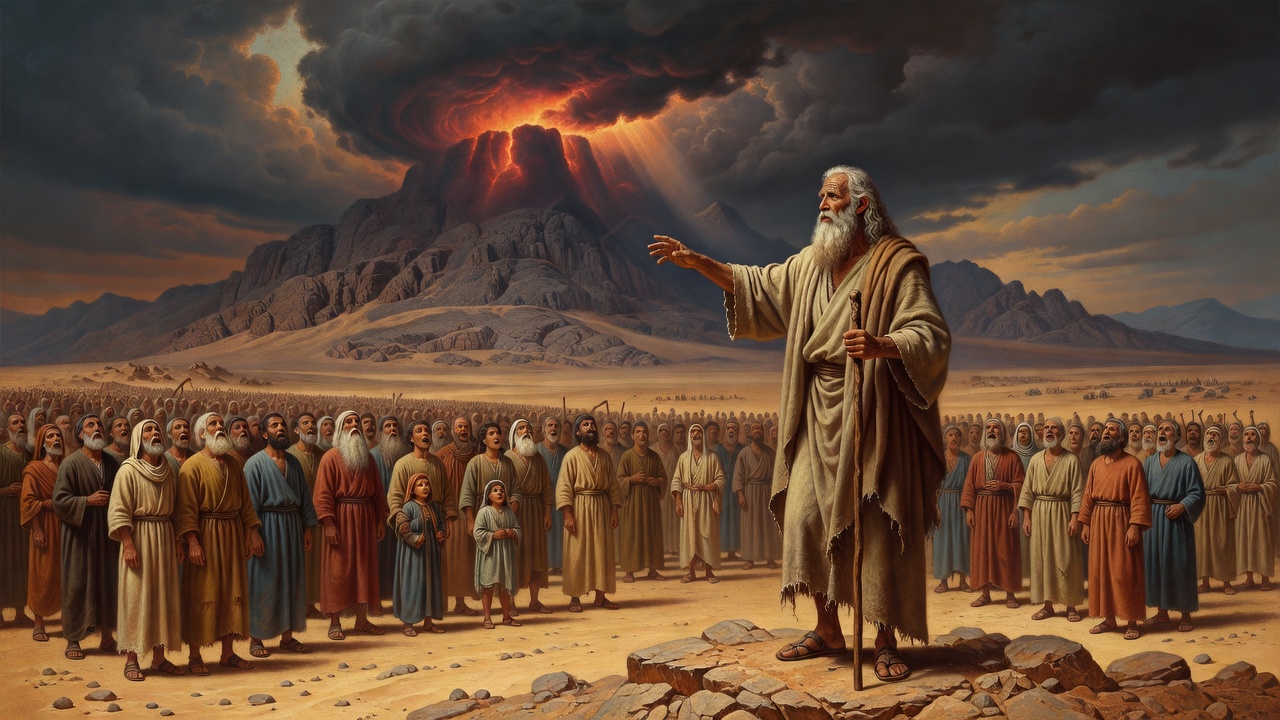
22Me taligu, Mosis mo veve vena, “Ngere ngaha a leohora i Huqe u veve lawe gimiu, tavohe neu kalo bubugi lo vusi Saenai. Me mo gato gena dilo lawua dena tailengi mena dodo gena avi. Siu hate gineu vage. Mo reve na leo lo tavisei vatu tatavola gairue, me mo betera lawe au.
23Me tavohe a avi mo gao na vusi gam rongo na leo mo vomai dena dodo lawua, me ira sesea meire ira tomtomuegi doluegi ramo vomai ram lehi eu. 24Me go ve, ‘Wo! Noda Huqe Mauri, u haharagi na varavarai nona muremure mena lawuana lawe ginde lo dilo lawua gau rongoe lo livugei avi. Bagataha dambei ilo huri ve Huqe Mauri u gato me tangaloi he mate tea. 25Siserigi ngaha gamai gam rao huri ve gain kakarani lobei mateana taligu. A avi lawua vin gao gamai me vin ngehigi gamai. Tareve gamai gain rongo na diloi noda Huqe Mauri taligu gamai gain mate. 26Gu ilo beno! Hate tangaloi tangaha huri ve Huqe vomai lobena lolo avi vena gato mwere u gato mei ginde siu lo tagugi dahe mate tea. 27Ko vano kakarani ko rorongtagi na leo doluegi noda Huqe Mauri vin veve lawego me lo tagugi goin vomai gom vevesere lawe gamai. Gamai gai rongora me gain tabera.’ 28Me i Huqe u rongo na diloi nomu leo tavohe gu gato mei eu me i Huqe mo veve vena, ‘Nau rongo na diloi leo noi sinobu me havai ngere rau veve doluegi rau hogo. 29Neu nam tarani ve rain lado mavagieu, me rain tabe na noku lehora tamwere, me lo nora mwasoana, noi reneture me i reneture rain vomai lo tagure vin garea vin tuei, 30siserigi ngaha goin veve lawera, rain mule taligu lo nora vale siusiu. 31Niko hogosie goin toga mei eu hano. Neu nain bete na noku leohora mena noku leo tamwata, me leo vevegi, lo tagugi goin vano goin huhui na tangaloi ngere hi ginie, me lo tagugi rain toga lolo vanue nain bete lawera, rain tabe na noku tamwata.’”
32Me taligu, Mosis mo veve vena, “Nein dige lo turegi hi a nomiu Huqe Mauri u veve lawe gimiu. Nein lehuri ve nein vei na havagi a Huqe Mauri u veve lawe gimiu. Mese begi sulo matue sige sulo mawiri. 33Nein dige lo turegi hi a nomiu Huqe Mauri u veve lawe gimiu. Tareve nein vei mwere hi, nomiu mwasoana vin garea me nein mwaso vurugegi siu nein toga vin qaravu lolo vanue ngere hi nein leie vin vuragi nomiu.”
Did you know?
The Covenant and the Ten Commandments
- In Deuteronomy, the mountain where the covenant and commandments were given is called Horeb. Horeb refers to the broader mountain range of which Sinai was a peak, situated beside a spacious plain where the Israelites could camp.Sources: Horeb · the Bible text itself
- In Deuteronomy's account of the Sabbath commandment, the requirement of rest is explicitly tied to Israel's history of slavery in Egypt. Because the Israelites had been liberated from forced labor, their servants, foreigners, and working animals were also granted complete rest on the seventh day.Sources: the Bible text itself
- Moses served as an intermediary between God and the people because the tribal heads and elders feared they would die if they continued hearing the divine voice from the fire and deep darkness. They asked Moses to go near, receive the remaining statutes, and report them to the assembly.Sources: the Bible text itself
Notes written with AI assistance from open sources (Theographic Bible Metadata, CC BY-SA 4.0; Easton’s Bible Dictionary, public domain) and reviewed before publishing.
Places in this chapter
Only places identified with high confidence are shown (90% or more according to the scholarly sources compiled by OpenBible). Period map: DARE (Digital Atlas of the Roman Empire), CC BY 4.0; modern map: © OpenStreetMap contributors; places: OpenBible.info (CC BY 4.0).
Credits and license for this translation
Waratau Siaga Tatuei mo Vilegi
Ambae, East: Waratau Siaga Tatuei mo Vilegi (Old Testament)
copyright © 2022 Pioneer Bible Translators
Language: Havai (Ambae, East)
Contributor: The Seed Company
© Pioneer Bible Translators of Dallas, Texas, USA.
This translation is made available to you under the terms of the
Creative Commons Attribution Share-Alike license 4.0.
You have permission to share and redistribute this Bible translation in any format and to make reasonable revisions and adaptations of this translation, provided that:
You include the above copyright and source information.
If you make any changes to the text, you must indicate that you did so in a way that makes it clear that the original licensor is not necessarily endorsing your changes.
If you redistribute this text, you must distribute your contributions under the same license as the original.
Pictures included with Scriptures and other documents on this site are licensed just for use with those Scriptures and documents.
For other uses, please contact the respective copyright owners.
Note that in addition to the rules above, revising and adapting God's Word involves a great responsibility to be true to God's Word. See Revelation 22:18-19.
2025-05-20
Source: http://ebible.org/omb/ · eBible.org