1 Samuel 3
Waratau Siaga Tatuei mo Vilegi · Tap a verse to see its cross-references.

About this book
About 1 Samuel
- Easton's Bible Dictionary (1897) says the books of Samuel were probably written by Samuel, Gad, and Nathan. It holds that Samuel wrote the first twenty-four chapters of the first book, that Gad, a companion of David, continued the history, and that Nathan completed it, probably arranging the whole in the form in which it now stands.Sources: Easton: Samuel, Books of
- Easton's Bible Dictionary (1897) says the first book covers a period of about a hundred years and nearly coincides with the life of Samuel. It contains the history of Eli (chapters 1-4), of Samuel (chapters 5-12), and of Saul and of David in exile (chapters 13-31), and notes that frequent gaps mean these are not complete histories of successive reigns.Sources: Easton: Samuel, Books of
- The story begins with Eli, high priest at Shiloh while the ark was there, who also judged Israel for forty years. Hannah consecrated her son Samuel at Shiloh as a perpetual Nazirite; he grew up under Eli's care and later had his home at Ramah, a town of Mount Ephraim, and resorted to Gilgal among the places where he administered justice.Sources: Eli · Samuel · Ramah · Gilgal
- Saul, son of Kish and of the tribe of Benjamin, is described as the first king of the Jewish nation; Gibeah was his birthplace and remained his residence after he became king. David, eighth and youngest son of Jesse of Bethlehem, tended his father's sheep on the uplands of Judah before the account of his exile from Saul.Sources: Saul · Gibeah · David · Easton: Samuel, Books of
- The Septuagint translators regarded the books of Samuel and Kings as one continuous history, divided into four books they called the Books of the Kingdom. The Vulgate followed that division but styled them the Books of the Kings, so the books now called First and Second Samuel in Protestant versions were there the First and Second Books of Kings.Sources: Easton: Samuel, Books of
Notes written with AI assistance from open sources (Theographic Bible Metadata, CC BY-SA 4.0; Easton’s Bible Dictionary, public domain) and reviewed before publishing.
Samuel
19Me siu Samuel mo lawua, me Huqe mo tino meie. Huqe he siregi na leo noi Samuel tea vena soi talo tano. 20Me doluegi Israel tavuigi Dan mo dadari Bereseba ngere rau ilo ve Huqe mo rivu Samuel mwere na nona tangaloi ligoligogi. 21Me Huqe mo vomai tuqaravu lo Saelo, huri mo vosangie lawe Samuel lo Saelo duruhi na nona leo.
Did you know?
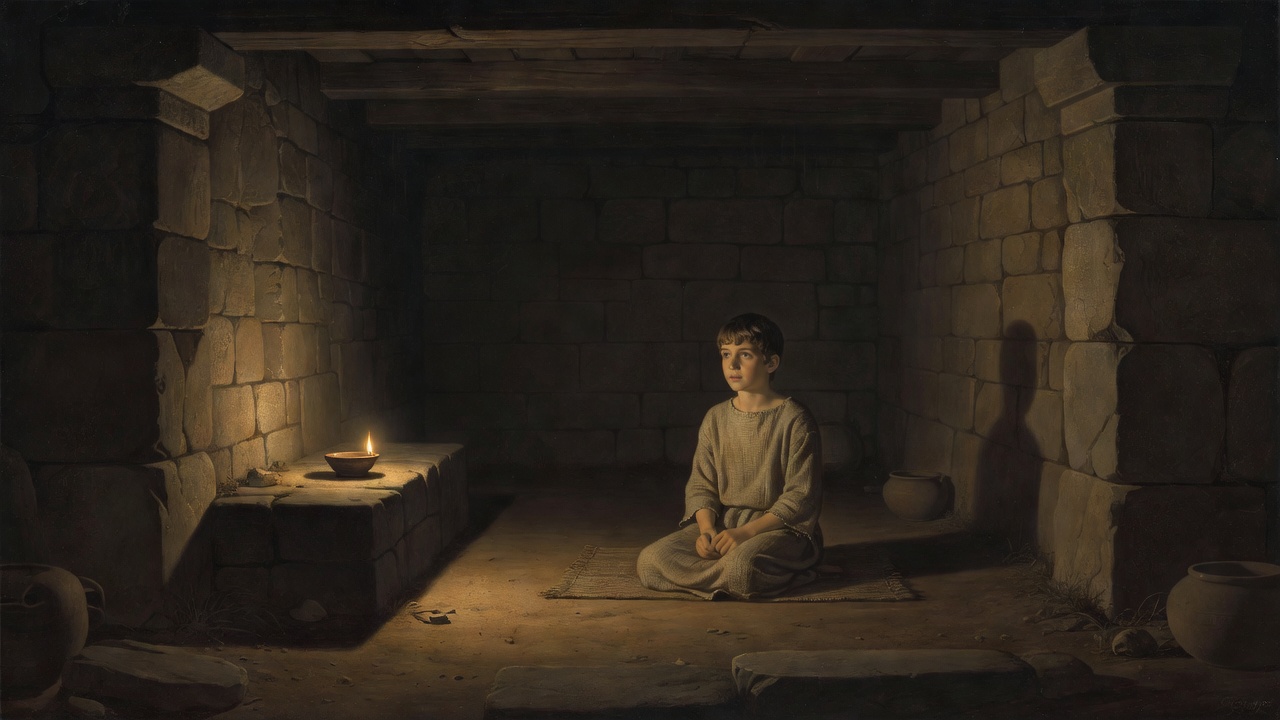
The Calling of Samuel
- The sanctuary housing the ark of God was located at Shiloh, where the young Samuel ministered under the high priest Eli. The text notes that direct divine revelations and visions were rare in those days, prior to the Lord revealing Himself to Samuel at Shiloh.Sources: the Bible text itself · Shiloh · Eli
- Eli served as high priest and judged Israel for forty years, but his failure to sternly reprove his corrupt sons, Hophni and Phinehas, brought a divine sentence of judgment against his household. The priestly office remained in Eli's lineage until King Solomon later removed Abiathar and installed Zadok.Sources: Eli · the Bible text itself
- The phrase from Dan to Beersheba designates the entire territory of the Promised Land, from its northern boundary at Dan to its southern limit at Beersheba, a distance of about 144 miles. Its mention emphasizes that the whole nation recognized Samuel as an established prophet.Sources: Beersheba · the Bible text itself
Notes written with AI assistance from open sources (Theographic Bible Metadata, CC BY-SA 4.0; Easton’s Bible Dictionary, public domain) and reviewed before publishing.
Places in this chapter
- Dan · Today: Tel Dan · 33.249, 35.652 · verse 20
- Shiloh · Today: Khirbet Seilun · 32.056, 35.290 · verse 21
Only places identified with high confidence are shown (90% or more according to the scholarly sources compiled by OpenBible). Period map: DARE (Digital Atlas of the Roman Empire), CC BY 4.0; modern map: © OpenStreetMap contributors; places: OpenBible.info (CC BY 4.0).
Credits and license for this translation
Waratau Siaga Tatuei mo Vilegi
Ambae, East: Waratau Siaga Tatuei mo Vilegi (Old Testament)
copyright © 2022 Pioneer Bible Translators
Language: Havai (Ambae, East)
Contributor: The Seed Company
© Pioneer Bible Translators of Dallas, Texas, USA.
This translation is made available to you under the terms of the
Creative Commons Attribution Share-Alike license 4.0.
You have permission to share and redistribute this Bible translation in any format and to make reasonable revisions and adaptations of this translation, provided that:
You include the above copyright and source information.
If you make any changes to the text, you must indicate that you did so in a way that makes it clear that the original licensor is not necessarily endorsing your changes.
If you redistribute this text, you must distribute your contributions under the same license as the original.
Pictures included with Scriptures and other documents on this site are licensed just for use with those Scriptures and documents.
For other uses, please contact the respective copyright owners.
Note that in addition to the rules above, revising and adapting God's Word involves a great responsibility to be true to God's Word. See Revelation 22:18-19.
2025-05-20
Source: http://ebible.org/omb/ · eBible.org