Genesis 8
Na Rongorongo Uto nina Jesus Christ · Tap a verse to see its cross-references.
Na lualua te kabulaghi horu
1Ma God te ghanaghana olia Noah mana maumanu ilokana na vaka. God te nia vetena na ghuri ge ke ghurihia na beti, mana lualua te vuivuni na kabulaghi horu. 2Na beti boroni pari te beto na vuravura me sosopi pulohi tana malana, mana uha sule te beto tesakai tua. 3Mana lualua te kabulaghi horu me sosopi. Mi murina sakai hangalatu limi hangavulu (150) na bongi, 4tana hangavulu vituni na dani tana vituni na vula, mana vaka te mai sopou tua tana ghotu tana bubulo i Ararat. 5Me te tona haliu so na sosopi horu na beti, mi tana vuivuni ni bongi tana hangavuluni na vula, mana kouni na ghotu sule te vuivuni ni tate.
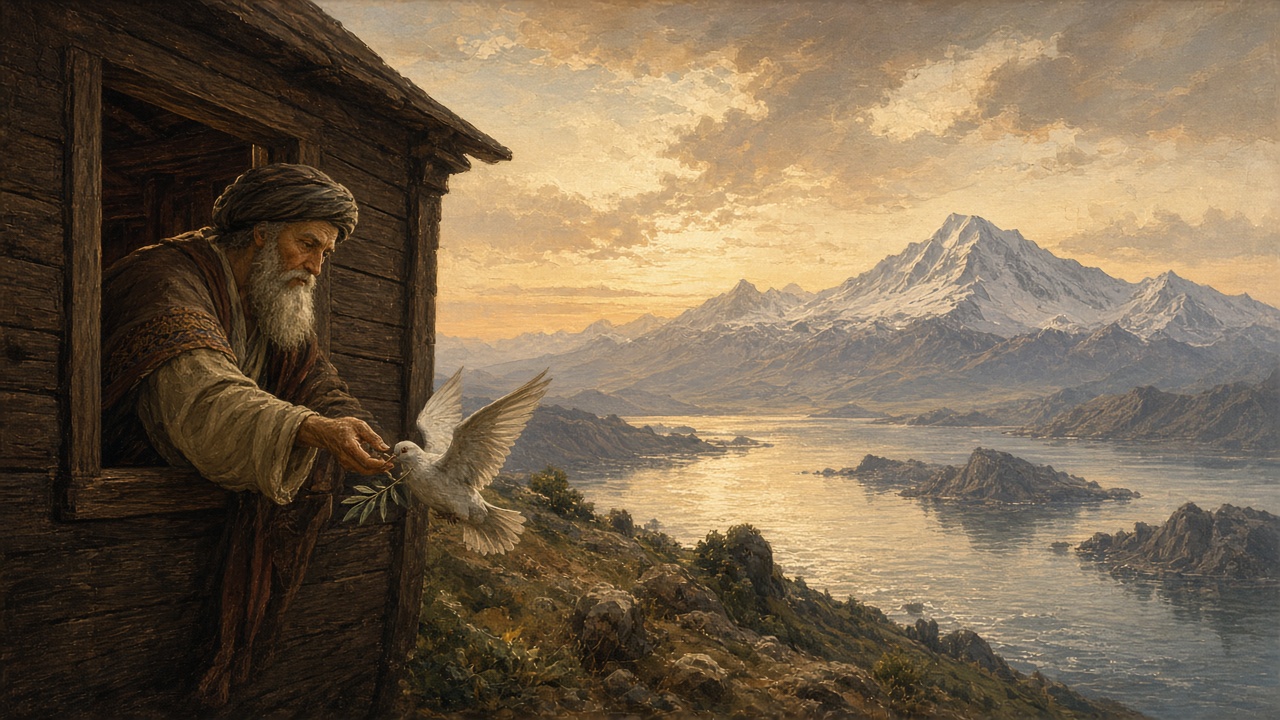
6Mi murina vati hangavulu na bongi, Noah te hangavia na matakenena na vaka te gonia, 7me nia vetena na manu bili, tara holoa nia “raven”, me lovo kolili polo ke mamaha na maramana. 8Mete ghoi nia vetena rughuhoru so na bola ke righia ke tangomana na kene sodoana na pari mamaha. 9Mana bola te mua topo malana ge ke tegha, na pukuna na beti te vonu dato mua tana pari. Keri ge gaia te ghoi oli so tana vaka, ma Noah te nia hagalo horu na limana me tegha igaa na bola, ge lavi oli haghea. 10Me padi tua vituni na dani, Noah te ghoi nia vetena so na bola. 11Tana dani vaghana keri, te dutu tua na nulavi, na bola te nia oli kolu vania mai na raurau ni olive tana mangana. Ma Noah te ghilala te dutu tua na sosopi soko na beti. 12Me padi tua e vitu na dani, gaia te ghoi nia vetena so na bola, mana dani vaghana keri gaia te mua pulohi mai tua.
13Mi tana bona Noah te ono hangalatu sakai (601) na niuluna, ta sakai na dani tana vuivuni ni vula, Noah te ghae datoa na vovongo ni vaka, me vaevane horu, mana beti te dutu mamaha tua. 14Mi tana erua hangavulu vitu na bongi tana ruani na vula, na maramana te mamaha udolu.
15Ma God te bosa vania Noah, 16“Ko sania igaa na vaka, ighoe mana taumu mana dalemu mana taudira. 17Ko taluhorura na lei maumanu mana manu ge gaira kara vahuhu ma kara sepalaghi tana maramana. 18Keri ge Noah, ma tauna, maira rana daledira mana taudira tara sania na vaka. 19Mana lei vatavata ni maumanu mana manu tara horu mai tana vaka rua me rua.
20Ma Noah te kisua nina vatei sukaghi kekere vania Yahweh. Me sukaghighi gaa na lei maumanu mana manu mana hava te talamaghinia ge kara nia sukaghi vania. 21Ma Yahweh te holopangotia na sukaghi me bosa vania heghena, “Inau ku mua ghoi varangaa tua na maramana, mana dikaladira na lei totobo vola soko, sakai mana na ghanaghana ni tinoni mana gehegehena ke dika vuivuni mai tana garipileadira. 22Tana bona ke ghaha na maramana, ke mua mautu na bona ni vade mana baobaore, na uha pana hina, na bihi pana papara, na dani pana bongi.”
Did you know?
The Waters Recede
- The ark came to rest on the mountains of Ararat, a name meaning “sacred land” or “high land” for a country on whose mountains the ark settled after the flood. Easton's Bible Dictionary (1897) suggests those mountains were probably the Kurdish range of southern Armenia, though the name is also commonly applied to a high, almost inaccessible peak rising from the plain of the Araxes. In 2 Kings 19:37 and Isaiah 37:38 the Authorized Version renders the name “Armenia” and the Revised Version “land of Ararat,” while Jeremiah 51:27 uses it for central or southern Armenia.Sources: Ararat · the Bible text itself
- Noah’s Hebrew name means “rest,” and in this chapter the ark itself comes to rest as the waters go down. He was the son of Lamech and the grandson of Methuselah, and the father of Shem, Ham, and Japheth. Easton's Bible Dictionary describes him as the connecting link between the old world and the new, and as a second great progenitor of the human family.Sources: Noah · the Bible text itself
- Chronological notes place the Great Flood in 2347 BC, lasting one year; the subsiding of the waters in 2346 BC, over 220 days; and the leaving of the ark in 2346 BC, as a single day. In the chapter itself, the waters have gone down after 150 days and the ark rests on the seventeenth day of the seventh month; on the first day of the first month of Noah’s six hundred and first year the waters have dried up, and by the twenty-seventh day of the second month the earth is fully dry.Sources: The Great Flood · The flood subsides · Leaving the Ark · the Bible text itself
Notes written with AI assistance from open sources (Theographic Bible Metadata, CC BY-SA 4.0; Easton’s Bible Dictionary, public domain) and reviewed before publishing.
Places in this chapter
- Ararat · Today: Urartu · 39.703, 44.300 · verse 4
Only places identified with high confidence are shown (90% or more according to the scholarly sources compiled by OpenBible). Period map: DARE (Digital Atlas of the Roman Empire), CC BY 4.0; modern map: © OpenStreetMap contributors; places: OpenBible.info (CC BY 4.0).
Credits and license for this translation
Na Rongorongo Uto nina Jesus Christ
Portions of the Holy Bible in the Gela language of the Solomon Islands
Baebol long langguis Gela
copyright © 2015 Wycliffe Bible Translators, Inc.
Language: Gela
This translation is made available to you under the terms of the
Creative Commons Attribution-Noncommercial-No Derivatives license 4.0.
You may share and redistribute this Bible translation or extracts from it in any format, provided that:
You include the above copyright and source information.
You do not sell this work for a profit.
You do not change any of the words or punctuation of the Scriptures.
Pictures included with Scriptures and other documents on this site are licensed just for use with those Scriptures and documents.
For other uses, please contact the respective copyright owners.
2021-11-30
Source: http://ebible.org/nlg/ · eBible.org