Genesis 14
Na Rongorongo Uto nina Jesus Christ · Tap a verse to see its cross-references.
Abram te volaa Lot
1Mi tana bona vaghana keri, e vati na vunaghi haba na ahadira a Amraphel ni Babylonia, Arioch ni Ellasar, Chedorlaomer ni Elam, ma Tidal ni Goiim. 2Gaira tara rughuhoru ni gehemate kolura e lima na vunaghi haba na ahadira, Bera ni Sodom, Birsha ni Gomorrah, Shinab ni Admah, Shemeber ni Zeboiim, mana vunaghi haba ni Bela (itaeni aeni na komu sule tara holoa nia ghua Zoar). 3Ra lima na vunaghi haba raini tara liokolu mara lavira didira na malaghai, mara savukolu tana boboko i Siddim, (na bona eni tara holoa nia “na boboko ni Tahi Mate” itaeni). 4Gaira ra lima na vunaghi haba raini tara kabu tua e hangavulu rua na niulu sarana nina maana na vunaghi haba Chedorlaomer, hauva mi lokana e hangavulu tolu na niulu i sarana gaia mara kabu hughuhughu kolua. 5Keri ke, mi tana e hangavulu vatini na niulu na Vunaghi haba Chedorlaomer kolura ra tolu na vunaghi haba keha tara padapada, ma didira malaghai tara mai ge kara suravira e lima na vunaghi haba. Tana vuivuni tara veitotoghoni mara lagavulera na kema ni Repha tana Ashteroth-Karnaim, mara laga vulera ghua na kema ni Zuz tana Ham, mara tona haliu mara laga vulera na kema ni Em tana nanata ni Kiriathaim. 6Soko ke, mara lagavulera na kema ni Hori tana lei ghotu tana bubulo Seir, sara tana El-paran dutuvia na bona mamaha te taho iga na beti mana ghai. 7Me vati na vunaghi haba raini tara oli mara tona tana komu tara holoa nia En-mishpat (itaeni tara holoa nia Kadesh.) Iani tara lagavulera na kema ni Amelek, mara maana pungisira na lei komu nina kema Amelek. Murina keri ge ra ghoi tona ta sakai na komu tara holoa nia Hazazon-tamar, mara lagavulera rana kemana Amor tara ghahara igaa.
8Keri ge rana vunaghi haba ni Sodom, Gomorrah, Admah, Zeboiim ma Bela tara lolola kolura didira na malaghai, mara tona tana boboko i Siddim. Igaa tara veitotoghoni 9kolura ra vati na vunaghi haba, Cherdorlaomer ni Elam, Tidal ni Goiim, Amraphel ni Babylonia, ma Arioch ni Ellasar. E lima na vunaghi haba tara veilalabui kolura e vati na vunaghi haba. 10Na boboko te subo igaa na gilu te vonughighi na tar. [Mi tana bona e vati na vunaghi haba tara dutu ni lagavuleadira, mara tabotabo ge kara sama sania rana lima na vunaghi haba kolura didira na malaghai ke, me subo itadira kara tumu haghe tana lei gilu. Mana balu ghua tara sama va tana lei ghotu. 11Keri ge ra vati na vunaghi haba tara bolighi na lei lologho ni Sodom mi Gomorrah, kolui na vanga, mara tona. 12Mara lavia ghua Lot, na dalena na hoghona Abram, kolui nina lei lologho na pukuna gaia te ghanaa so i Sodom tana bona vaghana keri.
13Ma sakai na mane te samapolo, me saravia a Abram, na tinoni ni Jew. Abram te ghanaa so ililighi na lei ghai tabu nina Mamre, na mane tana kemana Amor. A Mamre, kolura erua na hoghona, Eshcol ma Aner, tara liokolu ni gehemate kolua Abram. 14Mi tana bona Abram te rongovia tara sagua a Lot, na dalena na hoghona ka, ge holokolura na lei nina malaghai. Gaira ra tolu hangalatu hangavulu alu na mane, mara ghurura ra vati na vunaghi haba, mara nira sara i Dan. 15Igaa Abram te vilivokara na lei nina malaghai tana sopasopa ovu, ge labura na lei ghana na kana tana bongi, me laga vulera ghua. Me ghuru tonara me nira va sara i Hobah, sodu ilauna Damascus. 16Me lavialighi na lei lologho te sagui, me lavia ghua a Lot, na dalena hoghona, kolui nina lei totobo mana lei vaivine kolura balu vure ghua.
Melchizedek te vautoa Abram
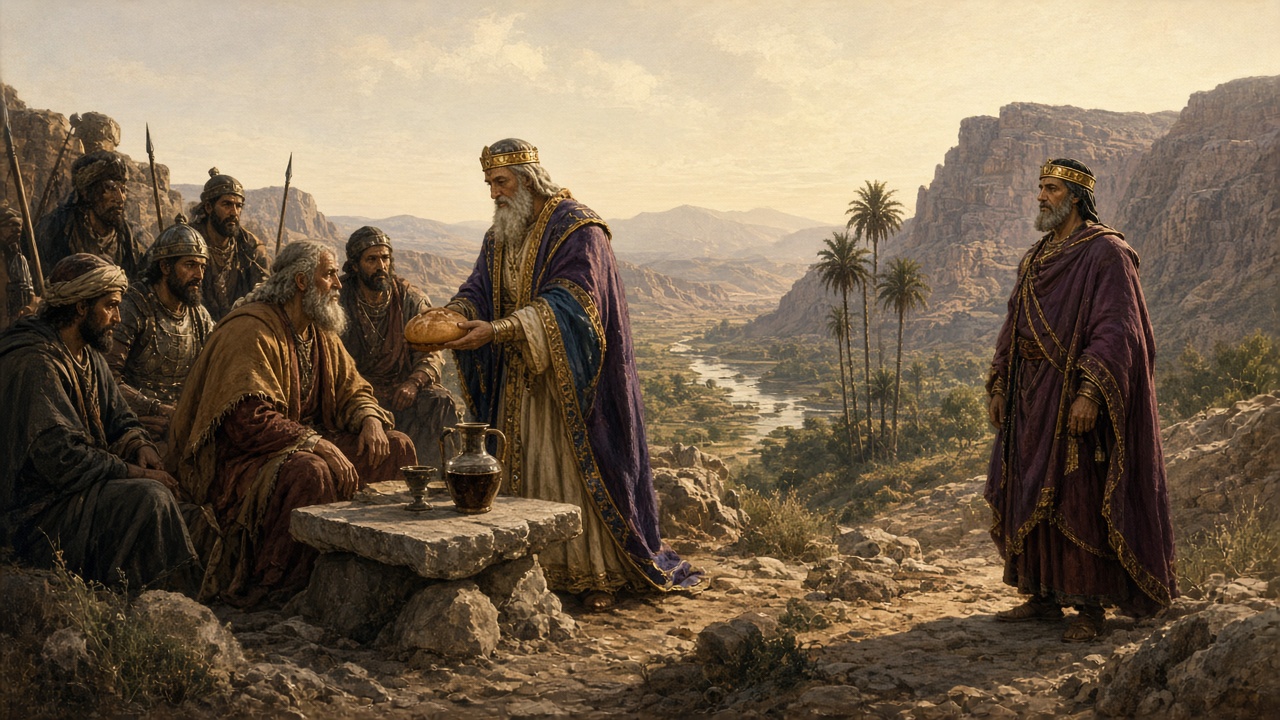
17Ma Abram te oli tana kisumate, me laga vulera igaa na Vunaghi haba Chedorlaomer maia tolu na vunaghi haba kolua. Mana vunaghi haba ni Sodom te tughuru me va holopangotia Abram tana boboko tara holoa nia Shaveh (eruani na ahana, “na bobokona na Vunaghi haba.”) 18Ma Melchizedek, na vunaghi haba ni Salem, ma nina manesukaghi ghua a God puku ni haba, gaia te mai, me hea a Abram na berete mana wine. 19Ma gaia te vautoa ghua Abram me ghaghua, “Ge God puku ni haba te gonia na parako mana pari, ke vautogho Abram. 20Ge ka holohabaa God puku ni haba, gaia te negho ge o laga vulera ghamua na lei kana.” Ma Abram te holai sakai tana lei hangavuluni ta nina lei totobo te laga vulei tana veilalabui, me vahea Melchizedek.
21Keri ke, na Vunaghi haba ni Sodom te bosa vania Abram me ghaghua, “Ko holai tua na lei totobo to sagui tana kisumate, mana lei kulagu na vure vamua ko lavi olira vaniu mai.”
22Ma Abram te bosatughu me ghaghua, “Inau tu baubahu tana matana Yahweh, God puku ni haba, te gonia na parako mana pari, 23ge ku mua tabei nimua na lei lologho. Hughua na pile kikia ta nimua na lei totobo, ke oli vanigho gatu mughua. Keri ge ko mua bosa talunagho mo ghaghua, ‘Inau tu nea Abram ge lologho!’ 24Inau ku mua ghoi lavia tua siki totobo vaniu heghegu. Hauva, mu ku holopangotia so na hava tara ghanighi tua nina lei malaghai. Mo ko lubatira ghua na lei hoghogu Aner, Eshcol, ma Mamre, gaira kara lavighi na tunuvadira.”
Did you know?
The Campaign of the Four Kings
- Easton's Bible Dictionary (1897) identifies the four invading kings with names on ancient inscriptions: Chedorlaomer with Khudur-Lagamar of Elam, Amraphel with Khammu-rabi of Shinar (southern Chaldea), Arioch, king of Ellasar, with Eri-Aku of Larsa, and Tidal with Tudkhula. It explains Eri-Aku as an Elamite name meaning “servant of the moon-god,” later changed to Rimsin, and takes Goiim—“nations”—as Gutium, east of the Tigris and north of Elam.Sources: Chedorlaomer · Amraphel · Arioch (king of Ellasar) · Tidal
- The five local kings drew up for battle in the Valley of Siddim, which this chapter equates with the Salt Sea, and the valley was full of tar pits into which some of the fleeing men fell. Easton's Bible Dictionary places that valley at the south end of the Dead Sea, between Engedi and the cities of the plain, and calls the pits bitumen pits.Sources: the Bible text itself · Vale of Siddim
- Abram lived near the oaks of Mamre the Amorite, a brother of Eshcol and Aner, and the three were bound by treaty to him. Easton's Bible Dictionary calls Mamre and Eshcol Amorite chiefs and Aner a Canaanite chief, and notes that they joined Abram in pursuing Chedorlaomer and recovering Lot.Sources: the Bible text itself · Mamre · Eshcol · Aner
Notes written with AI assistance from open sources (Theographic Bible Metadata, CC BY-SA 4.0; Easton’s Bible Dictionary, public domain) and reviewed before publishing.
Places in this chapter
- Elam · 32.189, 48.258 · verses 1, 9
- Shinar · Today: Babylonia · 32.543, 44.422 · verses 1, 9
- Salt Sea · Today: Dead Sea · 31.500, 35.500 · verse 3
- Shaveh-kiriathaim · Today: within 1 km of Al Qurayyat · 31.541, 35.686 · verse 5
- Dan · Today: Tel Dan · 33.249, 35.652 · verse 14
- Damascus · 33.511, 36.306 · verse 15
- Valley of Shaveh · Today: intersection of Kidron Valley and Valley of Hinnom · 31.767, 35.236 · verse 17
- Salem · Today: Jerusalem · 31.777, 35.234 · verse 18
Only places identified with high confidence are shown (90% or more according to the scholarly sources compiled by OpenBible). Period map: DARE (Digital Atlas of the Roman Empire), CC BY 4.0; modern map: © OpenStreetMap contributors; places: OpenBible.info (CC BY 4.0).
Credits and license for this translation
Na Rongorongo Uto nina Jesus Christ
Portions of the Holy Bible in the Gela language of the Solomon Islands
Baebol long langguis Gela
copyright © 2015 Wycliffe Bible Translators, Inc.
Language: Gela
This translation is made available to you under the terms of the
Creative Commons Attribution-Noncommercial-No Derivatives license 4.0.
You may share and redistribute this Bible translation or extracts from it in any format, provided that:
You include the above copyright and source information.
You do not sell this work for a profit.
You do not change any of the words or punctuation of the Scriptures.
Pictures included with Scriptures and other documents on this site are licensed just for use with those Scriptures and documents.
For other uses, please contact the respective copyright owners.
2021-11-30
Source: http://ebible.org/nlg/ · eBible.org