Exodus 3
Na Rongorongo Uto nina Jesus Christ · Tap a verse to see its cross-references.
Moses mana ghai reserese te vavu
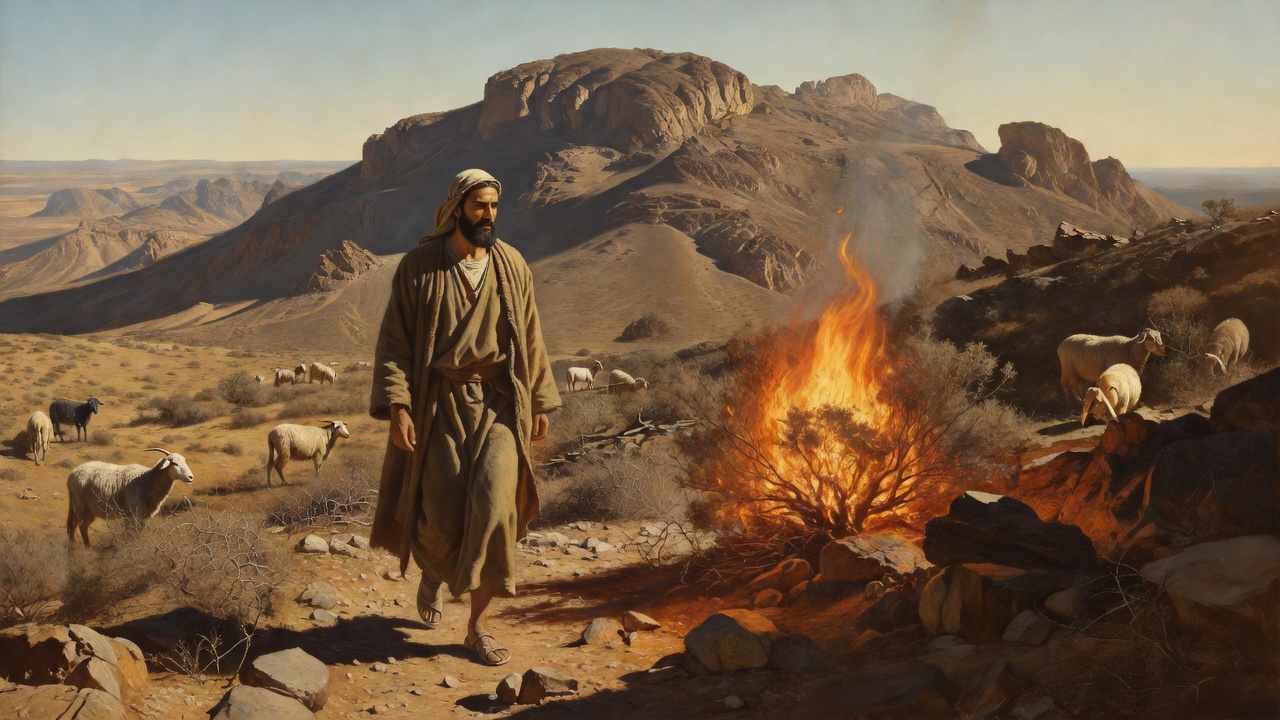
1Sakai na bongi, Moses te lavira nina sheep vungona Jethro, na mane sukaghi ni Midian, me va tona haghe [ilokana na tautalu asi]/[tana bona mamaha] lilighina Sinai, na nina ghotu a God. 2Mua hau vaso, nina angel Yahweh/Lord God te tate vania tana ghai reserese te vavu. Moses te hare na pukuna na ghai reserese te vavu, hauva me mua durake. 3Moses te [bosa/ghanaghana] heghena, “Vatei haeharegha sughua! Ivei tea, ge mua durakea na ghai reserese? Inau ku tona mu ku righia vaa eni.” 4Mi tana bona a Yahweh te righia Moses te mai lilighina na ghai reserese, gaia te holoa tana lokana na ghai, “Moses! Moses!”
Ma Moses te bosa tughu, “Iani inau”.
5God te bosa vania, “Ko bei mai dutu. Ko hola keha na hahara ni tuamu na pukuna na bona tabu to tughuru iga.” 6Keri ge bosa vania, “Inau God didira na kukuamu - na God nina Abraham, na God nina Isaac ma God nina Jacob.” Mi tana bona Moses te rongovia eni, gaia te poloa na matana nia na limana, na pukuna gaia te mataghu ge ke righia God.
7Ma Yahweh te bosa vania, “Itaeni vaho ge ko pukua. Inau tu righia na dika itadira nigua na vure i Egypt. Inau tu rongovia didira na tangi ni hangadira ta didira na vahola tana tinoni ni lutu. Eo, inau tu ghilala didira na vahaghitaili. 8Keri ge u mai mu ku lavi kehara itadira na vure ni Egypt, vaa tana puku ni komudira te uto, mete subo iga na bona tana pari. Gaia na pari te tave iga na susu ni buluka mana kokolo ni midua - na pari tara ghahara iga rana vure ni Canaan, rana vure ni Hit, rana vure ni Amor, rana vure ni Periz, rana vure ni Hivi, ma rana vure ni Jebus. 9Didira na tangi na vure ni Israel te saraviu, mi nau tu righia ivei te vagha na vure ni Egypt tara nea na vahaghitailiadira nia na lei totobo vahola. 10Mi taeni ko tona, inau tu vetenagho ge ko tona tana vunaghi haba (Pharaoh). Mi ghoe ko hulira nigua na vure rana Israel/Jew rughuhoru tana komu i Egypt.”
11Ma Moses te bosa vania God, “Ma hei inau, ge ku va tate i naghona Pharaoh mu ku hulira rana Israel/Jew rughuhoru tana komu i Egypt?”
12Ma God te bosa vania, “Inau ku kabu kolugho. Aeni ke tatea te utuni, inau tu nigho vetena, tana bona ko lavi horura rana Israel/Jew tana komu ni Egypt ke, ko ghoi oli mai so iani ighau udolu kara holohabaa God tana ghotu eni.”
13Ma Moses te huatia me ghaghua, “Ge tuku tona itadira na vure ni Israel/Jew, mu ku bosa vanira, ‘Na God didira rana kukuamiu te niu vetena vanighau mai,’ gaira kara ghoi huatiu, ‘Ma hei na ahana na god eni to nia kokokoe?’ Keri ke, mana hava ku bosa vanira?”
14Ma God te bosa tughu vania, “Inau gaia [sakai vamua] te kabu talau ke va me va. Aeni na hava ko bosa vanira rana Israel/Jew, ‘Inau gaia keri te niu vetena vanighau mai.’” 15Ma God te ghoi bosa vania so, “Ko bosa vanira, ‘A Yahweh, na God didira na kukuamiu - a God nina Abraham, ma God nina Isaac ma God nina Jacob te niu vetena vanighau mai.’ Aeni gaia na ahagu ke ghahaa talaua, ma kara nia kokoe talau na lei vavata.
16“Ko tona mo ko holo kolura na lei mane huhuli ni Israel/Jew, mo ko bosa vanira, ‘A Yahweh, na God didira na kukuamiu - a God nina Abraham, ma God nina Isaac, ma God nina Jacob - te tate vaniu me ghaghua, “Inau tu vatoghaghau mu righia na hava te kaleghau i Egypt. 17Mi nau tu baubahu ge ku vavolaghau tana lei vahola itadira na Egypt. Inau ku hulighau va tana pari tara ghahara iga rana vure ni Canaan, rana vure ni Hit, rana vure ni Amor, rana vure ni Periz, rana vure ni Hivi, ma rana vure ni Jebus, na pari te tave iga na kokolo ni susu mana midua.” ’
18“Agaira na huhuli tana vure ni Israel/Jew kara tangomana na holopangotiana a nimua na rongorongo. Keri ge ighau udolu kau tona haliu va tana vunaghi haba ni Egypt, ma kau bosa vania, ‘A Yahweh na God didira rana Israel/Jew te kabukolughai. Lubatighai ge kai tona e tolu na bongi na vinano ilokana na bona mamaha, ge kai va taludatoa na sukaghi vania a Yahweh nimami na God.’ 19Hauva mi nau tu ghilala na vunaghi haba ni Egypt ke mua lubatighau na tona sakai vamua gaia te ghilala utoa inau tu laga vulea itatana gaia. 20Mana pukuna keri, inau ku haua na limagu, ge ku vahaghitailira rana vure ni Egypt nia na lei vata ni butuli vaughilala. Mi tana sosoko, gaia ke lubatighau. 21Mi nau ku nera so, ke vagha ke goni utoghau na vure ni Egypt. Gaira kara va heghau na lei dolo ge kau mua rughuhoru kokoba. 22Sopa na lei vaivine ni Israel/Jew kara nongighi na lei totobo ni silver/silver mana golu mana lei tivi utoutoa itadira na lei komukoludira na Egypt, maia ghua na lei hoghodira tara nongi haghe mai. Na lei tivi raini kau pupulura nia so na lei dalemiu na mane mana vaivine. Tana halautu vaghana vaho eni, ge kau righia te vagha kau sagura rana vure ni Egypt.”
Did you know?
The Call of Moses at the Burning Bush
- Moses is shepherding in Midian when this chapter begins. The Midianites were a nomadic Arabian tribe descended from Midian, Abraham's fourth son by Keturah, whose name is explained as strife. They lived chiefly in the desert north of Arabia, and the Sinai peninsula was grazing land for their flocks; it was there, after fleeing Egypt, that Moses became a servant and then the priest's son-in-law.Sources: the Bible text itself · Midian · Midian
- His father-in-law is Jethro, called the priest of Midian. Easton's Bible Dictionary (1897) equates that priest with Raguel and says that, if the two names belong to one man, Raguel may be regarded as his personal name and Jethro, meaning excellency, as an official title.Sources: the Bible text itself · Jethro
- Moses leads the flock to Horeb, the mountain of God. The name is explained as desert, or mountain, of the dried-up ground, a general term for the whole range of which Sinai was one summit; Easton's Bible Dictionary (1897) gives the modern name of the range as Jebel Musa and describes a huge block about two miles long and about one mile wide, with a very spacious plain called Er Rahah at its north-east end, where the Israelites later camped for nearly a year.Sources: the Bible text itself · Horeb
Notes written with AI assistance from open sources (Theographic Bible Metadata, CC BY-SA 4.0; Easton’s Bible Dictionary, public domain) and reviewed before publishing.
Places in this chapter
- Midian · 28.495, 35.012 · verse 1
- Mount Horeb · Today: Jebel Musa · 28.540, 33.973 · verse 1
- Egypt · 30.129, 31.308 · verses 7, 8, 10, 11, 12, 16, 17, 18, 19, 20, 22
Only places identified with high confidence are shown (90% or more according to the scholarly sources compiled by OpenBible). Period map: DARE (Digital Atlas of the Roman Empire), CC BY 4.0; modern map: © OpenStreetMap contributors; places: OpenBible.info (CC BY 4.0).
Credits and license for this translation
Na Rongorongo Uto nina Jesus Christ
Portions of the Holy Bible in the Gela language of the Solomon Islands
Baebol long langguis Gela
copyright © 2015 Wycliffe Bible Translators, Inc.
Language: Gela
This translation is made available to you under the terms of the
Creative Commons Attribution-Noncommercial-No Derivatives license 4.0.
You may share and redistribute this Bible translation or extracts from it in any format, provided that:
You include the above copyright and source information.
You do not sell this work for a profit.
You do not change any of the words or punctuation of the Scriptures.
Pictures included with Scriptures and other documents on this site are licensed just for use with those Scriptures and documents.
For other uses, please contact the respective copyright owners.
2021-11-30
Source: http://ebible.org/nlg/ · eBible.org