Psalms 95
De Heilige Schrift, Petrus Canisiusvertaling, 1939 · Tap a verse to see its cross-references.
1Komt, laat ons juichen ter ere van Jahweh, Jubelen voor de Rots van ons heil; 2Laat ons met lofzangen voor zijn aangezicht treden, En onze liederen voor Hem zingen: 3Want Jahweh is een machtige God! Hij is Koning, boven alle goden verheven: 4Hij houdt in zijn hand de diepten der aarde, En de toppen der bergen behoren Hem toe; 5Van Hem is de zee, Hij heeft ze geschapen, Het vaste land, dat zijn hand heeft gemaakt! 6Komt, buigen en werpen wij ons neer, Knielen wij voor Jahweh, die ons heeft geschapen; 7Want Hij is onze God, Wij het volk, dat Hij leidt, En de kudde aan zijn hand! Als gij dan heden mijn stem verneemt, 8Verstokt uw hart als bij Meriba niet; Als op de dag van Massa in de woestijn, 9Toen uw vaders Mij tartten en beproefden, Ofschoon ze mijn werken hadden aanschouwd! 10Veertig jaar lang was dat geslacht Mij een walg, En Ik sprak: Steeds dwaalt hun hart van Mij af, En mijn wegen kennen ze niet. 11Daarom zwoer Ik in mijn toorn: Neen, ze zullen niet ingaan in mijn Rust!
Did you know?
A Call to Praise and a Solemn Warning
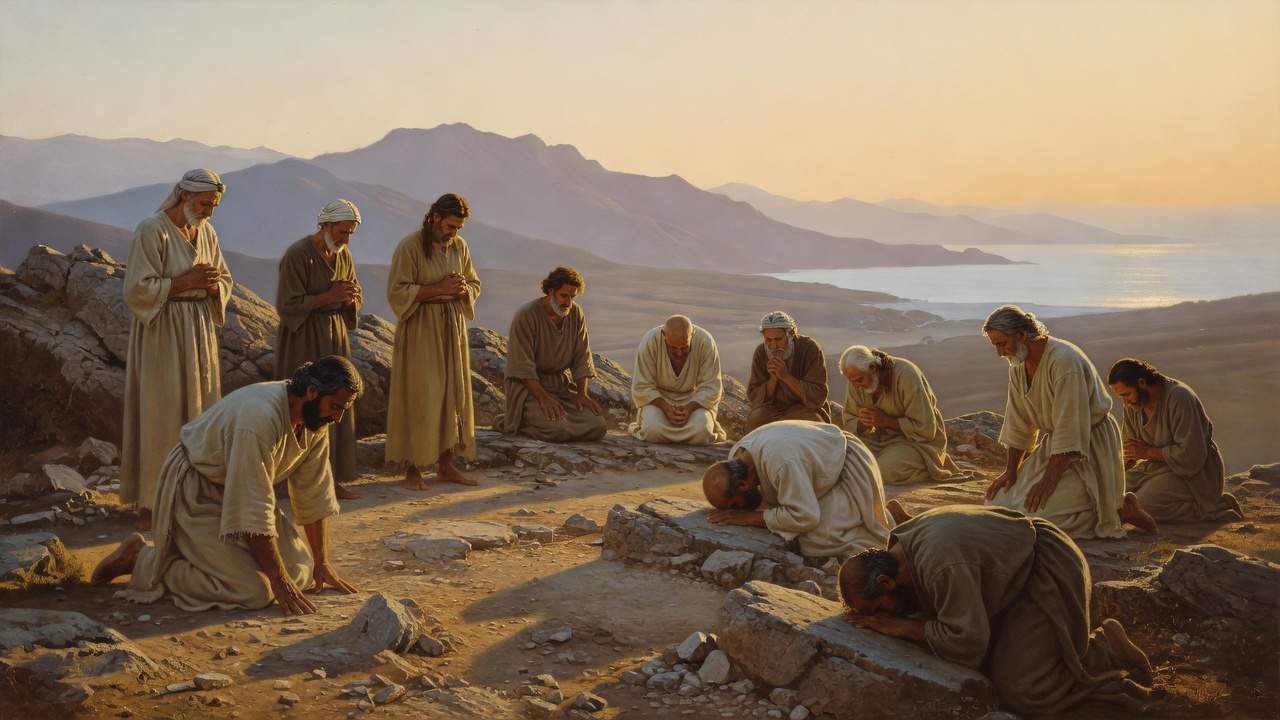
- Psalm 95 begins as an invitation to worship God with singing and thanksgiving, celebrating Him as a great King, the Creator of the seas and mountains, and the shepherd caring for His people. The psalm calls the community not only to shout with joy, but also to bow down and kneel before their Maker.Sources: the Bible text itself
- In the second half of the psalm, the tone shifts abruptly to a divine warning against hardening one's heart. It recalls the rebellion at Meribah and Massah in the wilderness, where the people tested God for forty years despite seeing His works, leading to the divine oath that they would not enter His rest.Sources: the Bible text itself
Notes written with AI assistance from open sources (Theographic Bible Metadata, CC BY-SA 4.0; Easton’s Bible Dictionary, public domain) and reviewed before publishing.
Places in this chapter
- Meribah · Today: within 500 m of Wadi Rufaiyil · 28.623, 33.880 · verse 8
Only places identified with high confidence are shown (90% or more according to the scholarly sources compiled by OpenBible). Period map: DARE (Digital Atlas of the Roman Empire), CC BY 4.0; modern map: © OpenStreetMap contributors; places: OpenBible.info (CC BY 4.0).
Credits and license for this translation
De Heilige Schrift, Petrus Canisiusvertaling, 1939
The Holy Bible in Dutch, Petrus Canisius translation, 1939
Public Domain
Language: Nederlandse taal (Dutch)
Eerste uitgave: Het Spectrum, Utrecht, Brussel, 1939
De Petrus Canisiusvertaling is een Nederlandse rooms-katholieke bijbelvertaling, waarvan de eerste complete uitgave verscheen in 1939. De volledige naam luidt: "De Heilige Schrift, vertaling uit de grondtekst met aantekeningen, in opdracht van de Apologetische Vereniging 'Petrus Canisius' ondernomen met goedkeuring van de hoogwaardige bisschoppen van Nederland". De Petrus Canisiusvertaling is de eerste Nederlandse katholieke vertaling die gebaseerd is op de grondteksten in hun oorspronkelijke taal. Andere vertalingen gingen uit van de Vulgaat. Het taalgebruik van de uitgave is naar hedendaagse normen licht archaïsch te noemen, maar nog steeds vlot verstaanbaar.
Verantwoording in verband met de auteursrechten
In verband met de auteursrechten is contact opgenomen met de oorspronkelijke uitgever (1), de Katholieke Vereniging voor Oecume (2) en de Katholieke Bijbelstichting (3) en werden geen bezwaren gevonden tegen deze publicatie. Rekening houdend met de wettelijke termijnen, kan deze uitgave beschouwd worden als vrij van auteursrechten.
First publication: Het Spectrum, Utrecht, Brussel, 1939
The translation "Petrus Canisius" is a dutch roman catholic bible translation, that was first published in 1939. Its full title is "The Holy Scripture, translation of the original texts with annotations, commissioned by the Apologetical Society 'Petrus Canisius' and executed with the approval of the most reverend bishops of the Netherlands". The translation "Petrus Canisius" is the first dutch catholic translation that was based on the scripture texts in their original language. Other translations were based on the Vulgate. The language of this edition is to current standards moderately archaic, but still easily understood.
Accountability in relation to copyright
Concerning the copyright contacts have been made with the original publisher (1), the Katholieke Vereniging voor Oecumene (Catholic Society for Ecumenism) (2) and the Katholieke Bijbelstichting (Catholic Bible Foundation) (3) and no objections have been found against this publication. Taking into account the legal terms, this edition can be considered to be in the public domain.
UITGEVERIJ UNIEBOEK|HET SPECTRUM BV, HOUTEN, THE NETHERLANDS
KATHOLIEKE VERENIGING VOOR OECUMENE, 'S HERTOGENBOSCH, THE NETHERLANDS
KBS, HOEVEN, THE NETHERLANDS
2024-08-06
Source: http://ebible.org/nld1939/ · eBible.org