Psalms 84
De Heilige Schrift, Petrus Canisiusvertaling, 1939 · Tap a verse to see its cross-references.
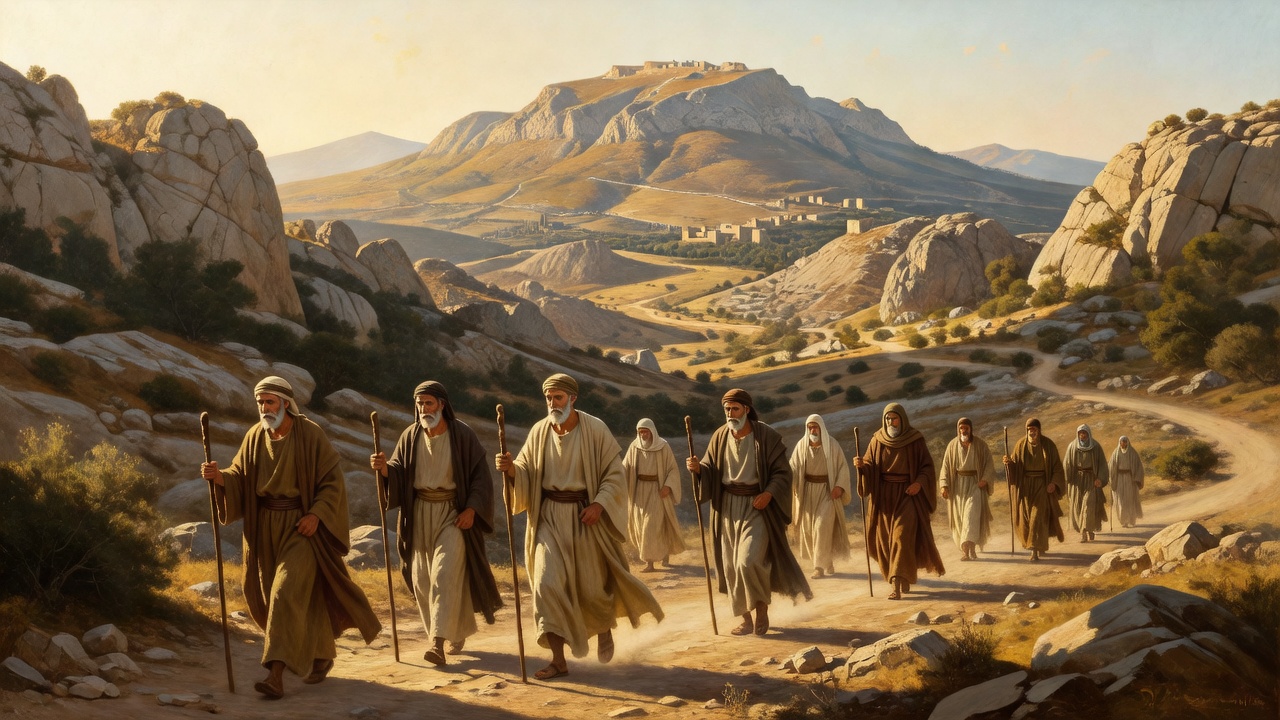
1Voor muziekbegeleiding; op de gittiet. Een psalm van de zonen van Kore. Hoe lieflijk is uw woning, Jahweh der heirscharen! 2Mijn ziel smacht van verlangen Naar de voorhoven van Jahweh; Mijn hart en mijn lichaam heffen een jubelzang aan Voor den levenden God! 3Ook de mus vindt een woning, De zwaluw een nest, waar ze haar jongen kan leggen: Bij uw altaren, Jahweh der heirscharen, Mijn Koning en God. 4Gelukkig, die in uw huis mogen wonen, En eeuwig U loven! 5Gelukkig de mensen, die hun kracht in U vinden, Als ze met blijdschap ter bedevaart gaan! 6Het dorre dal wordt hun een bron, En de lenteregen bedekt het met vijvers; 7Zo gaan ze steeds krachtiger voort, Totdat ze voor God op de Sion verschijnen. 8Jahweh der heirscharen, hoor mijn gebed; Jakobs God, ach, luister toch! 9Waarachtig, één dag in uw voorhoven Is beter dan duizend daarbuiten; Liever wil ik op de drempel van Gods huis blijven staan, Dan wonen in de tenten der bozen. 11Want Jahweh is een zon en een schild; God geeft genade en glorie. Nooit weigert Jahweh een weldaad aan hen, Die onberispelijk leven. 12Jahweh der heirscharen: Gelukkig de mens, die op U blijft vertrouwen!
Did you know?
Longing for the House of God
- The "Valley of Baca" mentioned in verse 6 translates literally or figuratively as a "valley of weeping" or balsam trees. It likely describes an arid valley through which pilgrims traveled on their journey toward the sanctuary in Jerusalem.Sources: Valley of Baca · the Bible text itself
- Mount Zion was a prominent hill of Jerusalem surrounded by deep valleys, where the city of David and the sanctuary were established. The psalm celebrates pilgrims traveling from strength to strength until they appear before God on Zion.Sources: Zion · the Bible text itself
- The psalmist vividly expresses longing for the temple, noting how even small birds like sparrows and swallows find nesting places near the altars. Standing at the threshold or serving as a doorkeeper in God's house is considered far better than dwelling among the wicked.Sources: the Bible text itself
Notes written with AI assistance from open sources (Theographic Bible Metadata, CC BY-SA 4.0; Easton’s Bible Dictionary, public domain) and reviewed before publishing.
Places in this chapter
Only places identified with high confidence are shown (90% or more according to the scholarly sources compiled by OpenBible). Period map: DARE (Digital Atlas of the Roman Empire), CC BY 4.0; modern map: © OpenStreetMap contributors; places: OpenBible.info (CC BY 4.0).
Credits and license for this translation
De Heilige Schrift, Petrus Canisiusvertaling, 1939
The Holy Bible in Dutch, Petrus Canisius translation, 1939
Public Domain
Language: Nederlandse taal (Dutch)
Eerste uitgave: Het Spectrum, Utrecht, Brussel, 1939
De Petrus Canisiusvertaling is een Nederlandse rooms-katholieke bijbelvertaling, waarvan de eerste complete uitgave verscheen in 1939. De volledige naam luidt: "De Heilige Schrift, vertaling uit de grondtekst met aantekeningen, in opdracht van de Apologetische Vereniging 'Petrus Canisius' ondernomen met goedkeuring van de hoogwaardige bisschoppen van Nederland". De Petrus Canisiusvertaling is de eerste Nederlandse katholieke vertaling die gebaseerd is op de grondteksten in hun oorspronkelijke taal. Andere vertalingen gingen uit van de Vulgaat. Het taalgebruik van de uitgave is naar hedendaagse normen licht archaïsch te noemen, maar nog steeds vlot verstaanbaar.
Verantwoording in verband met de auteursrechten
In verband met de auteursrechten is contact opgenomen met de oorspronkelijke uitgever (1), de Katholieke Vereniging voor Oecume (2) en de Katholieke Bijbelstichting (3) en werden geen bezwaren gevonden tegen deze publicatie. Rekening houdend met de wettelijke termijnen, kan deze uitgave beschouwd worden als vrij van auteursrechten.
First publication: Het Spectrum, Utrecht, Brussel, 1939
The translation "Petrus Canisius" is a dutch roman catholic bible translation, that was first published in 1939. Its full title is "The Holy Scripture, translation of the original texts with annotations, commissioned by the Apologetical Society 'Petrus Canisius' and executed with the approval of the most reverend bishops of the Netherlands". The translation "Petrus Canisius" is the first dutch catholic translation that was based on the scripture texts in their original language. Other translations were based on the Vulgate. The language of this edition is to current standards moderately archaic, but still easily understood.
Accountability in relation to copyright
Concerning the copyright contacts have been made with the original publisher (1), the Katholieke Vereniging voor Oecumene (Catholic Society for Ecumenism) (2) and the Katholieke Bijbelstichting (Catholic Bible Foundation) (3) and no objections have been found against this publication. Taking into account the legal terms, this edition can be considered to be in the public domain.
UITGEVERIJ UNIEBOEK|HET SPECTRUM BV, HOUTEN, THE NETHERLANDS
KATHOLIEKE VERENIGING VOOR OECUMENE, 'S HERTOGENBOSCH, THE NETHERLANDS
KBS, HOEVEN, THE NETHERLANDS
2024-08-06
Source: http://ebible.org/nld1939/ · eBible.org